


嫦娥四号着陆区次表层介电特性全波形反演与仿真验证
doi: 10.11728/cjss2024.03.2023-0115
-
 陈书睿 男, 1996年2月出生于江苏省扬州市, 现为同济大学测绘与地理信息科学学院博士研究生, 主要研究方向为月球浅表层结构探测与温度分析. E-mail: ChenSR96@outlook.com
 -
 冯永玖 男, 1981年12月出生于云南省昭通市, 现为同济大学测绘与地理信息科学学院教授, 博士生导师, 主要研究方向为深空遥感探测与选址分析. E-mail: yjfeng@tongji.edu.cn
作者简介:
通讯作者:
Numerical Validation of Subsurface Dielectric Property Estimation Based on Full Waveform Inversion at Chang’E-4 Landing Site
-
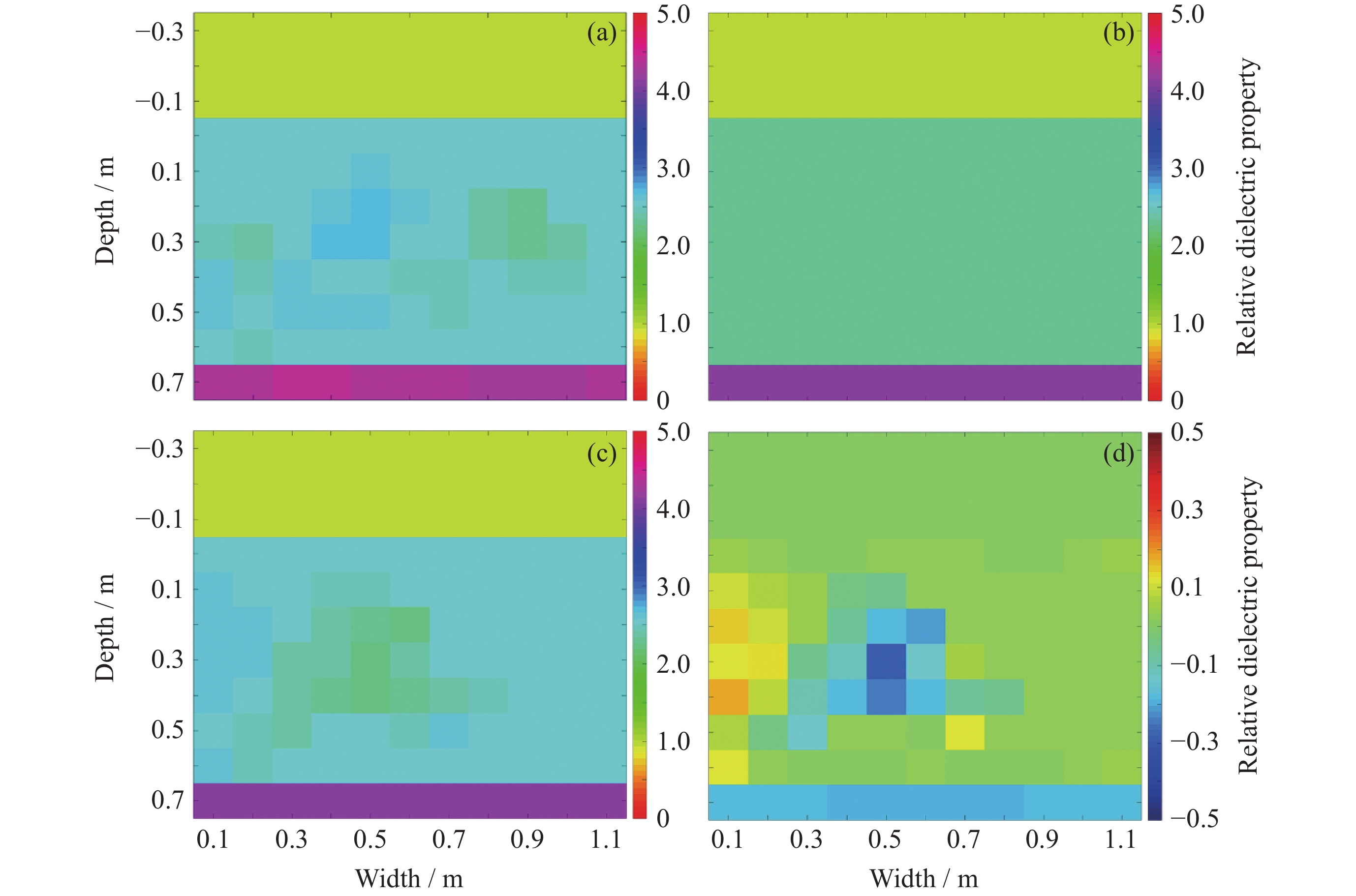
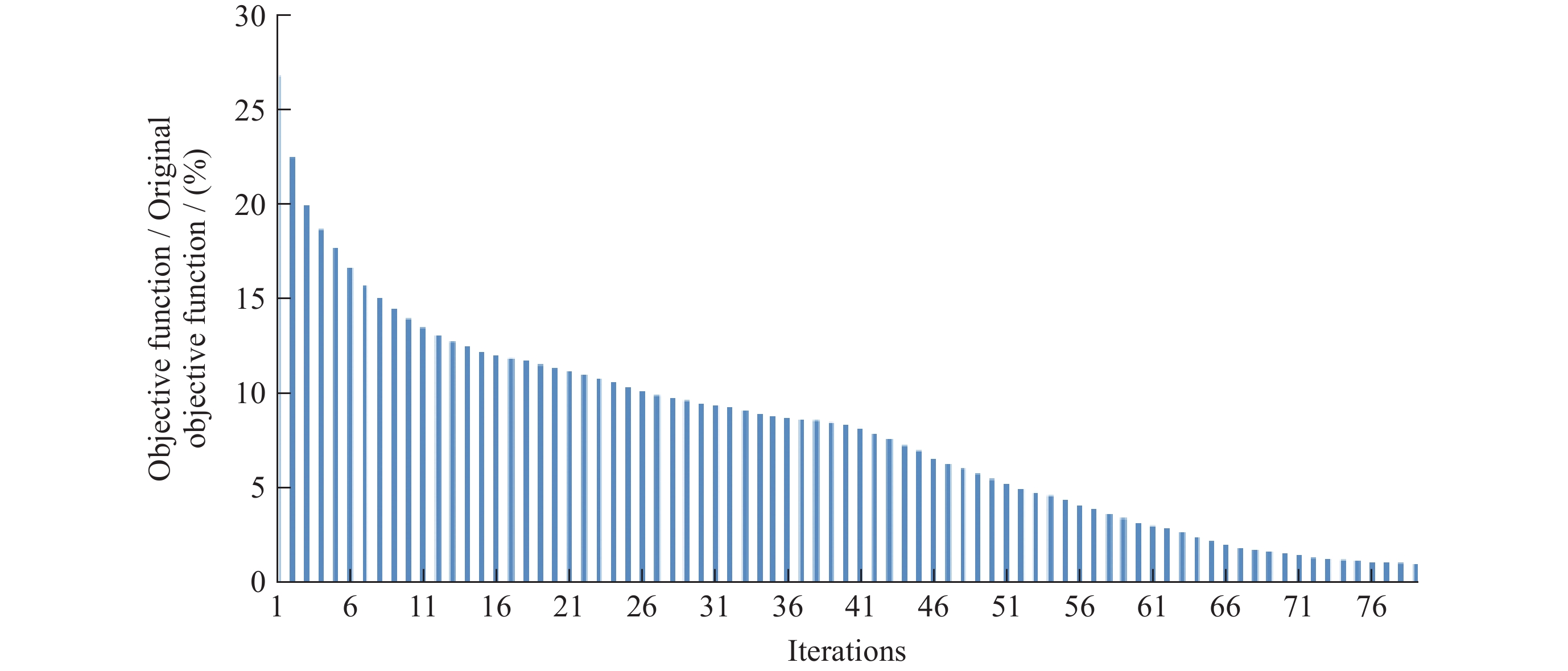
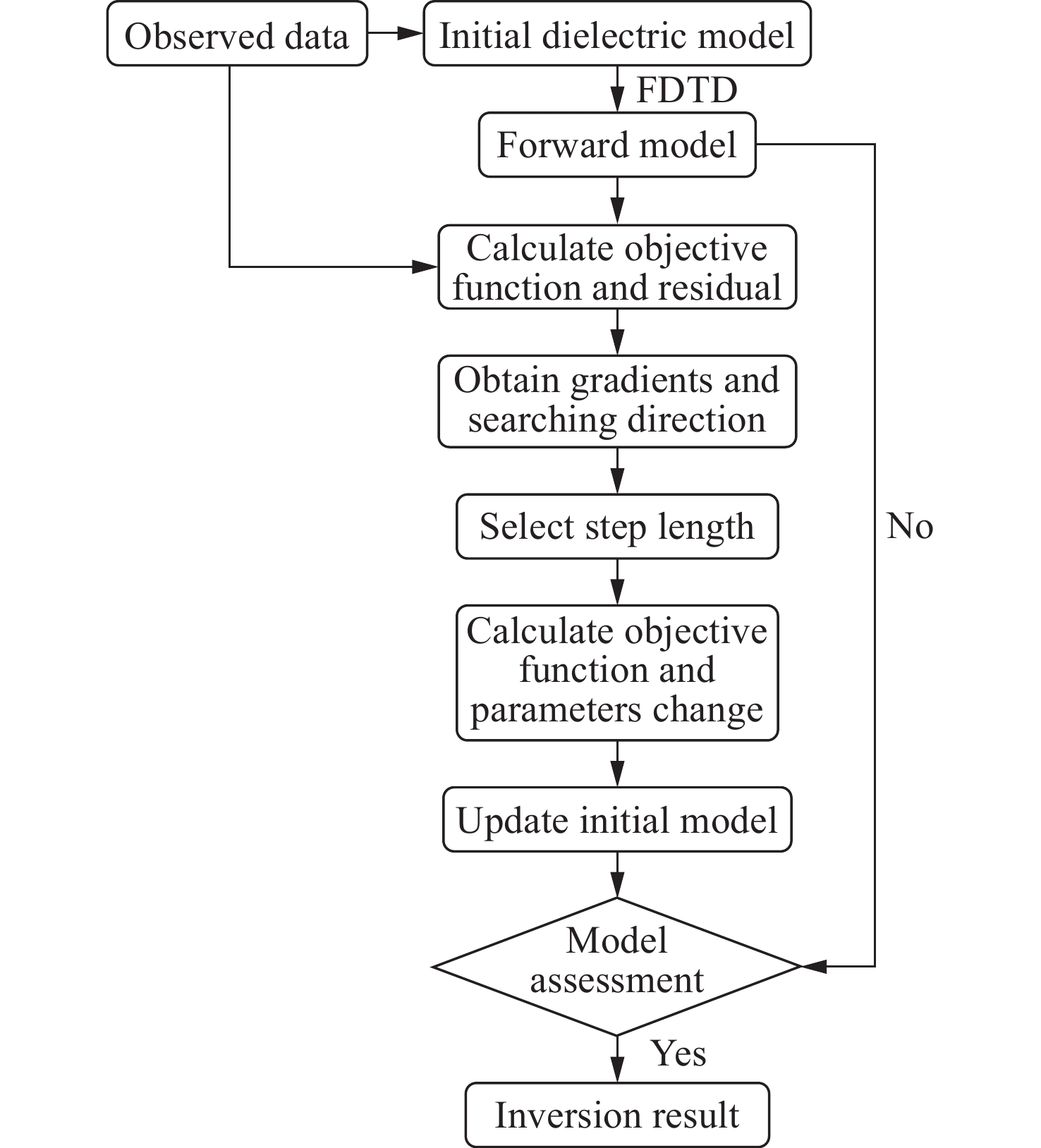
摘要: 介电特性是决定雷达波在物质中传播速度的重要参数. 嫦娥四号测月雷达提供的高垂向分辨率次表层雷达剖面信息有助于加深对月球次表层物质介电特性的理解与认识. 全波形反演法充分利用雷达波场的运动学和动力学信息, 根据雷达波模拟结果与真实数据的差异计算更新参数, 迭代初始介电模型实现对次表层介电剖面的反演. 本文结合嫦娥四号测月雷达数据与时域有限差分方法下均质模型和随机等效介质模型的雷达回波特性, 确定随机等效介质模型能够更好地模拟嫦娥四号着陆区次表层物质的介电特性. 全波形方法反演的介电模型与真实模型在大部分区域的相对介电常数误差小于0.2, 为反演月壤厚度及构建次表层温度模型提供了重要的数据支撑.Abstract: Dielectric property is an important parameter that determines the propagation speed of radar wave in materials, which is widely used in stratigraphic division, regolith thickness inversion, radar model construction and water-ice detection. However, continuous impacts may cover the traces of important geological activities and hinder the exploration of lunar geological. In January 2019, China’s Chang’E-4 carried the Yutu-2 rover successfully landed at the Von Kármán crater (177.5991°E, 45.4446°S) in the South Pole-Aitken (SPA) basin. The Yutu-2 rover equipped with dual-frequency ground penetrating radar (Lunar Penetrating Radar, LPR). The subsurface radar diagram with fine vertical resolution provided by the Chang’E-4 LPR can deepen our understanding of the dielectric property of lunar subsurface materials. Full Waveform Inversion (FWI) method can fully utilize the kinematic and dynamic information of radar wave field and invert the dielectric property by constructing an initial dielectric model and continuously updating this model with comparison of the observed radar data. By comparing the simulation results of homogeneous dielectric model and stochastic equivalent media model to the Chang’E-4 LPR diagram, we selected the stochastic equivalent media model as the real model to simulate the subsurface dielectric profile at the Chang’E-4 landing site and valid the dielectric accuracy inversed by FWI method. Our results reported that FWI method can not only capture the dielectric perturbation in local scale, but also generate two-dimensional dielectric profile with high spatial resolution. The initial dielectric model is able to better characterize the dielectric properties after 79 FWI iterations, and the maximum inversion error of relative dielectric constant is limited to 0.2 (the objective function is minimized to 0.91% of the initial value). The stochastic equivalent medium model can effectively simulate the dielectric properties of the lunar regolith, and the radar simulation results based on it are close to the Chang’E-4 LPR radar diagram.
-
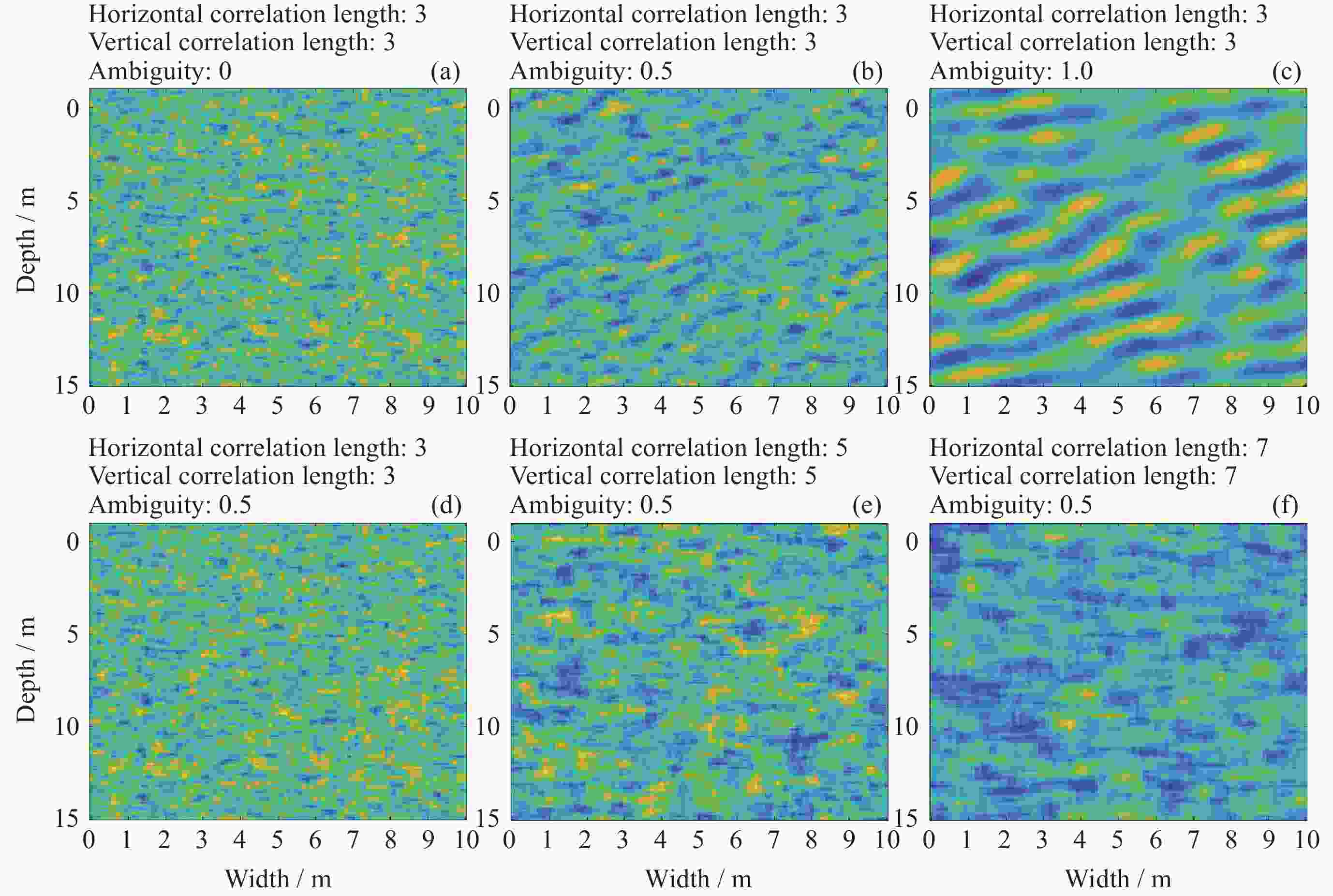
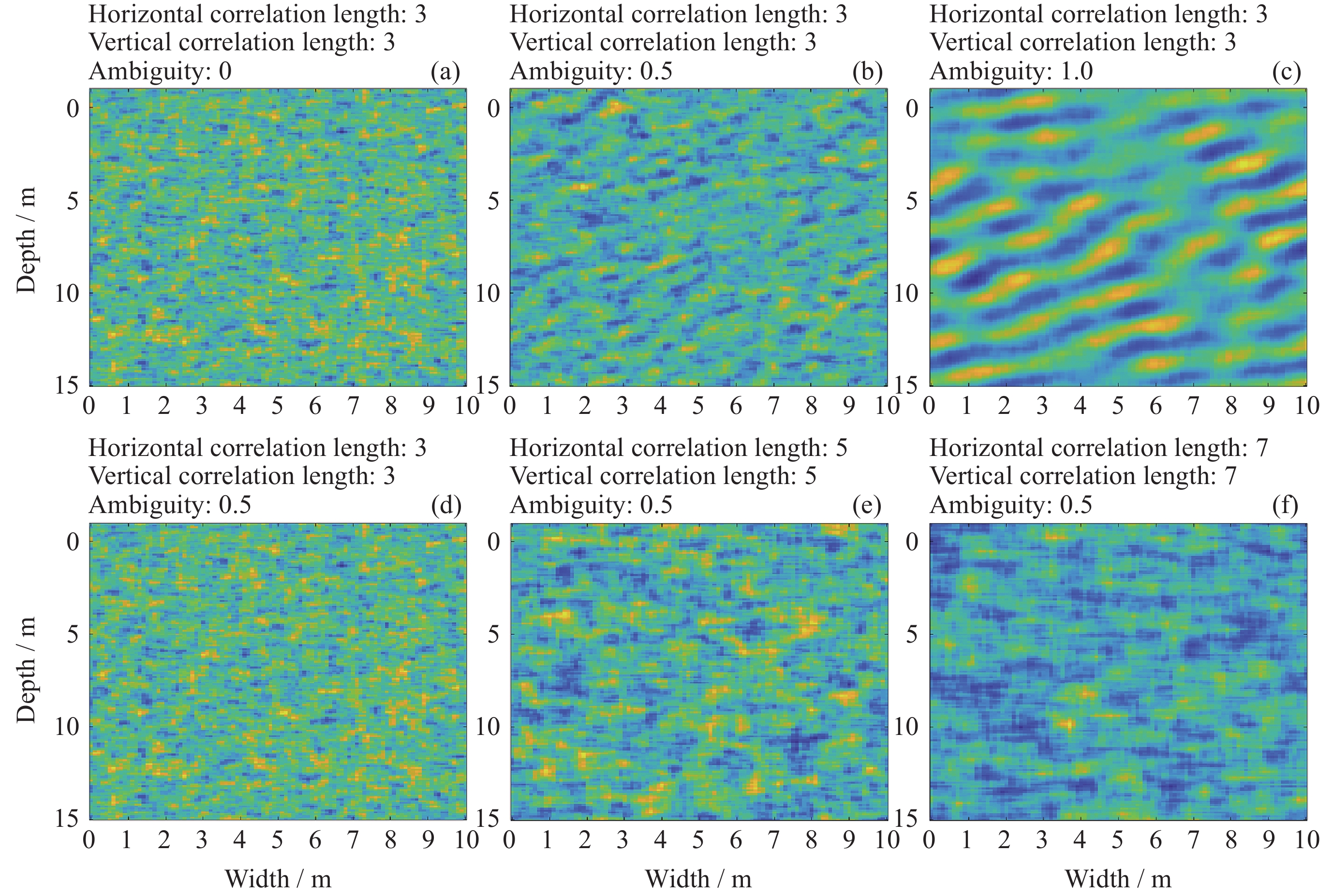
图 2 不同相关长度及模糊度条件下的随机等效介质模型
Figure 2. Stochastic equivalent medium model with different correlation lengths and ambiguities
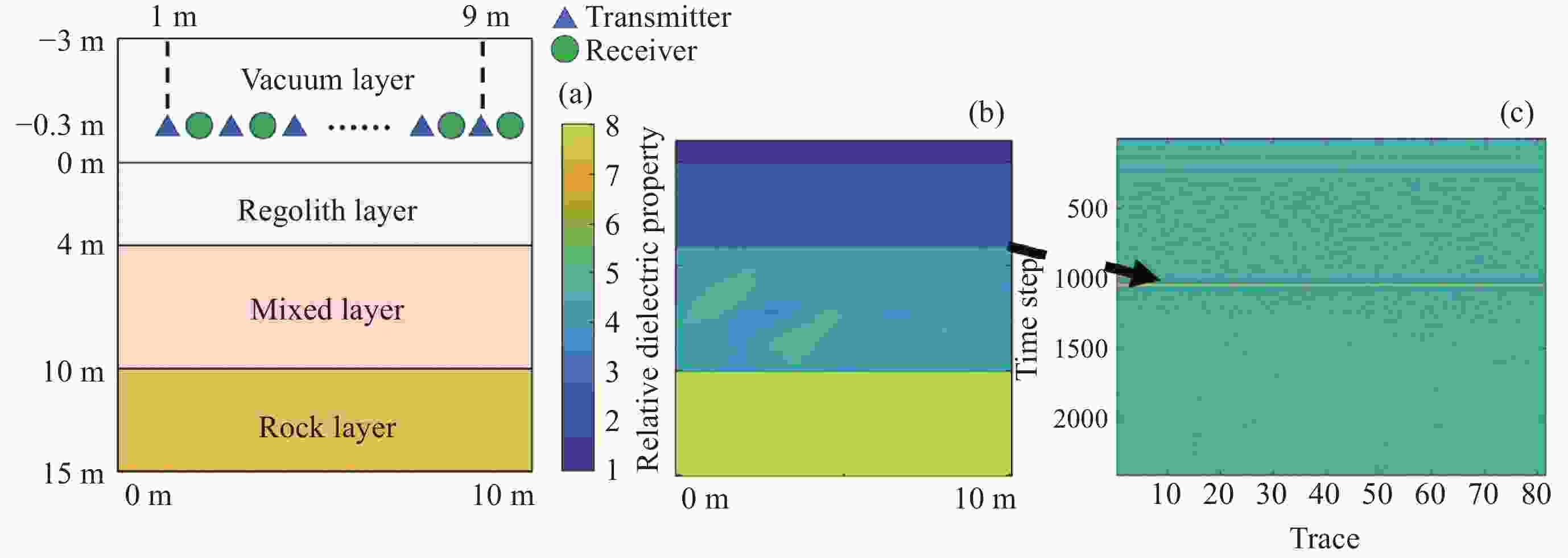
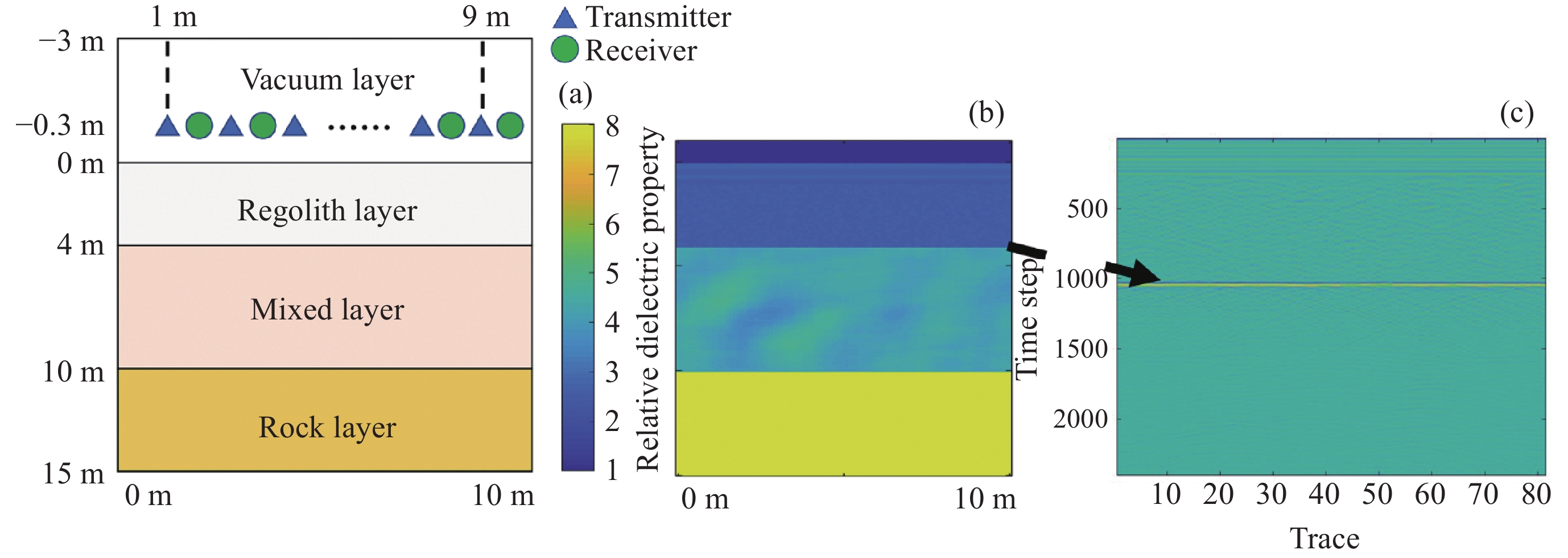
图 3 随机等效介质模型雷达回波仿真. (a)次表层介电常数模型, (b)随机等效介质模型, (c)雷达波正演结果
Figure 3. Radar diagram simulation of stochastic equivalent medium model. (a) Subsurface model, (b) stochastic equivalent medium model, (c) the simulation result of stochastic equivalent medium model

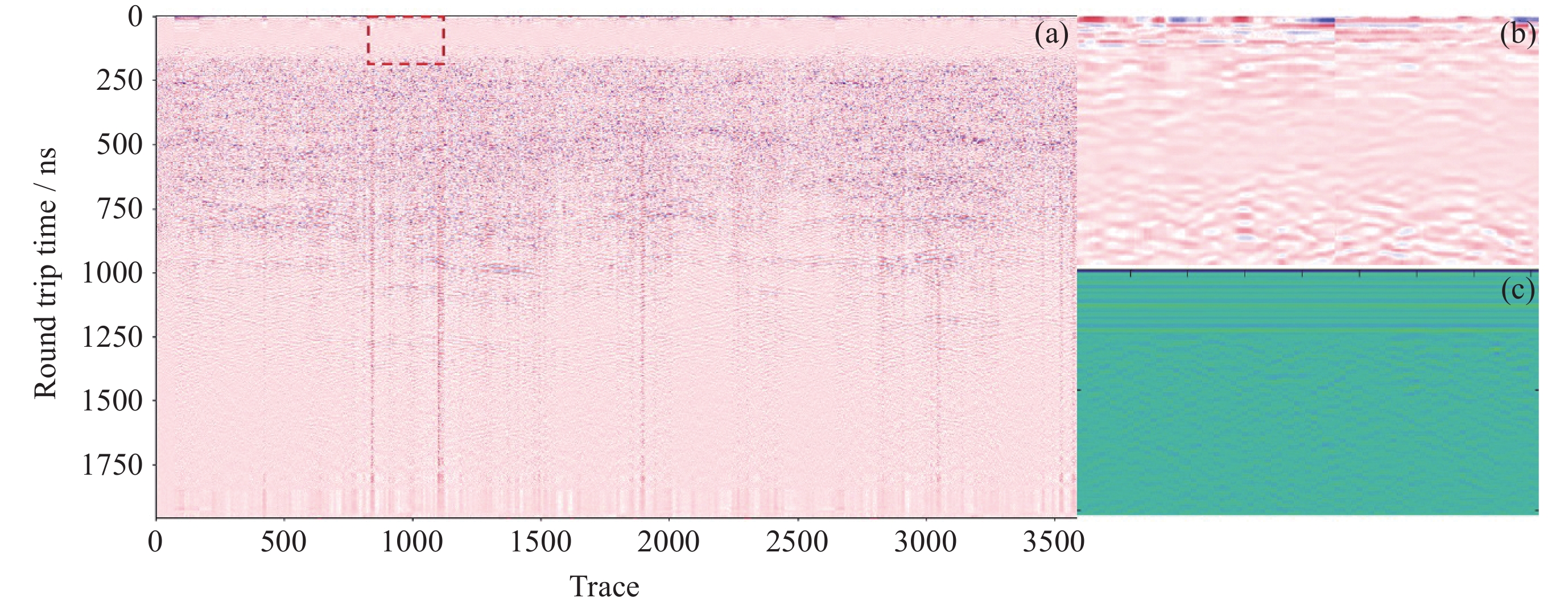
图 4 嫦娥四号测月雷达影像(a), 局部放大(b)及随机等效介质模型正演结果的局部放大效果(c)
Figure 4. Chang’E-4 LPR radar diagram (a), partial enlargement (b) and partial enlargement (c)
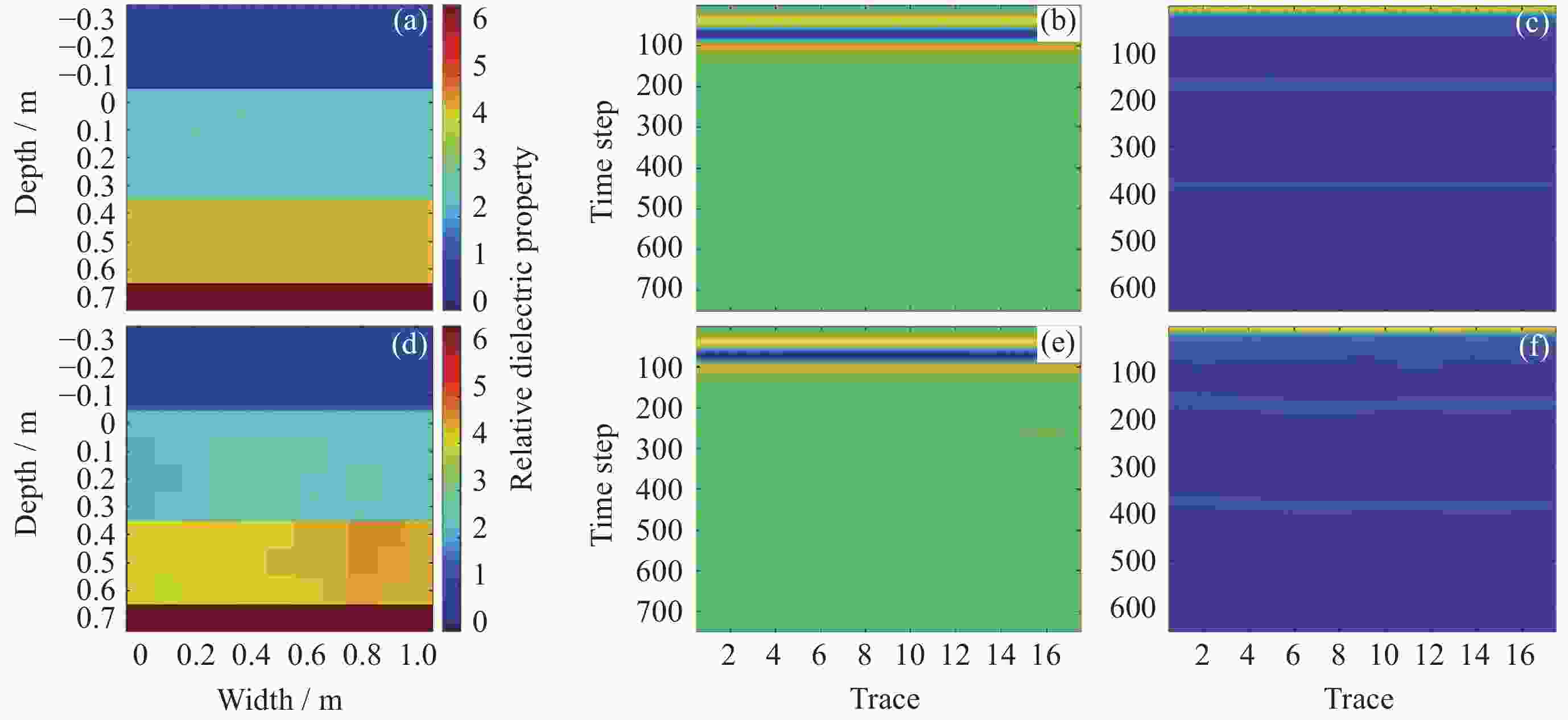
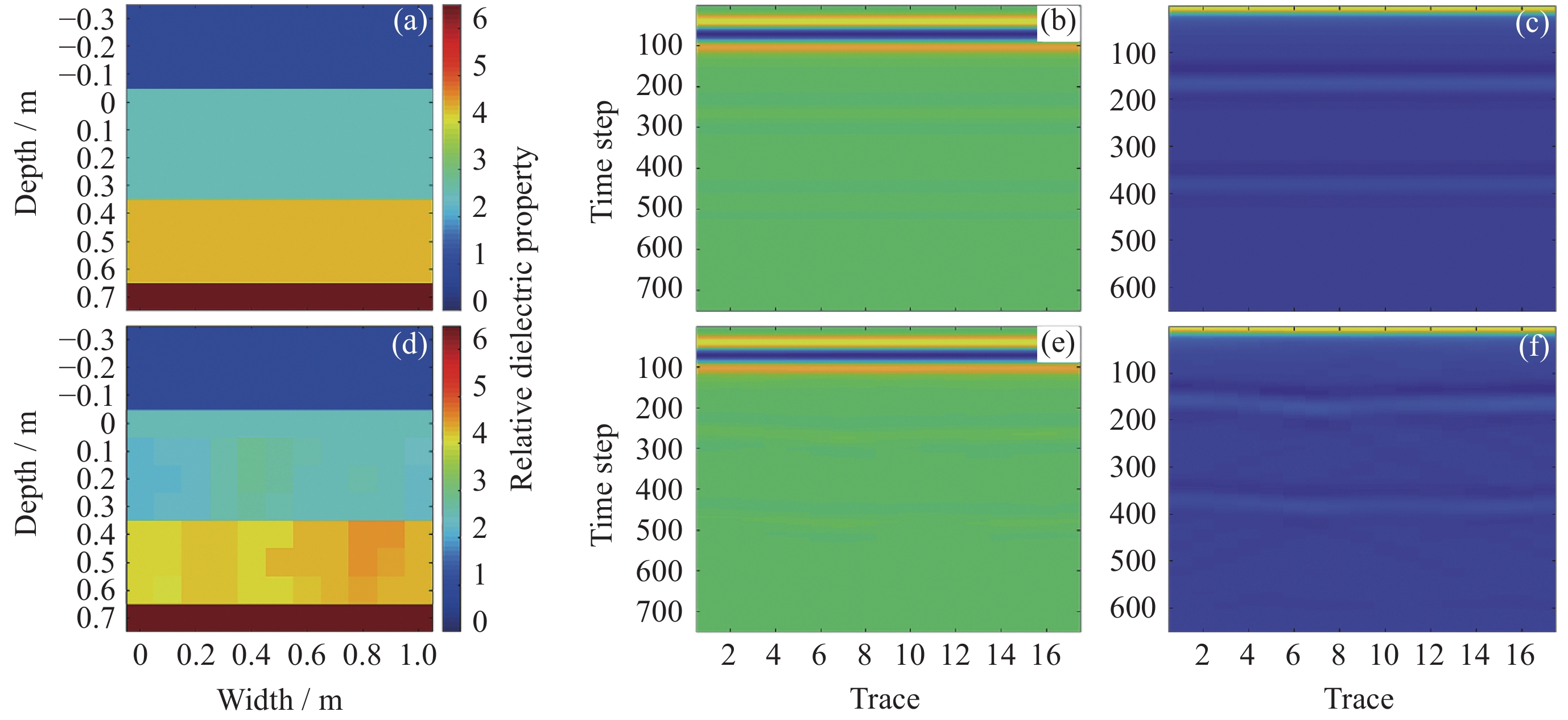
图 5 均质模型 (a), 均质模型的正演结果 (b), 零时刻校正后的均质模型的正演结果 (c), 随机等效介质模型 (d), 随机等效介质模型的正演结果 (e), 零时刻校正后的随机等效介质模型的正演结果 (f)
Figure 5. Homogeneous model (a), raw result of homogeneous model (b), time-zero correction result of homogeneous model (c), stochastic equivalent media model (d), raw result of stochastic equivalent media model (e), time-zero correction result of stochastic equivalent media model (f)
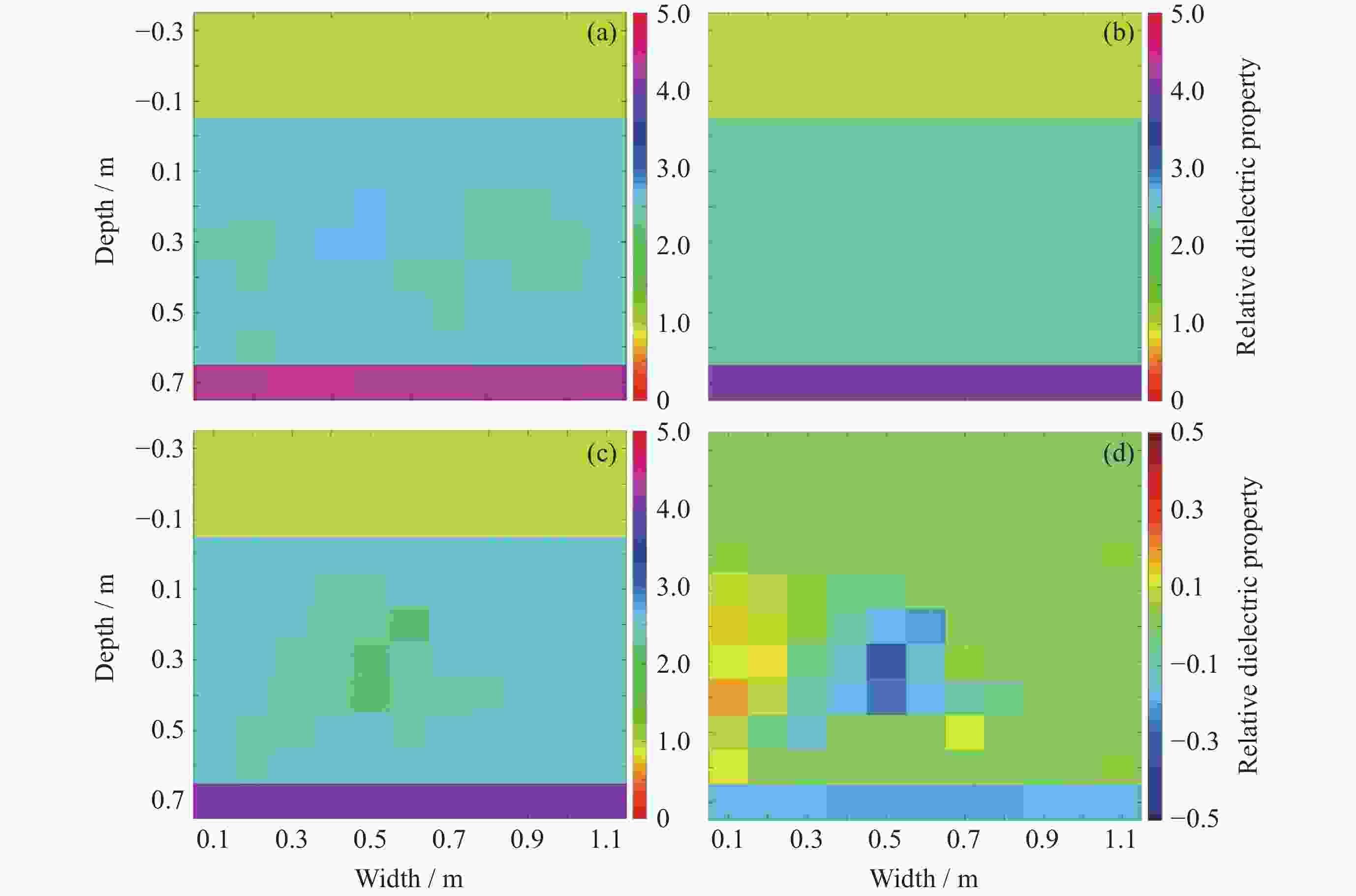
图 6 真实模型 (a), 初始模型 (b), 介电常数反演结果 (c), 真实模型和介电常数反演结果的差异 (d)
Figure 6. Real model (a), initial model (b), inversed model (c), model comparison between real model and inversed model (d)
表 1 雷达波正演模拟的时域有限差分参数
Table 1. Forward simulation parameters of FDTD
参数 数值 描述 中心频率/ MHz 500 测月雷达第二通道中心频率 波形 Ricker 模拟测月雷达发射波形 时间窗口/ns 15 雷达波持续时间 天线高度/m 0.3 发射天线距月面高度 天线偏移/m 0.32 发射和接收天线距离 吸收边界类型 CPML 卷积完美匹配层 吸收边界厚度/m 0.3 决定吸收边界的效果 离散格网大小/m 0.01 决定仿真波场的空间分辨率  下载: 导出CSV
-
[1] HEIKEN G H, VANIMAN D T, FRENCH B M. Lunar Source book, A User’s Guide to the Moon[M]. Cambridge: Cambridge University Press, 1991 [2] NEAL C R. The Moon 35 years after Apollo: what’s left to learn?[J]. Geochemistry, 2009, 69(1): 3-43 doi: 10.1016/j.chemer.2008.07.002 [3] JAUMANN R, HIESINGER H, ANAND M, et al. Geology, geochemistry, and geophysics of the Moon: status of current understanding[J]. Planetary and Space Science, 2012, 74(1): 15-41 doi: 10.1016/j.pss.2012.08.019 [4] DONG Z J, FENG X, ZHOU H Q, et al. Properties analysis of lunar regolith at Chang’E-4 landing site based on 3D velocity spectrum of lunar penetrating radar[J]. Remote Sensing, 2020, 12(4): 629 doi: 10.3390/rs12040629 [5] WANG K, ZENG Z F, ZHANG L, et al. A compressive sensing-based approach to reconstructing regolith structure from lunar penetrating radar data at the Chang’E-3 landing site[J]. Remote Sensing, 2018, 10(12): 1925 doi: 10.3390/rs10121925 [6] FA W Z, ZHU M H, LIU T T, et al. Regolith stratigraphy at the Chang’E-3 landing site as seen by lunar penetrating radar[J]. Geophysical Research Letters, 2015, 42(23): 10179-10187 [7] LATHAM G V. Results from the apollo lunar seismic experiment[J]. The Moon, 1972, 3(4): 386-387 doi: 10.1007/BF00562459 [8] KRUPENIO N N. Results of radar experiments performed on automatic stations Luna 16 and Luna 17[C]//Proceedings of the COSPAR Space Research XIII. Berlin: Akademie-Verlag, 1973 [9] THOMPSON T W, MASURSKY H, SHORTHILL R W, et al. A comparison of infrared, radar, and geologic mapping of lunar craters[J]. The Moon, 1974, 10(1): 87-117 doi: 10.1007/BF00562019 [10] PORCELLO L J, JORDAN R L, ZELENKA J S, et al. The Apollo lunar sounder radar system[J]. Proceedings of the IEEE, 1974, 62(6): 769-783 doi: 10.1109/PROC.1974.9517 [11] ISHIYAMA K, KUMAMOTO A, ONO T, et al. Estimation of the permittivity and porosity of the lunar uppermost basalt layer based on observations of impact craters by SELENE[J]. Journal of Geophysical Research: Planets, 2013, 118(7): 1453-1467 doi: 10.1002/jgre.20102 [12] VASHISHTHA A, KUMAR S. Characterization of geomorphological features of lunar surface using Chandrayaan-1 Mini-SAR and LRO Mini-RF data[J]. Quaternary International, 2020, 575-576: 338-357 [13] KUMAR A, KOCHAR I M, PANDEY D K, et al. Dielectric constant estimation of lunar surface using mini-RF and chandrayaan-2 SAR data[J]. IEEE Transactions on Geoscience and Remote Sensing, 2022, 60: 4600608 [14] FENG Y J, CAO Y Z, TONG X H, et al. High-accuracy lunar global brightness-temperature mapping using third-order Fourier fitting and co-kriging interpolation[J]. Icarus, 2023, 403: 115646 doi: 10.1016/j.icarus.2023.115646 [15] MENG Z G, DONG X G, LEI J T, et al. Constructing a complete brightness temperature dataset of the moon with Chang’e-2 microwave radiometer data[J]. IEEE Transactions on Geoscience and Remote Sensing, 2023, 61: 5302114 [16] FENG J Q, SIEGLER M A, HAYNE P O. New constraints on thermal and dielectric properties of lunar regolith from LRO diviner and CE‐2 microwave radiometer[J]. Journal of Geophysical Research: Planets, 2020, 125(1): e2019JE006130 doi: 10.1029/2019JE006130 [17] FA W Z, JIN Y Q. A primary analysis of microwave brightness temperature of lunar surface from Chang-E 1 multi-channel radiometer observation and inversion of regolith layer thickness[J]. Icarus, 2010, 207(2): 605-615 doi: 10.1016/j.icarus.2009.11.034 [18] SIEGLER M, WARREN P, FRANCO K L, et al. Lunar heat flow: global predictions and reduced heat flux[J]. Journal of Geophysical Research: Planets, 2022, 127(9): e2022JE007182 doi: 10.1029/2022JE007182 [19] LI C L, ZUO W, WEN W B, et al. Overview of the Chang’e-4 mission: opening the frontier of scientific exploration of the lunar far side[J]. Space Science Reviews, 2021, 217(2): 35 doi: 10.1007/s11214-021-00793-z [20] FENG J Q, SIEGLER M A, WHITE M N. Dielectric properties and stratigraphy of regolith in the lunar South Pole-Aitken basin: observations from the Lunar Penetrating Radar[J]. Astronomy & Astrophysics, 2022, 661: A47 [21] FENG J Q, SU Y, DING C Y, et al. Dielectric properties estimation of the lunar regolith at CE-3 landing site using lunar penetrating radar data[J]. Icarus, 2017, 284: 424-430 doi: 10.1016/j.icarus.2016.12.005 [22] LAI J L, XU Y, BUGIOLACCHI R, et al. First look by the Yutu-2 rover at the deep subsurface structure at the lunar farside[J]. Nature Communications, 2020, 11(1): 3426 doi: 10.1038/s41467-020-17262-w [23] FENG Y J, CHEN S R, TONG X H, et al. Exploring the lunar regolith’s thickness and dielectric properties using band-limited impedance at Chang’E-4 landing site[J]. Journal of Geophysical Research: Planets, 2023, 128(3): e2022JE007540 doi: 10.1029/2022JE007540 [24] LAI J L, XU Y, ZHANG X P, et al. Comparison of dielectric properties and structure of lunar regolith at Chang’e‐3 and Chang’e‐4 landing sites revealed by ground‐penetrating radar[J]. Geophysical Research Letters, 2019, 46(22): 12783-12793 doi: 10.1029/2019GL084458 [25] LI C L, SU Y, PETTINELLI E, et al. The Moon’s farside shallow subsurface structure unveiled by Chang’E-4 Lunar Penetrating Radar[J]. Science Advances, 2020, 6(9): eaay6898 doi: 10.1126/sciadv.aay6898 [26] TARANTOLA A. Inversion of seismic reflection data in the acoustic approximation[J]. Geophysics, 1984, 49(8): 1259-1266 doi: 10.1190/1.1441754 [27] SINGH S C, WEST G F, BREGMAN N D, et al. Full waveform inversion of reflection data[J]. Journal of Geophysical Research: Solid Earth, 1989, 94(B2): 1777-1794 doi: 10.1029/JB094iB02p01777 [28] WANG X, FENG D S. Multiparameter full-waveform inversion of 3-D on-ground GPR with a modified total variation regularization scheme[J]. IEEE Geoscience and Remote Sensing Letters, 2021, 18(3): 466-470 doi: 10.1109/LGRS.2020.2976146 [29] MELES G A, VAN DER KRUK J, GREENHALGH S A, et al. A new vector waveform inversion algorithm for simultaneous updating of conductivity and permittivity parameters from combination crosshole/borehole-to-surface GPR data[J]. IEEE Transactions on Geoscience and Remote Sensing, 2010, 48(9): 3391-3407 doi: 10.1109/TGRS.2010.2046670 [30] KLOTZSCHE A, JONARD F, LOOMS M C, et al. Measuring soil water content with ground penetrating radar: a decade of progress[J]. Vadose Zone Journal, 2018, 17(1): 1-9 [31] HARUZI P, SCHMÄCK J, ZHOU Z, et al. Detection of tracer plumes using full‐waveform inversion of time-lapse ground penetrating radar data: a numerical study in a high-resolution aquifer model[J]. Water Resources Research, 2022, 58(5): e2021WR030110 doi: 10.1029/2021WR030110 [32] YU Y, HUISMAN J A, KLOTZSCHE A, et al. Coupled full-waveform inversion of horizontal borehole ground penetrating radar data to estimate soil hydraulic parameters: a synthetic study[J]. Journal of Hydrology, 2022, 610: 127817 doi: 10.1016/j.jhydrol.2022.127817 [33] DELL S, ABAKUMOV I, ZNAK P, et al. On the role of diffractions in velocity model building: a full-waveform inversion example[J]. Studia Geophysica et Geodaetica, 2019, 63(4): 538-553 doi: 10.1007/s11200-019-0733-6 [34] KLOTZSCHE A, VEREECKEN H, VAN DER KRUK J. Review of crosshole ground-penetrating radar full-waveform inversion of experimental data: recent developments, challenges, and pitfalls[J]. Geophysics, 2019, 84(6): H13-H28 doi: 10.1190/geo2018-0597.1 [35] LAVOUÉ F, BROSSIER R, MÉTIVIER L, et al. Two-dimensional permittivity and conductivity imaging by full waveform inversion of multioffset GPR data: a frequency-domain quasi-Newton approach[J]. Geophysical Journal International, 2014, 197(1): 248-268 doi: 10.1093/gji/ggt528 [36] YANG X, KLOTZSCHE A, MELES G, et al. Improvements in crosshole GPR full-waveform inversion and application on data measured at the Boise Hydrogeophysics Research Site[J]. Journal of Applied Geophysics, 2013, 99: 114-124 doi: 10.1016/j.jappgeo.2013.08.007 [37] WEI G F, LI X Y, WANG S J. Thermal behavior of regolith at cold traps on the moon׳s south pole: revealed by Chang’E-2 microwave radiometer data[J]. Planetary and Space Science, 2016, 122: 101-109 doi: 10.1016/j.pss.2016.01.013 [38] LI J, ZENG Z F, LIU C, et al. A study on lunar regolith quantitative random model and lunar penetrating radar parameter inversion[J]. IEEE Geoscience and Remote Sensing Letters, 2017, 14(11): 1953-1957 doi: 10.1109/LGRS.2017.2743618 [39] CARRIER III W D, OLHOEFT G R, MENDELL W. Physical properties of the lunar surface[M]//HEIKEN G H, VANIMAN D T, FRENCH B M. Lunar Sourcebook, A User’s Guide to the Moon. Cambridge: Cambridge University Press, 1991: 475-594 [40] THOMPSON T W, DYCE R B. Mapping of lunar radar reflectivity at 70 centimeters[J]. Journal of Geophysical Research, 1966, 71(20): 4843-4853 doi: 10.1029/JZ071i020p04843 [41] LAI J L, XU Y, ZHANG X P, et al. Structural analysis of lunar subsurface with Chang’E-3 lunar penetrating radar[J]. Planetary and Space Science, 2016, 120: 96-102 doi: 10.1016/j.pss.2015.10.014 [42] ZHANG L, XU Y, ZENG Z F, et al. Simulation of martian near-surface structure and imaging of future GPR data from Mars[J]. IEEE Transactions on Geoscience and Remote Sensing, 2022, 60: 5101812 [43] DONG Z H, FANG G Y, JI Y C, et al. Parameters and structure of lunar regolith in Chang’E-3 landing area from lunar penetrating radar (LPR) data[J]. Icarus, 2017, 282: 40-46 doi: 10.1016/j.icarus.2016.09.010 [44] ZHAO N, ZHU P M, YANG K S, et al. The preliminary processing and analysis of LPR Channel-2B data from Chang’E-3[J]. Science China Physics, Mechanics & Astronomy, 2014, 57(12): 2346-2353 [45] ALKHALIFAH T, SUN B B, WU Z D. Full model wavenumber inversion: identifying sources of information for the elusive middle model wavenumbers[J]. Geophysics, 2018, 83(6): R597-R610 doi: 10.1190/geo2017-0775.1 [46] LI J, BAI L G, LIU H. Numerical test of the Chang’E-5 lunar penetrating array radar full waveform inversion[C]//Proceedings of the Sixth International Conference on Engineering Geophysics. Houston: Society of Exploration Geophysicists, 2021: 186-189 -
-

 下载:
下载:

计量
- 文章访问数: 1619
- HTML全文浏览量: 674
- PDF下载量: 73
-
被引次数:
0(来源:Crossref)
0(来源:其他)

