


基于范艾伦卫星观测数据的地球辐射带电子能谱分布的统计分析
doi: 10.11728/cjss2024.03.2023-0070
-
 王建行 男, 2001年出生于安徽省淮北市, 现为武汉大学电子信息学院空间物理系博士生, 主要研究方向为空间波粒相互作用的观测和建模、地球空间环境的预测预报. E-mail: jianhangwang@whu.edu.cn
 -
 项正 男, 1990年8月出生于湖北省黄冈市, 现为武汉大学电子信息学院空间物理系副教授, 主要研究方向为地球辐射带动力学. E-mail: xiangzheng@whu.edu.cn
 -
 马新 女, 1992年6月出生于河南省漯河市, 现为武汉大学电子信息学院空间物理系博士后, 主要研究方向为地球辐射带波粒相互作用机理与建模. E-mail: whumaxin@whu.edu.cn
作者简介:
Statistical Analysis of Distributions of Electron Energy Spectra in the Earth’s Radiation Belts Based on Van Allen Probes Observations
-
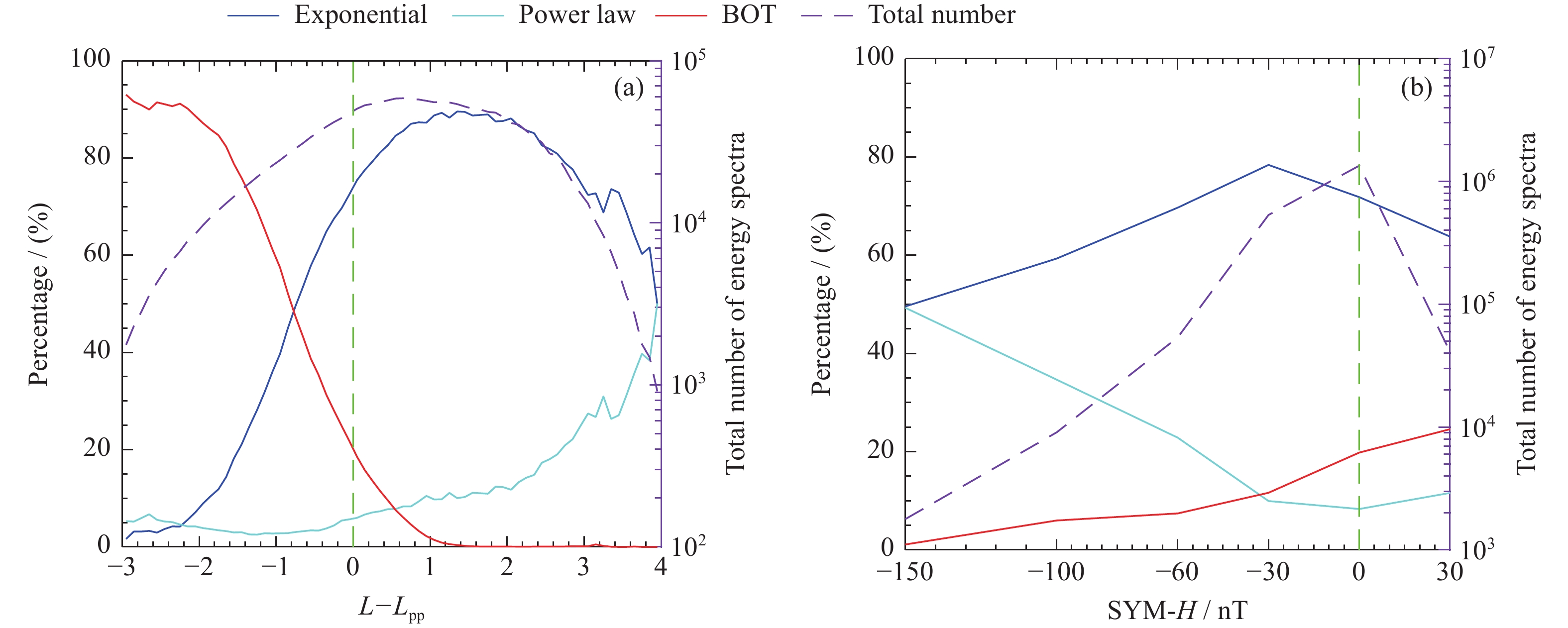
摘要: 利用范艾伦卫星2014年至2018年观测的高精度电子能谱数据, 统计分析了不同辐射带高能电子能谱类型的时空分布特征. 结果表明, 辐射带电子能谱主要被分为三类: 指数分布能谱、幂律分布能谱和反转能谱. 指数分布能谱通常在等离子体层以外占主导地位. 幂律分布能谱通常在磁暴的主相出现在高L处, 并逐渐转移到低L处. 在地磁活动平静时期, 幂律分布能谱在高L处存在时间更长, 占比更多. 反转能谱在等离子体层内L>2.5处占主导地位, 随着等离子体层层顶升高, 反转能谱增加, 指数分布能谱减少. 在长时间的地磁活动平静年份, 辐射带电子反转能谱局地峰值(约2 MeV)附近的电子通量明显较低, 反转能谱占比较少. 辐射带电子能谱类型对等离子体层层顶和地磁活动依赖性的统计分析表明, 反转能谱发生率的峰值位置约位于L=(Lpp–2)(Lpp为等离子体层层顶位置), 指数分布能谱发生率的峰值约位于L=(Lpp+1.5), 幂律分布能谱的出现与电子的注入密切相关. 磁暴越剧烈, 反转能谱被指数分布能谱取代的L范围越广泛. 在平静时期, 由于等离子体嘶声的散射作用, 等离子体层层顶内的指数分布能谱被反转能谱取代. 本文给出了辐射带电子能谱类型长期的时空分布特征, 可以为辐射带动态建模和高能电子通量预报提供理论参考.Abstract: The characteristics of energy spectra distributions of radiation belt electrons can help reveal the dominant physical mechanism behind the dynamics of the radiation belt. In this study, the temporal and spatial distribution characteristics of energy spectra of energetic electrons are statistically analyzed using the measurements from Van Allen probes during 2014–2018. The results show that most of the electron spectra in the radiation belt can be classified into three types: exponential, power-law and reversed spectra. The exponential spectra dominate in the outer radiation belt outside the plasmapause. The power-law spectra usually occur at higher L values and move to lower L values during geomagnetic storms. During quiet geomagnetic activity periods, the power-law energy spectra stay at the high L with longer time and higher proportion. The reversed energy spectra dominate at L>2.5 inside the plasmasphere. As the increase of plasmapause locations, more reversed energy spectra occur while the proportion of the exponential energy spectra decreases. During long-term quiet periods, electron fluxes near the peak of the reversed energy spectra (about 2 MeV) are relatively low to form obvious reversed spectral. The results also show that the peak location of reversed energy spectra is about 2 L inside the plasmapause while the peak location of exponential energy spectra is about 1.5 L outside the plasmapause. Appearances of power-law energy spectra are related to substorm injections of electrons. Stronger magnetic storms produce wider L ranges where reversed energy spectra are replaced by exponential spectra. During quiet times, exponential energy spectra inside the plasmapause are replaced by reversed energy spectra due to pitch angle scattering produced by plasmaspheric hiss waves.
-
Key words:
- Radiation belts /
- Electron energy spectra /
- Van Allen Probes /
- Geomagnetic activity /
- Plasmapause
-
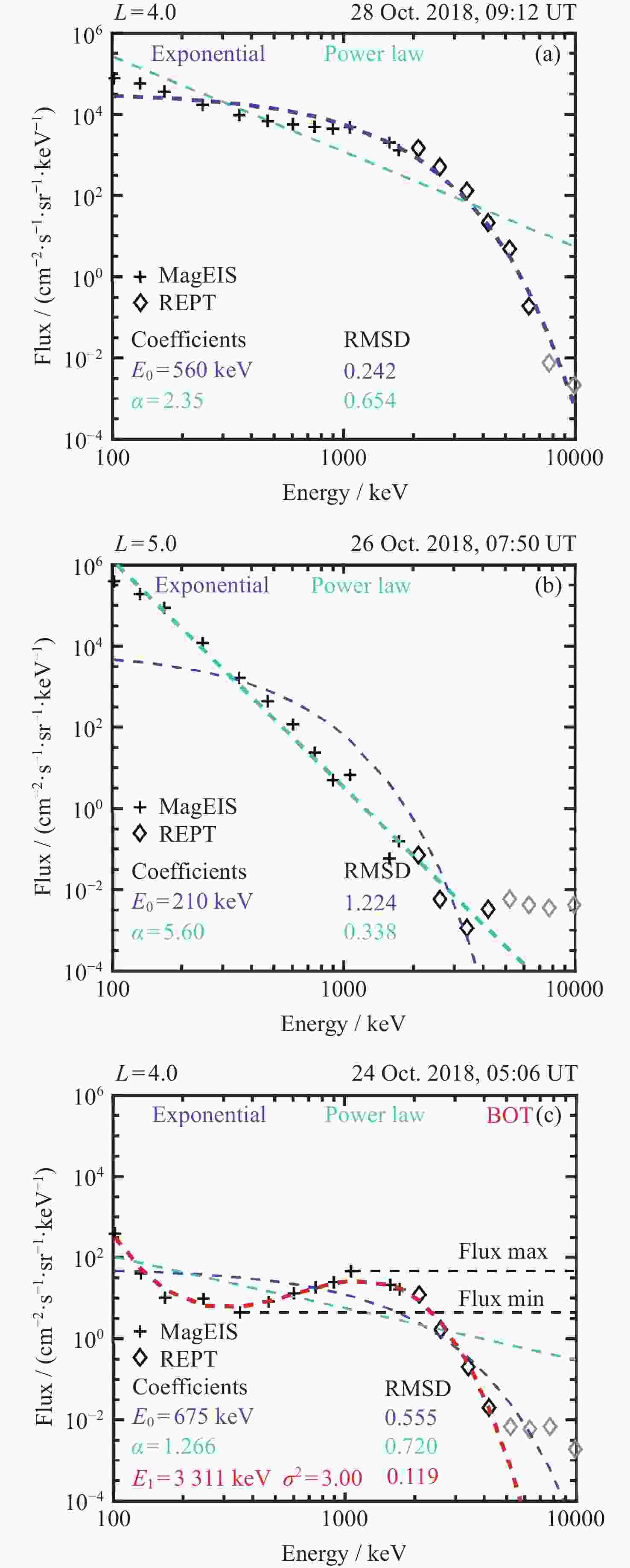
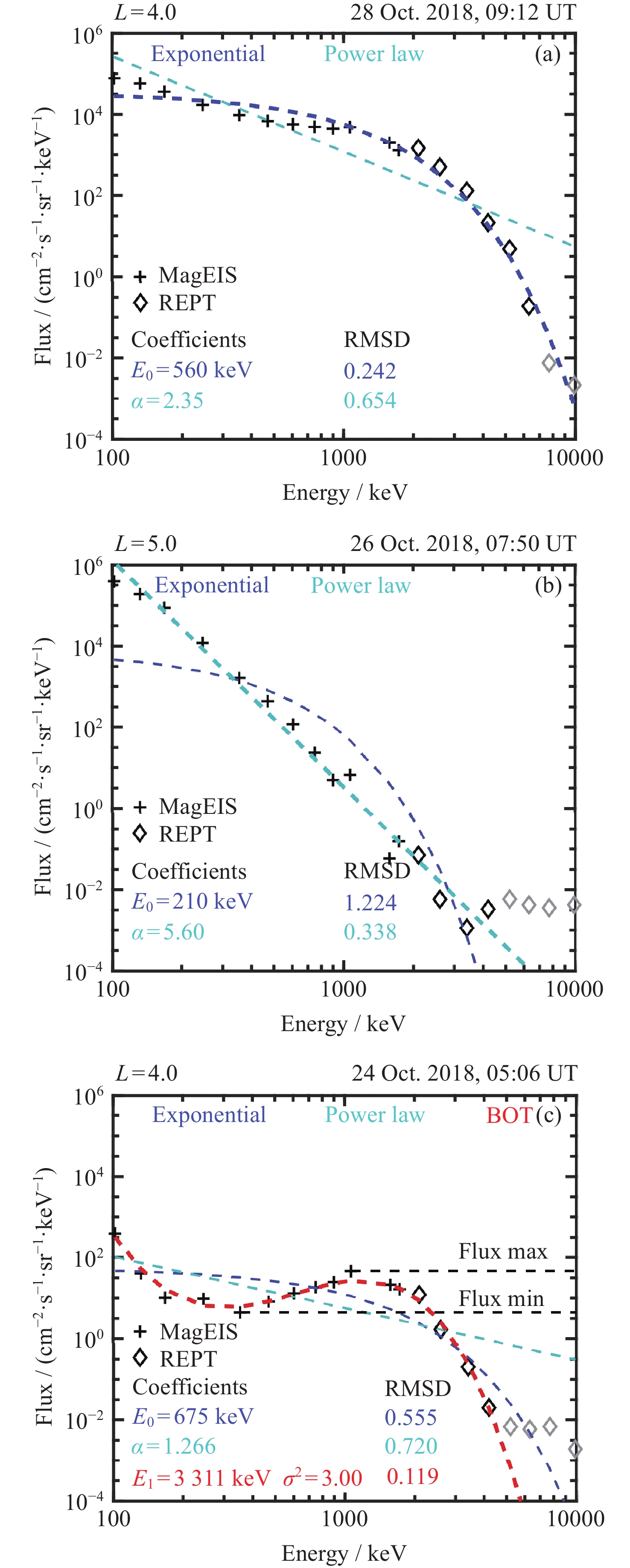
图 1 指数分布能谱、幂律分布能谱和反转能谱
Figure 1. Diagrams of exponential energy spectrum, power law energy spectrum and Bump-on-Tail (BOT) energy spectrum
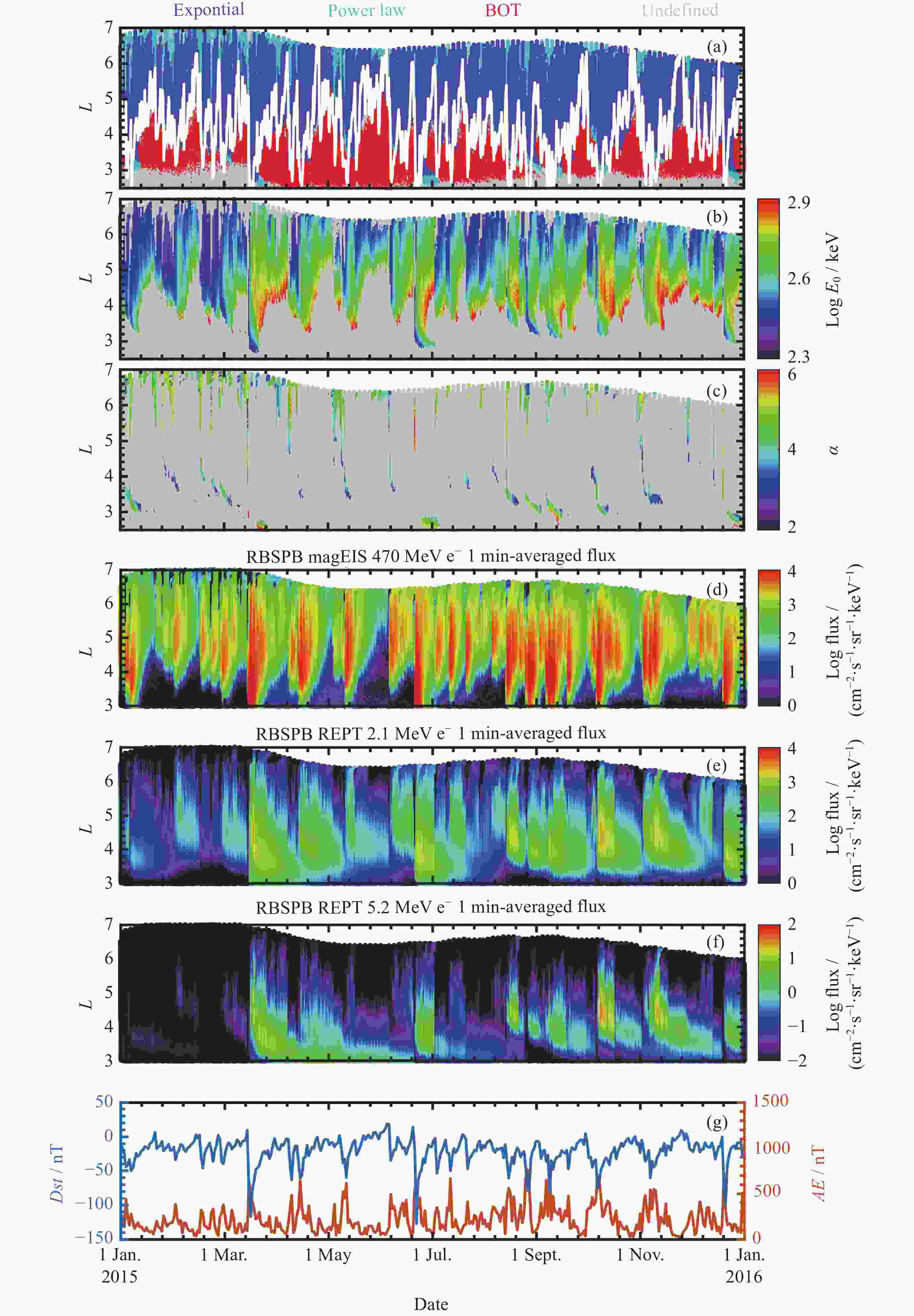
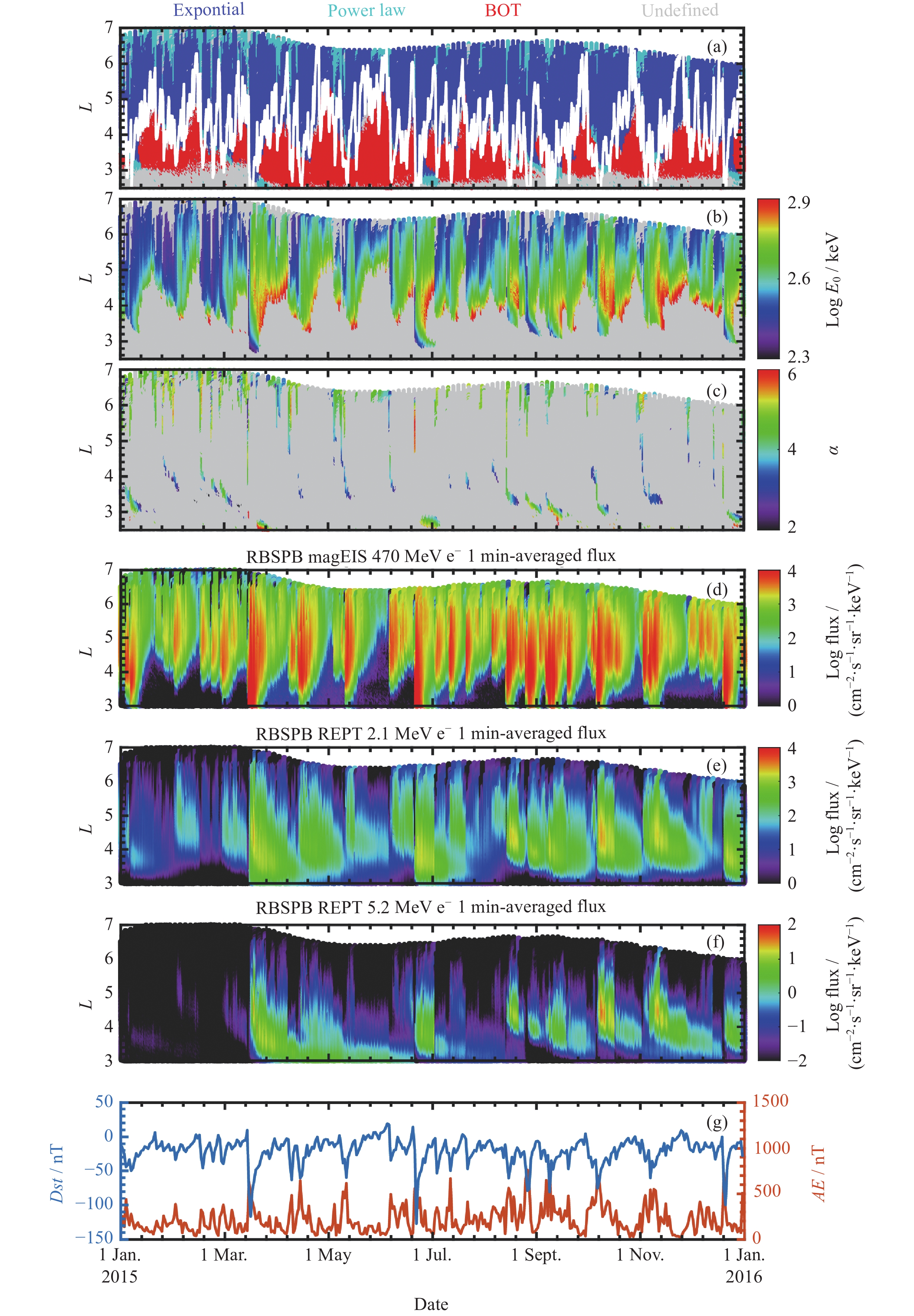
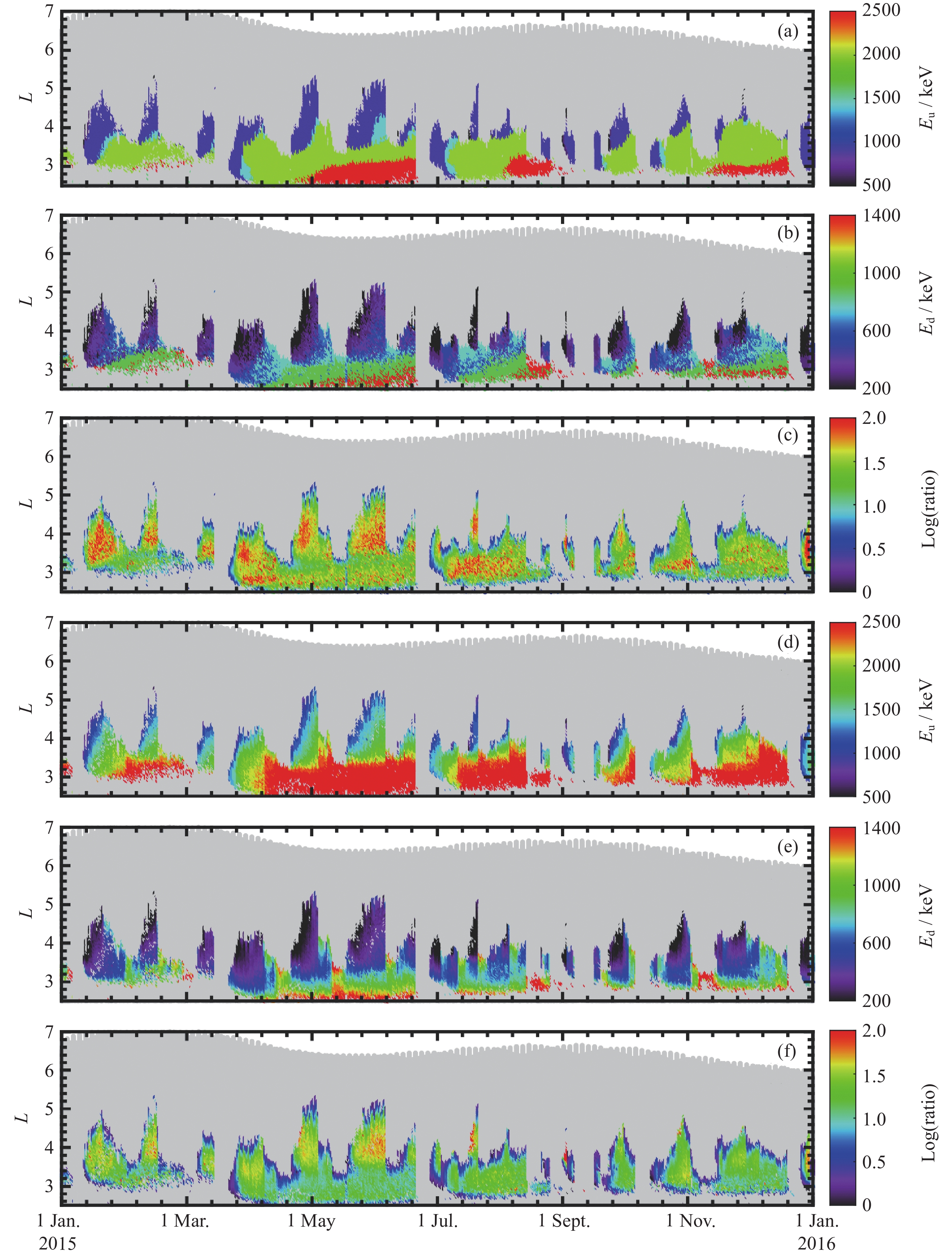
图 2 范艾伦卫星观测的2015年辐射带电子能谱分类与特征值
Figure 2. Categorization and characteristic values of the radiation belt electron energy spectrum observed by the Van Allen satellite in 2015

图 3 2015年反转能谱的观测特征值(a)~(c)与拟合特征值(d)~(f)
Figure 3. Observed (a)~(c) and fitted (d)~(f) eigenvalues of BOT in 2015

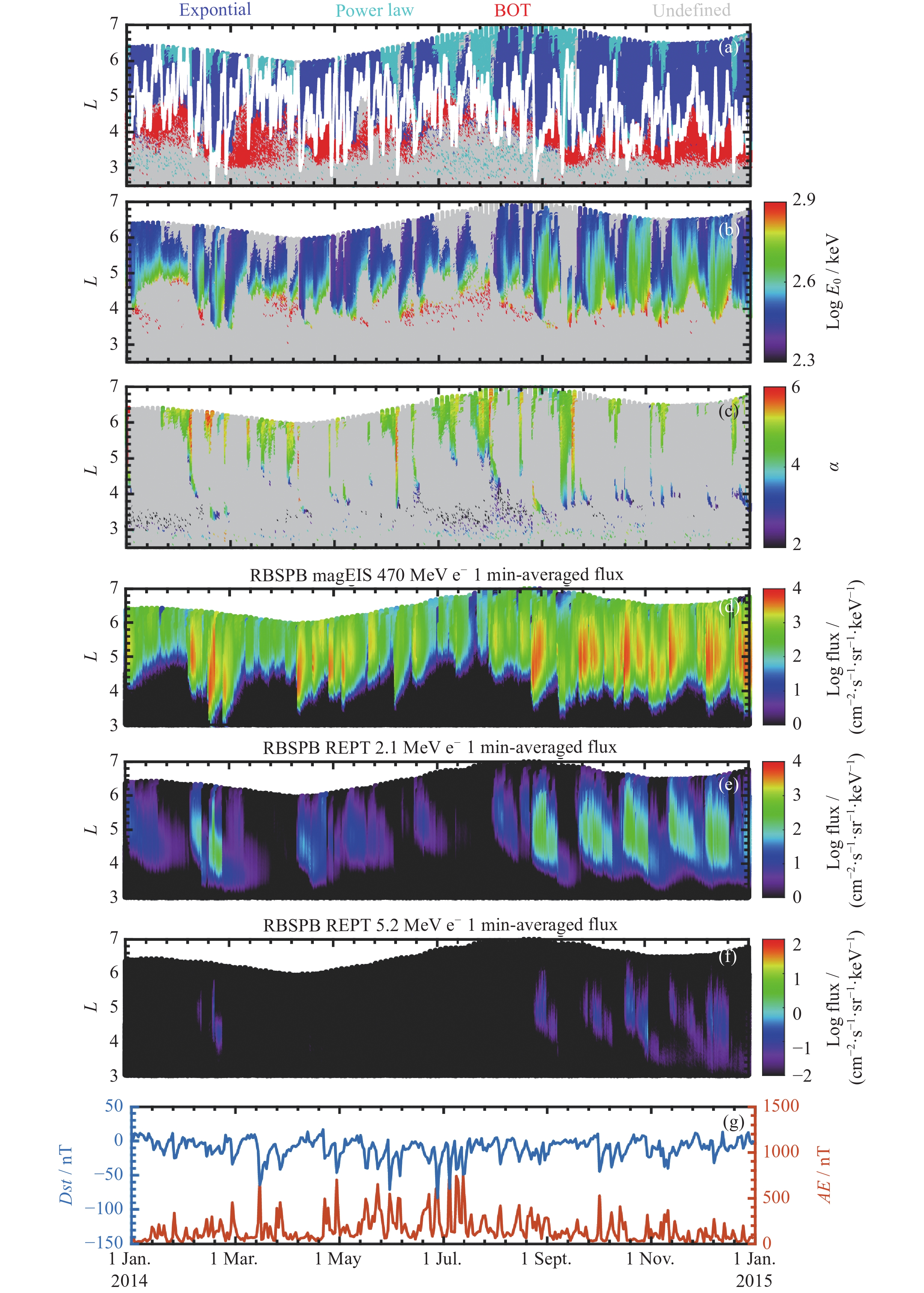
图 4 2014年辐射带电子能谱分类结果与特征值
Figure 4. Categorization and characteristic values of the radiation belt electron energy spectrum in 2014
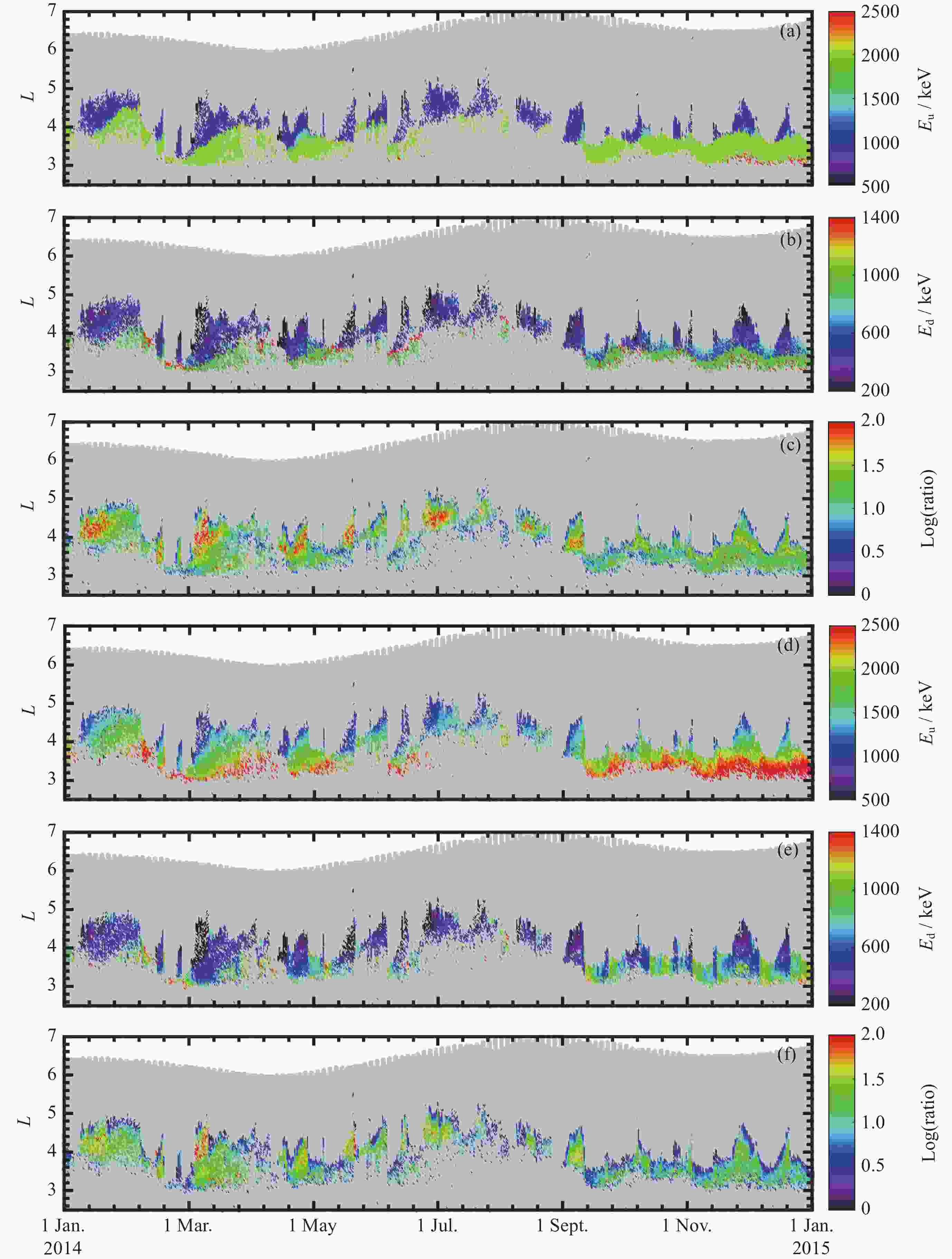
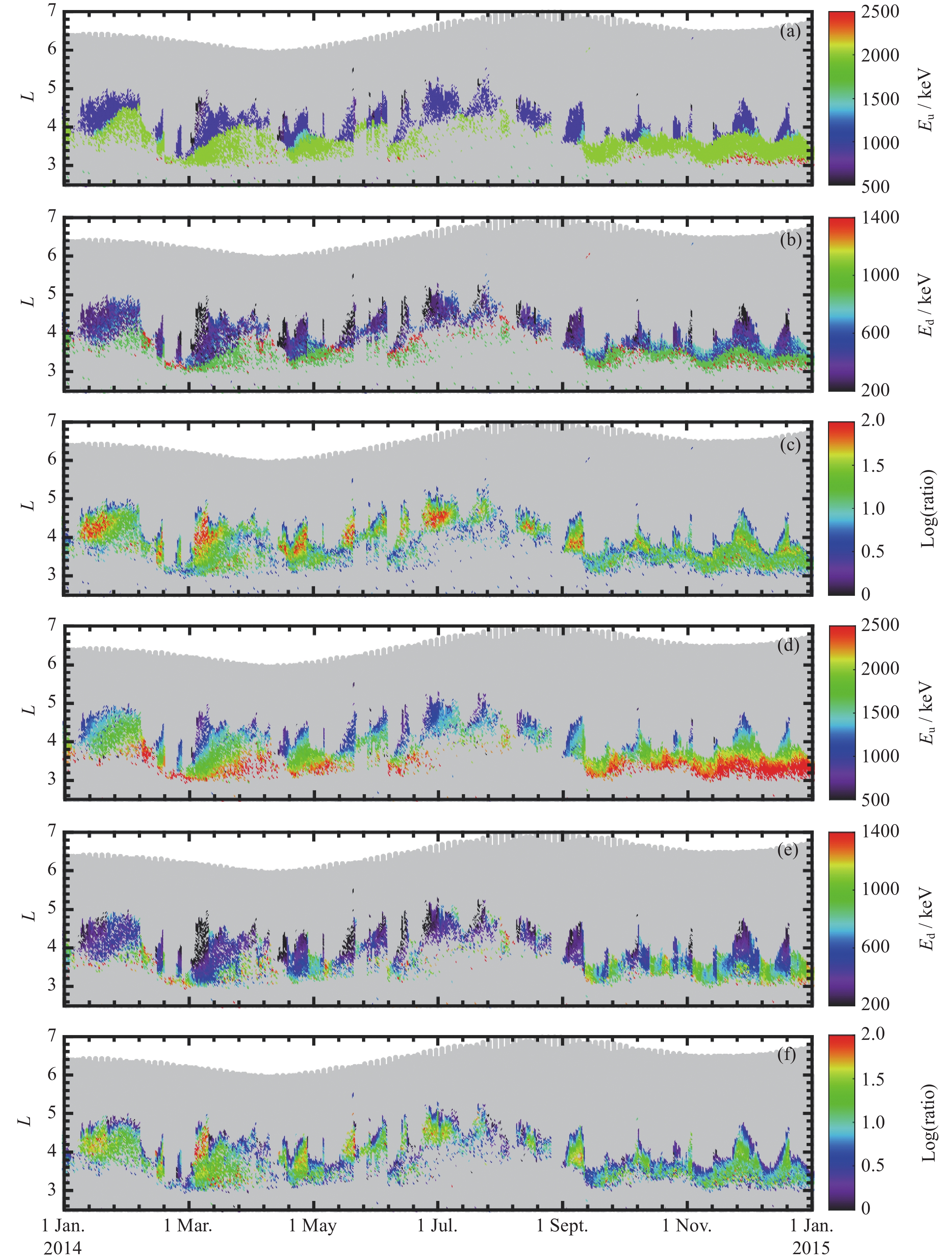
图 5 2014年反转能谱观测特征值(a)~(c)及拟合特征值(d)~(f)
Figure 5. Observed (a)~(c) and fitted (d)~(f) eigenvalues of BOT in 2014
-
[1] NI B B, XIANG Z, GU X D, et al. Dynamic responses of the Earth's radiation belts during periods of solar wind dynamic pressure pulse based on normalized superposed epoch analysis[J]. Journal of Geophysical Research: Space Physics, 2016, 121(9): 8523-8536 doi: 10.1002/2016JA023067 [2] NI B B, ZHANG Y, GU X D. Identification of ring current proton precipitation driven by scattering of electromagnetic ion cyclotron waves[J]. Fundamental Research, 2023, 3(2): 257-264 doi: 10.1016/j.fmre.2021.12.018 [3] WANG J H, GUO D Y, XIANG Z, et al. Prediction of geosynchronous electron fluxes using an artificial neural network driven by solar wind parameters[J]. Advances in Space Research, 2023, 71(1): 275-285 doi: 10.1016/j.asr.2022.10.013 [4] CHU X N, MA D L, BORTNIK J, et al. Relativistic electron model in the outer radiation belt using a neural network approach[J]. Space Weather, 2021, 19(12): e2021SW002808 doi: 10.1029/2021SW002808 [5] PILIPENKO V, YAGOVA N, ROMANOVA N, et al. Statistical relationships between satellite anomalies at geostationary orbit and high-energy particles[J]. Advances in Space Research, 2006, 37(6): 1192-1205 doi: 10.1016/j.asr.2005.03.152 [6] GUO D Y, XIANG Z, NI B B, et al. Three-dimensional simulations of ultra-relativistic electron acceleration during the 21 April 2017 storm[J]. Journal of Geophysical Research: Space Physics, 2023, 128(4): e2023JA031407 doi: 10.1029/2023JA031407 [7] CAO J B, DUAN A Y, REME H, et al. Relations of the energetic proton fluxes in the central plasma sheet with solar wind and geomagnetic activities[J]. Journal of Geophysical Research: Space Physics, 2013, 118(11): 7226-7236 doi: 10.1002/2013JA019289 [8] ZHAO H, JOHNSTON W R, BAKER D N, et al. Characterization and evolution of radiation belt electron energy spectra based on the van allen probes measurements[J]. Journal of Geophysical Research: Space Physics, 2019, 124(6): 4217-4232 doi: 10.1029/2019JA026697 [9] WHITTAKER C I, GAMBLE R J, RODGER C J, et al. Determining the spectra of radiation belt electron losses: fitting DEMETER electron flux observations for typical and storm times[J]. Journal of Geophysical Research: Space Physics, 2013, 118(12): 7611-7623 doi: 10.1002/2013JA019228 [10] PIZZELLA G, LAUGHLIN C D, O'BRIEN B J. Note on the electron energy spectrum in the inner Van Allen Belt[J]. Journal of Geophysical Research, 1962, 67(9): 3281-3287 doi: 10.1029/JZ067i009p03281 [11] IMHOF W L, SMITH R V. Energy spectrum of electrons at low altitudes[J]. Journal of Geophysical Research, 1965, 70(9): 2129-2134 doi: 10.1029/JZ070i009p02129 [12] GALPER A M, KOLDASHOV S V, MIKHAILOV V V, et al. Energy spectrum and charge composition of a new, long-lived, unstable electron radiation belt[J]. Journal of Geophysical Research: Space Physics, 1999, 104(A12): 28685-28689 doi: 10.1029/1999JA900201 [13] FENNELL J F, CLAUDEPIERRE S G, BLAKE J B, et al. Van Allen Probes show that the inner radiation zone contains no MeV electrons: ECT/MagEIS data[J]. Geophysical Research Letters, 2015, 42(5): 1283-1289 doi: 10.1002/2014GL062874 [14] LI X, SELESNICK R S, BAKER D N, et al. Upper limit on the inner radiation belt MeV electron intensity[J]. Journal of Geophysical Research: Space Physics, 2015, 120(2): 1215-1228 doi: 10.1002/2014JA020777 [15] JAYNES A N, BAKER D N, SINGER H J, et al. Source and seed populations for relativistic electrons: their roles in radiation belt changes[J]. Journal of Geophysical Research: Space Physics, 2015, 120(9): 7240-7254 doi: 10.1002/2015JA021234 [16] ZHAO H, NI B, LI X, et al. Plasmaspheric hiss waves generate a reversed energy spectrum of radiation belt electrons[J]. Nature Physics, 2019, 15(4): 367-372 doi: 10.1038/s41567-018-0391-6 [17] NI B B, HUANG H, ZHANG W X, et al. Parametric sensitivity of the formation of reversed electron energy spectrum caused by plasmaspheric hiss[J]. Geophysical Research Letters, 2019, 46(8): 4134-4143 doi: 10.1029/2019GL082032 [18] 黄河. 辐射带电子反转能谱的生成、演化和消失: 观测与模拟[D]. 武汉: 武汉大学, 2019HUANG He. The Formation, Evolution and Disappearance of Reversed Energy Spectra of Radiation Belt Electrons: Observations and Simulations[D]. Wuhan: Wuhan University, 2019 [19] BLAKE J B, CARRANZA P A, CLAUDEPIERRE S G, et al. The magnetic electron ion spectrometer (MagEIS) instruments aboard the radiation belt storm probes (RBSP) spacecraft[J]. Space Science Reviews, 2013, 179(1): 383-421 [20] BAKER D N, KANEKAL S G, HOXIE V, et al. The relativistic electron-proton telescope (REPT) investigation: design, operational properties, and science highlights[J]. Space Science Reviews, 2021, 217(5): 68 doi: 10.1007/s11214-021-00838-3 [21] HUA M, BORTNIK J, KELLERMAN A C, et al. Ensemble modeling of radiation belt electron acceleration by chorus waves: dependence on key input parameters[J]. Space Weather, 2023, 21(3): e2022SW003234 doi: 10.1029/2022SW003234 [22] SHPRITS Y Y, ALLISON H J, WANG D D, et al. A new population of ultra-relativistic electrons in the outer radiation zone[J]. Journal of Geophysical Research: Space Physics, 2022, 127(5): e2021JA030214 doi: 10.1029/2021JA030214 [23] SU Z P, XIAO F L, ZHENG H N, et al. STEERB: a three-dimensional code for storm-time evolution of electron radiation belt[J]. Journal of Geophysical Research: Space Physics, 2010, 115(A9): A09208 [24] XIAO F L, SU Z P, ZHENG H N, et al. Modeling of outer radiation belt electrons by multidimensional diffusion process[J]. Journal of Geophysical Research: Space Physics, 2009, 114(A3): A03201 [25] 刘阳希子, 项正, 郭建广, 等. 甚低频台站信号对地球内辐射带和槽区能量电子的散射效应分析[J]. 物理学报, 2021, 70(14): 149401 doi: 10.7498/aps.70.20202029LIU Yangxizi, XIANG Zheng, GUO Jianguang, et al. Scattering effect of very low frequency transmitter signals on energetic electrons in Earth’s inner belt and slot region[J]. Acta Physica Sinica, 2021, 70(14): 149401 doi: 10.7498/aps.70.20202029 [26] GUO D Y, XIANG Z, NI B B, et al. Bounce resonance scattering of radiation belt energetic electrons by extremely low-frequency chorus waves[J]. Geophysical Research Letters, 2021, 48(22): e2021GL095714 doi: 10.1029/2021GL095714 [27] ZONG Q G, ZHOU X Z, WANG Y F, et al. Energetic electron response to ULF waves induced by interplanetary shocks in the outer radiation belt[J]. Journal of Geophysical Research: Space Physics, 2009, 114(A10): A10204 [28] LIU X, LIU W L, CAO J B, et al. Dynamic plasmapause model based on THEMIS measurements[J]. Journal of Geophysical Research: Space Physics, 2015, 120(12): 10543-10556 [29] GUO D Y, FU S, XIANG Z, et al. Prediction of dynamic plasmapause location using a neural network[J]. Space Weather, 2021, 19(5): e2020SW002622 doi: 10.1029/2020SW002622 [30] XIANG Z, LI X L, KAPALI S, et al. Modeling the dynamics of radiation belt electrons with source and loss driven by the solar wind[J]. Journal of Geophysical Research: Space Physics, 2021, 126(6): e2020JA028988 doi: 10.1029/2020JA028988 [31] NI B B, SUMMERS D, XIANG Z, et al. Unique banded structures of plasmaspheric hiss waves in the earth's magnetosphere[J]. Journal of Geophysical Research: Space Physics, 2023, 128(3): e2023JA031325 doi: 10.1029/2023JA031325 [32] NI B B, ZOU Z Y, FU S, et al. Resonant scattering of radiation belt electrons by off-equatorial magnetosonic waves[J]. Geophysical Research Letters, 2018, 45(3): 1228-1236 doi: 10.1002/2017GL075788 -
-

 下载:
下载:

计量
- 文章访问数: 1807
- HTML全文浏览量: 666
- PDF下载量: 99
-
被引次数:
0(来源:Crossref)
0(来源:其他)

