


嫦娥七号任务测月雷达定标方法及实现
doi: 10.11728/cjss2026.02.2025-0102 cstr: 32142.14.cjss.2025-0102
-
 李玉喜 男, 1984年4月出生于河南省孟州市, 现为中国科学院空天信息创新研究院副研究员, 主要研究方向为星载探测雷达系统的研制、探地雷达(GPR)信号处理技术等. E-mail: liyx002994@aircas.ac.cn
作者简介:
Calibration Method and Implementation for the Lunar Penetrating Radar on Chang’E-7 Mission
-
摘要: 嫦娥七号搭载的测月雷达旨在探测月球次表层结构. 为确保探测数据的有效性, 并提升数据解译的准确性与一致性, 提出一套适用于航天级穿透雷达的系统定标方法, 包括全系统增益标定与系统传递函数标定等. 基于该方法, 对测月雷达进行系统定标, 明确其在轨运行的最优参数配置. 在此参数设置下, 雷达系统各项性能指标均达到设计要求: 低频通道与高频通道的系统增益分别为171.02 dB与169.70 dB, 分别满足400 m与40 m探测深度的需求. 所获取的接收时变增益曲线及系统传递函数经模拟月壤试验验证, 可为月面探测科学数据提供有效的校准基准. 该定标方案可为未来深空探测任务中的雷达系统校准提供技术参考与范式.Abstract: The Chang’E-7 mission carries a Lunar Penetrating Radar (LPR) for investigating lunar shallow subsurface structures. To ensure the validity of the acquired data and improve the accuracy and consistency of its interpretation, this study presents a comprehensive calibration framework suitable for space-grade penetrating radar systems, incorporating full-system gain calibration and system transfer function calibration, among others. Applying this methodology, the lunar radar system was rigorously calibrated, clarifying the optimal parameter configuration for its in-orbit operation. Under this parameter setting, all performance metrics of the radar system meet the design requirements: the system gains of the Low-Frequency (LF) and High-Frequency (HF) channels are 171.02 dB and 169.70 dB, respectively, fulfilling the detection depth requirements of 400 m and 40 m. The acquired Time-Varying Gain (TVG) curve and system transfer function, validated through simulated lunar regolith experiments, can provide effective calibration baselines for scientific data obtained during lunar surface exploration. This calibration scheme can serve as a technical reference for the calibration of radar systems in future deep-space exploration missions.
-
Key words:
- Chang’E-7 /
- Lunar Penetrating Radar (LPR) /
- System calibration /
- System gain /
- Transfer function /
- Time-variant gain
-
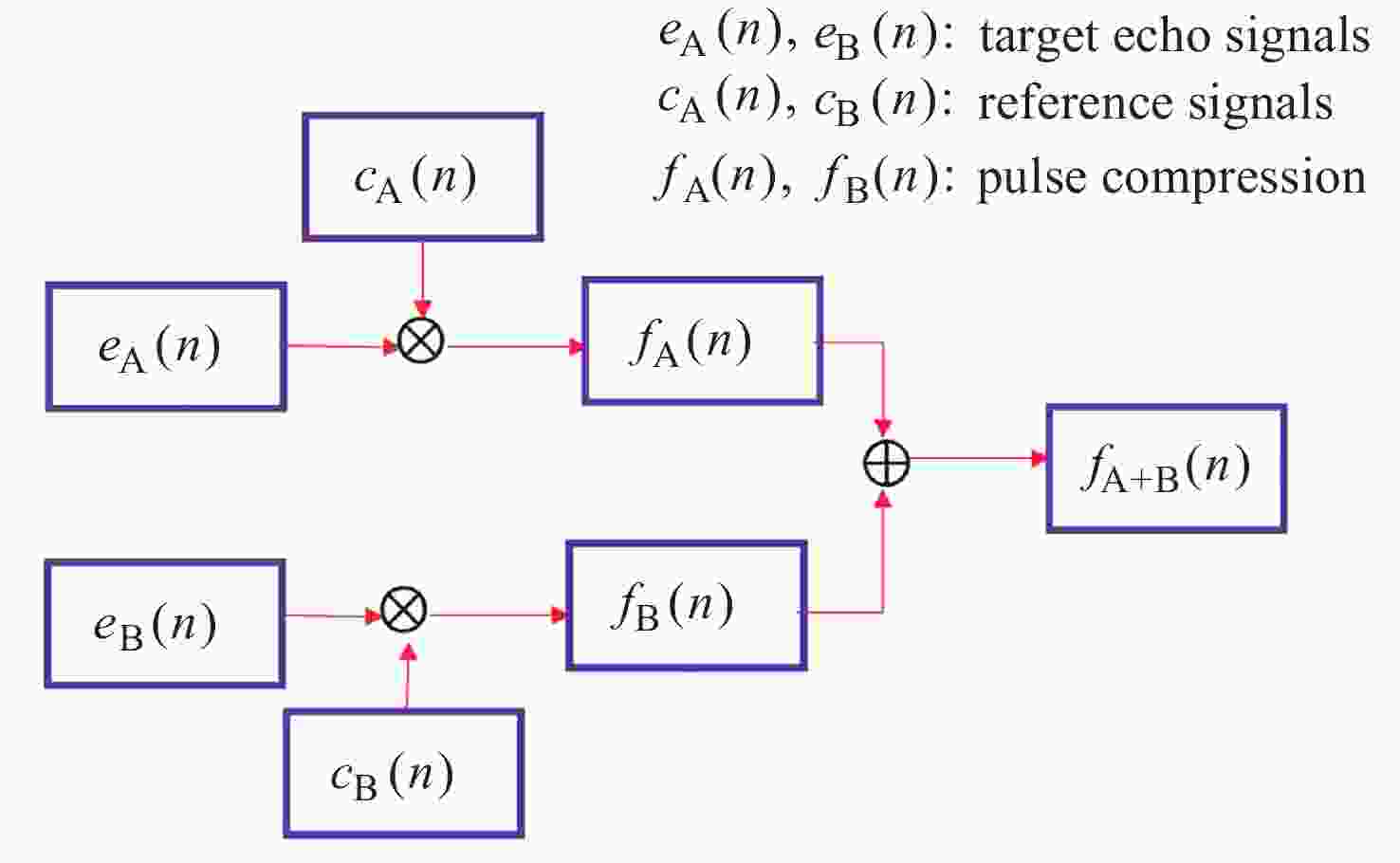
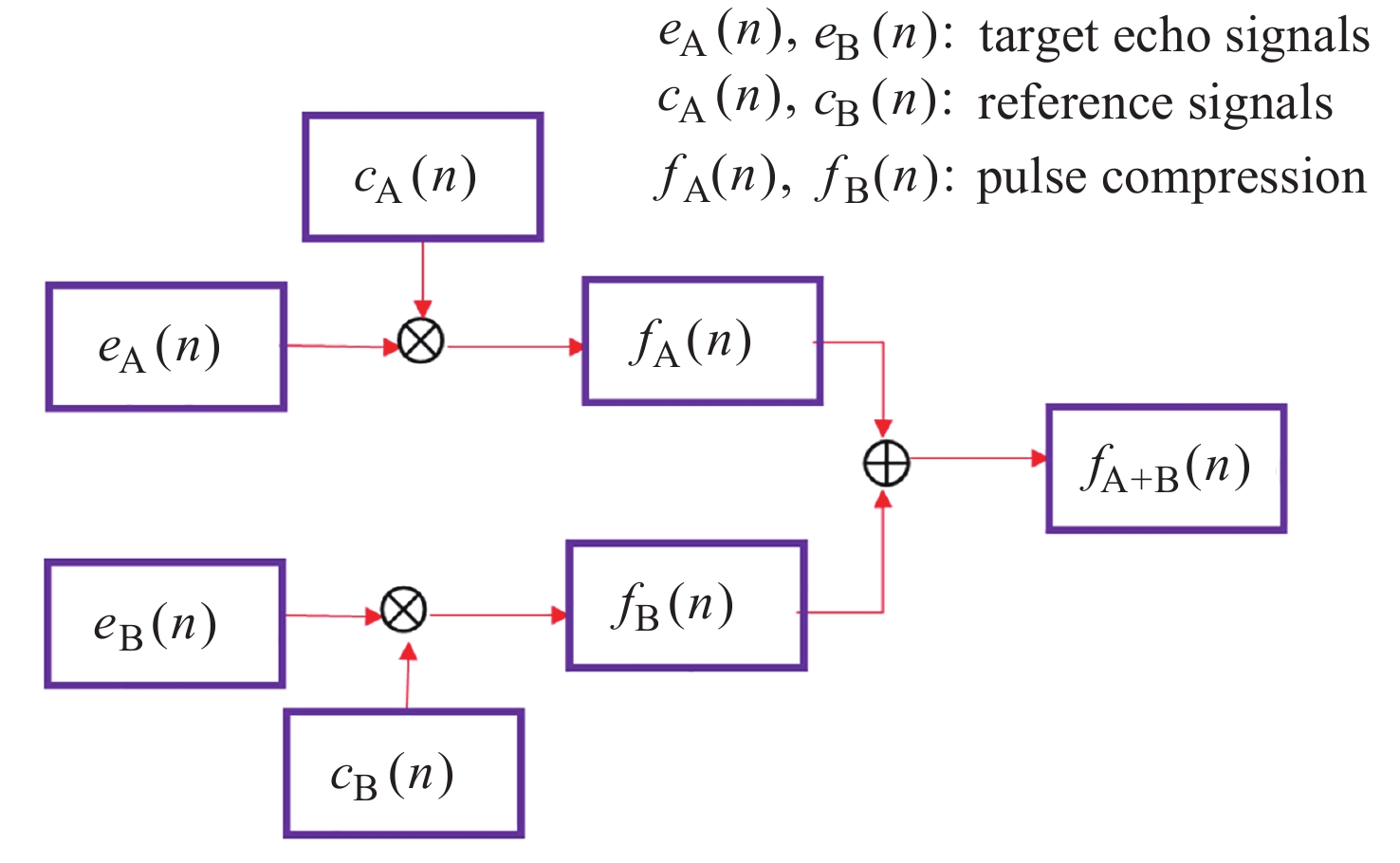
图 2 Chang’E-7测月雷达数据脉冲压缩处理流程
Figure 2. Pulse compression processing flowchart of Chang’E-7 LPR
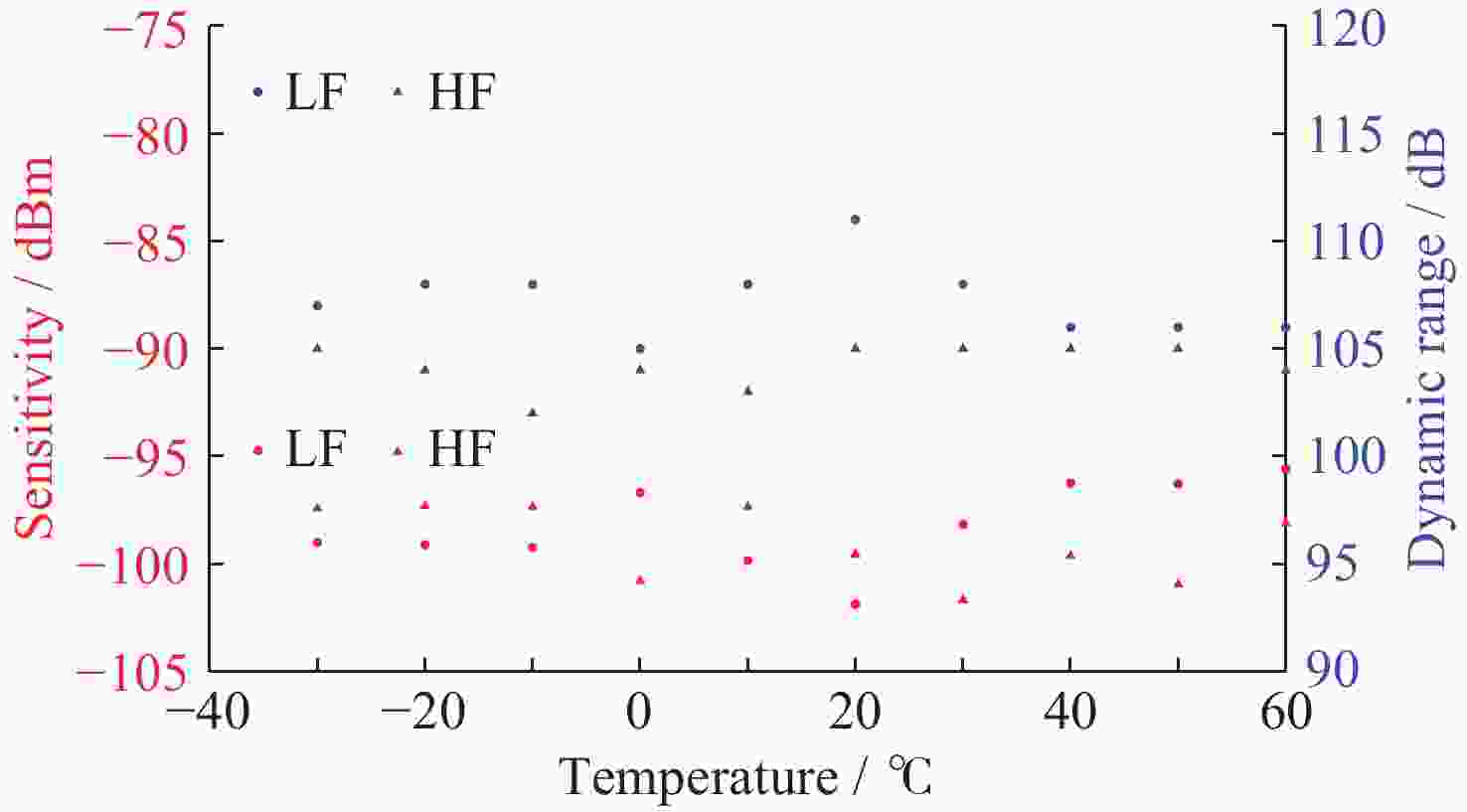
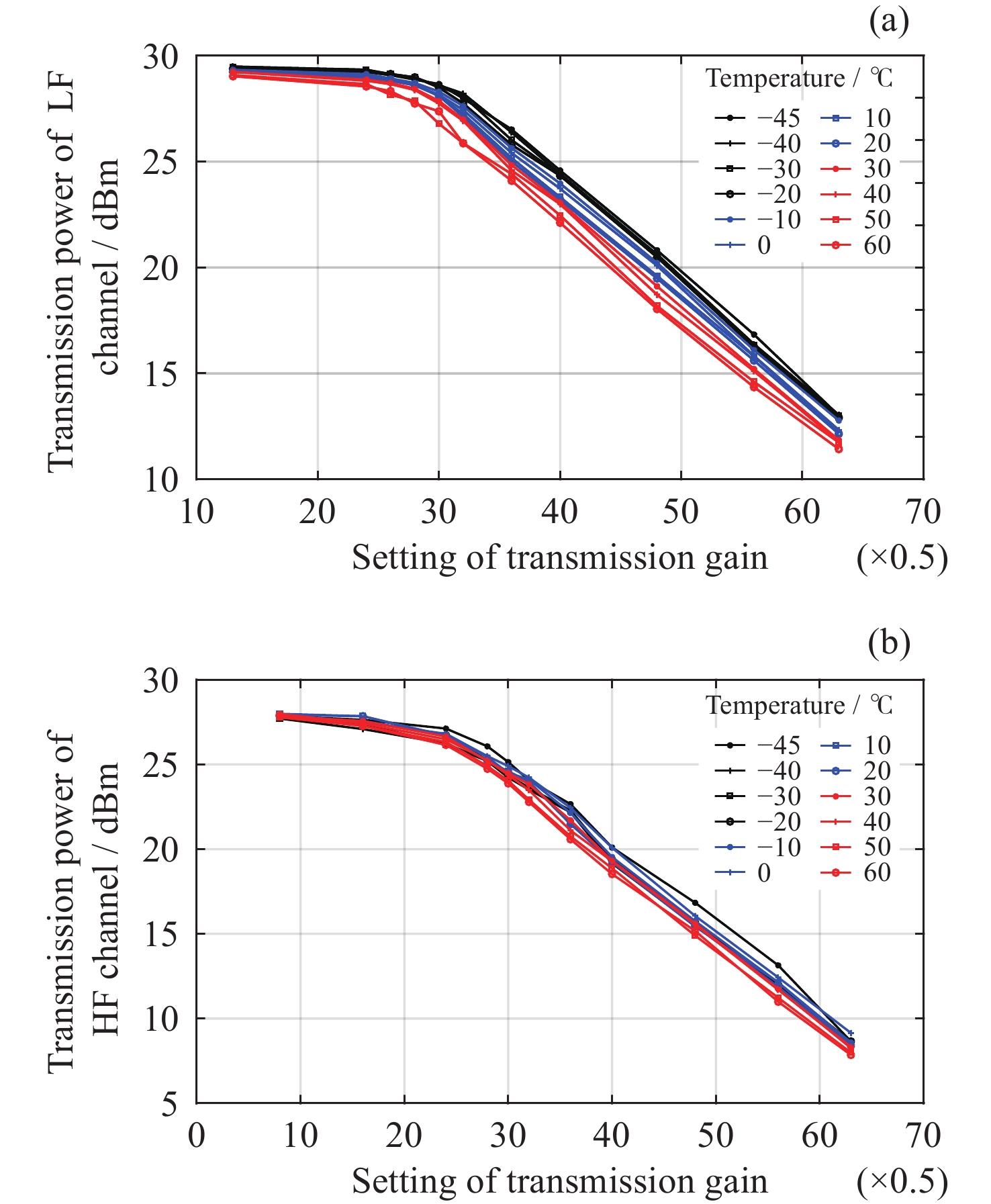
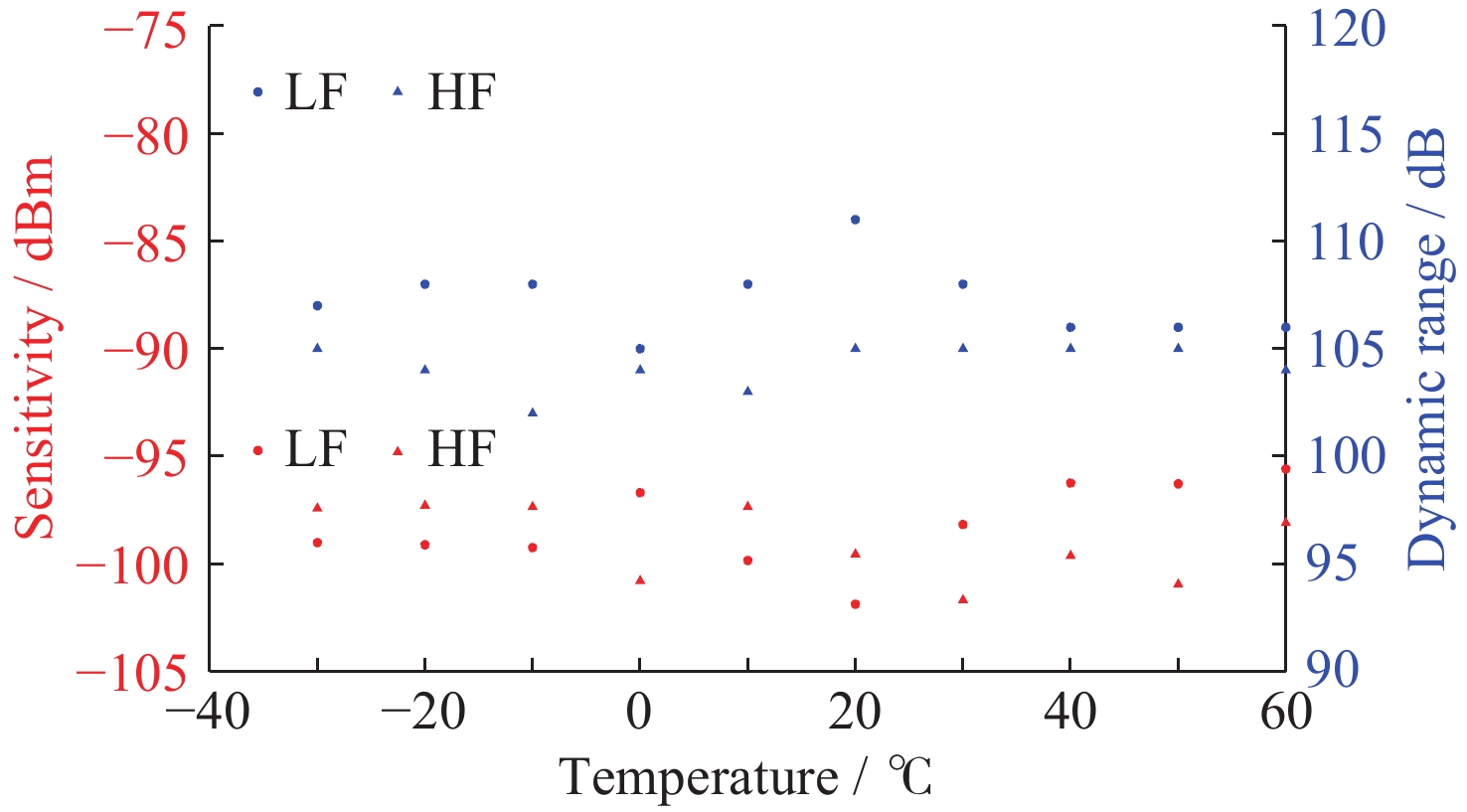
图 4 接收机不同温度下的灵敏度和动态范围
Figure 4. Receiver sensitivity and dynamic range at different temperatures
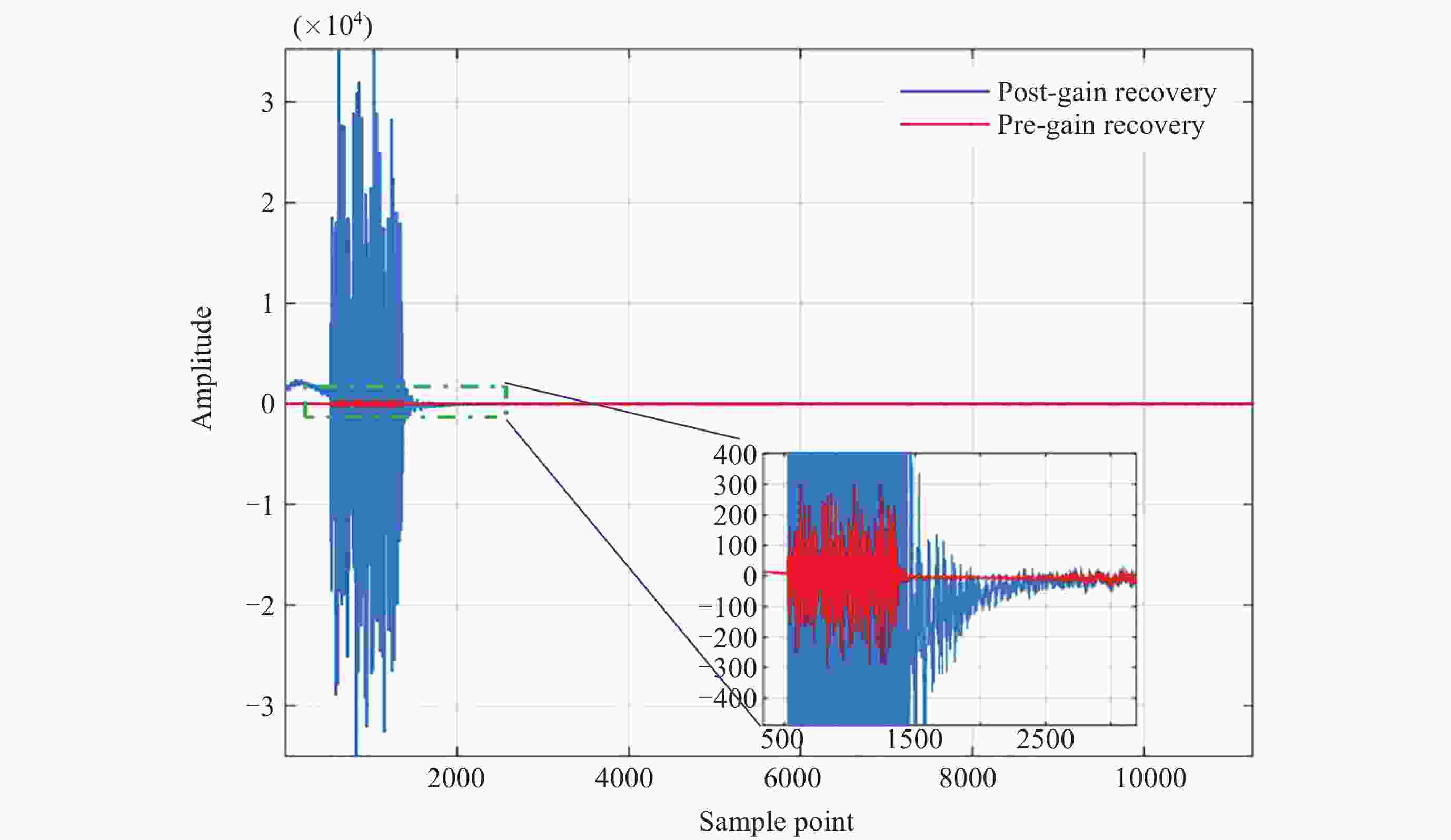
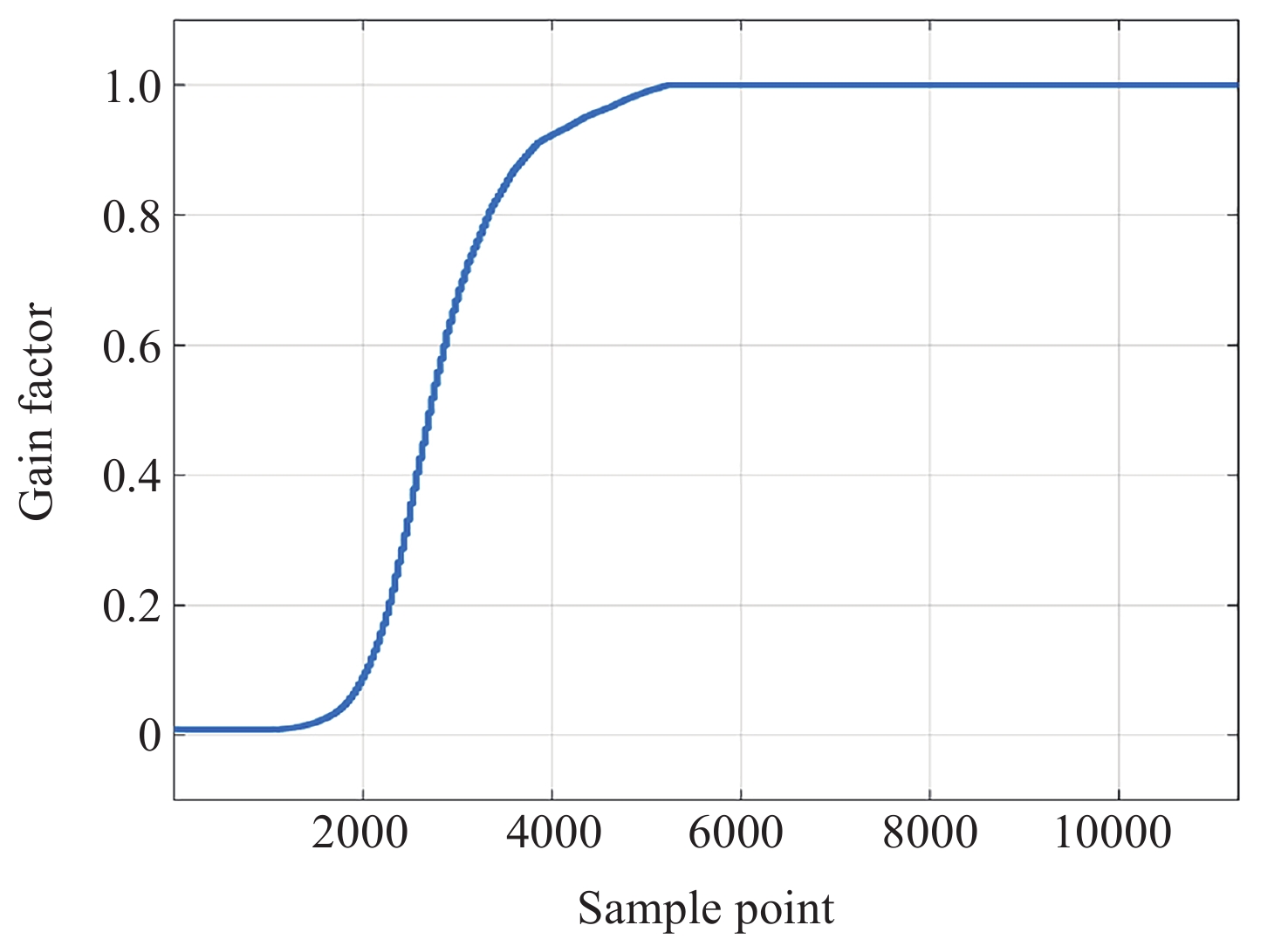
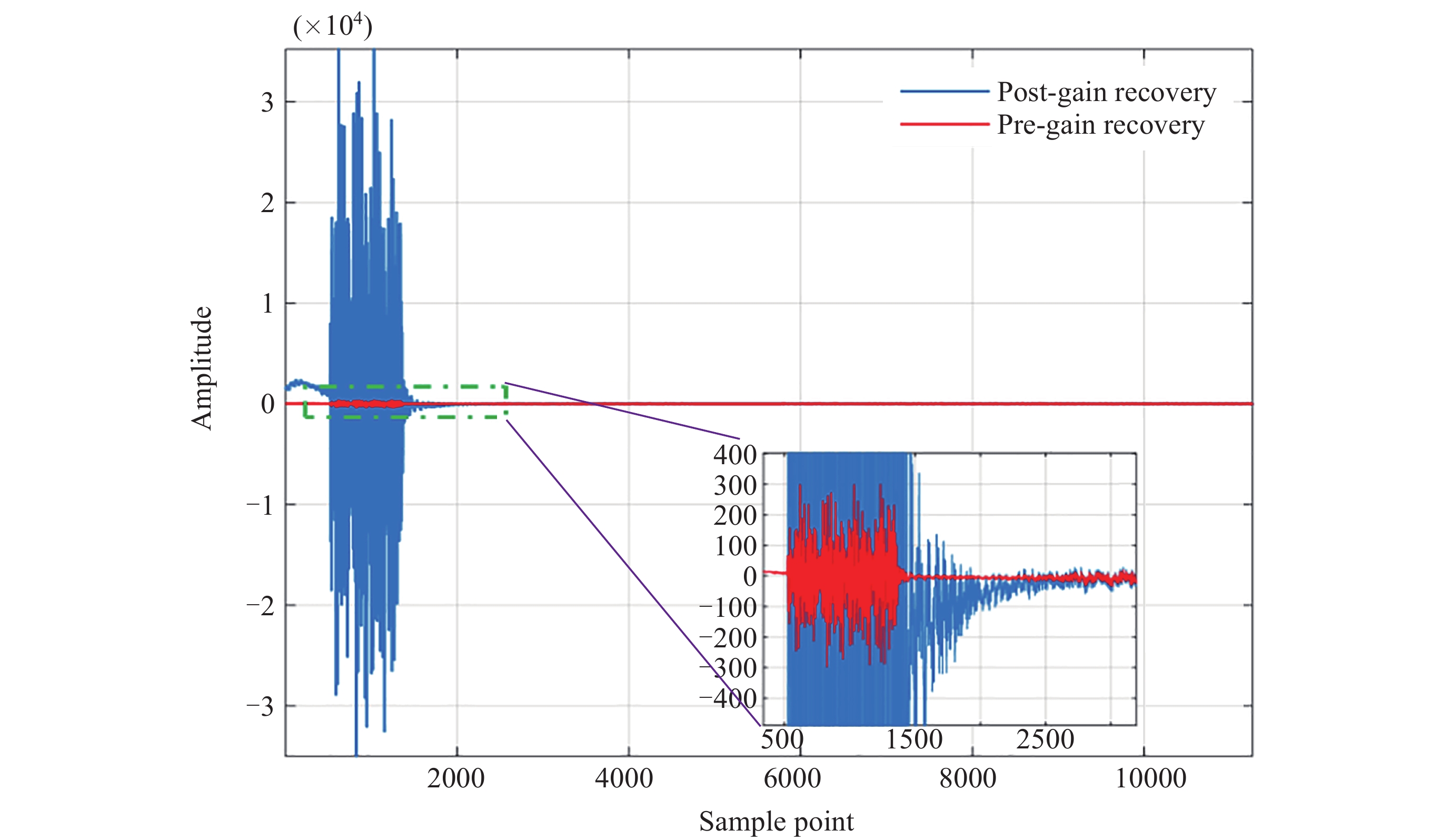
图 11 测月雷达高频通道时变增益还原结果
Figure 11. Time-variant gain restoration results of the HF channel
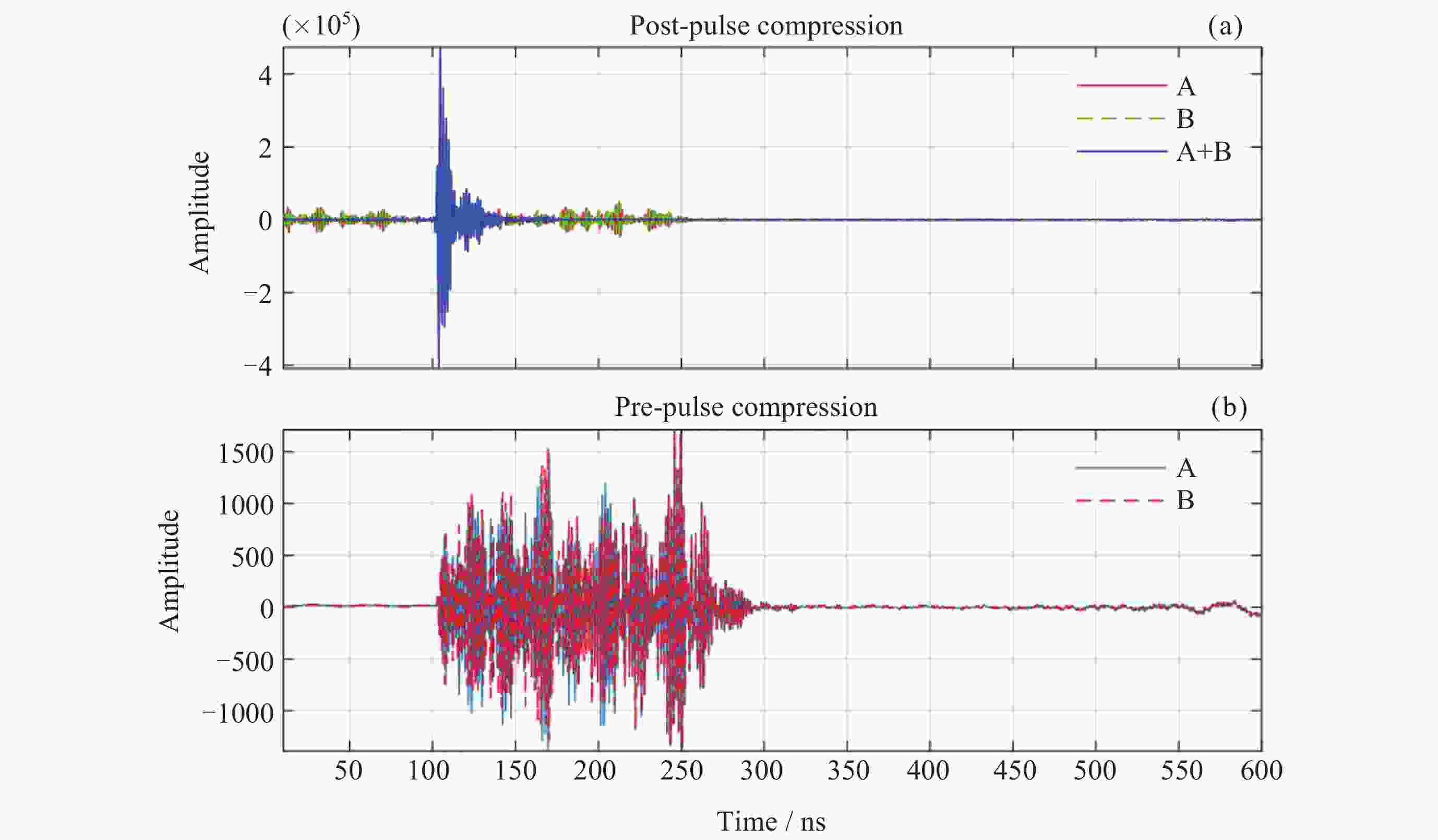
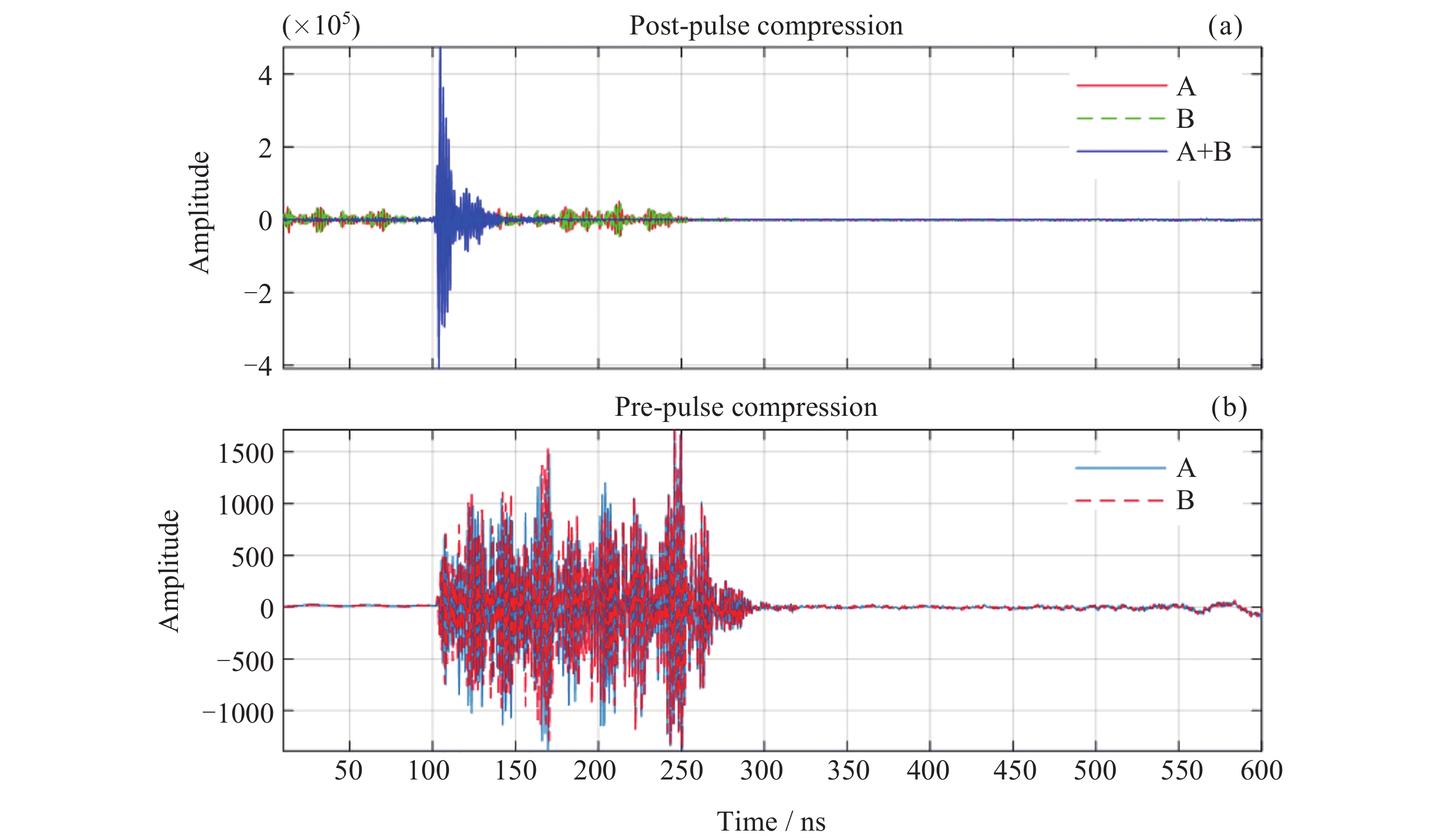
图 13 高频通道HH极化全反射回波信号
Figure 13. HF channel HH polarization full reflection echo signal
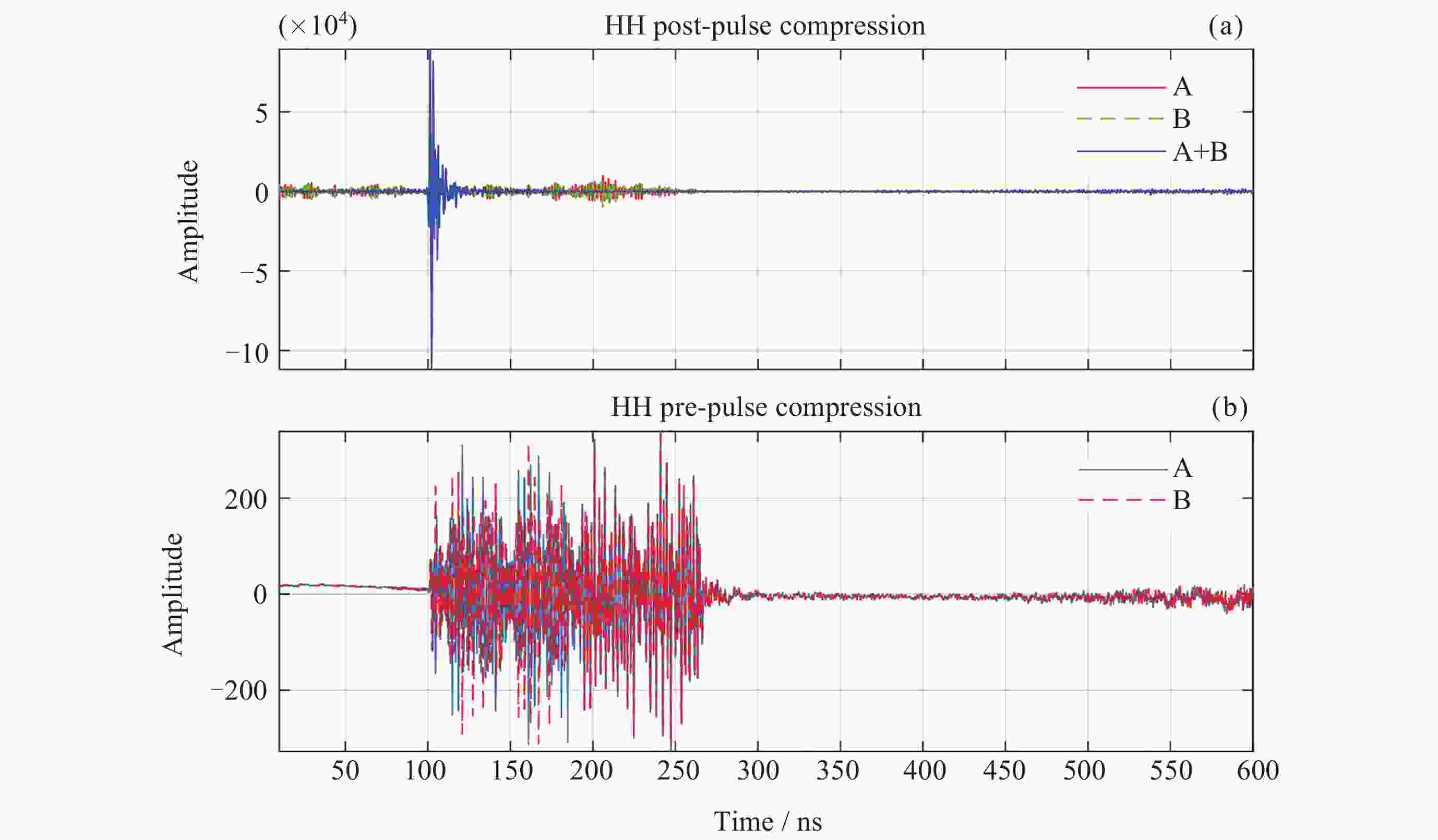
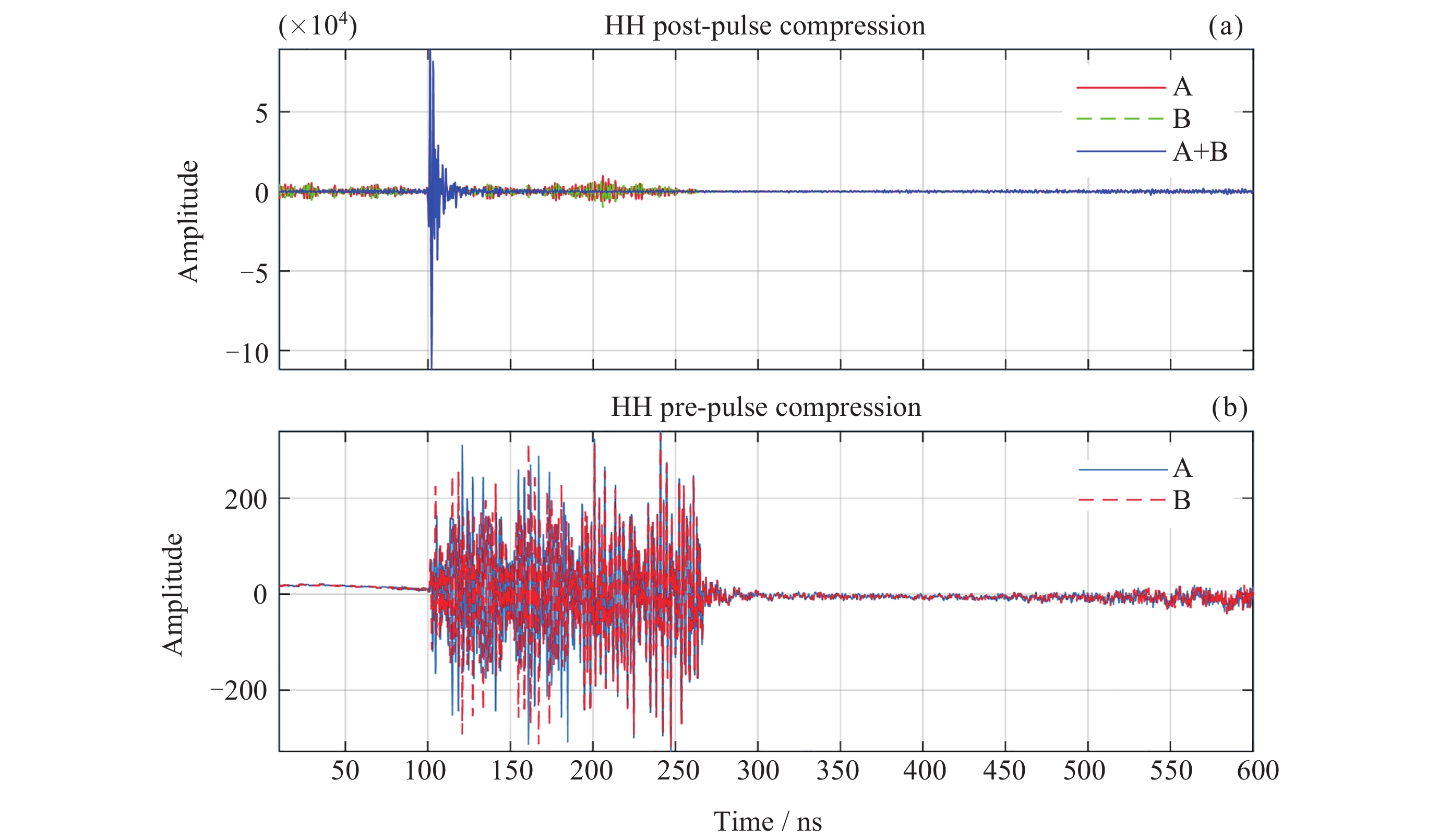
图 14 高频通道HH极化无反射回波信号
Figure 14. HF Channel HH polarization echo signal without reflection
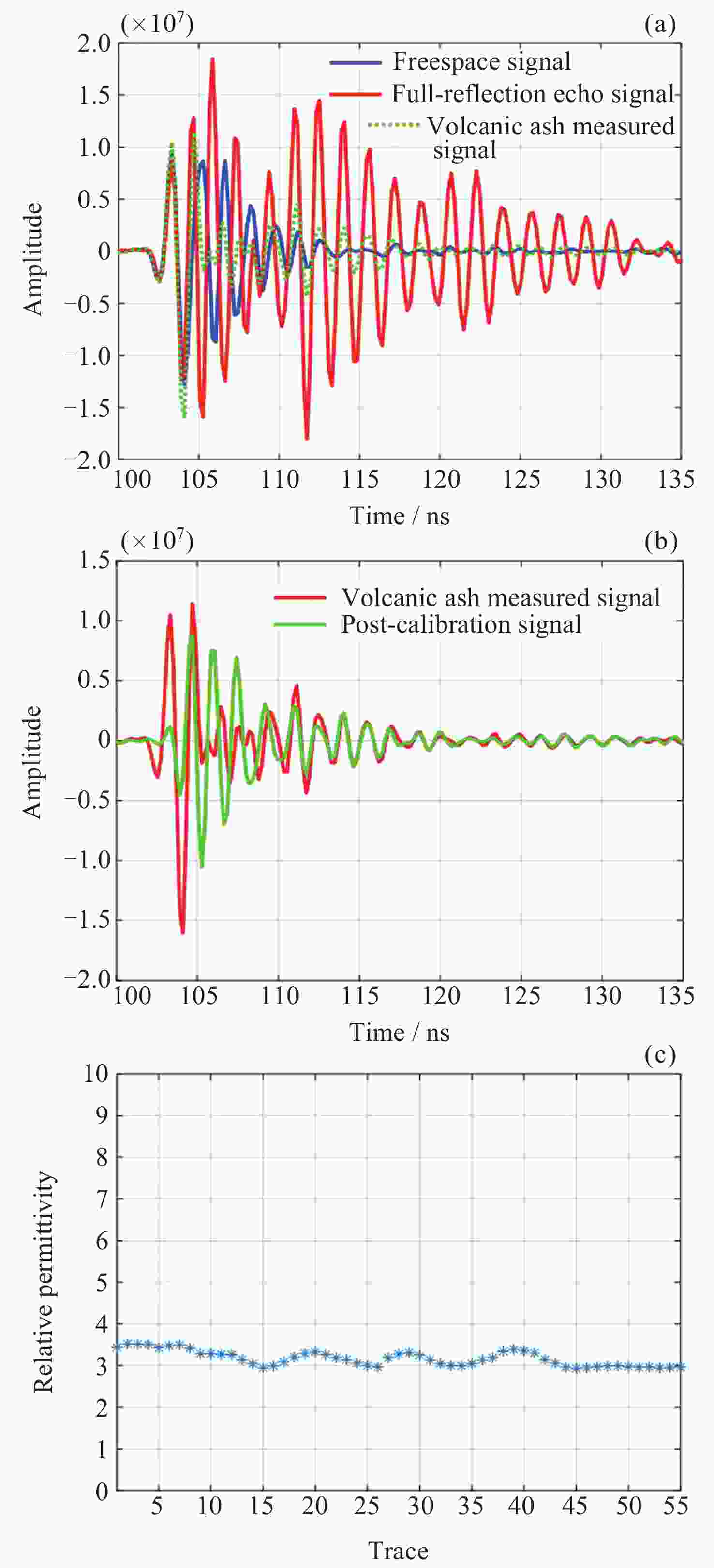
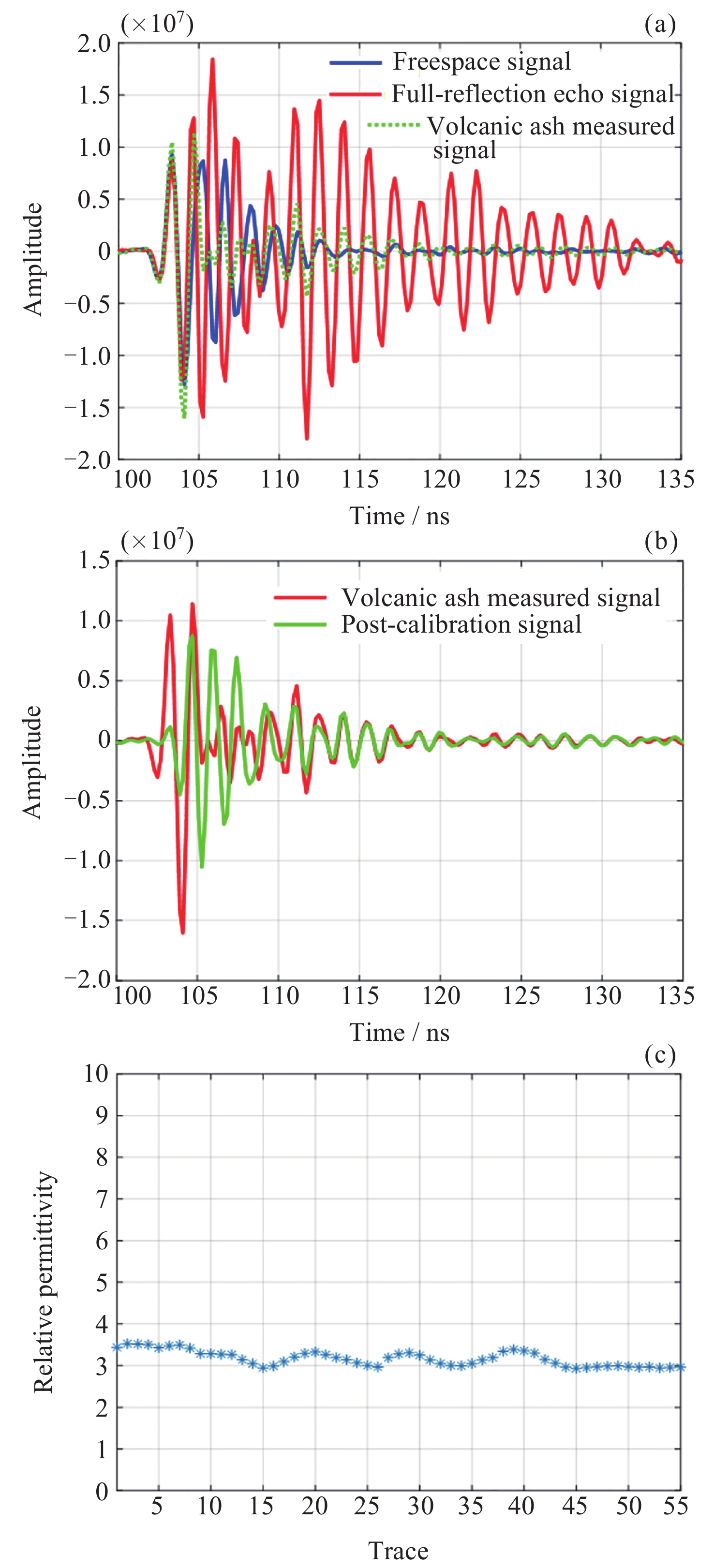
图 15 系统传递函数校准探测数据. (a) 校准前信号, (b) 校准信号比对, (c) 利用校准后信号估算火山灰介电常数
Figure 15. Detection signal calibrating by using system transfer function. (a) Pre-calibration signal, (b) signal comparison during calibrating, (c) dielectric constant estimation of volcanic ash by using post-calibration signal
表 1 Chang’E-7测月雷达的主要技术指标要求
Table 1. Main technical requirements of the Chang’E-7 Lunar Penetrating Radar (LPR)
No. Parameter Low frequency channel High frequency channel 1 Operating frequency/MHz 10~110 100~1500 2 Transmit power/W ≥0.2 ≥0.2 3 Receiver dynamic range/dB ≥80 ≥70 4 Receiver sensitivity/dBm ≤–80 ≤–70 5 Antenna polarization HH HH, HV 6 Thickness resolution Better than 2 m (εr=6.0) Better than 15 cm (εr=3.0) 7 Penetration depth/m ≥400 (εr=6.0) ≥40 (εr=3.0) 8 Design lifetime/a ≥8  下载: 导出CSV
-
[1] YE P J, PENG J. Deep space exploration and its prospect in China[J]. Strategic Study of CAE, 2006, 8(10): 13-18 [2] 王晶金, 李成智. 中国嫦娥探月工程的实践历程与创新初探[J]. 工程研究, 2024, 16(3): 364-374 doi: 10.3724/j.issn.1674-4969.23011111WANG Jingjin, LI Chengzhi. Practical history and innovation of China’s Chang’E lunar project[J]. Journal of Engineering Studies, 2024, 16(3): 364-374 doi: 10.3724/j.issn.1674-4969.23011111 [3] 叶培建, 黄江川, 孙泽洲, 等. 中国月球探测器发展历程和经验初探[J]. 中国科学: 技术科学, 2014, 44(6): 543-558 doi: 10.1360/N092014-00150YE Peijian, HUANG Jiangchuan, SUN Zezhou, et al. The process and experience in the development of Chinese lunar probe[J]. Scintia Sinica Technologica, 2014, 44(6): 543-558 doi: 10.1360/N092014-00150 [4] 孙泽洲, 张廷新, 张熇, 等. 嫦娥三号探测器的技术设计与成就[J]. 中国科学: 技术科学, 2014, 44(4): 331-343 doi: 10.1360/092014-37SUN Zezhou, ZHANG Tingxin, ZHANG He, et al. The technical design and achievements of Chang’E-3 probe[J]. Scientia Sinica Technologica, 2014, 44(4): 331-343 doi: 10.1360/092014-37 [5] 胡浩, 裴照宇, 李春来, 等. 无人月球采样返回工程总体设计——嫦娥五号任务[J]. 中国科学: 技术科学, 2021, 51(11): 1275-1286 doi: 10.1360/SST-2021-0155HU Hao, PEI Zhaoyu, LI Chunlai, et al. Overall design of unmanned lunar sampling and return project—Chang’E-5 mission[J]. Scientia Sinica Technologica, 2021, 51(11): 1275-1286 doi: 10.1360/SST-2021-0155 [6] LI C L, HU H, YANG M F, et al. Characteristics of the lunar samples returned by the Chang’E-5 mission[J]. National Science Review, 2022, 9(2): nwab188 doi: 10.1093/nsr/nwab188 [7] LI C L, HU H, YANG M F, et al. Nature of the lunar far-side samples returned by the Chang’E-6 mission[J]. National Science Review, 2024, 11(11): nwae328 doi: 10.1093/nsr/nwae328 [8] 余后满, 饶炜, 张益源, 等. “嫦娥七号”探测器任务综述[J]. 深空探测学报(中英文), 2023, 10(6): 567-576 doi: 10.15982/j.issn.2096-9287.2023.20230119YU Houman, RAO Wei, ZHANG Yiyuan, et al. Mission analysis and spacecraft design of Chang’E-7[J]. Journal of Deep Space Exploration, 2023, 10(6): 567-576 doi: 10.15982/j.issn.2096-9287.2023.20230119 [9] WANG C, JIA Y Z, XUE C B, et al. Scientific objectives and payload configuration of the Chang’E-7 mission[J]. National Science Review, 2024, 11(2): nwad329 doi: 10.1093/nsr/nwad329 [10] 傅晓晶, 蔡晓东, 刘一鸣, 等. “嫦娥七号”探测器多器协同综合测试技术[J]. 深空探测学报(中英文), 2023, 10(6): 577-585 doi: 10.15982/j.issn.2096-9287.2023.20230103FU Xiaojing, CAI Xiaodong, LIU Yiming, et al. Comprehensive testing technology for multi spacecraft collaboration in Chang’E-7 lunar probe[J]. Journal of Deep Space Exploration, 2023, 10(6): 577-585 doi: 10.15982/j.issn.2096-9287.2023.20230103 [11] ASTM International. ASTM D6087-22 Standard Test Method for Evaluating Asphalt-covered Concrete Bridge Decks using Ground Penetrating Radar[S]. West Conshohocken, PA: ASTM International, 2022 [12] MAHMOUDZADEH ARDEKANI M R, LAMBOT S. Full-wave calibration of time- and frequency-domain ground-penetrating radar in far-field conditions[J]. IEEE Transactions on Geoscience and Remote Sensing, 2014, 52(1): 664-678 doi: 10.1109/TGRS.2013.2243458 [13] PAJEWSKI L, VRTUNSKI M, BUGARINOVIĆ Ž, et al. GPR system performance compliance according to COST action TU1208 guidelines[J]. Ground Penetrating Radar, 2018, 1(2): GPR-1-2-1 [14] CROCI R, FOIS F, FLAMINI E, et al. Calibration report of the SHARAD instrument[C]//2007 4th International Workshop on Advanced Ground Penetrating Radar. Aula Magna Partenope: IEEE, 2007: 241-245. DOI: 10.1109/AGPR.2007.386560 [15] BENEDIX W S, PLETTEMEIER D, WOLF K, et al. External calibration of GPR antenna accommodated on a rover[C]//Proceedings of the 4th European Conference on Antennas and Propagation. Barcelona: IEEE, 2010: 1-4 [16] CAMPBELL B A, MORGAN G A, BERNARDINI F, et al. Calibration of Mars reconnaissance orbiter Shallow Radar (SHARAD) data for subsurface probing and surface reflectivity studies[J]. Icarus, 2021, 360: 114358. DOI: 10.1016/j.icarus.2021.114358 [17] HERVÉ Y, CIARLETTI V, LE GALL A, et al. The WISDOM radar on board the ExoMars 2022 Rover: characterization and calibration of the flight model[J]. Planetary and Space Science, 2020, 189: 104939 doi: 10.1016/j.pss.2020.104939 [18] 沈绍祥, 赵博, 卢伟, 等. 嫦娥七号探测器有效载荷分系统测月雷达正样设计报告: KTY-CEY200-7-X JB 43[R]. 北京: 中国科学院空天信息创新研究院, 2024SHEN Shaoxiang, ZHAO Bo, LU Wei, et al. Final Design Report of the Lunar Penetrating Radar Flight Model for Chang’E-7 Payload Subsystem: KTY-CEY200-7-X JB 43[R]. Beijing: Aerospace Information Research Institute, Chinese Academy of Sciences, 2024 [19] 李玉喜. 嫦娥五号有效载荷月壤结构探测仪定标与验证研究[D]. 北京: 中国科学院大学, 2019LI Yuxi. Research on Calibration and Verification of Lunar Penetrating Array Radar for Chang’E-5 Payload[D]. Beijing: University of Chinese Academy of Sciences, 2019 [20] CARRIER III W D, OLHOEFT G R, MENDELL W. Physical Properties of the Lunar Surface[M]. Cambridge: Cambridge University Press, 1991 [21] LI C L, SU Y, PETTINELLI E, et al. The Moon’s farside shallow subsurface structure unveiled by Chang’E-4 Lunar Penetrating Radar[J]. Science Advances, 2020, 6(9): eaay6898 doi: 10.1126/sciadv.aay6898 [22] ZHANG J H, ZHOU B, LIN Y T, et al. Lunar regolith and substructure at Chang’E-4 landing site in South Pole–Aitken basin[J]. Nature Astronomy, 2020, 5(1): 25-30 doi: 10.1038/s41550-020-1197-x [23] NOON D A, STICKLEY G F, LONGSTAFF D. A frequency-independent characterisation of GPR penetration and resolution performance[J]. Journal of Applied Geophysics, 1998, 40(1/2/3): 127-137 doi: 10.1016/S0926-9851(98)00008-1 [24] SU Y, WANG R G, DENG X J, et al. Hyperfine structure of regolith unveiled by Chang’E-5 lunar regolith penetrating radar[J]. IEEE Transactions on Geoscience and Remote Sensing, 2022, 60: 5110414. DOI: 1109/TGRS.2022.3148200 [25] 李玉喜, 沈绍祥, 卢伟, 等. 嫦娥七号探测器有效载荷分系统测月雷达定标试验大纲: KTY-CEY200-7-X DG 02[R]. 北京: 中国科学院空天信息创新研究院, 2024LI Yuxi, SHEN Shaoxiang, LU Wei, et al. Calibration Test Outline of the Lunar Penetrating Radar for Chang’E-7 Payload Subsystem: KTY-CEY200-7-X DG 02[R]. Beijing: Aerospace Information Research Institute, Chinese Academy of Sciences, 2024 [26] 李玉喜, 沈绍祥, 卢伟, 等. 嫦娥七号探测器有效载荷分系统测月雷达正样件定标试验总结: KTY-CEY200-7-X SB 26[R]. 北京: 中国科学院空天信息创新研究院, 2024LI Yuxi, SHEN Shaoxiang, LU Wei, et al. Calibration Test Summary of the Lunar Penetrating Radar Flight Model for Chang’E-7 Payload Subsystem: KTY-CEY200-7-X SB 26[R]. Beijing: Aerospace Information Research Institute, Chinese Academy of Sciences, 2024 -
-

 下载:
下载:

计量
- 文章访问数: 1664
- HTML全文浏览量: 735
- PDF下载量: 147
-
被引次数:
0(来源:Crossref)
0(来源:其他)

