


嫦娥七号中能质子探测器的定标及仿真分析
doi: 10.11728/cjss2026.02.2025-0109 cstr: 32142.14.cjss.2025-0109
-
 侯东辉 女, 1992年3月出生于河北省唐山市, 现为中国科学院国家空间科学中心高级工程师, 主要研究方向为空间能量粒子探测器的仿真、设计及数据处理等. E-mail: houdonghui@nssc.ac.cn
 -
 张珅毅 男, 1978年8月出生于新疆库尔勒市. 现为中国科学院国家空间科学中心研究员, 博士生导师, 主要研究方向为空间能量粒子探测器的仿真、设计及数据处理, 基于人工智能的粒子在轨识别和测量方法. E-mail: zsy@nssc.ac.cn
作者简介:
通讯作者:
Calibration and Simulation Analysis of the Medium-energy Proton Detector on Chang’E-7
-
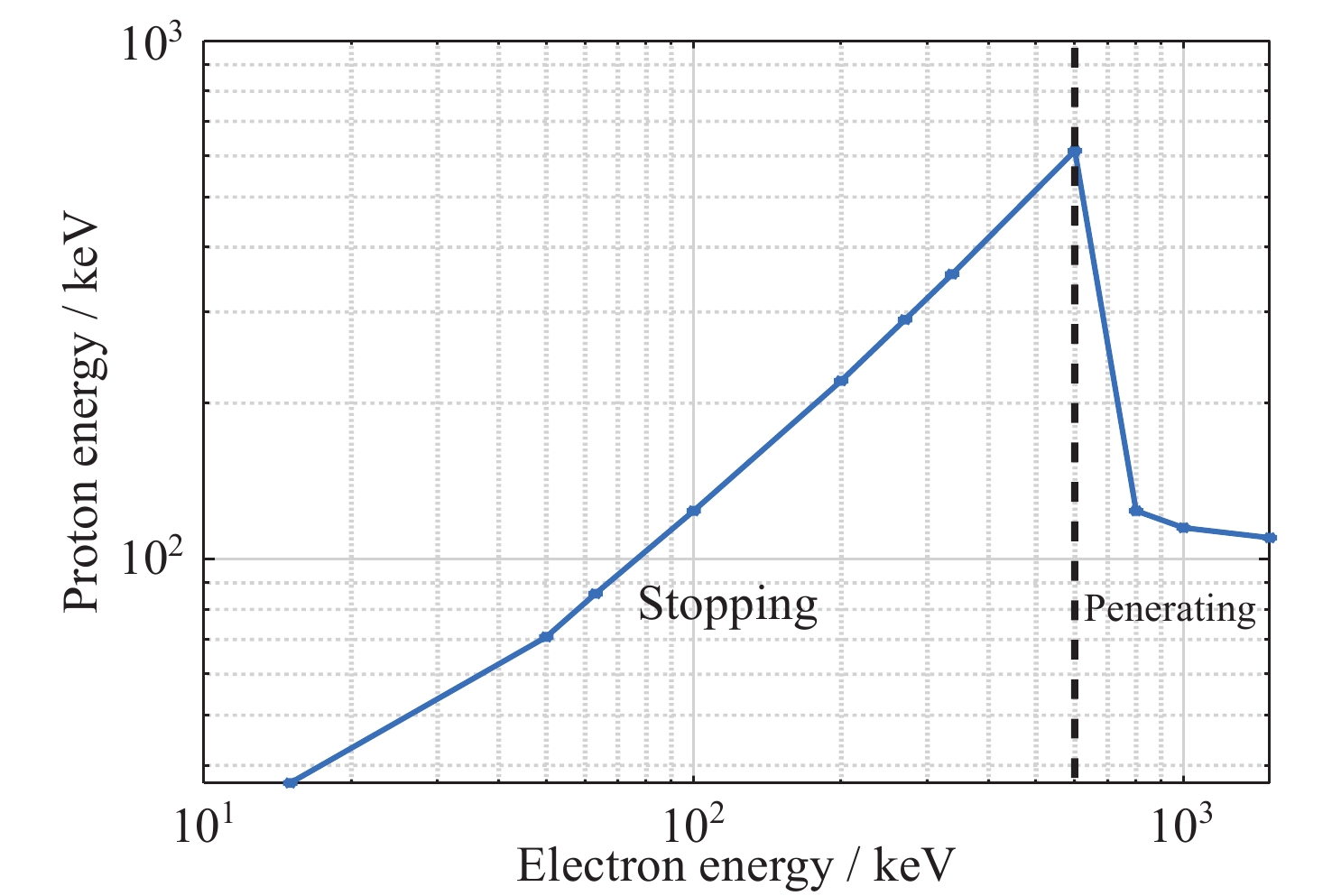
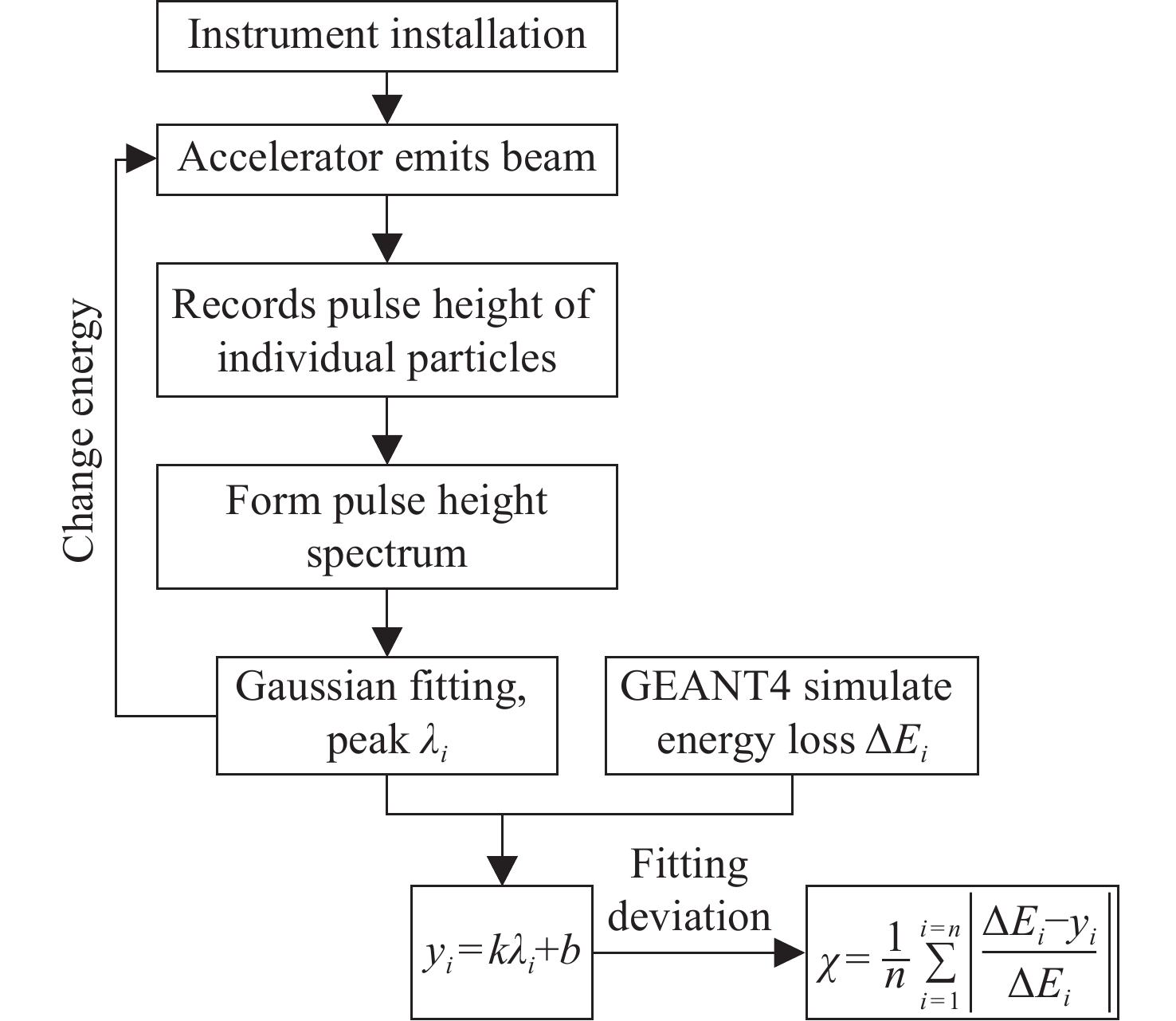
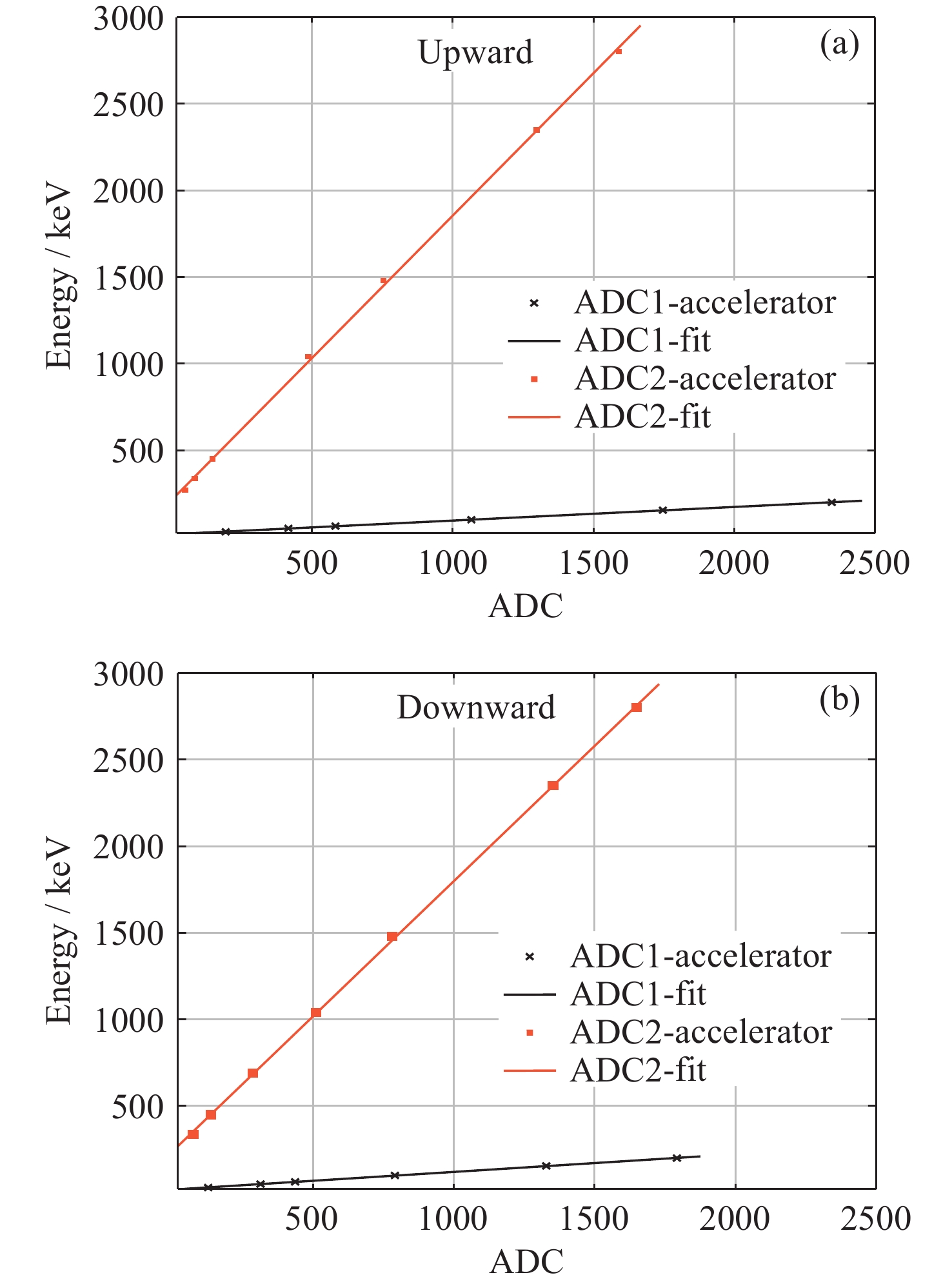
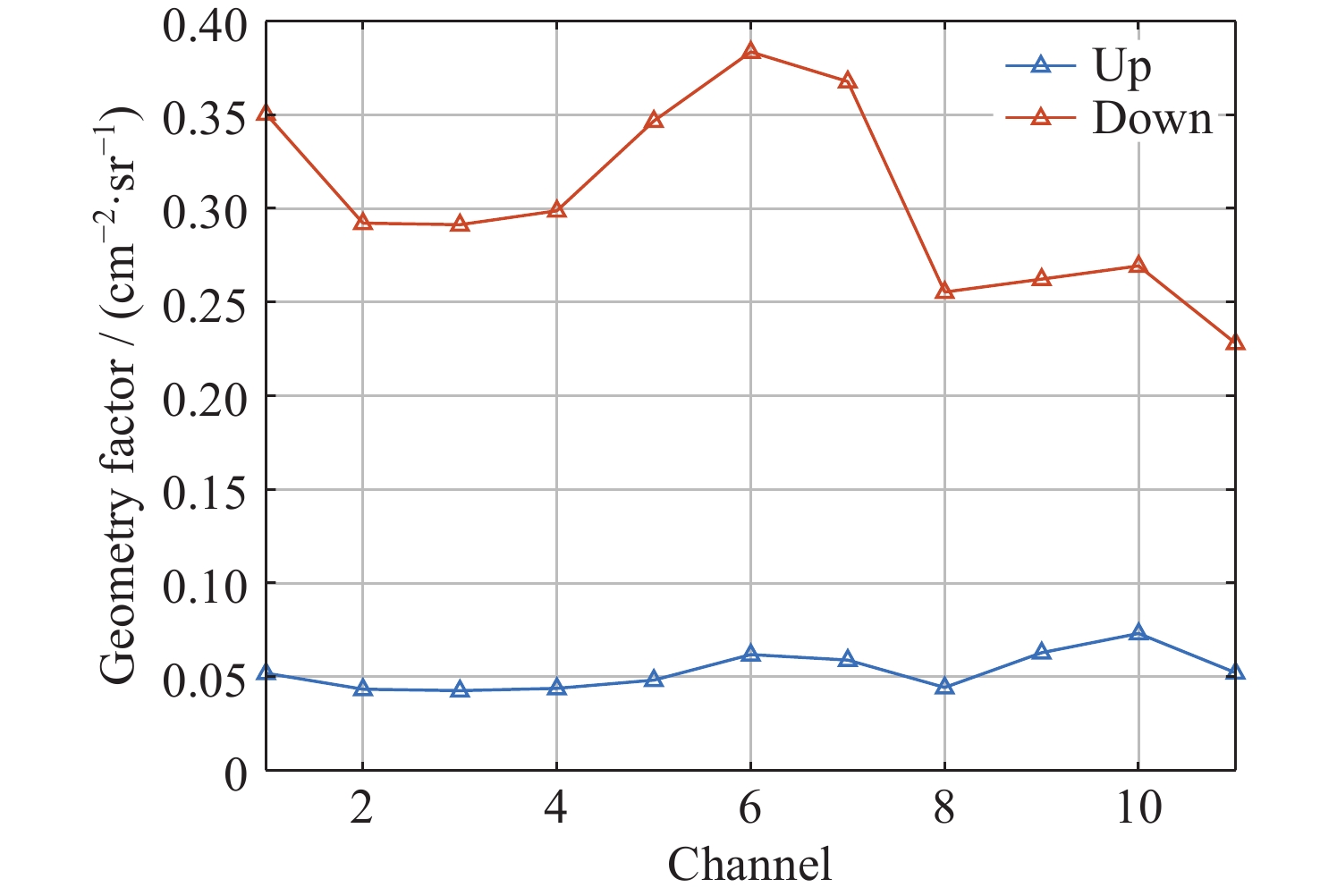
摘要: 嫦娥七号着陆器月表探测分系统搭载的双向中能质子探测器是国际首次实现月表双指向中能质子探测, 可以提供月表朝天和对地向中能质子的能谱数据(0.03~30 MeV), 为月球粒子辐射环境建模以及载人登月辐射防护等提供重要的数据支撑. 针对中能质子探测器地面定标的特殊问题, 利用电子加速器实现质子等效能量的标定, 结合高能质子穿透后的沉积能量实现全能段验证, 并通过加速器实验与仿真相结合的方法量化电子污染抑制能力. 研究表明, 探测器能量刻度偏差优于3%; 抗电子污染能力在1.4 MeV及以下, 优于94%; 朝天向探头几何因子平均值为0.053 cm–2·sr–1; 对地向探头几何因子平均值为0.3041 cm–2·sr–1. 定标结果为在轨数据反演提供了可靠基础, 所建立的定标仿真体系对未来月球及深空带电粒子探测器校准具有重要借鉴意义.Abstract: The bidirectional Medium-Energy Proton Detector (MEPD) onboard the lunar surface exploration subsystem of the Chang’E-7 lander represents the first-ever implementation of dual-direction medium-energy proton measurements on the Moon. It is capable of providing spectral data of upward- and downward-directed medium-energy protons in the range of 0.03~30 MeV, offering crucial support for modeling the lunar particle radiation environment and for radiation protection in future crewed lunar missions. The unique challenges of ground calibration for the MEPD were addressed in this study. An electron accelerator was employed to achieve proton-equivalent energy calibration, while the full energy range was validated by analyzing the deposited energy of penetrating high-energy protons. In addition, the suppression capability against electron contamination was quantitatively evaluated through a combined approach of accelerator experiments and numerical simulations. The results show that the detector’s energy calibration deviation is better than 3%, its electron-rejection efficiency exceeds 94% for energies at or below 1.4 MeV, and the average geometric factors of the upward-and downward-facing detectors are 0.053 cm–2·sr–1 and 0.3041 cm–2·sr–1, respectively. These calibration results provide a reliable foundation for in-orbit data inversion. Furthermore, the established calibration and simulation framework offers valuable reference for the future calibration of lunar and deep-space charged-particle detectors.
-
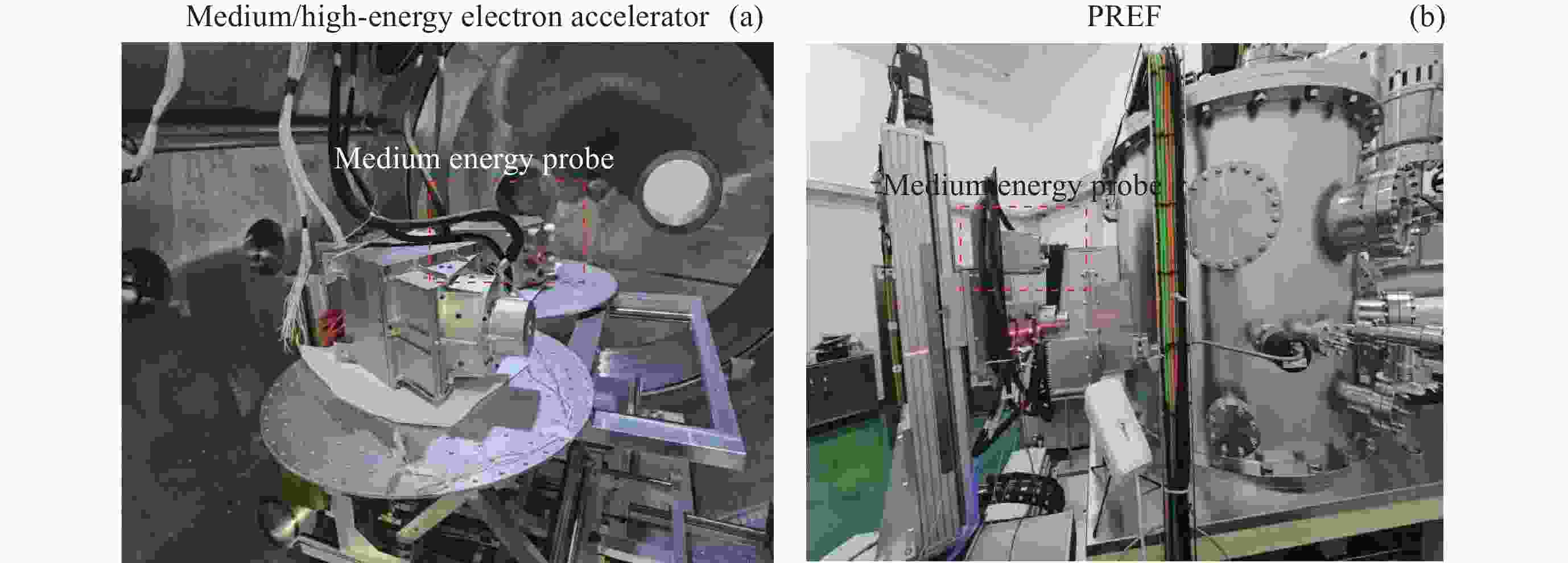
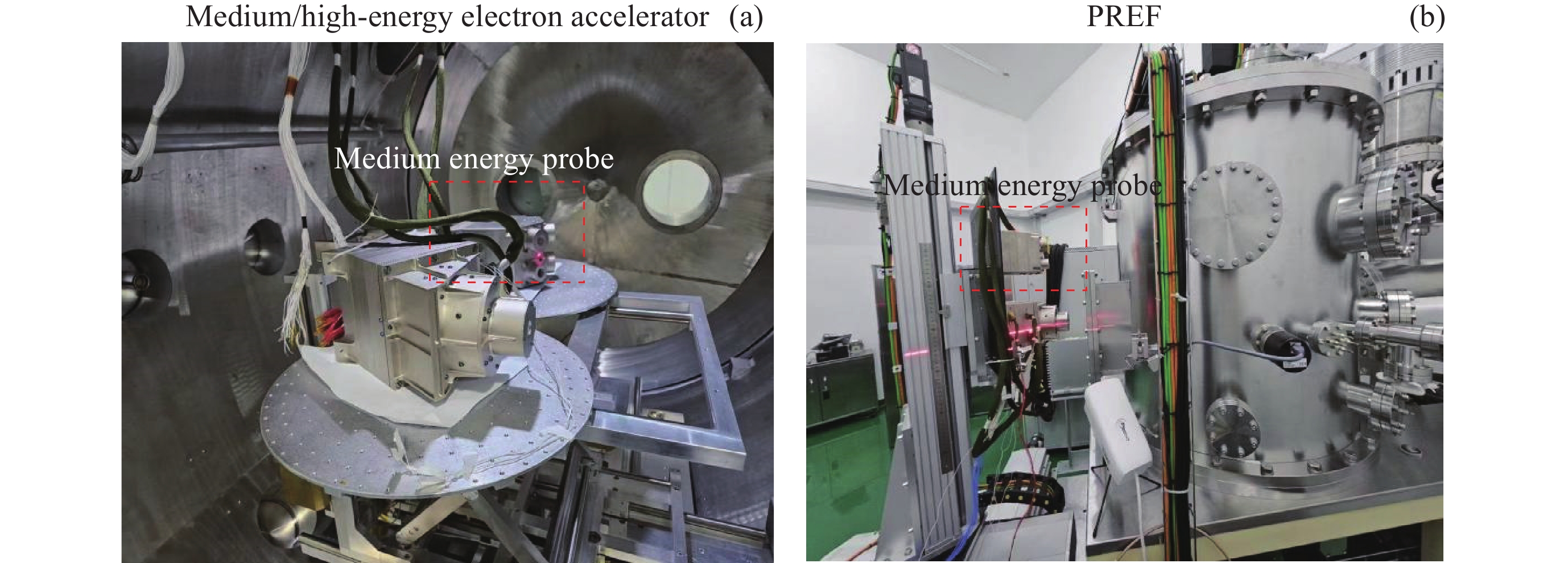
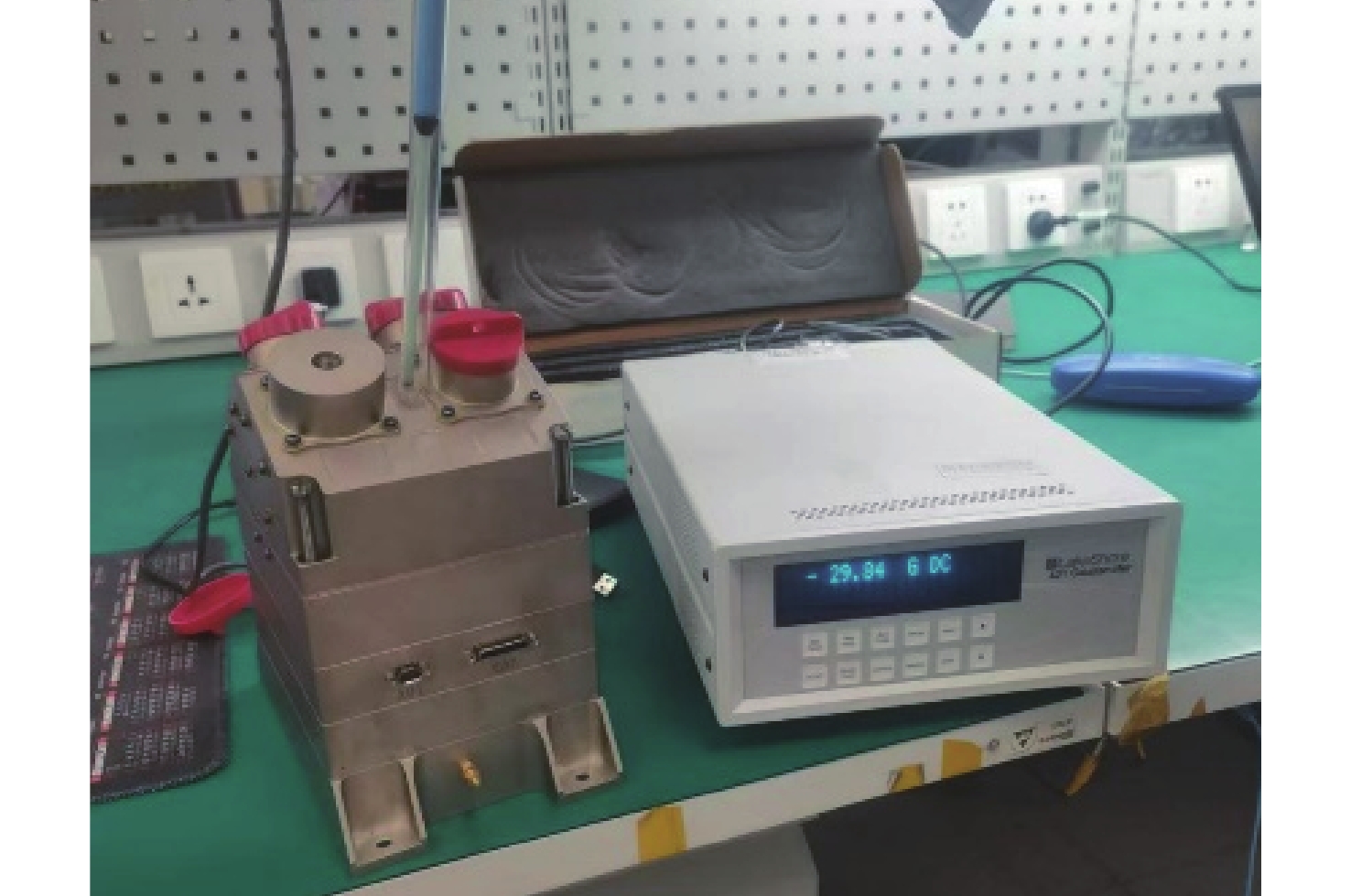
图 3 中高能电子加速器 (a) 和质子位移损伤效应模拟装置(b)
Figure 3. Medium/high-energy electron accelerator (a), and Proton Displacement Damage Effect Simulation Facility (PREF) (b)
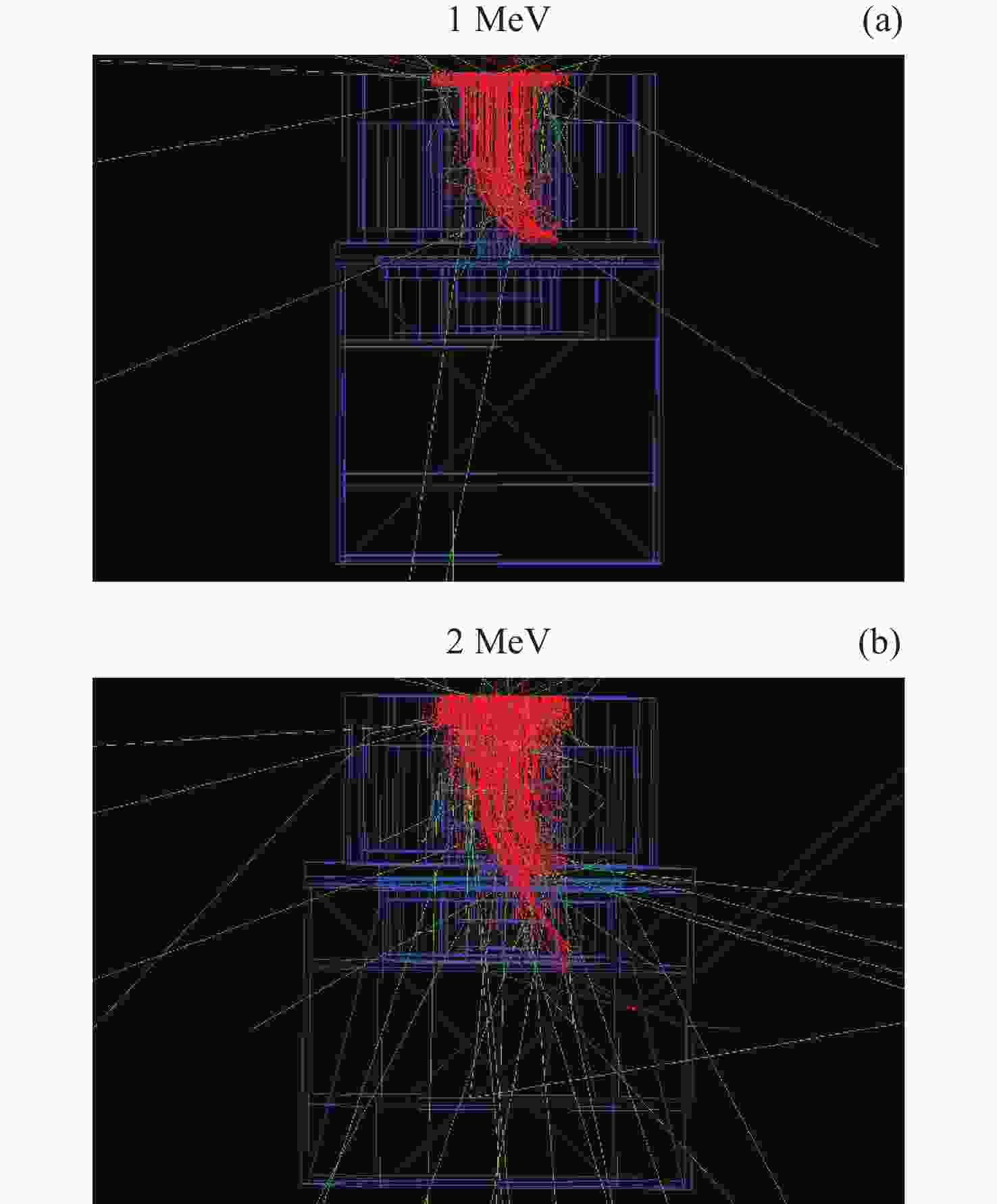
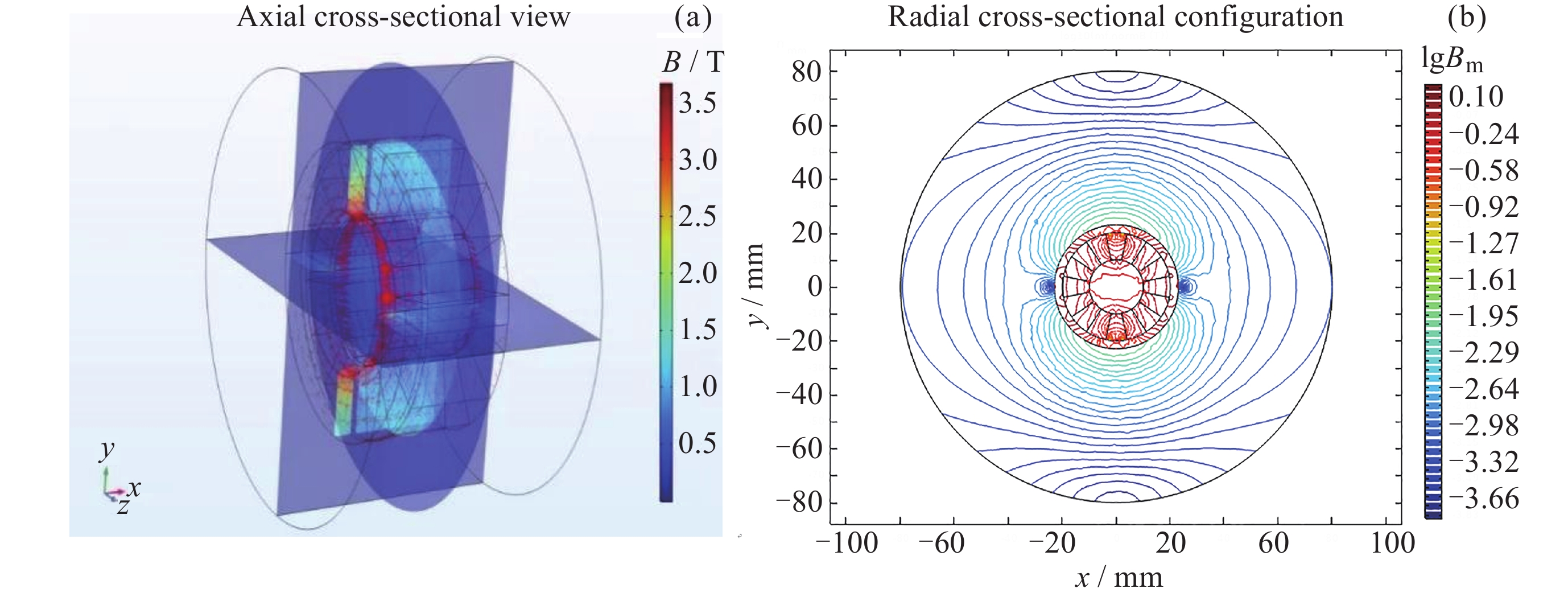
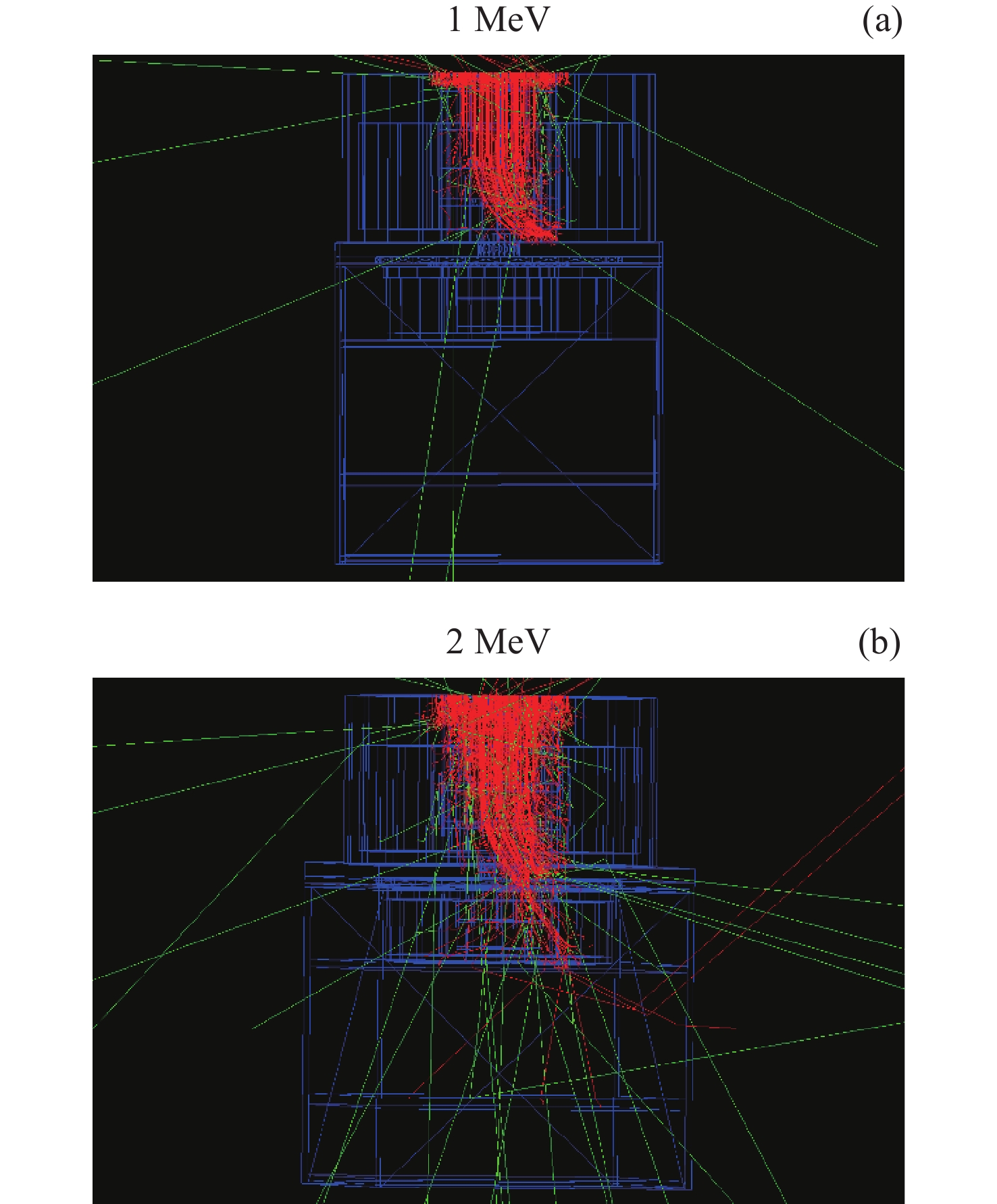
图 7 垂直入射电子在磁场偏转下的GEANT4仿真
Figure 7. GEANT4 simulation of electron deflection under magnetic field for vertically incident electrons
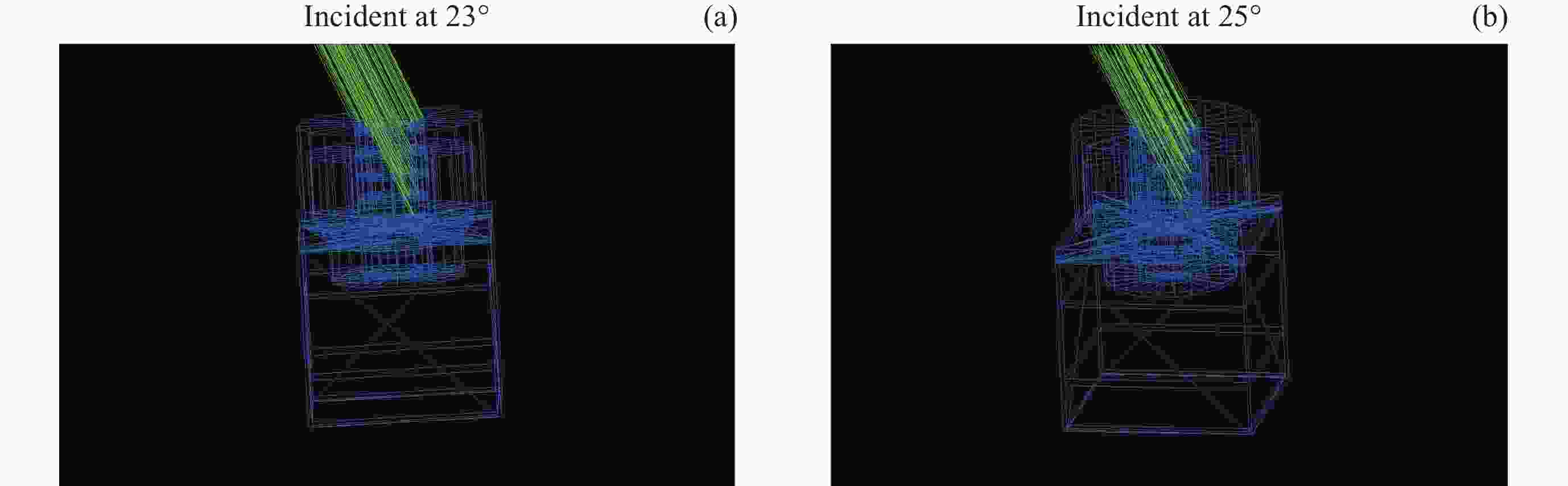
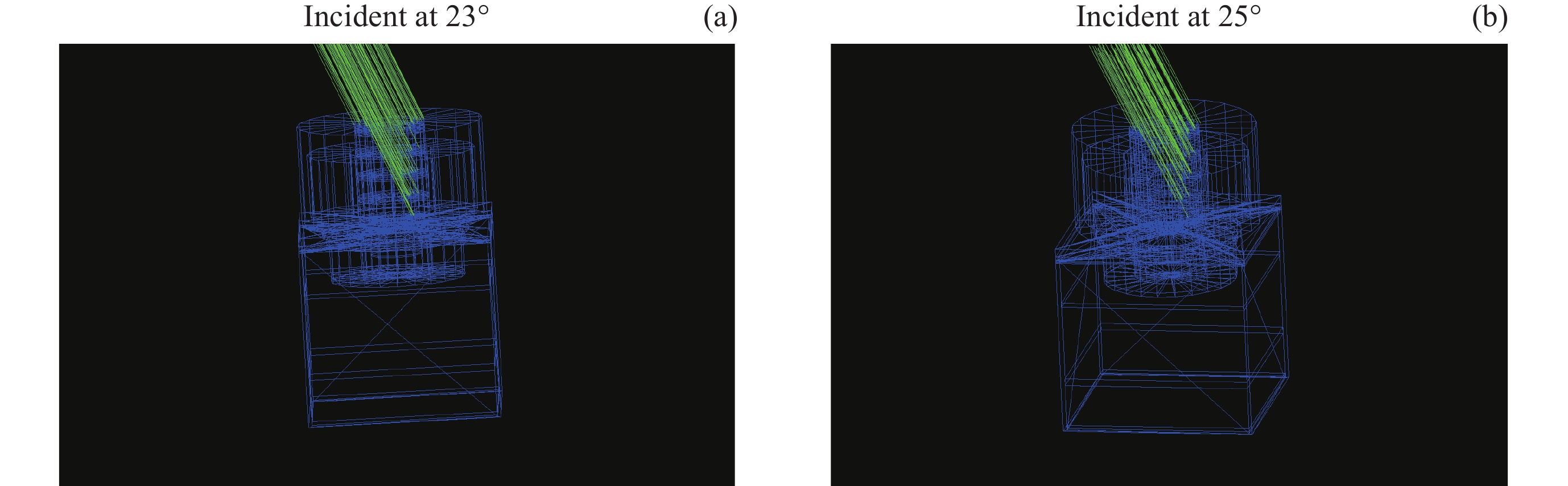
图 8 30 keV质子以不同角度入射时磁场偏转下的GEANT4仿真
Figure 8. GEANT4 simulation of 30 keV protons incident at different angles under magnetic field deflection
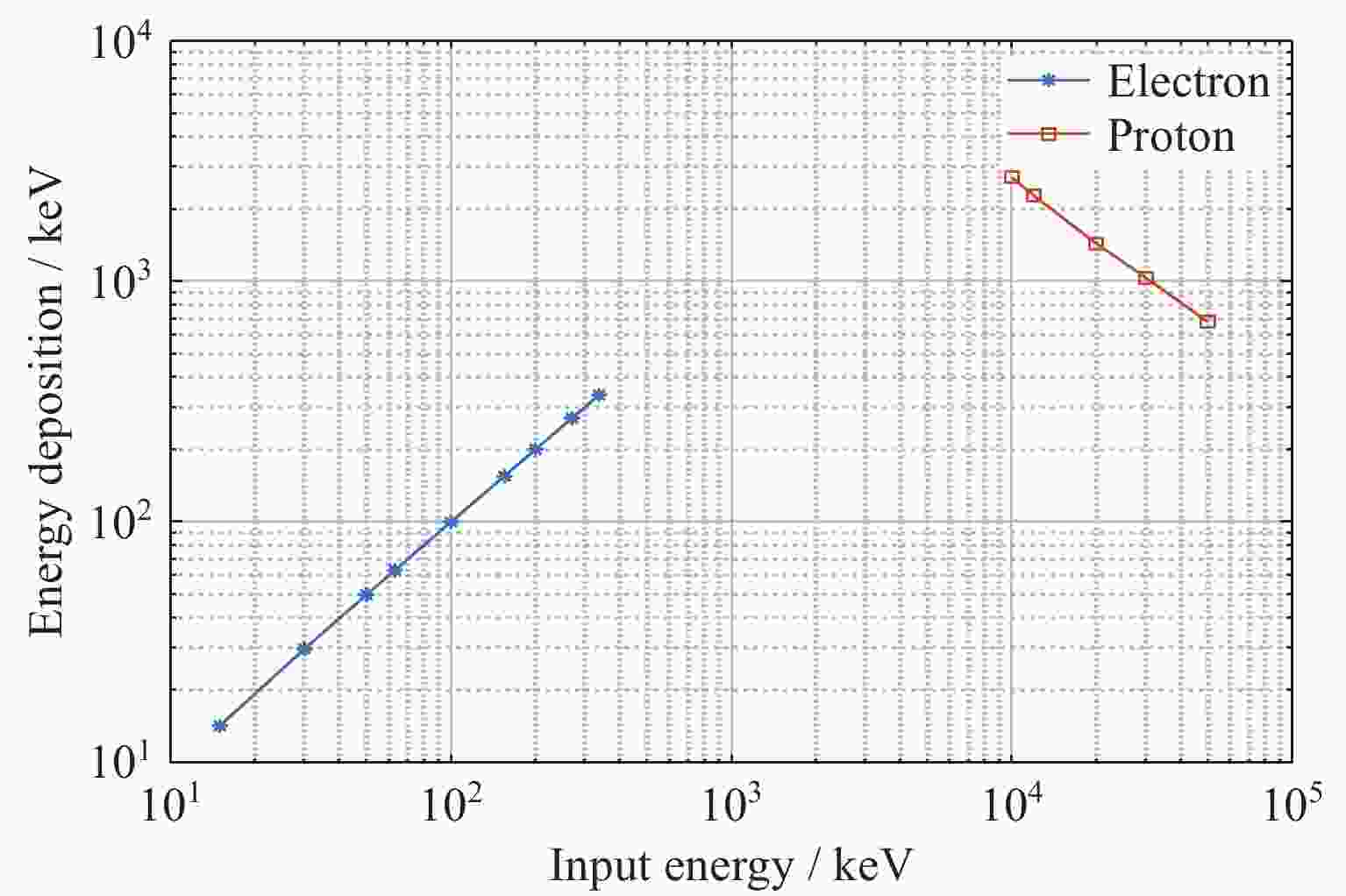
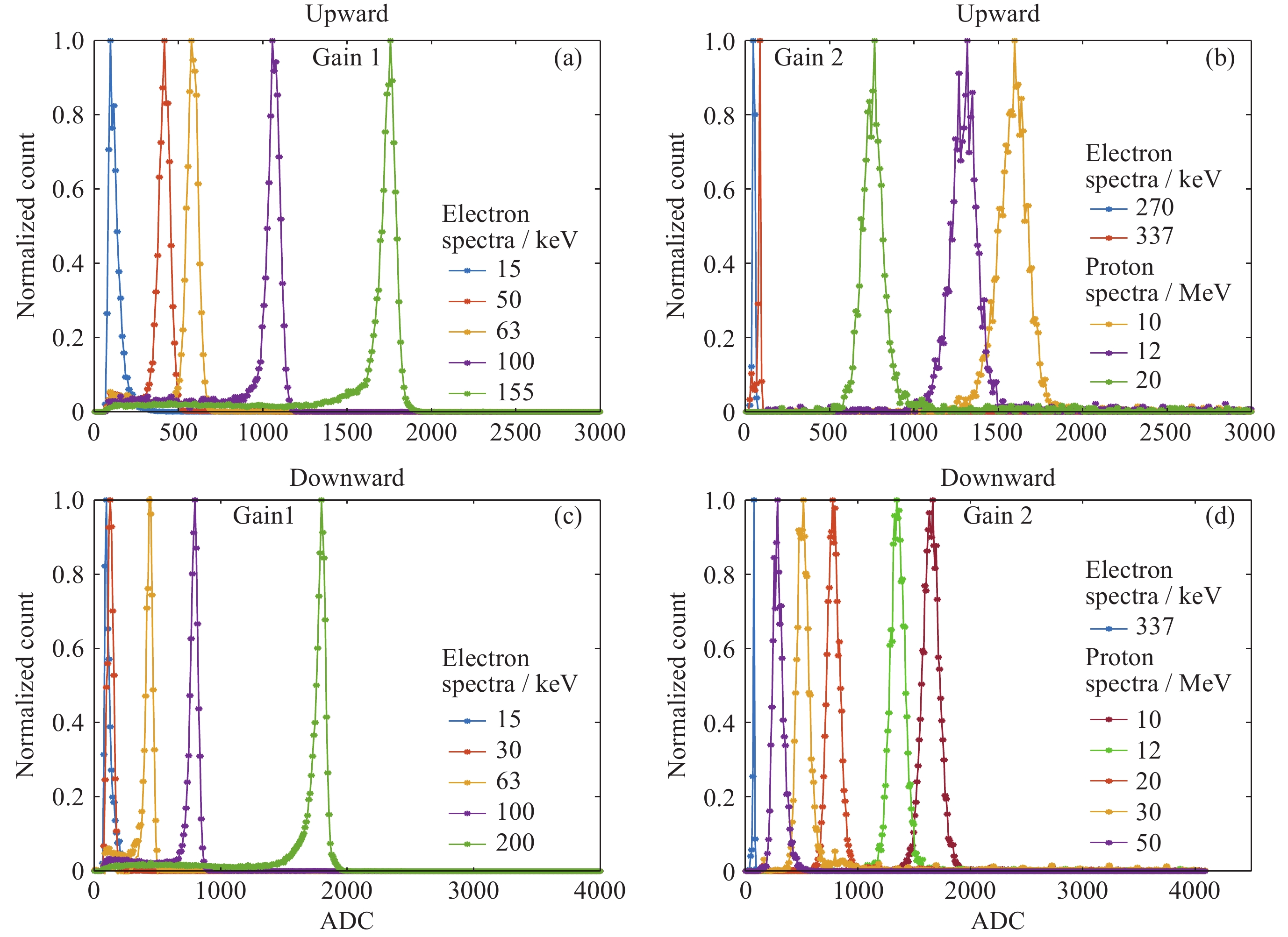
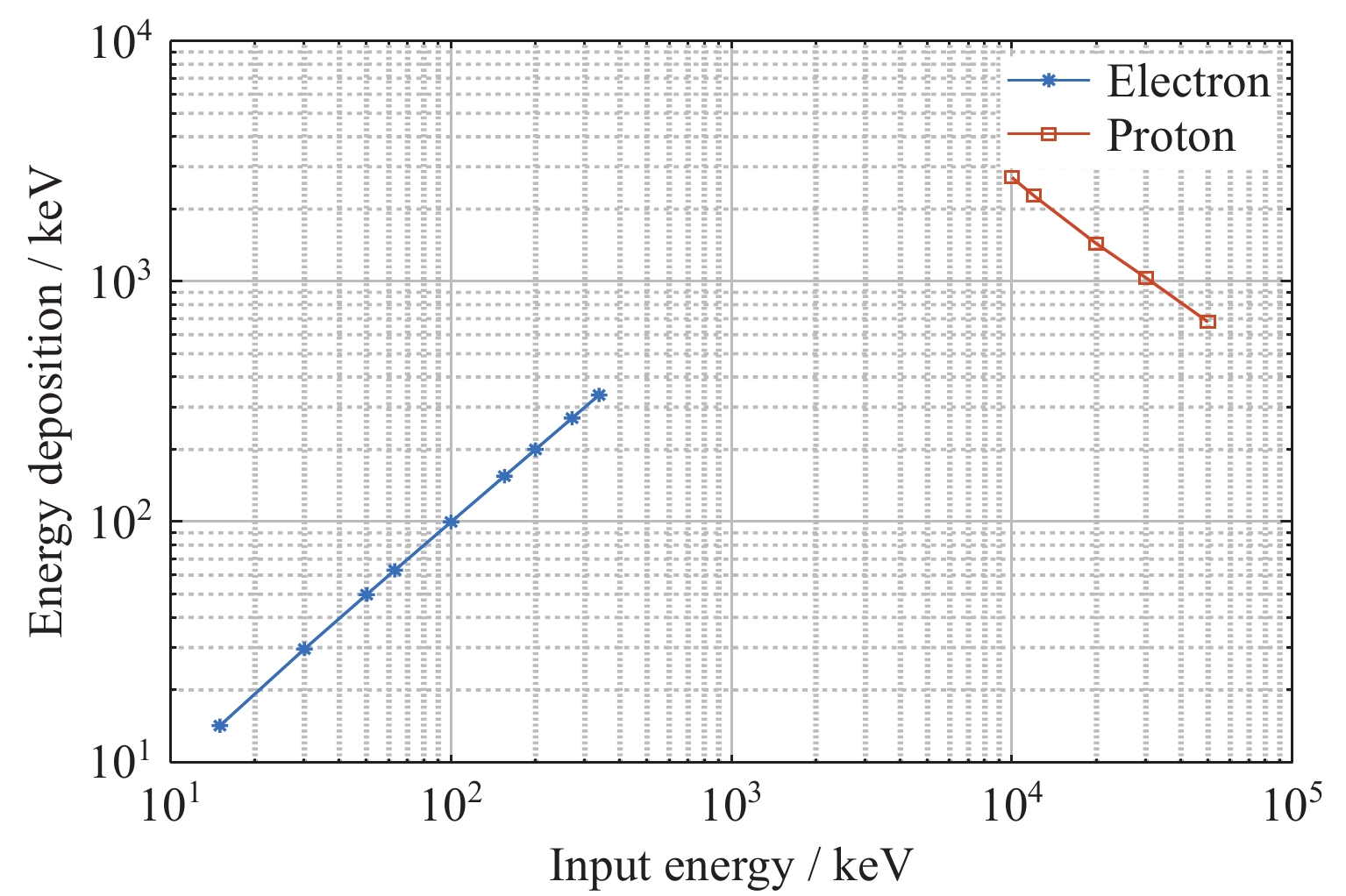
图 10 不同能量质子与电子在传感器中的沉积能量
Figure 10. Energy deposition of protons and electrons with different energies in the sensor
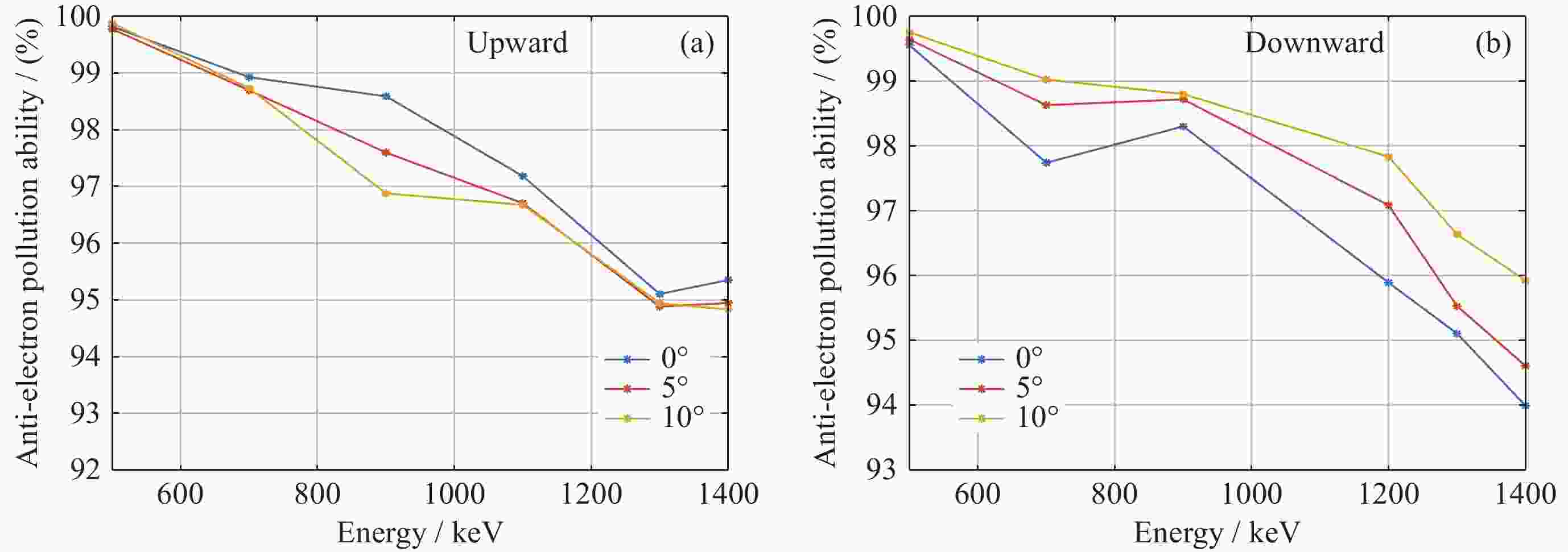
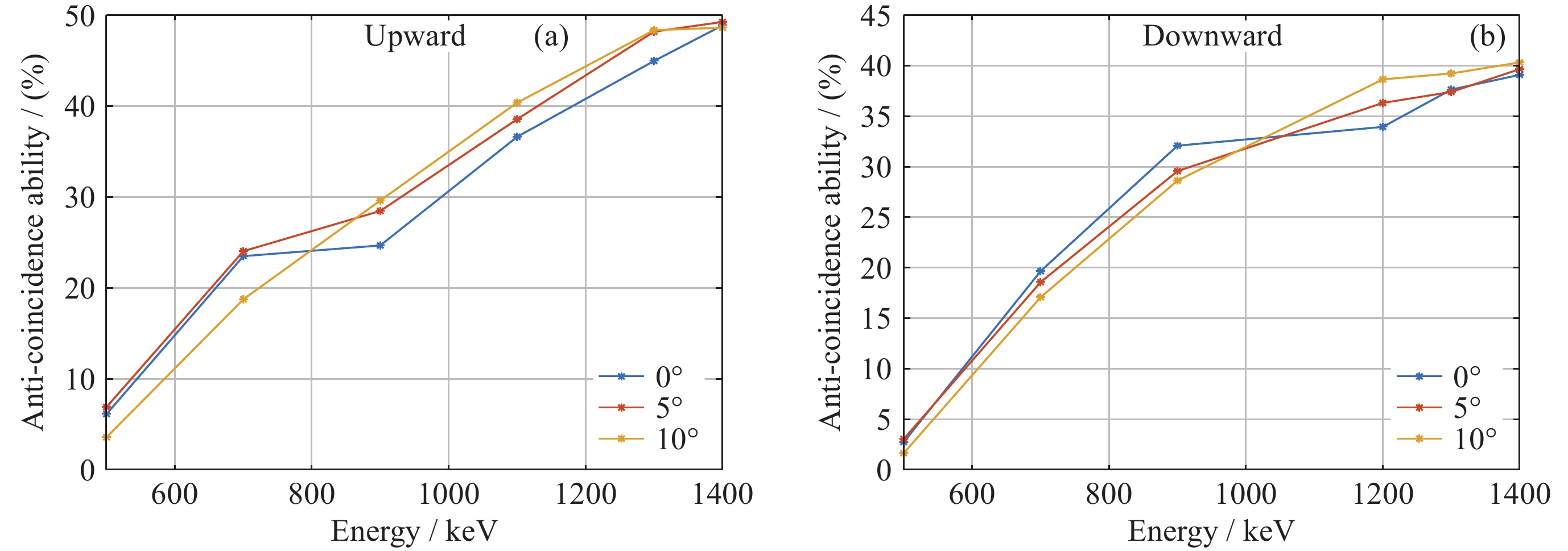
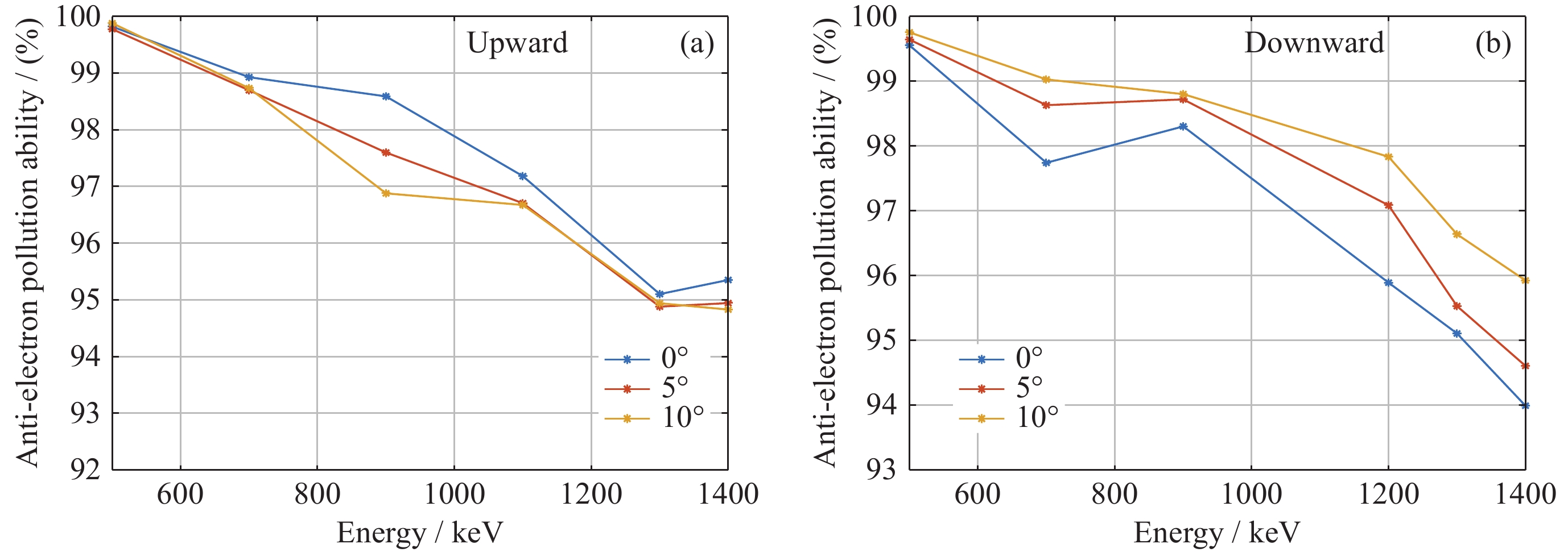
图 14 中能质子探测器抗电子污染能力
Figure 14. Electron contamination suppression capability of the MEPD
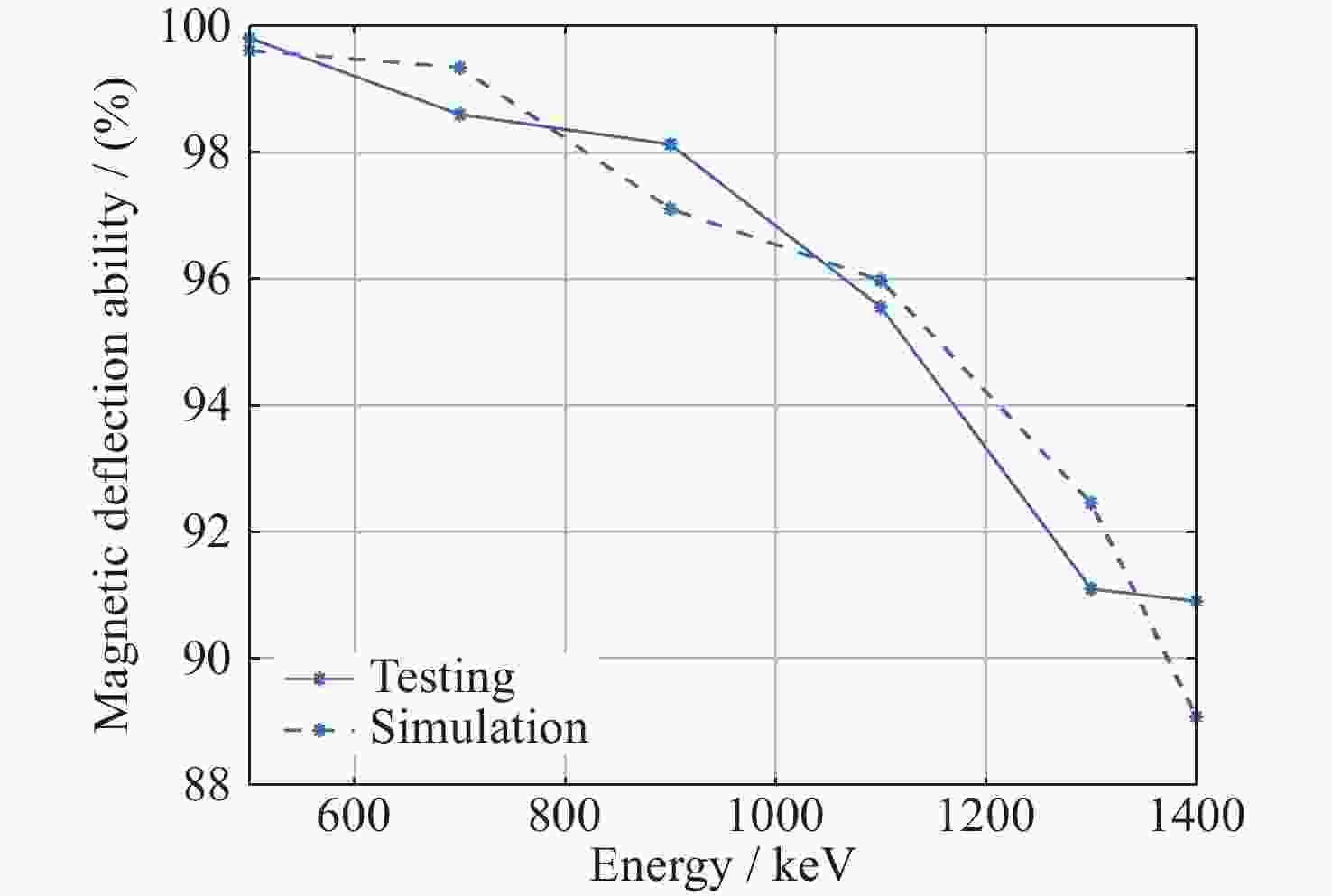
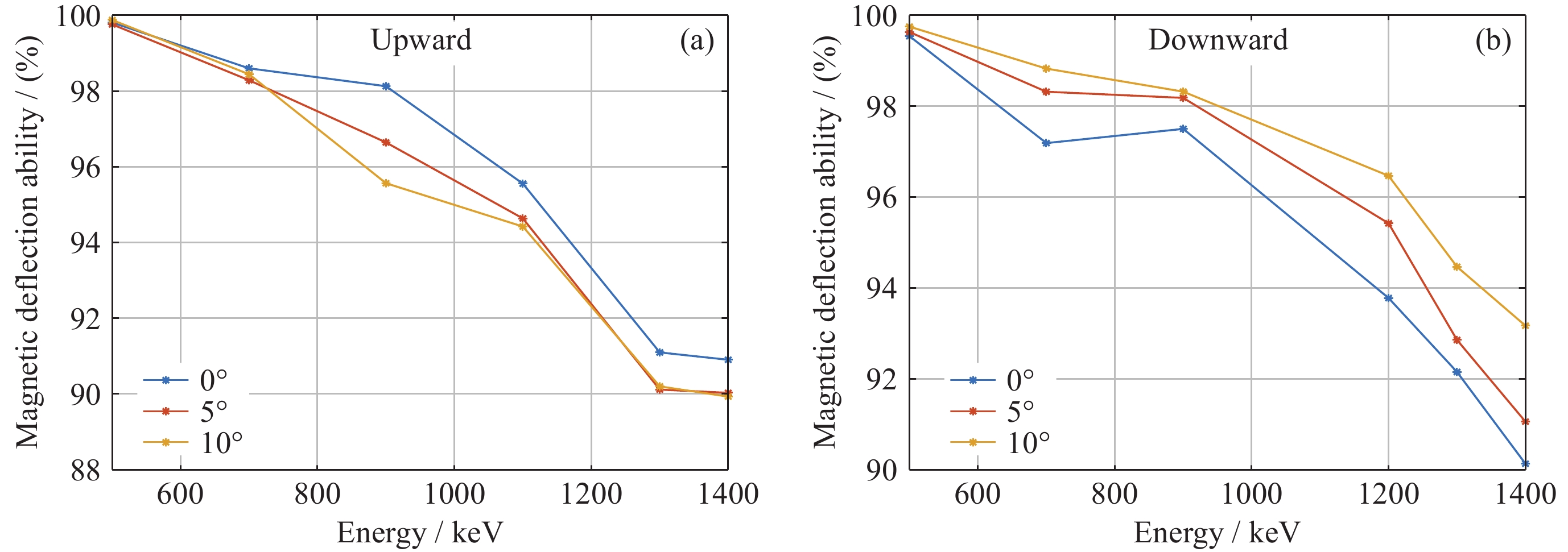
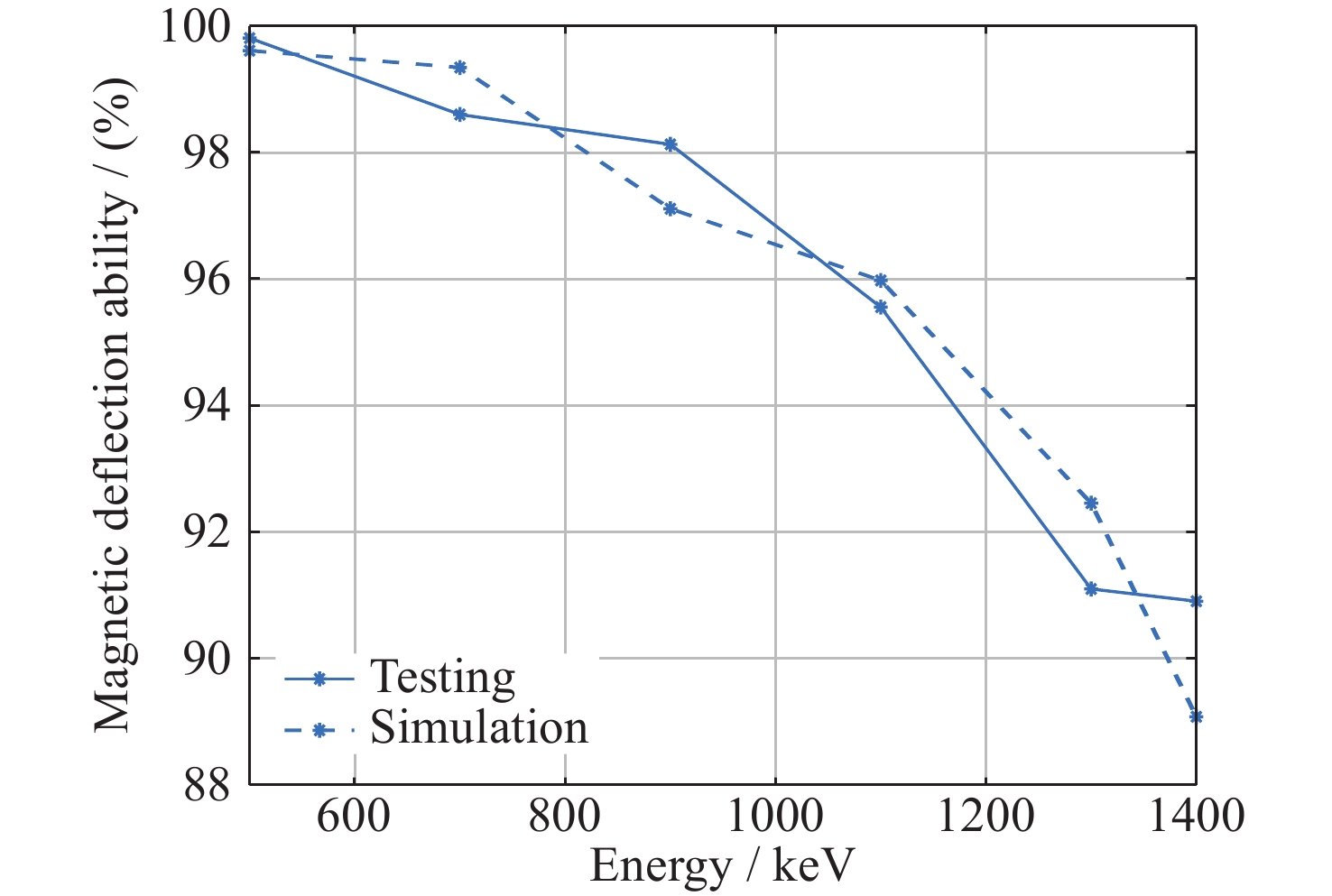
图 15 垂直入射时磁偏转能力对比
Figure 15. Comparison of magnetic deflection capability for vertically incident particles
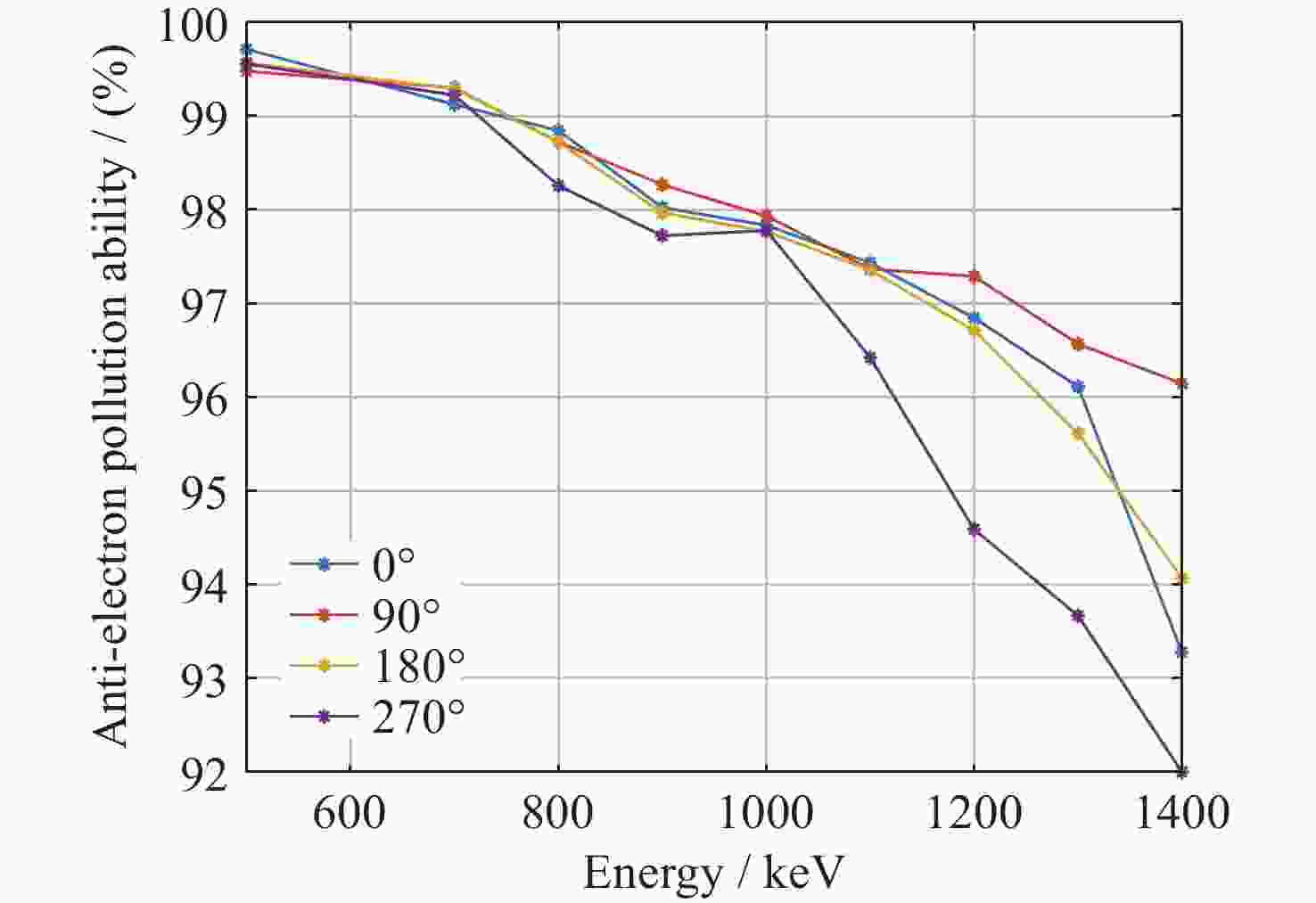
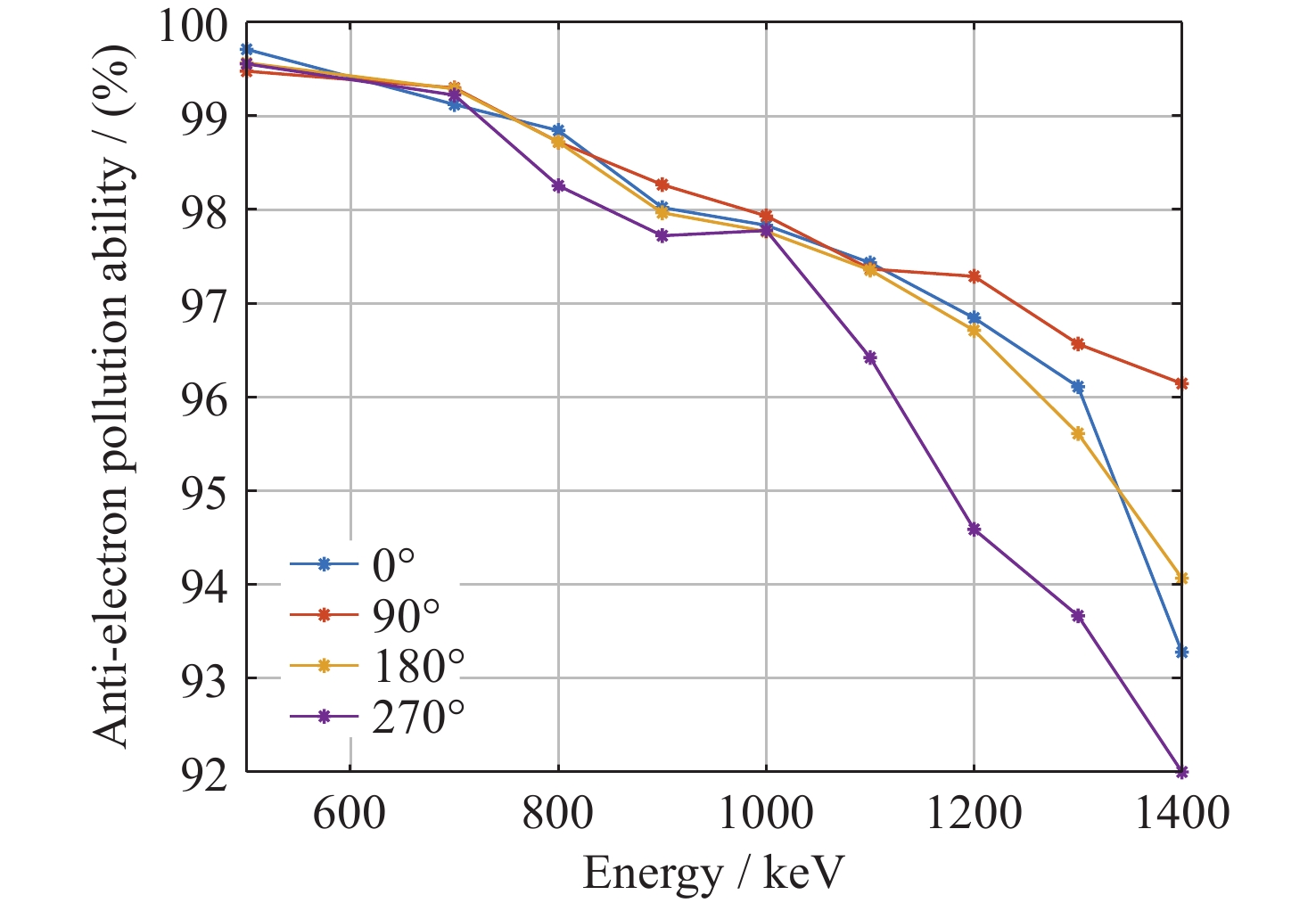
图 16 与传感器法向夹角为5° (极角)时不同方位角的抗电子污染能力
Figure 16. Electron contamination suppression capability at 5° polar angle to sensor normal under different azimuthal angles
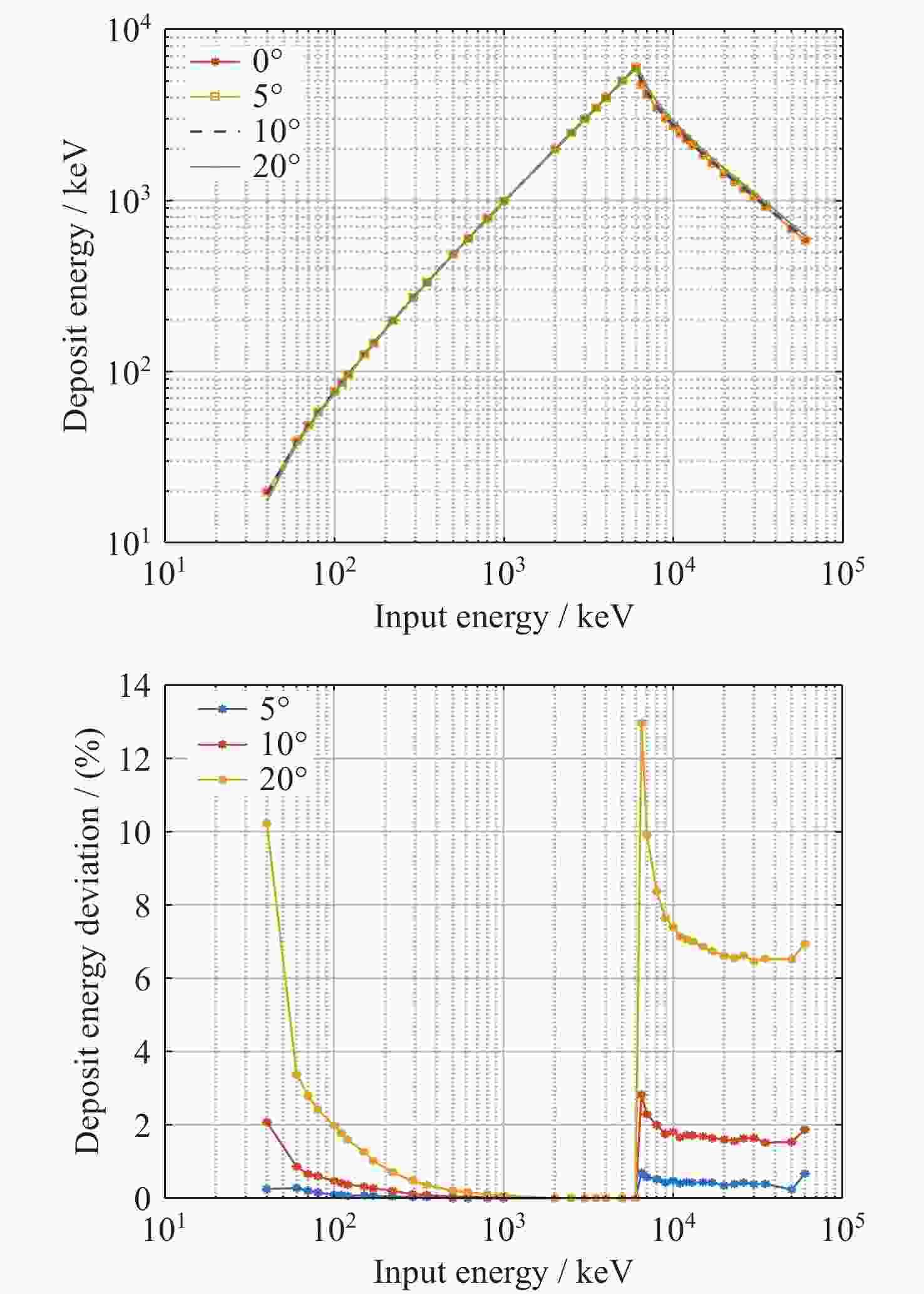
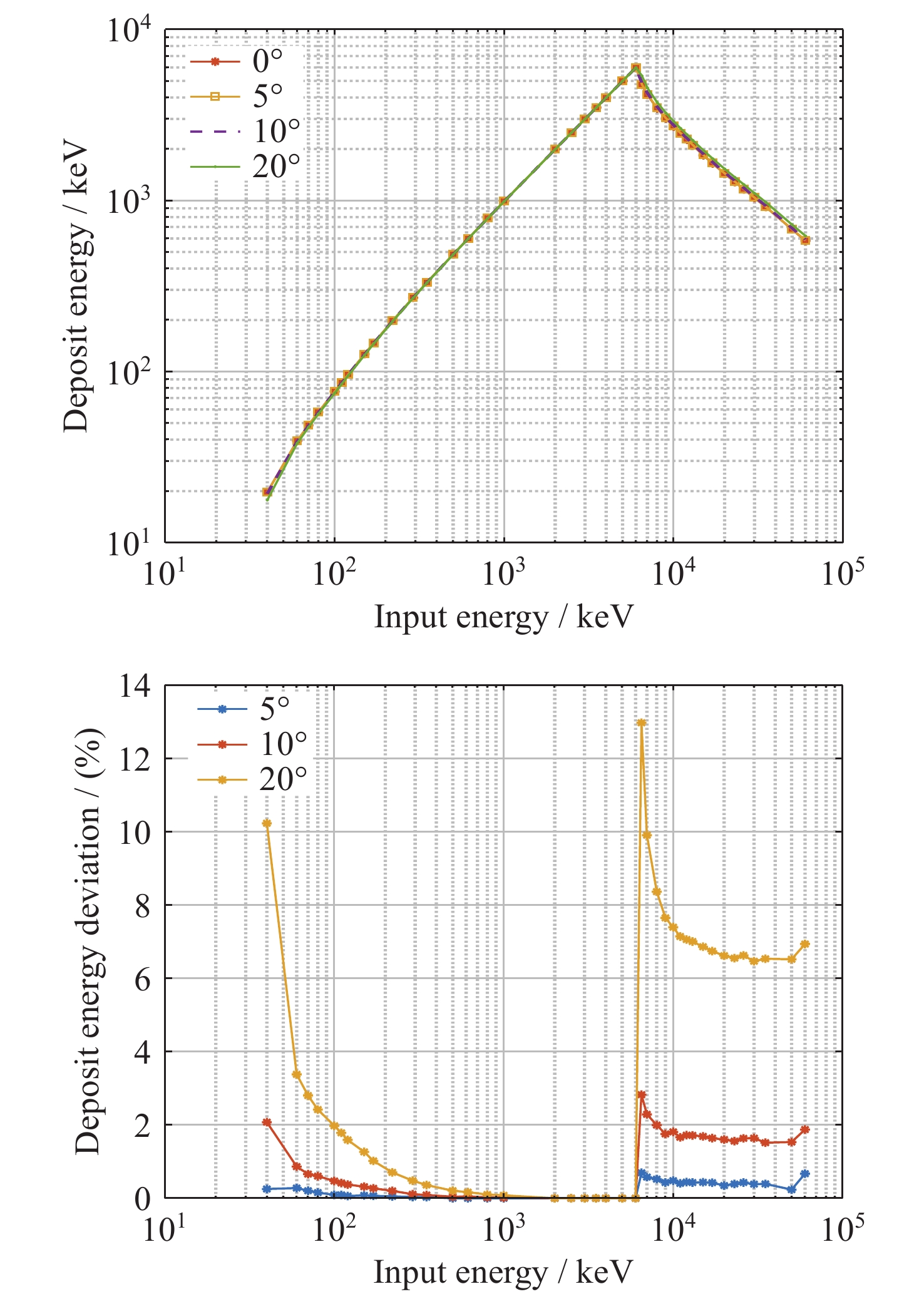
图 17 不同角度下质子在传感器中的沉积能量. (a)不同角度不同能量下质子沉积能量, (b)不同角度沉积能量与垂直入射沉积能量的偏差
Figure 17. Proton energy deposition in the sensor at different incident angles. (a) Energy deposition of protons with various energies at different angles, (b) deviation of energy deposition at different angles relative to vertical incidence
表 1 中能质子探头的能档划分
Table 1. Energy channel division for the Medium-Energy Proton Detector (MEPD)
能档 能量/keV P1 30~80 P2 80~170 P3 170~350 P4 350~800 P5 800~1500 P6 1500~2500 P7 2500~4000 P8 4000~5500 P9 6150~9300 P10 9300~18000 P11 18000~30000  下载: 导出CSV
表 2 加速器关键参数
Table 2. Key parameters of the accelerator
参数 中高能电子
加速器质子位移损伤效应
模拟装置粒子种类 电子 质子 粒子能量/MeV 0.015~1.5 10~60 束流能散/(%) <0.01 <0.2 束流强度/(cm–2·s–1) 103~109 102~109 束斑尺寸/cm 4×4 1×1~20×20 均匀性/(%) ≥95 ≥90 通量不稳定度/(%) <1 ≤1
下载: 导出CSV
-
[1] WANG L P, SHEN G H, ZHANG H X, et al. Design and development of energy particle detector on China’s Chang’E-7[J]. Aerospace, 2024, 11(11): 893 doi: 10.3390/aerospace11110893 [2] 沈国红, 黄聪, 张鹏飞, 等. 风云三号E星空间环境载荷综合探测技术[J]. 北京大学学报(自然科学版), 2024, 60(1): 145-156 doi: 10.13209/j.0479-8023.2023.096SHEN Guohong, HUANG Cong, ZHANG Pengfei, et al. Comprehensive detection payload technology for space environment of FY-3E satellite[J]. Acta Scientiarum Naturalium Universitatis Pekinensis, 2024, 60(1): 145-156 doi: 10.13209/j.0479-8023.2023.096 [3] HOU D H, ZHANG X X, WANG J H, et al. Calibration of the FY-3E particle sensors: High-Energy Particle Detector (HEPD)[J]. Journal of Instrumentation, 2023, 18(7): P07050 doi: 10.1088/1748-0221/18/07/P07050 [4] 郝梦坛, 张珅毅, 侯东辉, 等. 风云三号E星中能质子探测器标定[J]. 空间科学学报, 2023, 43(3): 558-566 doi: 10.11728/cjss2023.03.220329033HAO Mengtan, ZHANG Shenyi, HOU Donghui, et al. Calibration of the medium energy proton detector of FY-3E[J]. Chinese Journal of Space Science, 2023, 43(3): 558-566 doi: 10.11728/cjss2023.03.220329033 [5] ZHANG S Y, ZHANG X G, WANG C Q, et al. The geometric factor of high energy protons detector on FY-3 satellite[J]. Science China Earth Sciences, 2014, 57(10): 2558-2566 doi: 10.1007/s11430-014-4853-0 [6] VON ROSENVINGE T T, REAMES D V, BAKER R, et al. The high energy telescope for STEREO[J]. Space Science Reviews, 2008, 136(1): 391-435 doi: 10.1007/s11214-007-9300-5 -
-

 下载:
下载:

计量
- 文章访问数: 1064
- HTML全文浏览量: 608
- PDF下载量: 104
-
被引次数:
0(来源:Crossref)
0(来源:其他)

