


2013年7月13-14日磁暴期间中国低纬电离层不均匀体的时空演化
doi: 10.11728/cjss2026.03.2025-0128 cstr: 32142.14.cjss.2025-0128
-
 高鸿宇 男, 1997年1月出生于湖北省, 北京大学地球与空间科学学院博士研究生, 研究方向为电离层物理. E-mail: gaohongyu@pku.edu.cn
 -
 张东和 男, 北京大学地球与空间科学学院教授, 从事空间物理、空间天气、电离层物理的教学与科研工作, 承担国家重大科研基础工程项目(子午工程), 国家基金委、国家高技术研究发展计划、国家重点基础研究发展计划等科研项目. E-mail: zhangdh@pku.edu.cn
作者简介:
通讯作者:
Case of the Ionospheric Irregularities in China Low Latitude during the Geomagnetic Storm on 13-14 July 2013
-
摘要: 研究了2013年7月13-14日一次中等强度磁暴期间在中国低纬地区发生的电离层不均匀体事件. 通常情况下, 在北半球夏季, 东亚扇区低纬电离层不均匀体不易产生, 但是此次磁暴期间观测到显著的不均匀结构现象. 利用中国地壳运动观测网(CMONOC)和香港卫星定位参考台站网(SatRef)地基GNSS数据、深圳站(22.59°N, 113.97°E)闪烁接收机S4数据、海南富克站(19.4°N, 109.0°E)测高仪数据以及地磁观测数据等, 分析了中国低纬度地区的电离层不均匀体的时空演化过程, 并基于磁暴期间的空间环境参量对此次电离层不均匀体的激发机制进行分析. 结果表明, 磁暴期间出现的东向电场增强是促进此次电离层不均匀体发展的主要原因. 同时, 电离层不均匀体出现前测高仪观测到的卫星描迹表明, 大尺度波状结构可能作为种子作用, 为不均匀结构的产生创造了条件. 此外, 对比了S4指数、ROTI、失锁这几种参量在此次事件中的响应, 发现其在时间分布上大体一致, 与电离层不均匀体的发生时间一致, 但是在不均匀结构出现前约1 h出现的L2载波相位失锁应与本次事件无关.
-
关键词:
- 电离层不均匀体 /
- 电离层闪烁 /
- 磁暴 /
- 总电子含量(TEC) /
- 频高图
Abstract: This study investigates the effects of a moderate geomagnetic storm during 13-14 July 2013 on the development of ionospheric irregularities in the low latitude region of China. Although in the East Asian sector, ionospheric irregularities are relatively uncommon in July, unseasonal irregularities are observed during this geomagnetic storm. Ground-based GNSS data from Crustal Movement Observation Network of China (CMONOC) and Hong Kong Satellite positioning Reference stations (SatRef), S4 index data from the Ionospheric Scintillation Monitor (ISM) at Shenzhen (22.59°N, 113.97°E) station, ionosonde data from Fuke (19.4°N, 109.0°E) station, and geomagnetic data are used to show the evolution of the ionospheric irregularities in the low latitude region of China during the geomagnetic storm. Geomagnetic and solar activity parameters are used to analyze the generation mechanisms of the irregularities. It is shown that the eastward electric field enhanced by the geomagnetic storm is the major factor contributing to the generation of the irregularities. Satellite traces in the ionograms before the onset of the irregularities indicate that large-scale wave structures acting as seed perturbations may also contribute to this event. Furthermore, it is found that the temporal distribution of S4 index and ROTI are generally similar (enhanced during 15:00-18:00 UT) and coincide with the time range of the irregularities, but the distribution of L2 loss of lock is slightly different (occurring around 14:00 UT, about one hour earlier). These loss of lock occurrences are unrelated to this event. -
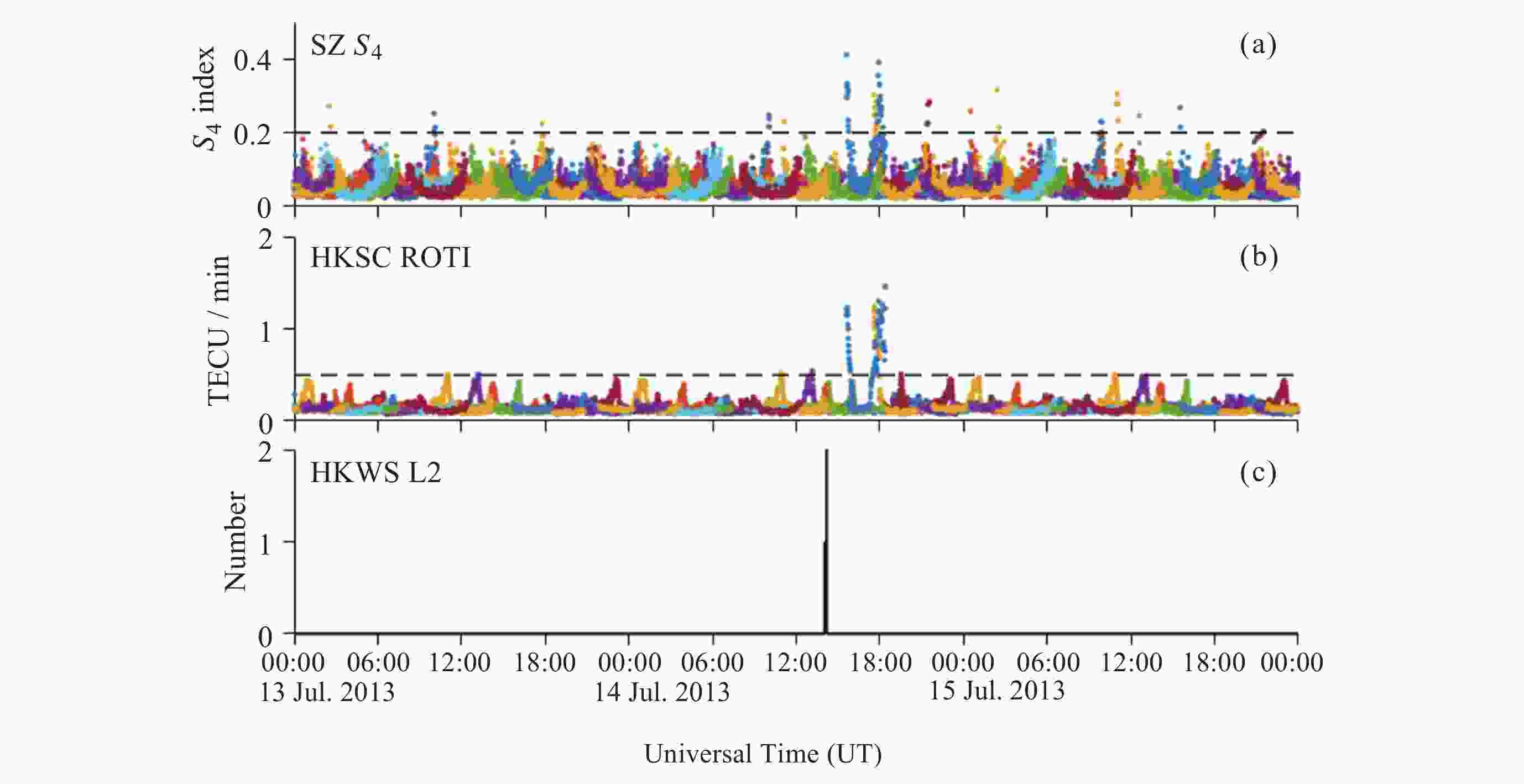
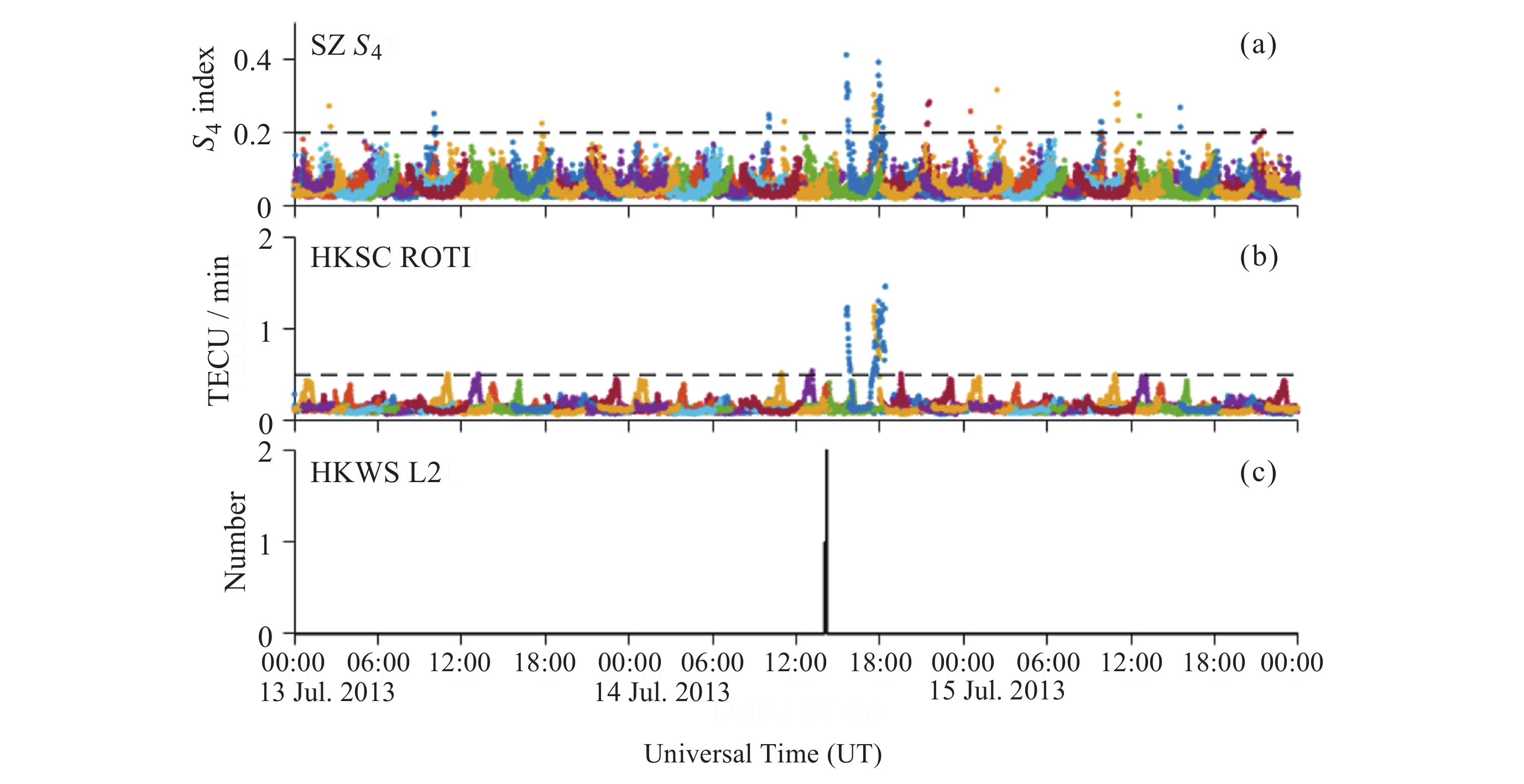
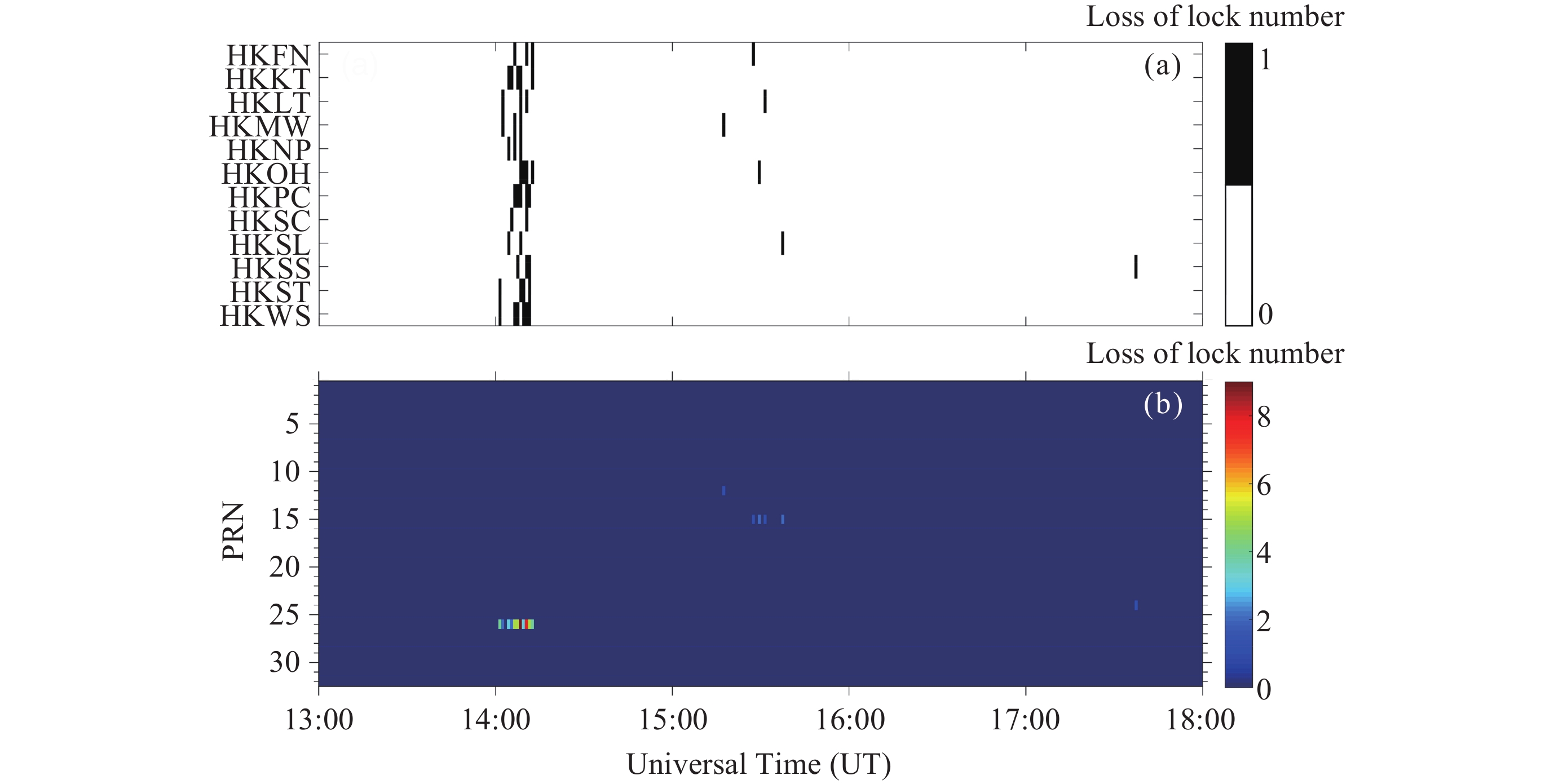
图 2 2013年7月13-15日深圳站S4指数、香港HKSC站ROTI、香港HKWS站L2载波相位每分钟失锁次数分布. 散点图中不同颜色的点代表不同卫星, 黑色虚线表示背景阈值, S4的阈值取0.2, ROTI的阈值取0.5 TECU·min–1
Figure 2. Variation of S4 from Shenzhen station, ROTI from HKSC station (Hong Kong), and the number of loss of lock on L2 in every minute from HKWS station (Hong Kong) during 13-15 July 2013. Each color in the scatter plots represents data from one satellite. Black dashed lines indicate the threshold values, taken as 0.2 for S4 and 0.5 TECU·min–1 for ROTI
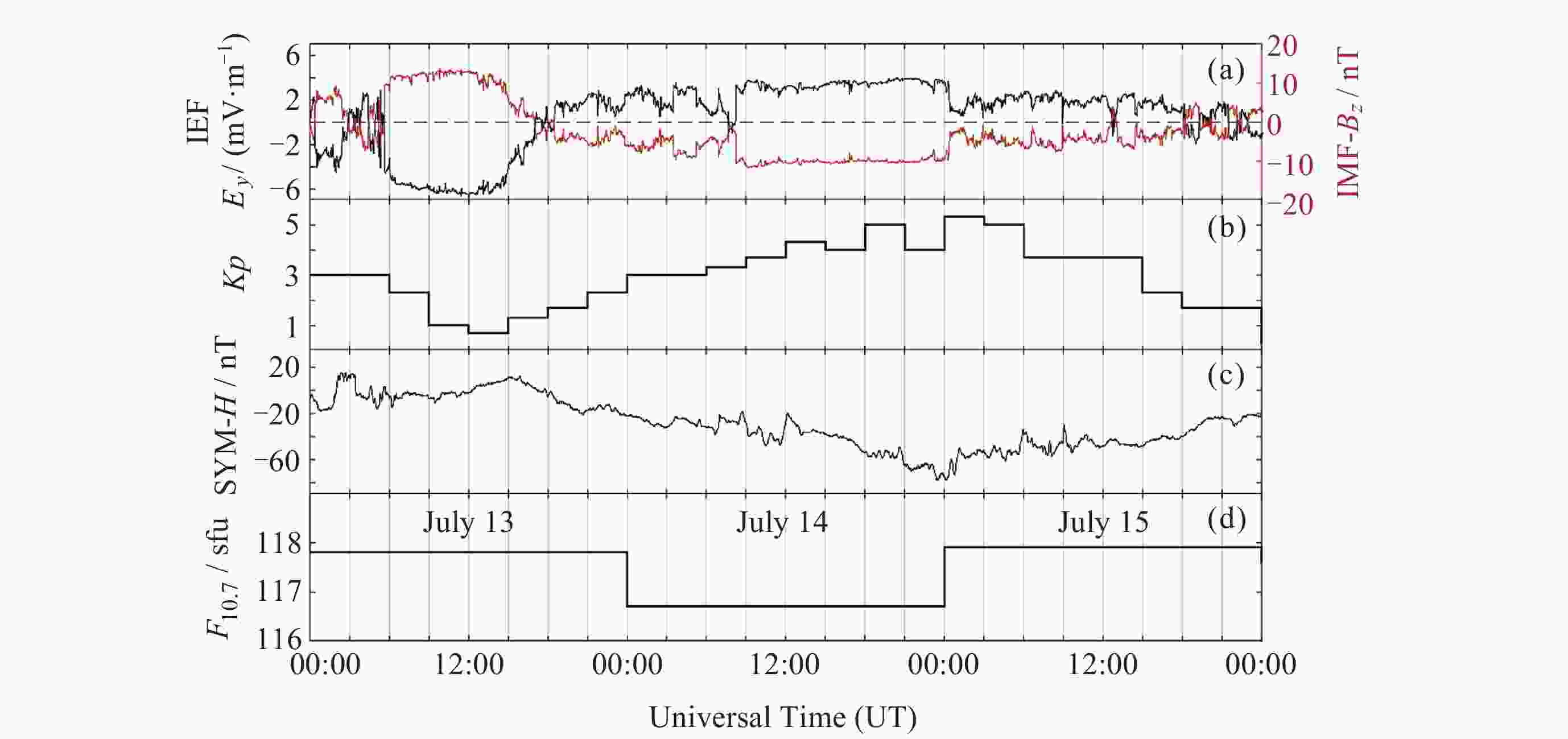
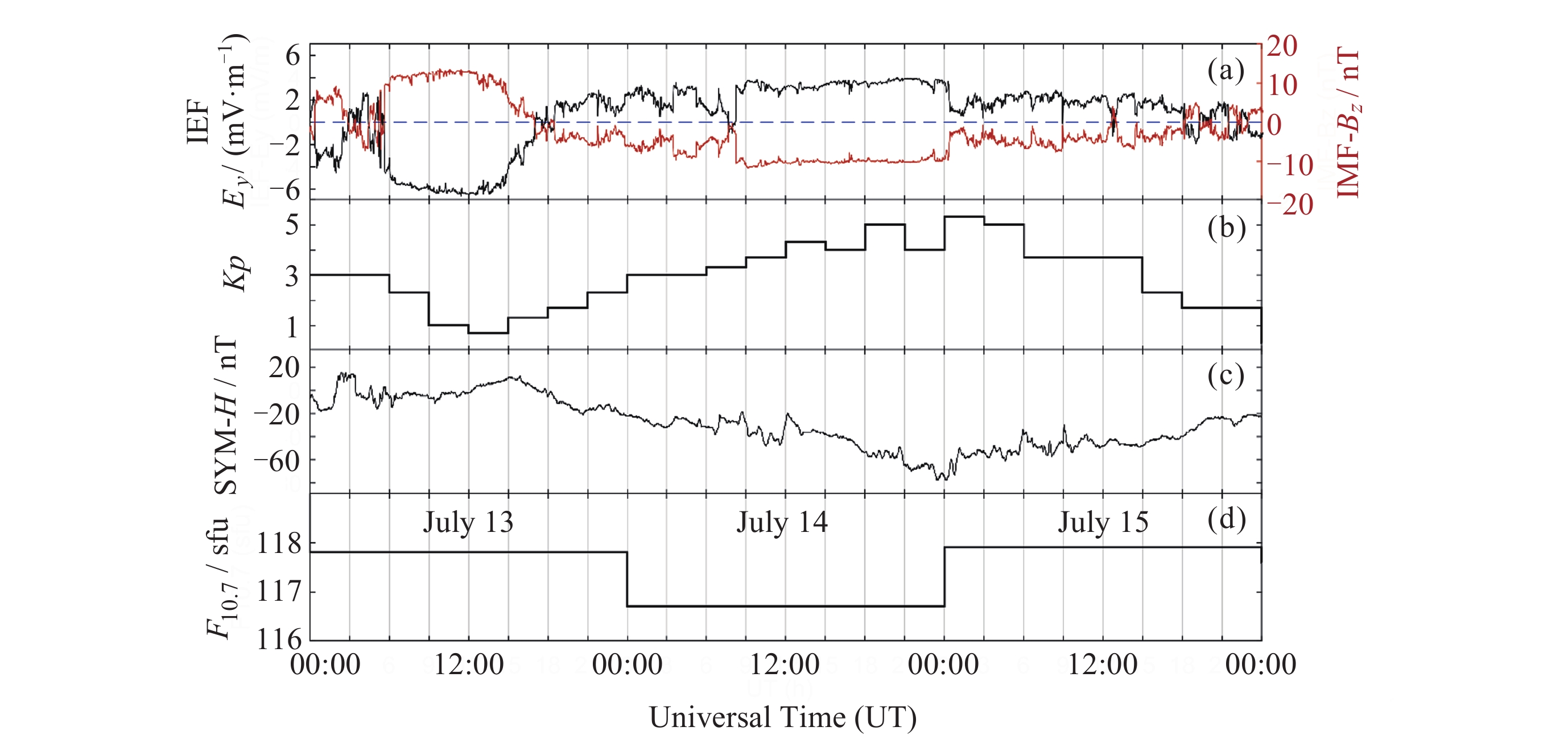
图 3 2013年7月13-15日的空间环境参量
Figure 3. Overview of geomagnetic and solar activity conditions during 13-15 July 2013
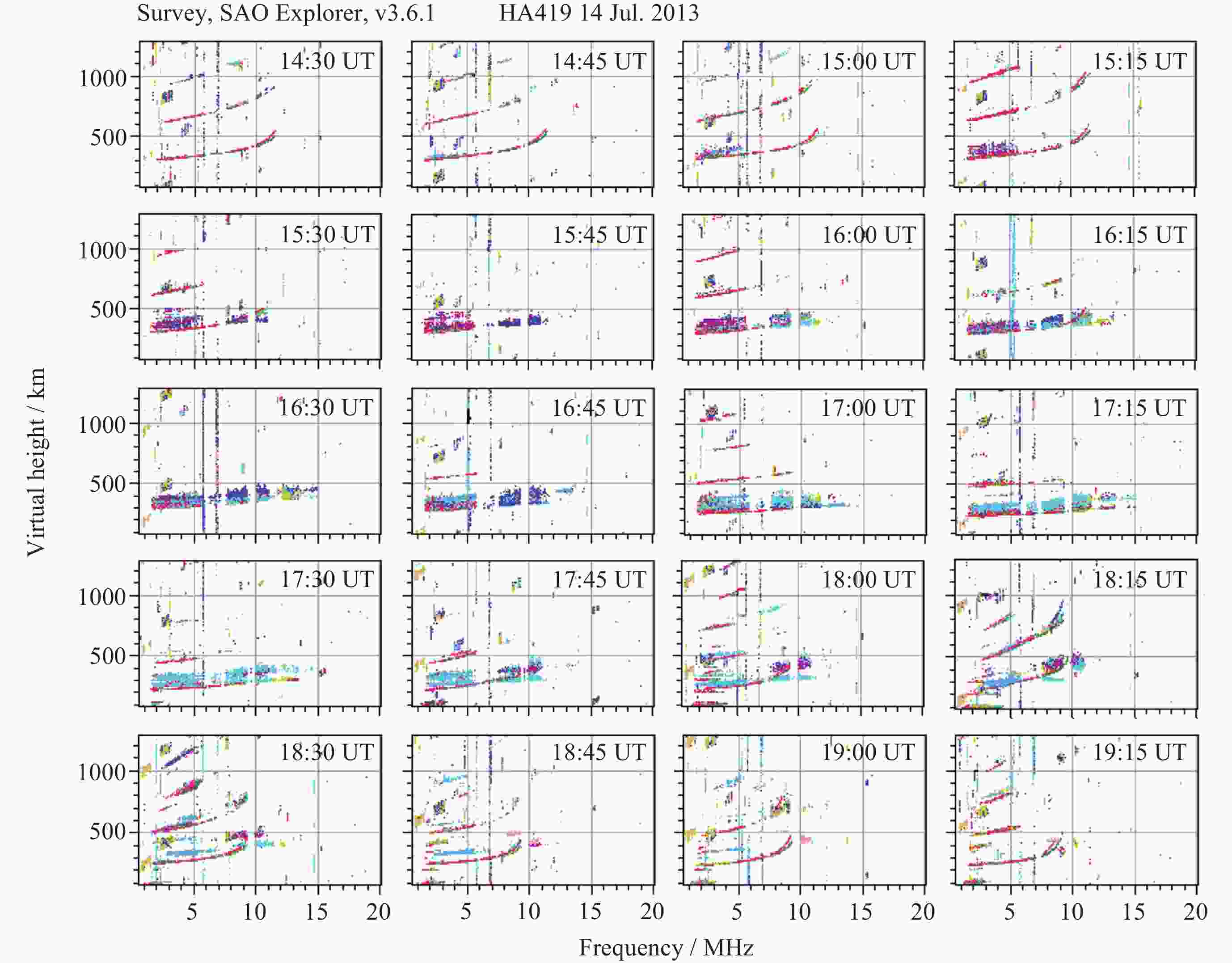
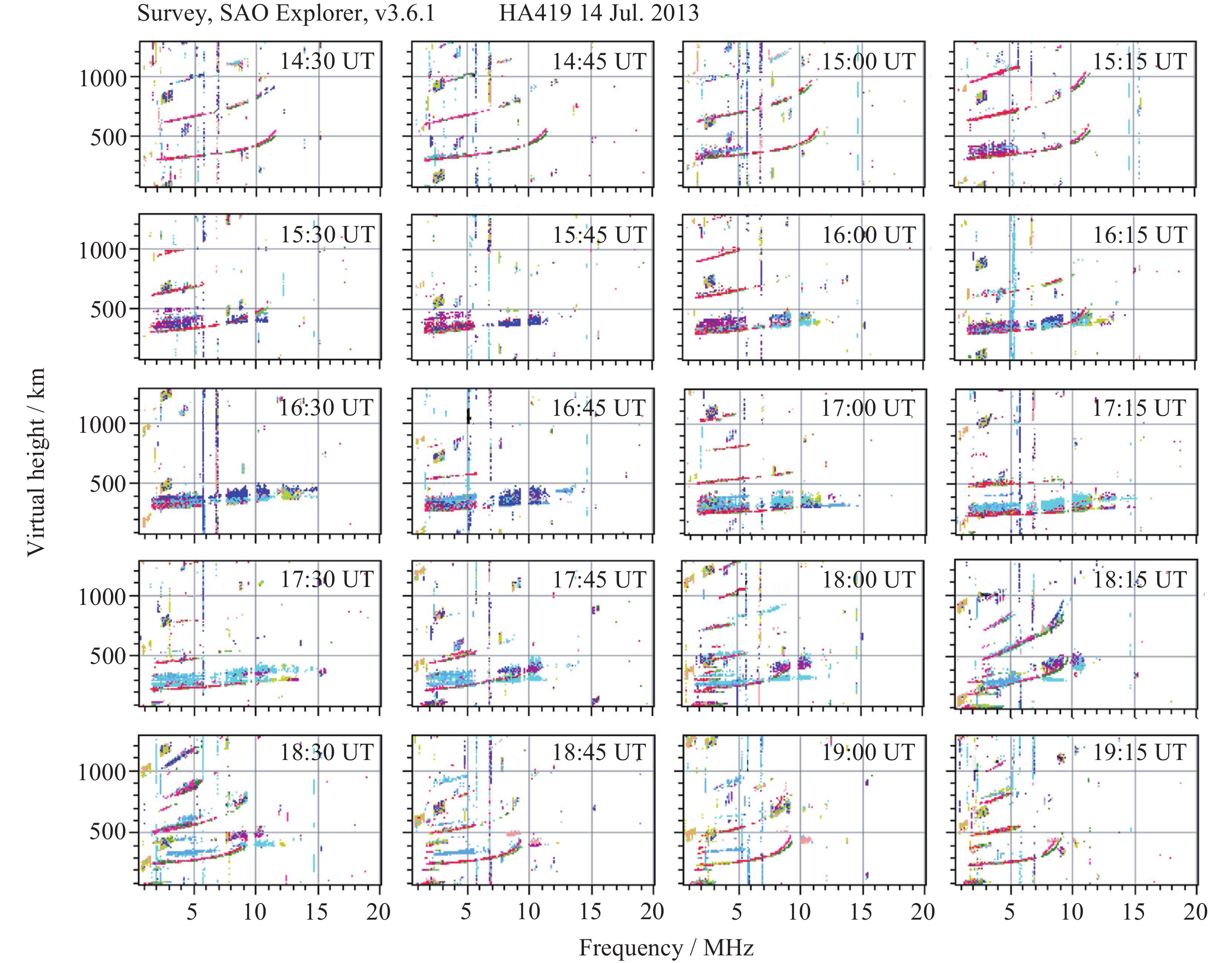
图 4 2013年7月14日14:30-19:15 UT海南富克站频高图时间序列
Figure 4. Time sequence of ionograms during 14:30-19:15 UT on 14 July 2013 at Fuke station
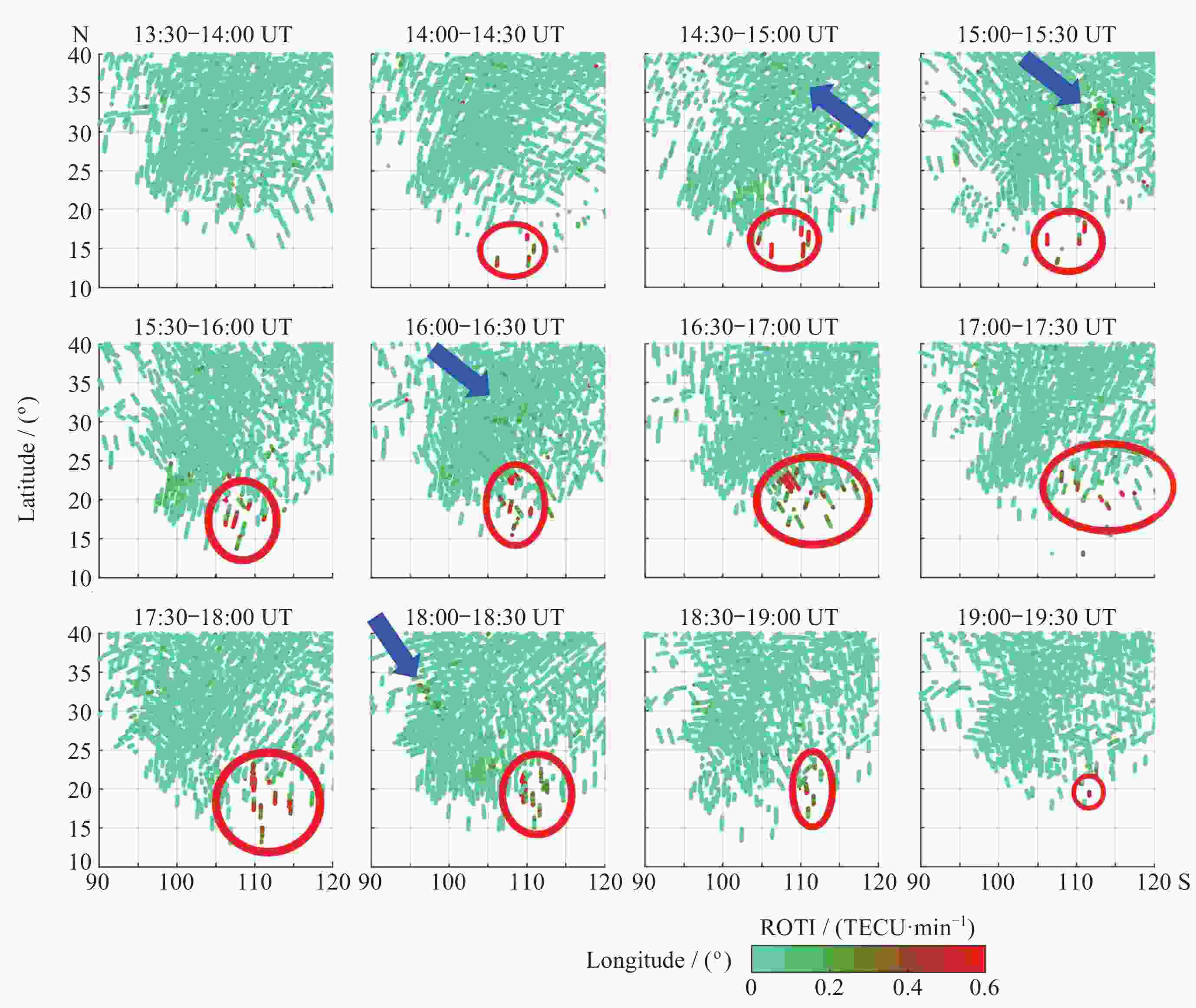
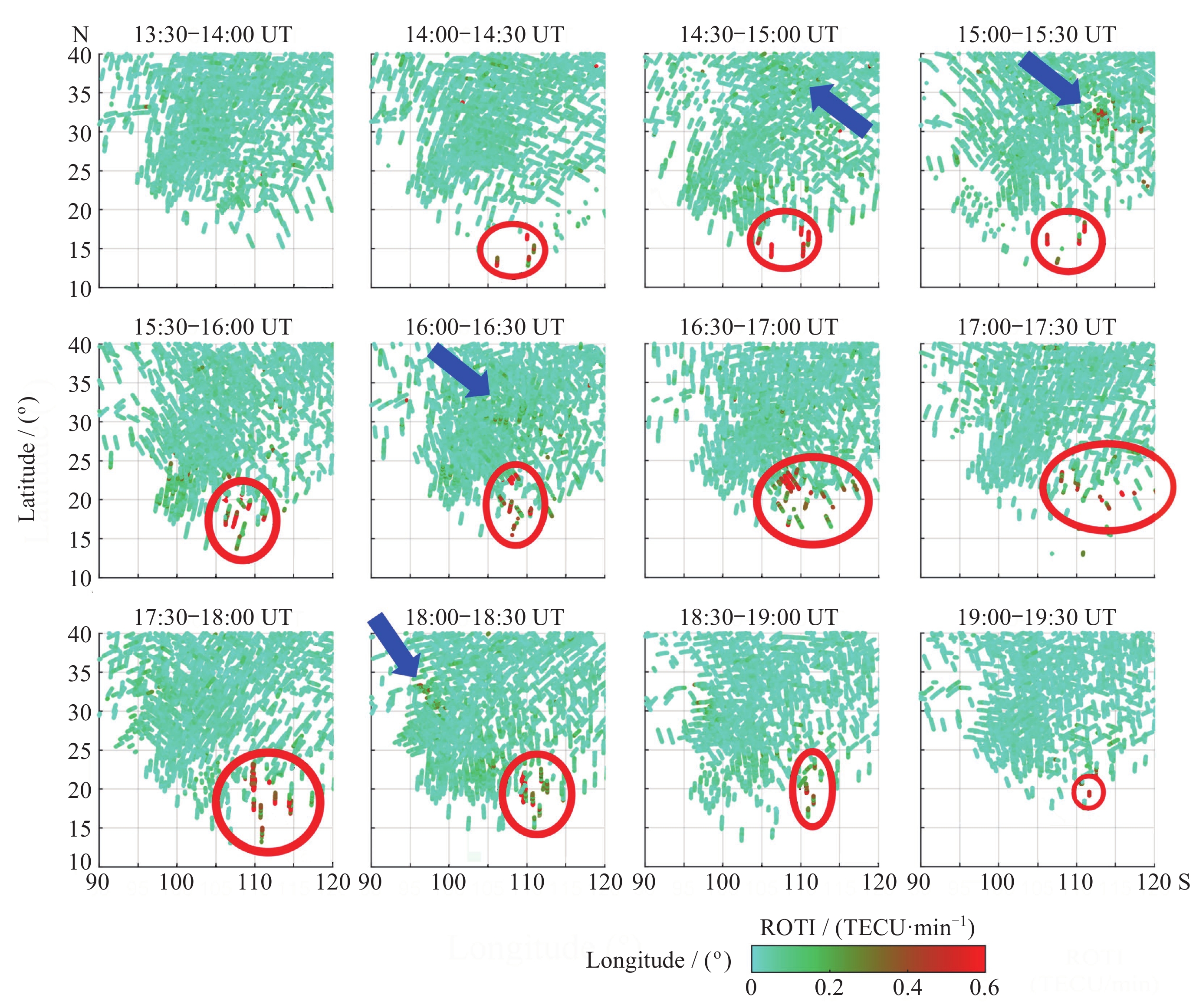
图 5 2013年7月14日13:30-19:30 UT的ROTI地图. 间隔为30 min. 红圈表示低纬不均匀体, 蓝色箭头表示中纬不均匀体
Figure 5. Time sequence of ROTI maps during 13:30-19:30 UT on 14 July 2013, in 30 min interval. Red circles represent low-latitude irregularities, and blue arrows represent mid-latitude irregularities
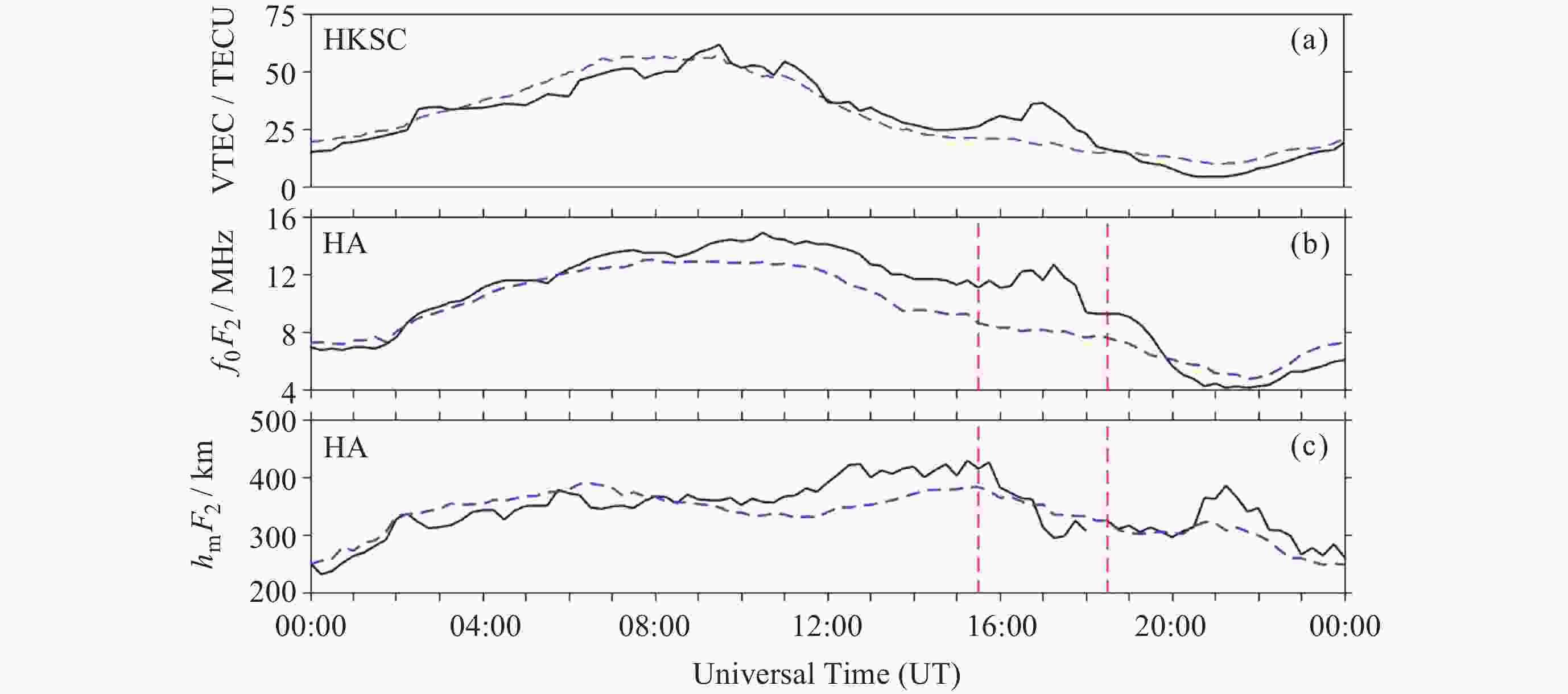
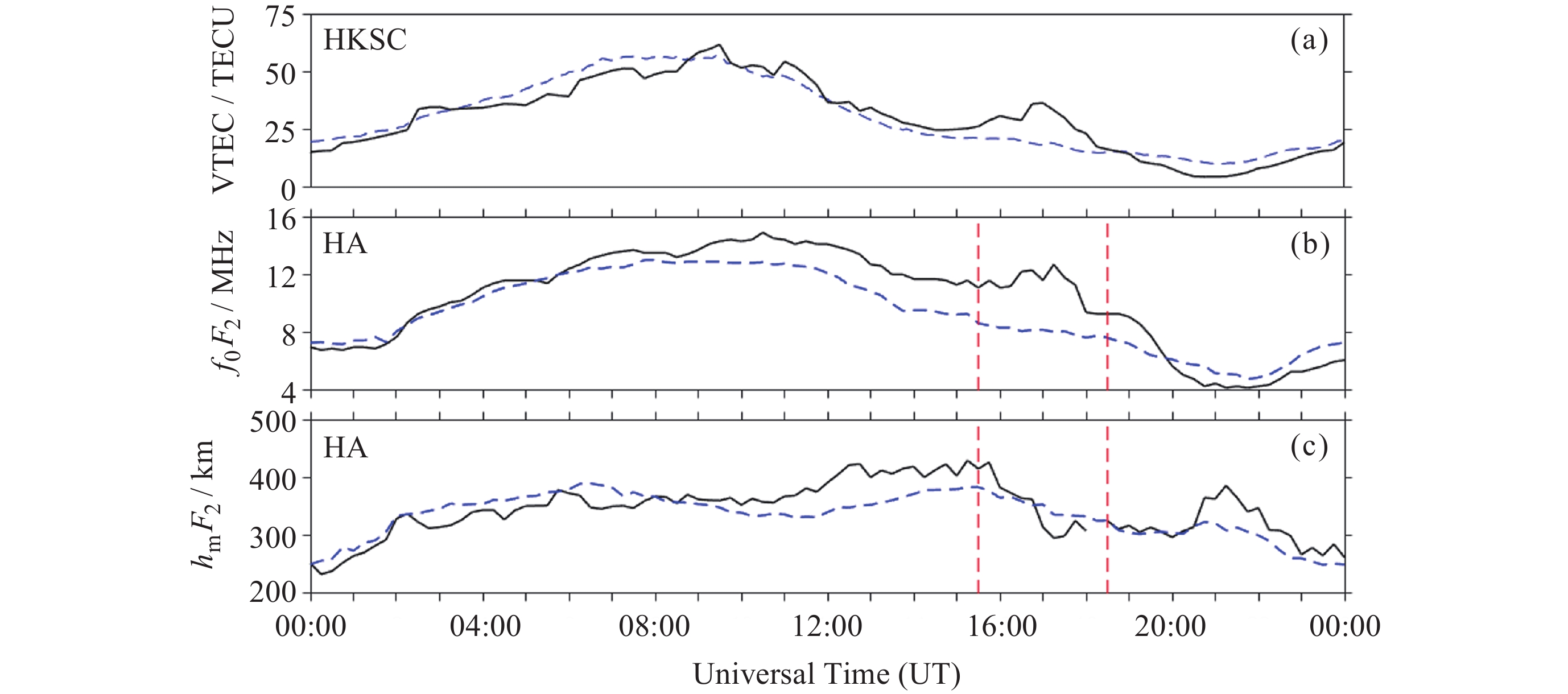
图 6 2013年7月14日HKSC站垂直TEC数据以及海南富克测高仪测得的f0F2和hmF2 (黑色实线). 蓝色虚线表示2013年7月的月中值, 红色虚线之间的部分表示有扩展F发生的时间段
Figure 6. Vertical TEC obtained from the HKSC station, and f0F2, hmF2 from the Fuke ionosonde on 14 July 2013, shown in black solid lines. Blue dashed lines indicate monthly median data of July 2013, and the start and end of spread-F are marked with red dashed lines
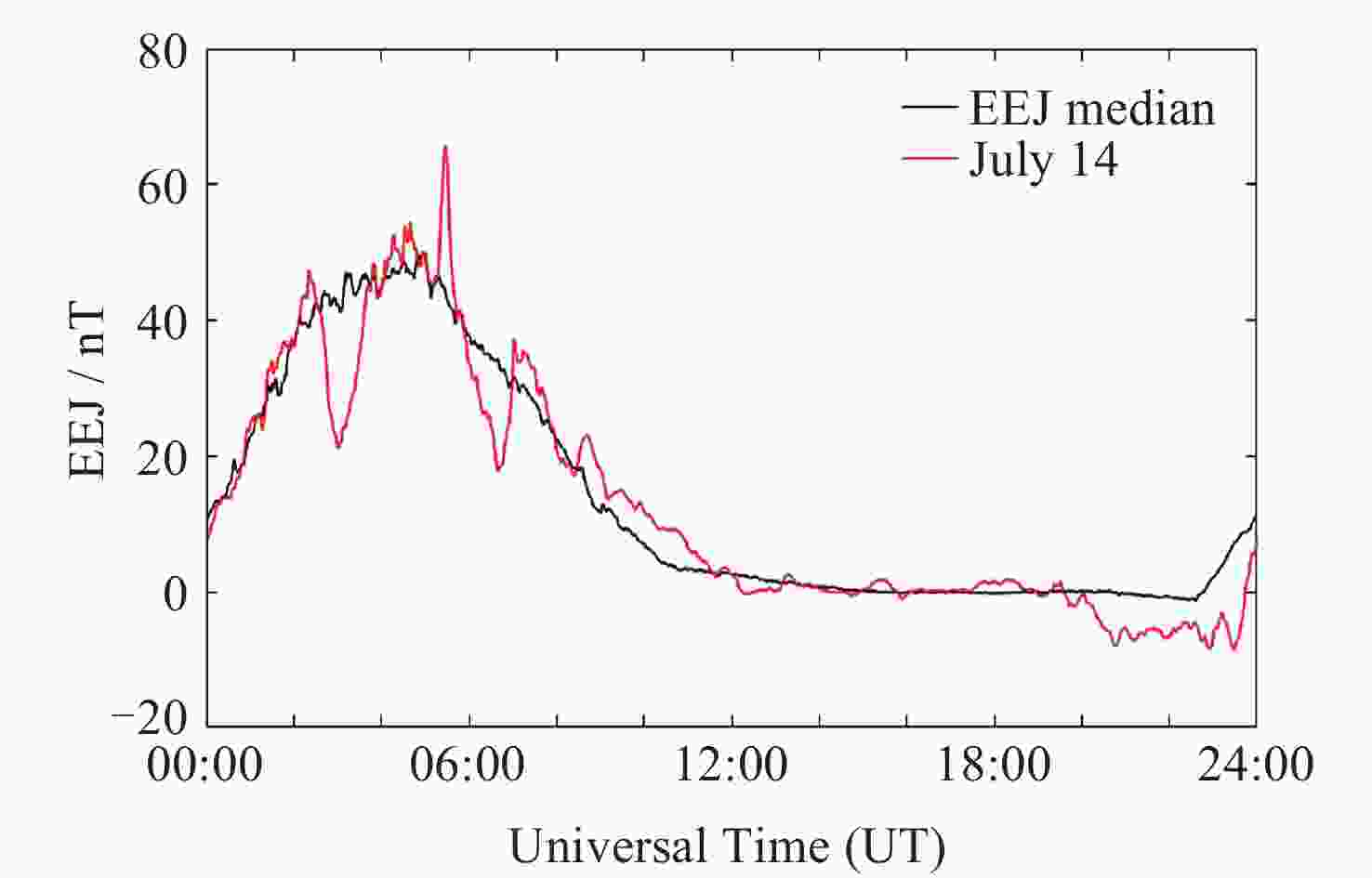
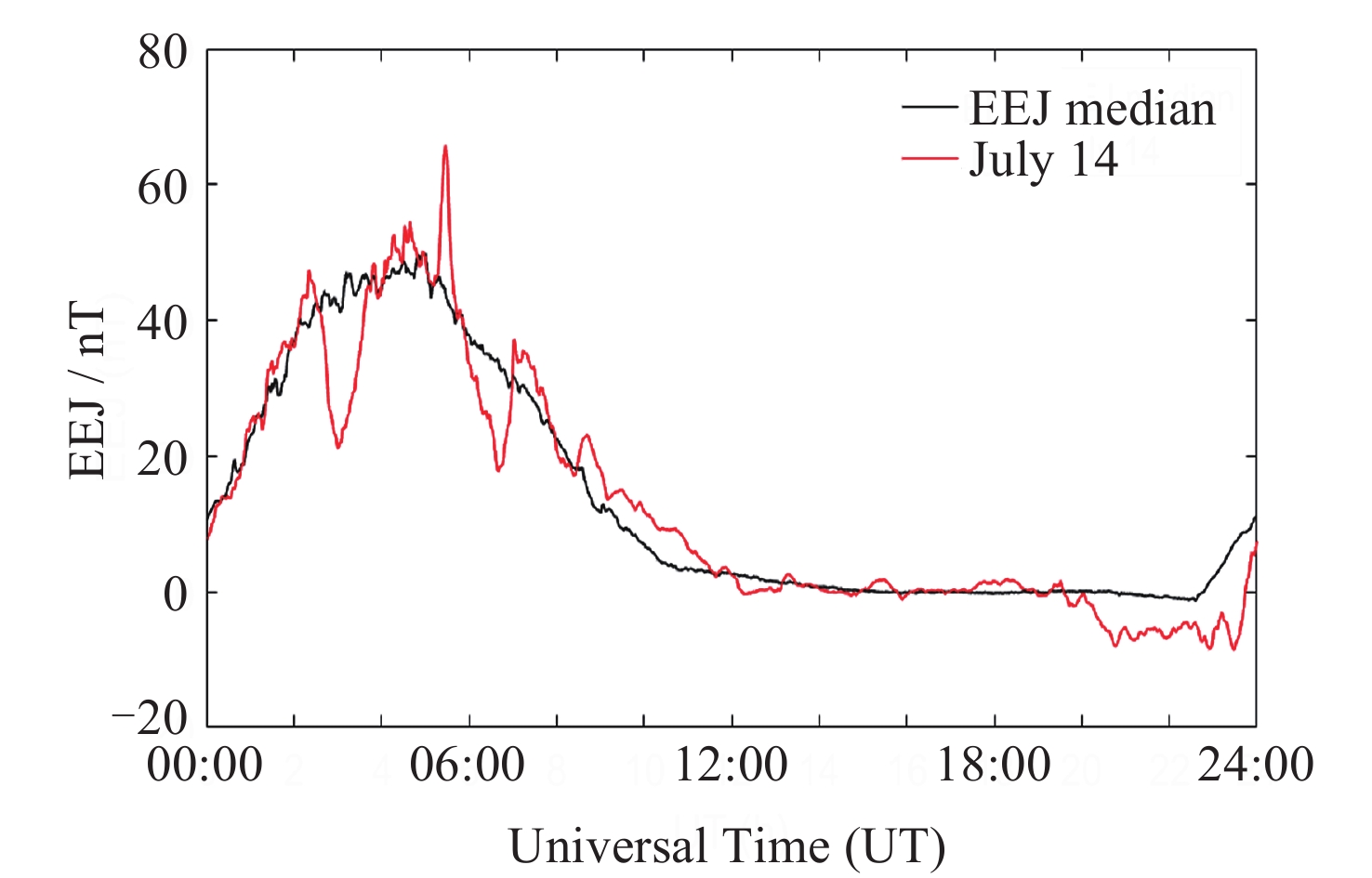
图 7 2013年7月14日的EEJ (红线)与2013年7月EEJ的月中值(黑线)随世界时的分布, EEJ的值以17:00 UT处为零点
Figure 7. Calculated EEJ on 14 July 2013 (red line) and the monthly median EEJ of July 2013 (black line). EEJ intensity is set to zero at 17:00 UT
-
[1] BASU S, GROVES K M, BASU S, et al. Specification and forecasting of scintillations in communication/navigation links: current status and future plans[J]. Journal of Atmospheric and Solar-Terrestrial Physics, 2002, 64(16): 1745-1754 doi: 10.1016/S1364-6826(02)00124-4 [2] KINTNER P M, LEDVINA B M, DE PAULA E R. GPS and ionospheric scintillations[J]. Space Weather, 2007, 5(9): S09003. doi: 10.1029/2006SW000260 [3] GAO H Y, ZHANG D H, ZHANG Y B, et al. Case studies of the unseasonal ionospheric irregularities in China’s low latitude on July 5 and July 17, 2013. Science China: Technological Sciences, 2025, 68(11): 2120601. DOI: 10.1007/s11431-025-3046-x [4] SULTAN P J. Linear theory and modeling of the Rayleigh-Taylor instability leading to the occurrence of equatorial spread F[J]. Journal of Geophysical Research: Space Physics, 1996, 101(A12): 26875-26891 doi: 10.1029/96ja00682 [5] KELLEY M C. The Earth’s Ionosphere: Plasma Physics and Electrodynamics[M]. 2nd ed. Amsterdam: Academic Press, 2009: 142-152 [6] TSUNODA R T. Control of the seasonal and longitudinal occurrence of equatorial scintillations by the longitudinal gradient in integrated E region Pedersen conductivity[J]. Journal of Geophysical Research: Space Physics, 1985, 90(A1): 447-456 doi: 10.1029/JA090iA01p00447 [7] KIL H, PAXTON L J, OH S J. Global bubble distribution seen from ROCSAT-1 and its association with the evening prereversal enhancement[J]. Journal of Geophysical Research: Space Physics, 2009, 114(A6): A06307 doi: 10.1029/2008JA013672 [8] 陈龙江, 甄卫民, 欧明, 等. 一种基于分步线性最优估计的全球中低纬区域电离层f0F2重构方法[J]. 电波科学学报, 2021, 36(1): 36-42 doi: 10.13443/j.cjors.2019080601CHEN Longjiang, ZHEN Weimin, OU Ming, et al. A method of ionospheric f0F2 reconstruction in low and middle latitudes of the world based on stepwise linear optimal estimation[J]. Chinese Journal of Radio Science, 2021, 36(1): 36-42 doi: 10.13443/j.cjors.2019080601 [9] AARONS J. The role of the ring current in the generation or inhibition of equatorial F layer irregularities during magnetic storms[J]. Radio Science, 1991, 26(4): 1131-1149 doi: 10.1029/91rs00473 [10] CHERNIAK I, ZAKHARENKOVA I, SOKOLOVSKY S. Multi-instrumental observation of storm-induced ionospheric plasma bubbles at equatorial and middle latitudes[J]. Journal of Geophysical Research: Space Physics, 2019, 124(3): 1491-1508 doi: 10.1029/2018JA026309 [11] MA G Y, MARUYAMA T. A super bubble detected by dense GPS network at east Asian longitudes[J]. Geophysical Research Letters, 2006, 33(21): L21103 doi: 10.1029/2006GL027512 [12] CHERNIAK I, ZAKHARENKOVA I. First observations of super plasma bubbles in Europe[J]. Geophysical Research Letters, 2016, 43(21): 11137-11145 doi: 10.1002/2016GL071421 [13] AA E, HUANG W G, LIU S Q, et al. Midlatitude plasma bubbles over China and adjacent areas during a magnetic storm on 8 September 2017[J]. Space Weather, 2018, 16(3): 321-331 doi: 10.1002/2017sw001776 [14] 田耀宇, 张东和, 王鉴远, 等. 甚高频雷达多普勒速度与流星雷达中性风速的对比分析[J]. 中国科学: 技术科学, 2026: 56TIAN Y Y, ZHANG D H, WANG J Y, et al. Comparative analysis of VHF radar Doppler velocity and neutral wind velocity from meteor radar[J]. Sci Sin Tech, 2026: 56 (in Chinese) [15] KIKUCHI T, HASHIMOTO K K, NOZAKI K. Penetration of magnetospheric electric fields to the equator during a geomagnetic storm[J]. Journal of Geophysical Research: Space Physics, 2008, 113(A6): A06214 doi: 10.1029/2007JA012628 [16] ABDU M A. Equatorial spread F/plasma bubble irregularities under storm time disturbance electric fields[J]. Journal of Atmospheric and Solar-Terrestrial Physics, 2012, 75-76: 44-56. DOI: 10.1016/j.jastp.2011.04.024 [17] LIU K K, LI G Z, NING B Q, et al. Statistical characteristics of low-latitude ionospheric scintillation over China[J]. Advances in Space Research, 2015, 55(5): 1356-1365 doi: 10.1016/j.asr.2014.12.001 [18] KUMAR S, CHEN W, LIU Z Z, et al. Effects of solar and geomagnetic activity on the occurrence of equatorial plasma bubbles over Hong Kong[J]. Journal of Geophysical Research: Space Physics, 2016, 121(9): 9164-9178 doi: 10.1002/2016JA022873 [19] RAMA RAO P V S, JAYACHANDRAN P T, SRI RAM P, et al. Characteristics of VHF radiowave scintillations over a solar cycle (1983-1993) at a low-latitude station: Waltair (17.7°N, 83.3°E)[J]. Annales Geophysicae, 1997, 15(6): 729-733 doi: 10.1007/s00585-997-0729-3 [20] SORI T, SHINBORI A, OTSUKA Y, et al. The occurrence feature of plasma bubbles in the equatorial to midlatitude ionosphere during geomagnetic storms using long-term GNSS-TEC data[J]. Journal of Geophysical Research: Space Physics, 2021, 126(5): e2020JA029010 doi: 10.1029/2020JA029010 [21] DAMACENO J G, BOLMGREN K, BRUNO J, et al. GPS loss of lock statistics over Brazil during the 24th solar cycle[J]. Advances in Space Research, 2020, 66(2): 219-225 doi: 10.1016/j.asr.2020.03.041 [22] LI G Z, NING B Q, HU L H, et al. Longitudinal development of low‐latitude ionospheric irregularities during the geomagnetic storms of July 2004[J]. Journal of Geophysical Research: Space Physics, 2010, 115(A4): A04304 doi: 10.1029/2009JA014830 [23] HAN C Y, LI G Z, SUN W J, et al. Generation and evolution of post-sunset equatorial plasma bubbles in East and Southeast Asia during the July 2022 geomagnetic storm[J]. Advances in Space Research, 2024, 73(3): 1843-1853 doi: 10.1016/j.asr.2023.10.046 [24] YE H L, YI W, ZHOU B Z, et al. Multi-instrumental observations of midlatitude plasma irregularities over Eastern Asia during a moderate magnetic storm on 16 July 2003[J]. Remote Sensing, 2023, 15(4): 1160 doi: 10.3390/rs15041160 [25] RASTOGI R G, KLOBUCHAR J A. Ionospheric electron content within the equatorial F2 layer anomaly belt[J]. Journal of Geophysical Research: Space Physics, 1990, 95(A11): 19045-19052 doi: 10.1029/JA095iA11p19045 [26] ANDERSON D, ANGHEL A, YUMOTO K, et al. Estimating daytime vertical E×B drift velocities in the equatorial F-region using ground-based magnetometer observations[J]. Geophysical Research Letters, 2002, 29(12): 1596 doi: 10.1029/2001GL014562 [27] TSUNODA R T. On seeding equatorial spread F: circular gravity waves[J]. Geophysical Research Letters, 2010, 37(10): L10104 doi: 10.1029/2010GL043422 [28] LI K, ZHANG D H, ZENG Y, et al. Revisiting the ionospheric disturbances over low latitude region of China during super typhoon Hato[J]. Space Weather, 2024, 22(5): e2023SW003694 doi: 10.1029/2023SW003694 [29] FEJER B G, SCHERLIESS L, DE PAULA E R. Effects of the vertical plasma drift velocity on the generation and evolution of equatorial spread F[J]. Journal of Geophysical Research: Space Physics, 1999, 104(A9): 19859-19869 doi: 10.1029/1999JA900271 [30] HAERENDEL G, ECCLES J V. The role of the equatorial electrojet in the evening ionosphere[J]. Journal of Geophysical Research: Space Physics, 1992, 97(A2): 1181-1192 doi: 10.1029/91JA02227 [31] ECCLES J V, ST. MAURICE J P, SCHUNK R W. Mechanisms underlying the prereversal enhancement of the vertical plasma drift in the low-latitude ionosphere[J]. Journal of Geophysical Research: Space Physics, 2015, 120(6): 4950-4970 doi: 10.1002/2014JA020664 [32] DE MICHELIS P, CONSOLINI G, PIGNALBERI A, et al. Ionospheric turbulence: a challenge for GPS loss of lock understanding[J]. Space Weather, 2022, 20(7): e2022SW003129 doi: 10.1029/2022SW003129 -
-

 下载:
下载:

计量
- 文章访问数: 1644
- HTML全文浏览量: 726
- PDF下载量: 124
-
被引次数:
0(来源:Crossref)
0(来源:其他)

