


微重力下基于流体相场的质子交换膜电解槽气泡行为与能量效率仿真
doi: 10.11728/cjss2026.03.2025-0153 cstr: 32142.14.cjss.2025-0153
-
 沈鑫华 男, 1999年8月出生于山东省临沂市, 现为青岛理工大学在读硕士研究生, 2024年3月至今在中国科学院力学研究所联合培养, 主要研究方向为能源集成. E-mail: shenxinhua@imech.ac.cn
 -
 王进 男, 1978年4月生, 现为青岛理工大学机械与汽车工程学院教授, 硕士生导师, 主要研究方向为先进材料成形理论与工艺、材料表面工程、新型金属材料开发. E-mail: wangjin@qut.edu.cn
-
 蓝鼎 男, 1977年11月生, 现为中国科学院力学研究所微重力重点实验室副研究员, 硕士生导师, 主要研究方向为空间材料表界面物理力学、在轨飞行器失效与防护技术. E-mail: landing@imech.ac.cn
作者简介:
通讯作者:
Simulation of Bubble Behavior and Energy Efficiency in Proton Exchange Membrane Electrolyzers Based on Fluid Phase Field under Microgravity Conditions
-
摘要: 质子交换膜电解槽是一种前景广阔的清洁可再生能源制氢技术装置, 也是空间站环控生保系统的关键技术之一. 目前, 空间站中质子交换膜电解槽存在因气泡行为导致的能量效率下降, 因此质子交换膜电解槽内部的气泡行为研究极为重要. 提出一种基于电化学模型耦合流体相场模型的多物理场模型, 对比研究常重力环境与微重力环境下质子交换膜电解槽的气泡行为及其对能量效率的影响, 针对性解决因气泡行为导致的能量效率下降. 结果表明, 在微重力环境下, 入口水流速从0.1 m·s–1增加至0.5 m·s–1时, 下壁气泡覆盖率升高9.5%, 在流道深度为0.8 mm时, 易形成扁平状气泡流覆盖流道下壁. 在常重力环境下, 流道深度较低时易形成薄膜流堵塞流道, 进而解决了质子交换膜水电解能量效率波动、长期工作稳定性不足以及气泡管理困难等问题.Abstract: Proton Exchange Membrane Electrolyzers (PEMELs) constitute a promising, clean, and renewable technology for hydrogen production and represent a critical component of life-support and environmental control systems aboard space stations. At present, PEMEL operation in space environments exhibits reductions in energy-conversion efficiency attributable to complex bubble dynamics within the cell; accordingly, a systematic investigation of intradevice bubble behavior is essential for optimizing overall system performance. In this study, we develop a multiphysics modeling framework that couples a detailed electrochemical model with a fluid phase-field model to perform a comparative analysis of how fundamental operating and geometric parameters — specifically inlet water velocity, outlet pressure, and channel depth — affect bubble dynamics in PEMELs under both normal-gravity and microgravity conditions, and to quantify the consequent effects on energy efficiency; the coupled model is validated through quantitative comparison with data from high-quality published literature. The simulation results indicate that, under both gravity regimes, increasing the inlet water velocity from 0.1 m·s–1 to 0.5 m·s–1 drives a transition of flow regime from wavy flow to dispersed bubble flow, yielding higher bubble coverage and a concomitant decrease in energy efficiency, and therefore high inlet water velocities (e.g., 0.5 m·s–1) should be avoided. As the outlet pressure increases from 1 atm to 10 atm, the bubble regime progressively shifts from dispersed bubble flow toward wavy or thin-film flow, which increases bubble coverage and degrades energy efficiency; accordingly, high outlet pressures (e.g., 10 atm) should be avoided. Increasing channel depth from 0.8 mm to 1.2 mm promotes a transition from wavy flow to dispersed bubble flow, reduces lower-wall bubble coverage, and improves energy efficiency, suggesting an optimal channel depth range of approximately 1.0~1.2 mm. Variations in gravity direction exert only minor influence on bubble behavior and energy efficiency for millimeter-scale flow fields. These findings provide valuable guidance for bubble-management strategies and for the design and operation of PEMELs to enhance energy-conversion efficiency in both terrestrial and microgravity environments.
-
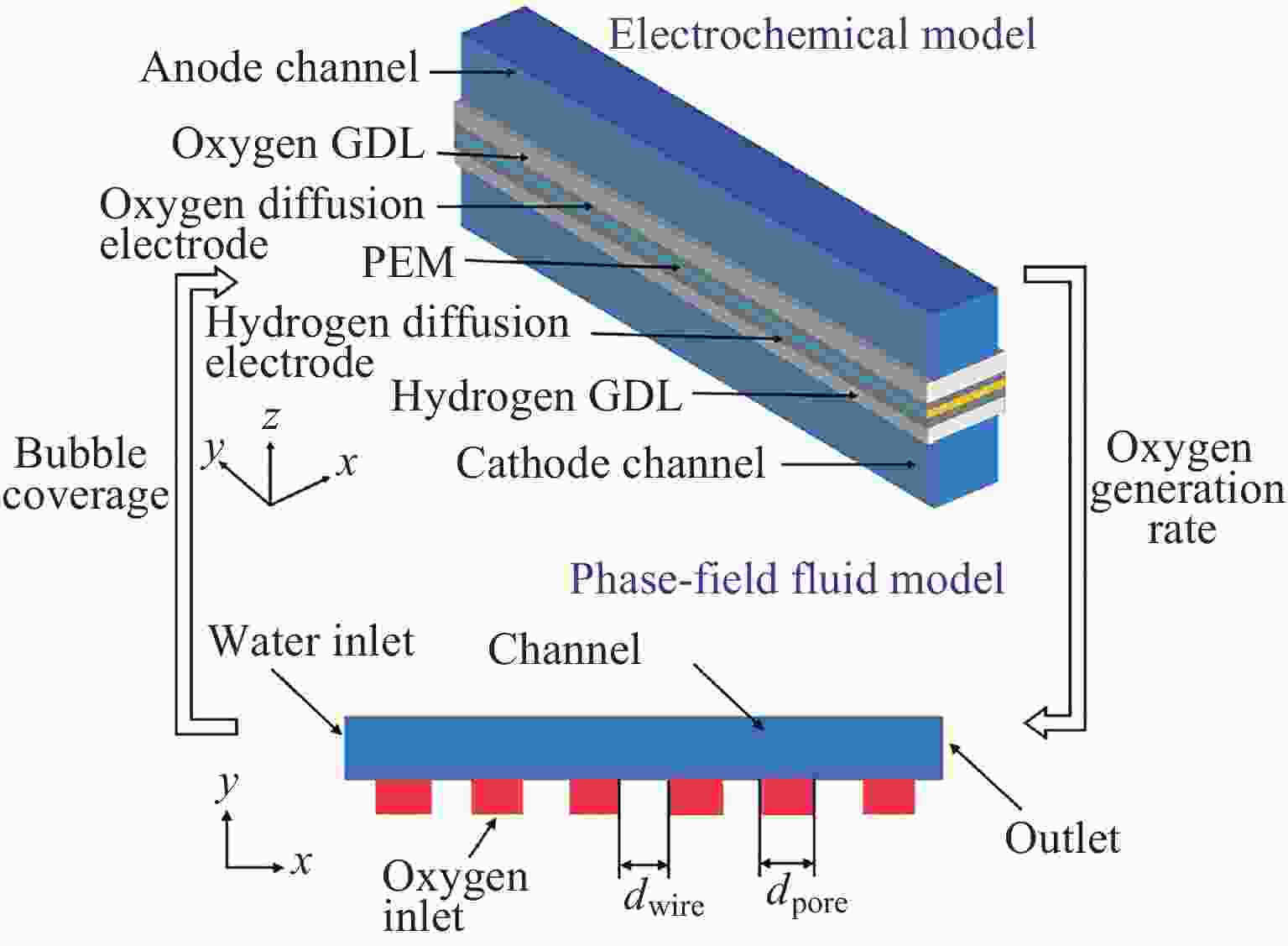
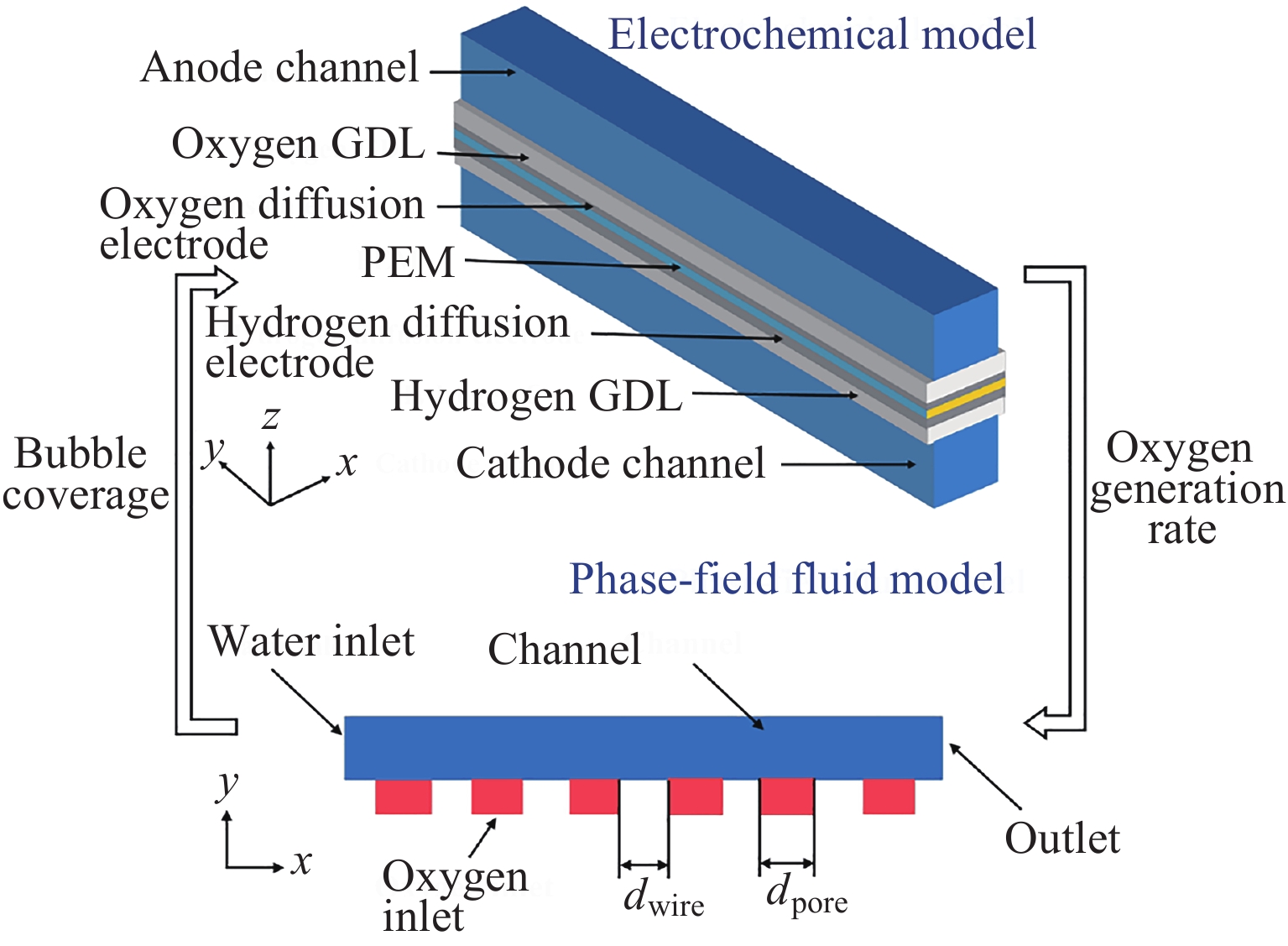
图 1 电化学模型耦合流体相场模型原理
Figure 1. Schematic diagram of electrochemical model coupled fluid phase field model
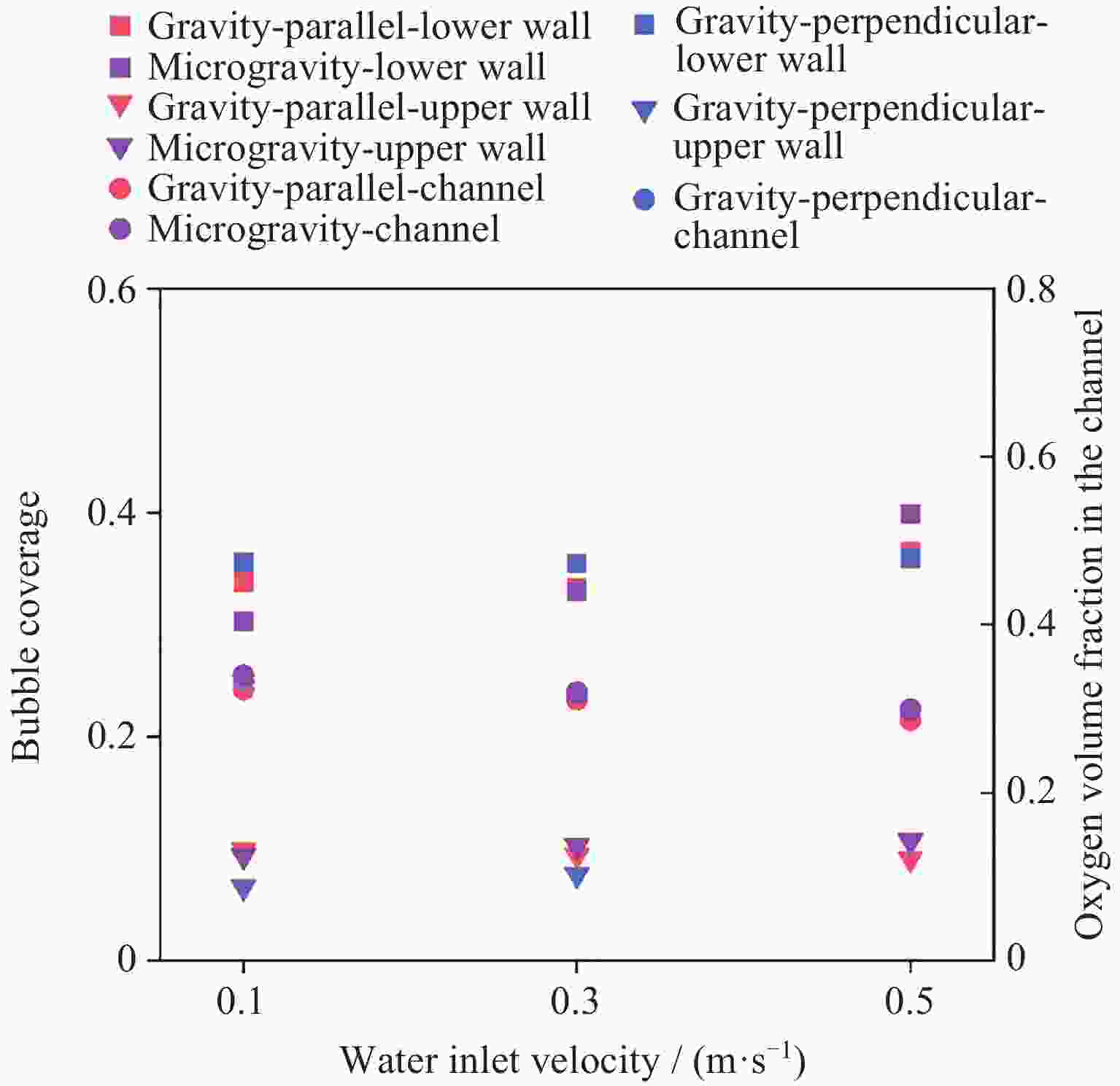
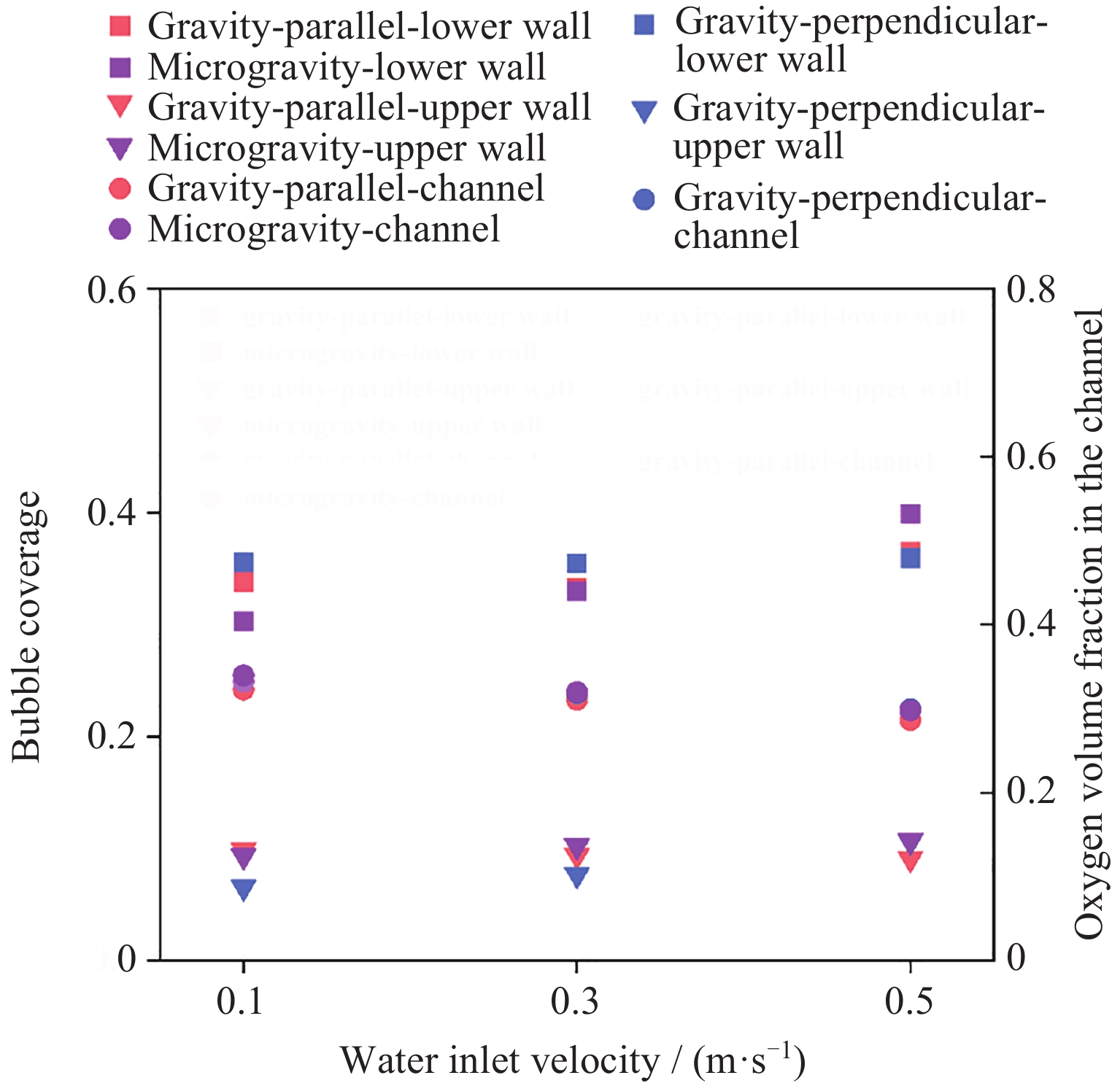
图 5 常重力环境和微重力环境不同入口水流速下的气泡覆盖率和氧气体积分数
Figure 5. Bubble coverage and oxygen volume fraction under different inlet water flow rates in normal gravity and microgravity environments
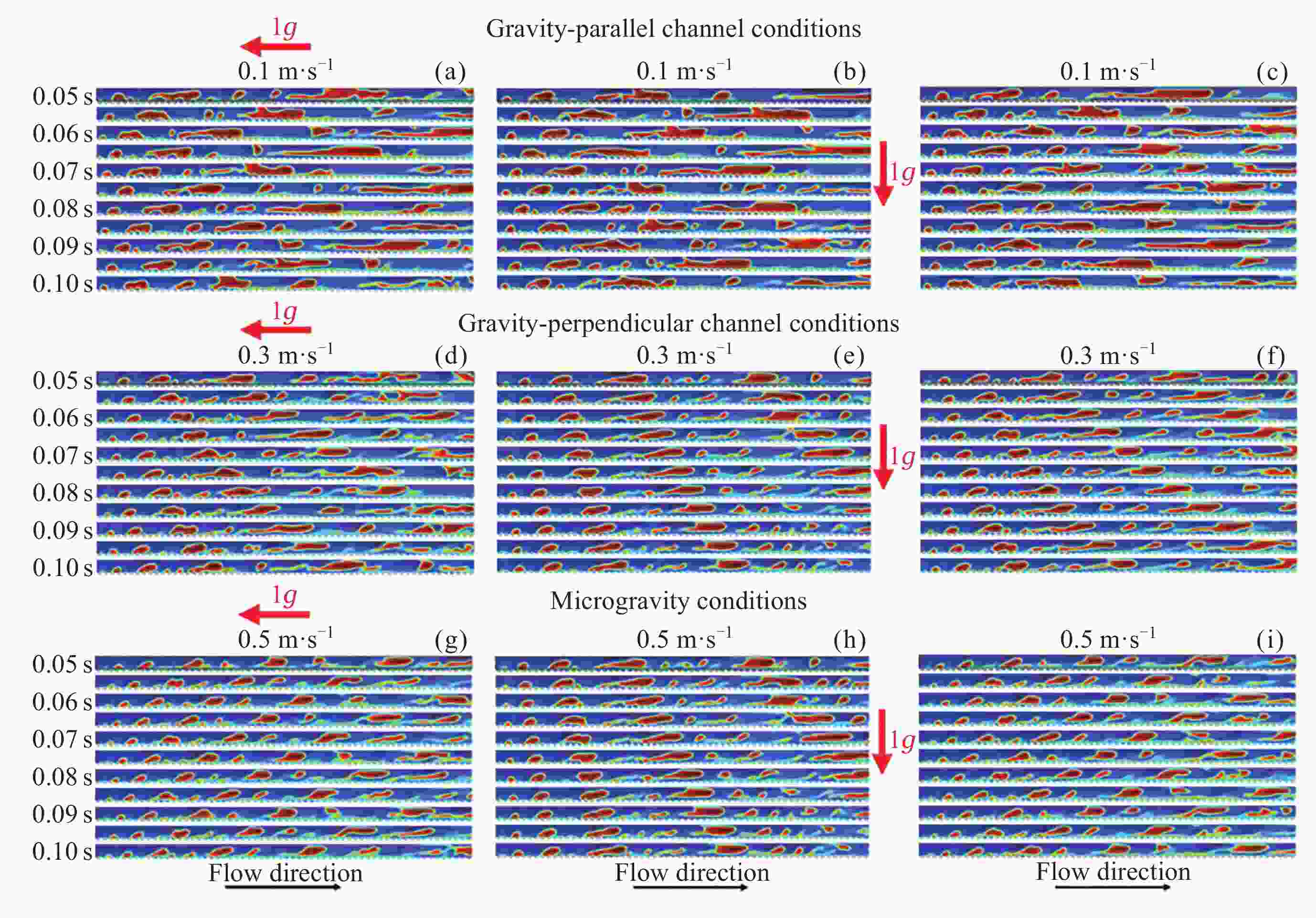
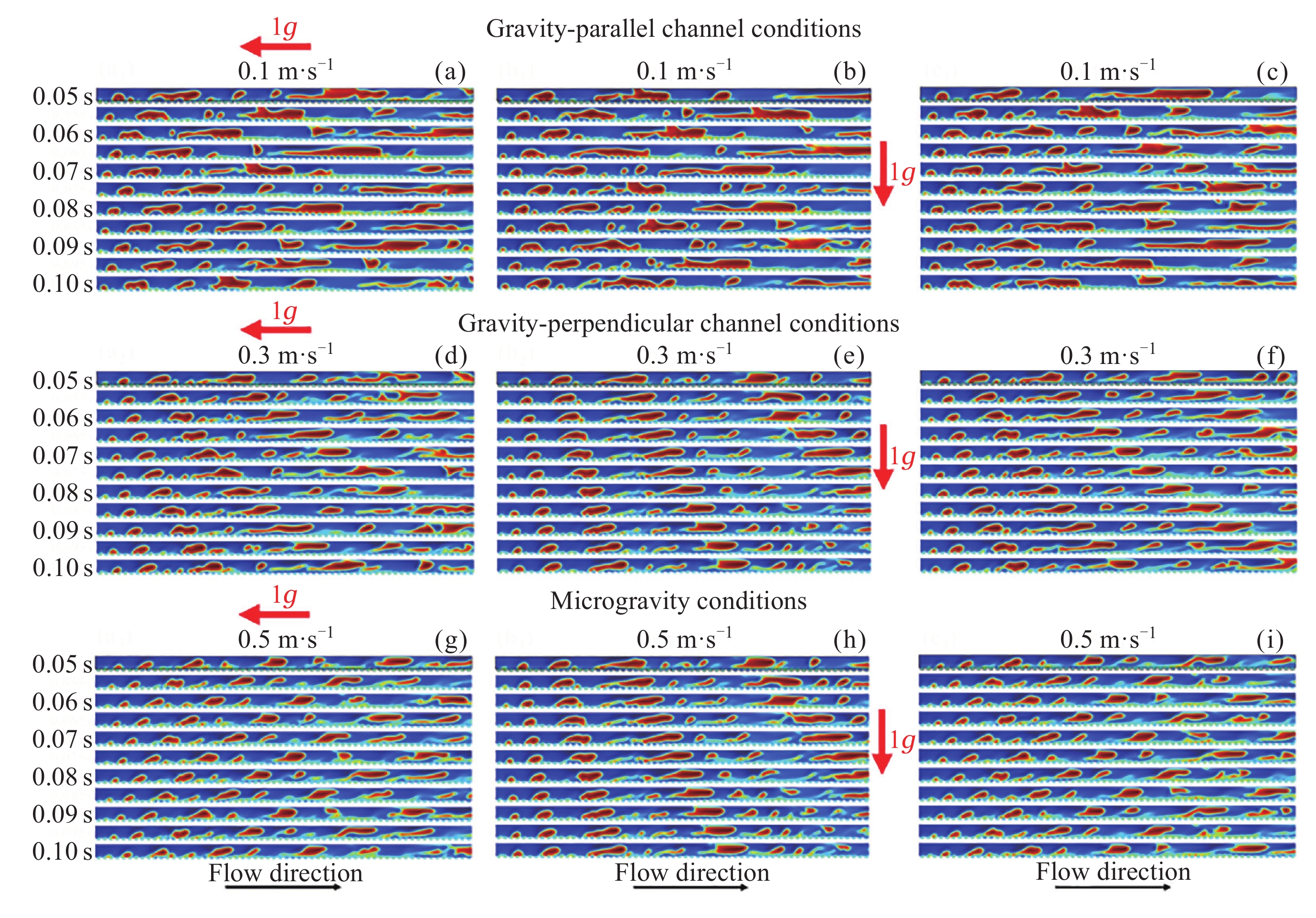
图 6 常重力环境与微重力环境不同入口水流速对两相流的影响
Figure 6. Effect of different inlet water velocities on two-phase flow in normal gravity and microgravity environments
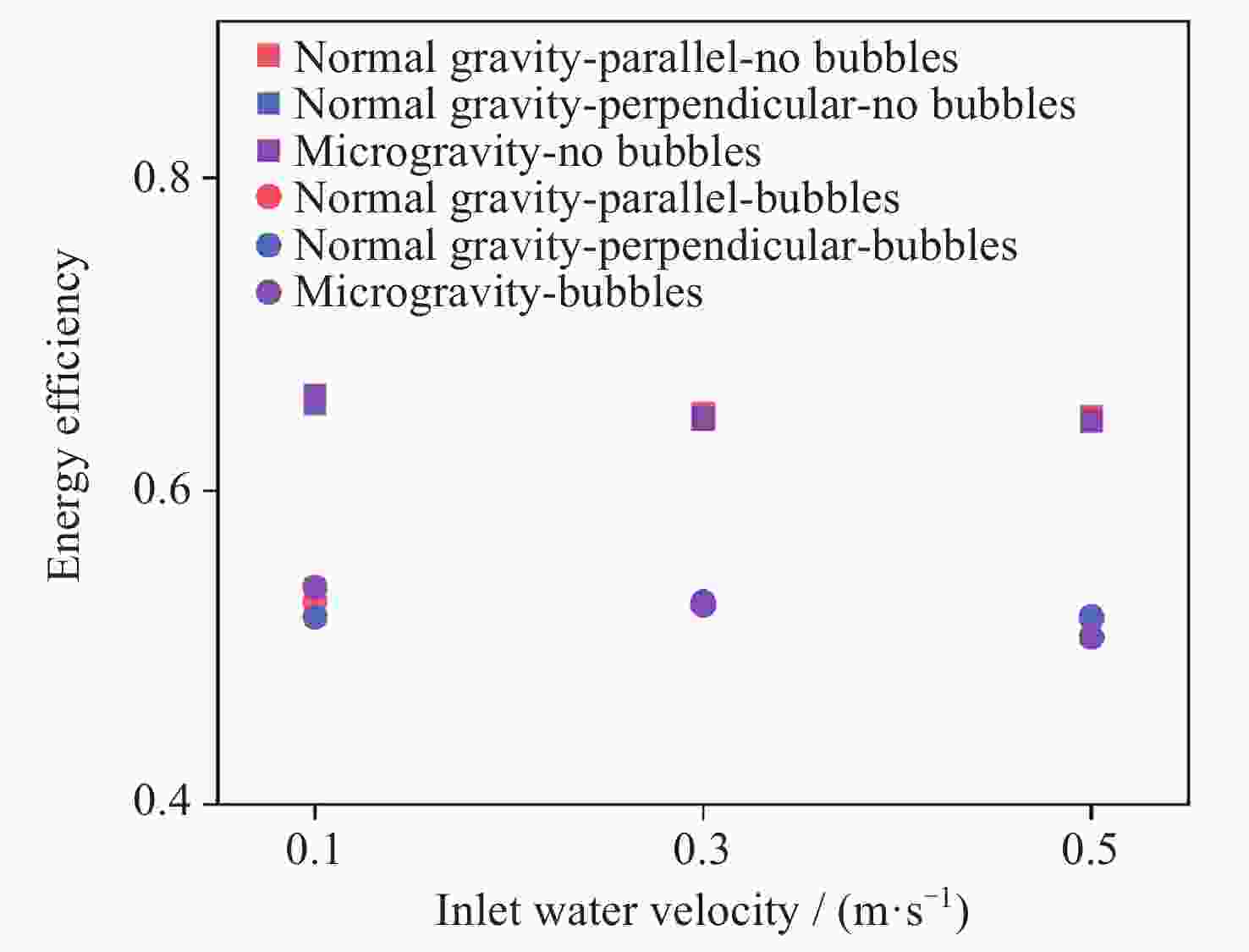
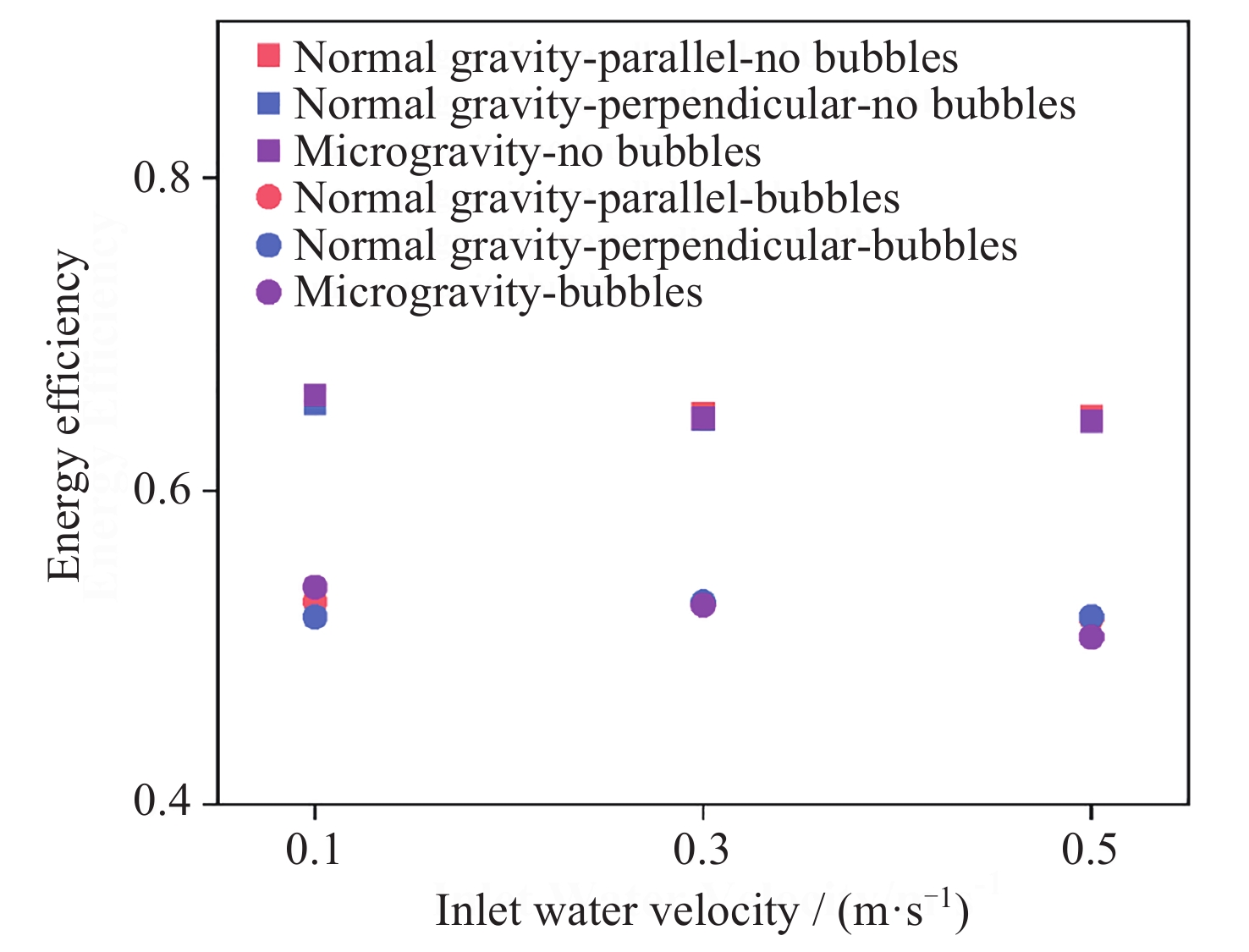
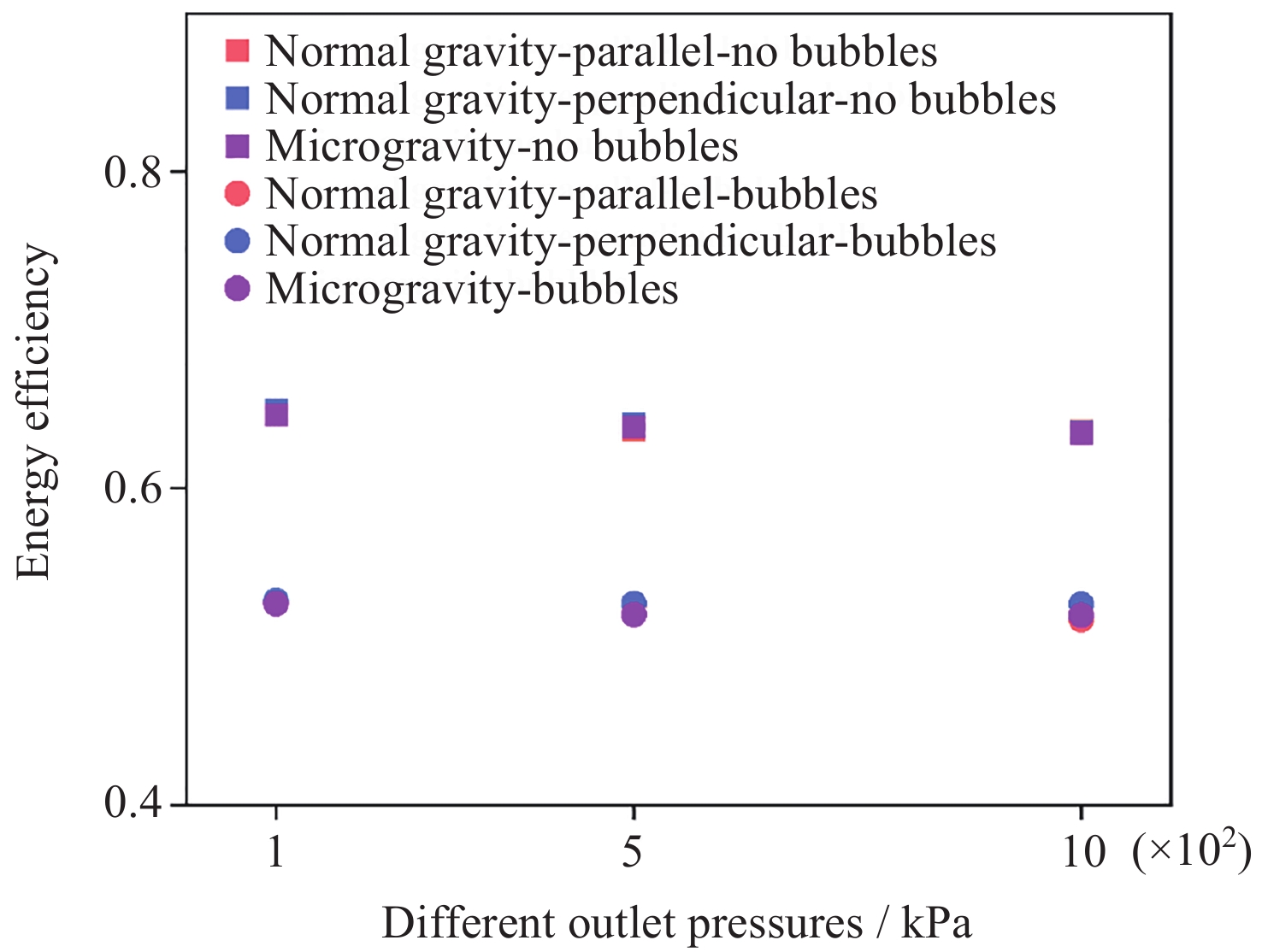
图 7 常重力环境和微重力环境不同入口水流速对能量效率的影响
Figure 7. Effect of different inlet water flow rates on energy efficiency in normal gravity and microgravity environments
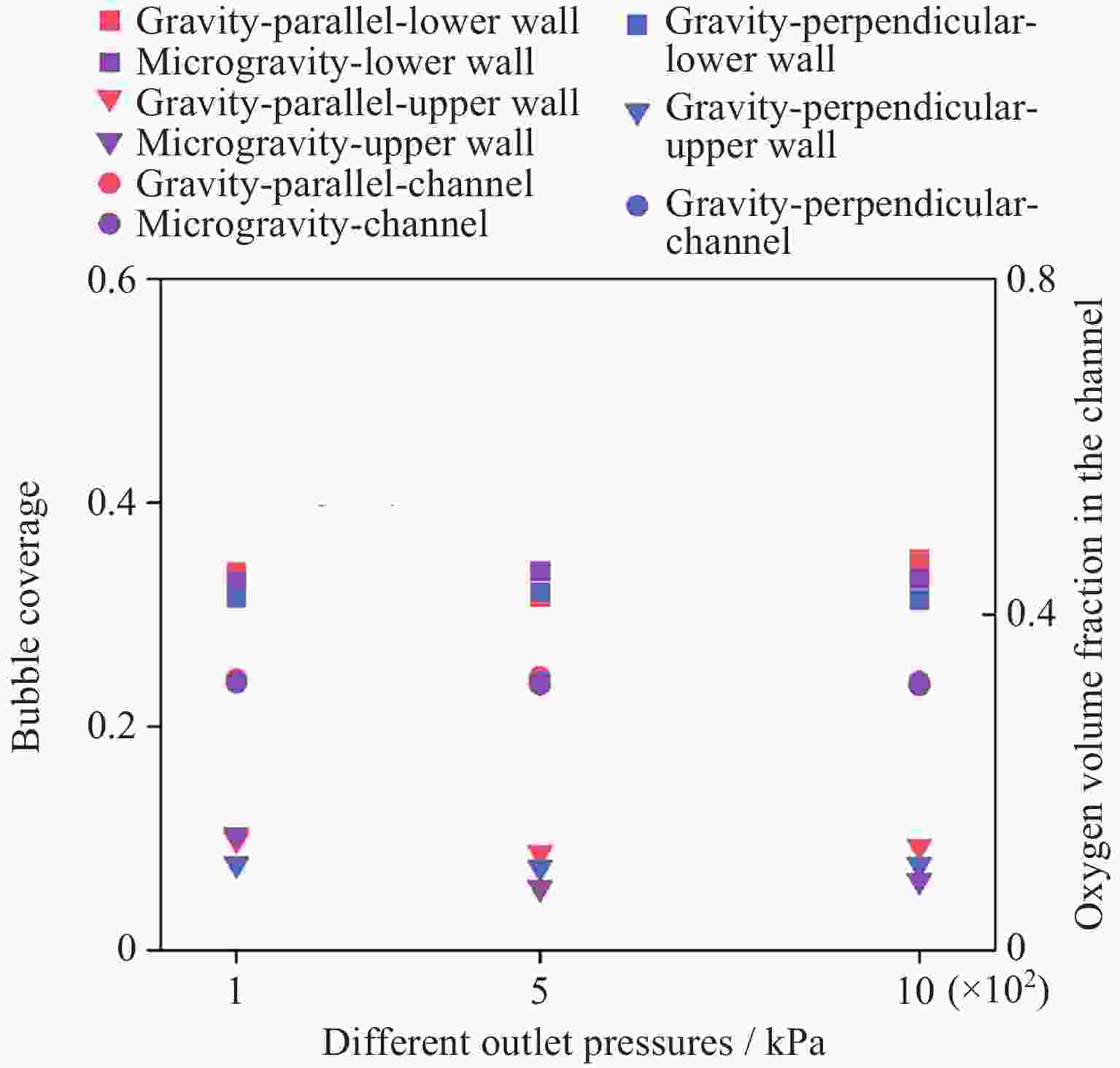
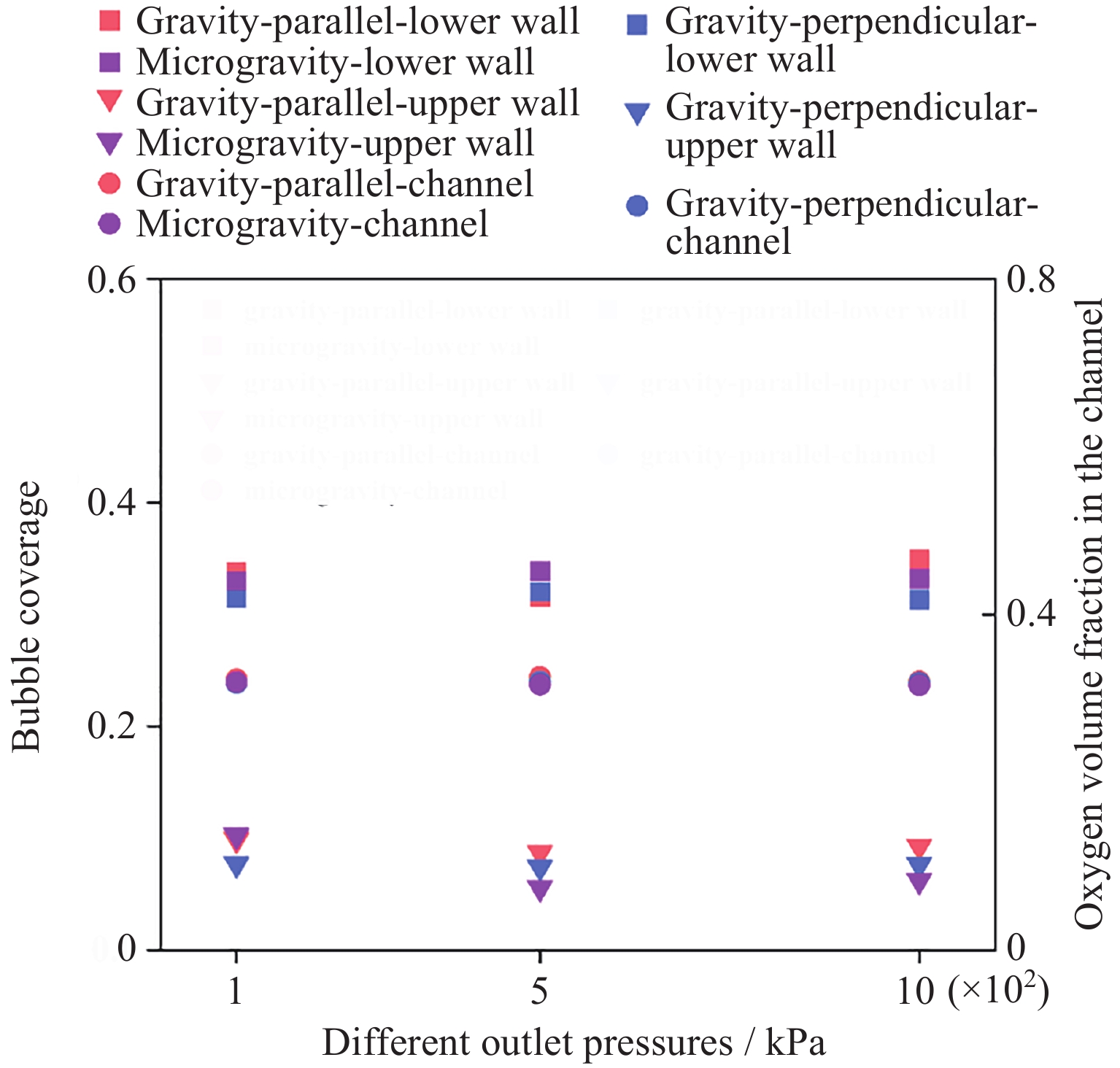
图 8 常重力环境和微重力环境不同出口压力下的气泡覆盖率和氧气体积分数
Figure 8. Bubble coverage and oxygen volume fraction under different outlet pressures in normal gravity and microgravity environments
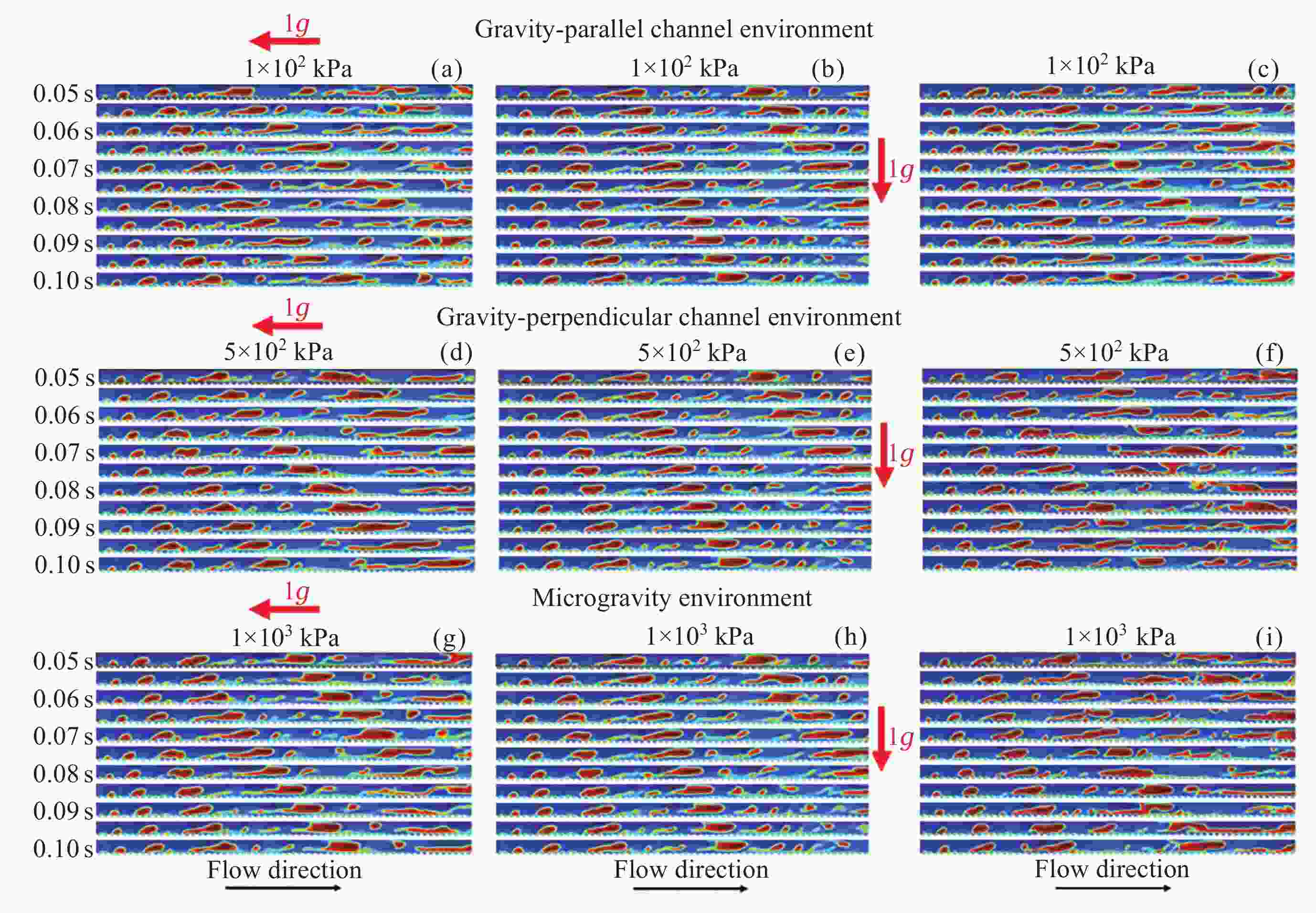
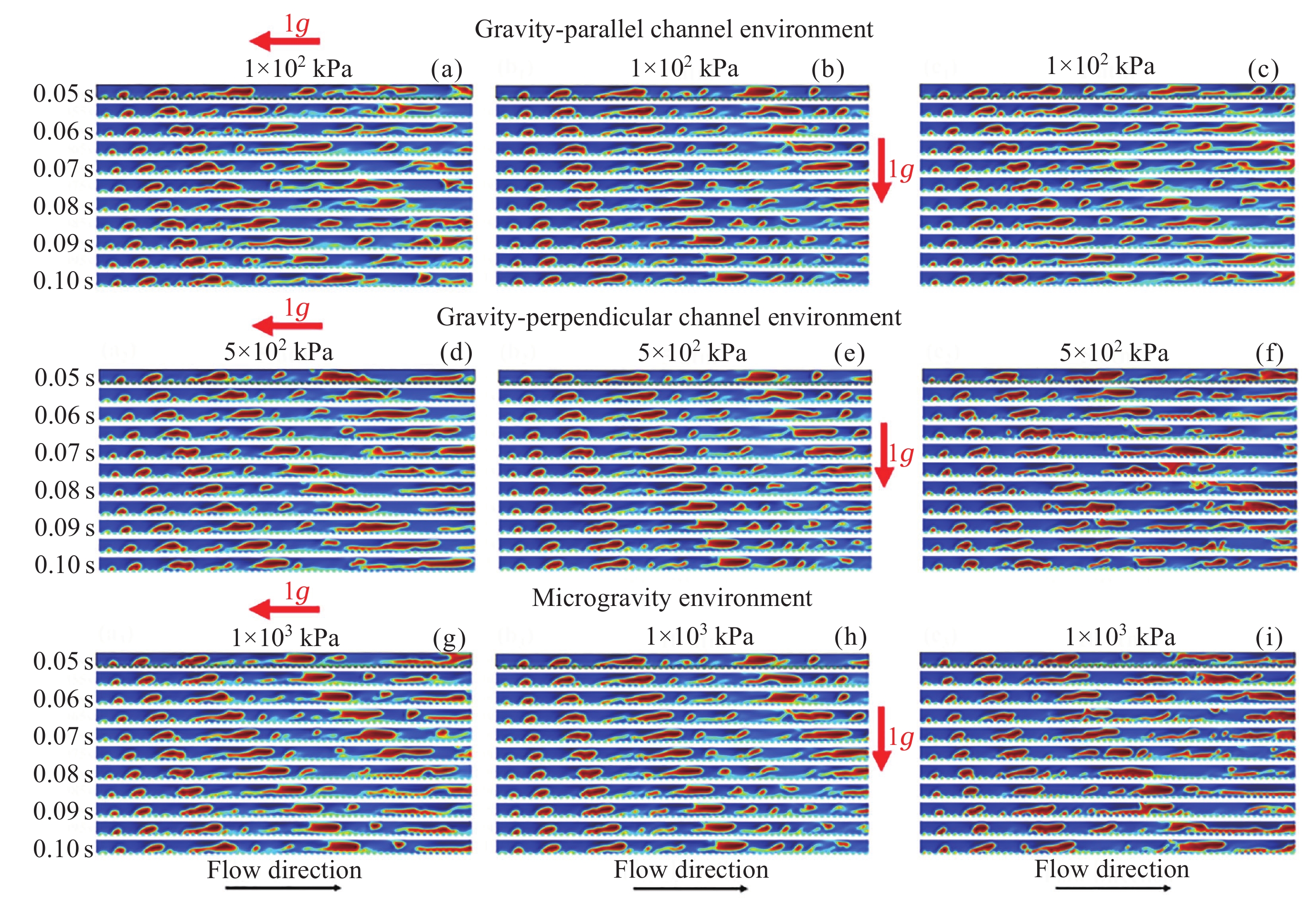
图 9 常重力环境与微重力环境不同出口压力对两相流的影响
Figure 9. Effect of different outlet pressures on two-phase flow in normal gravity and microgravity environments
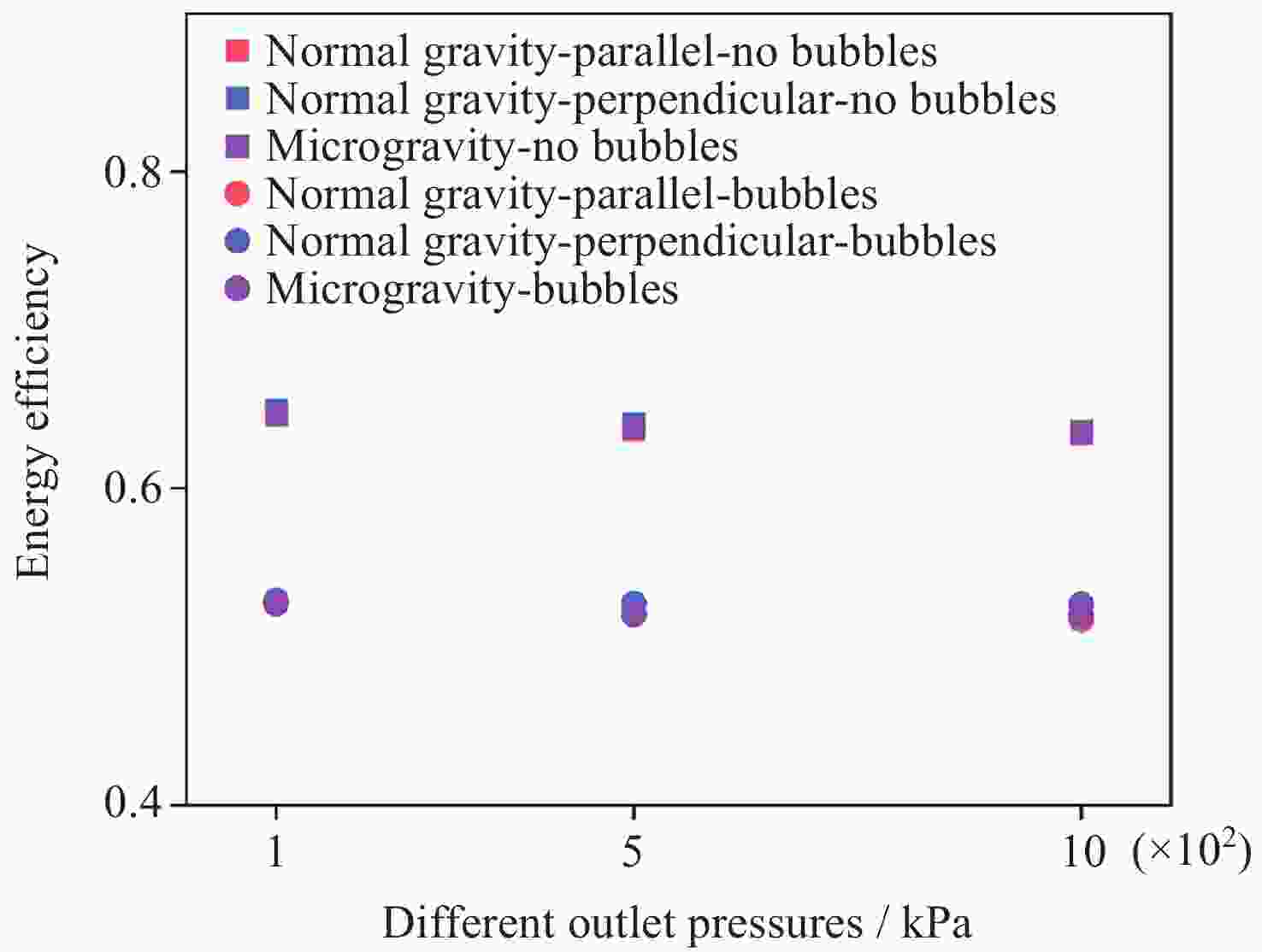
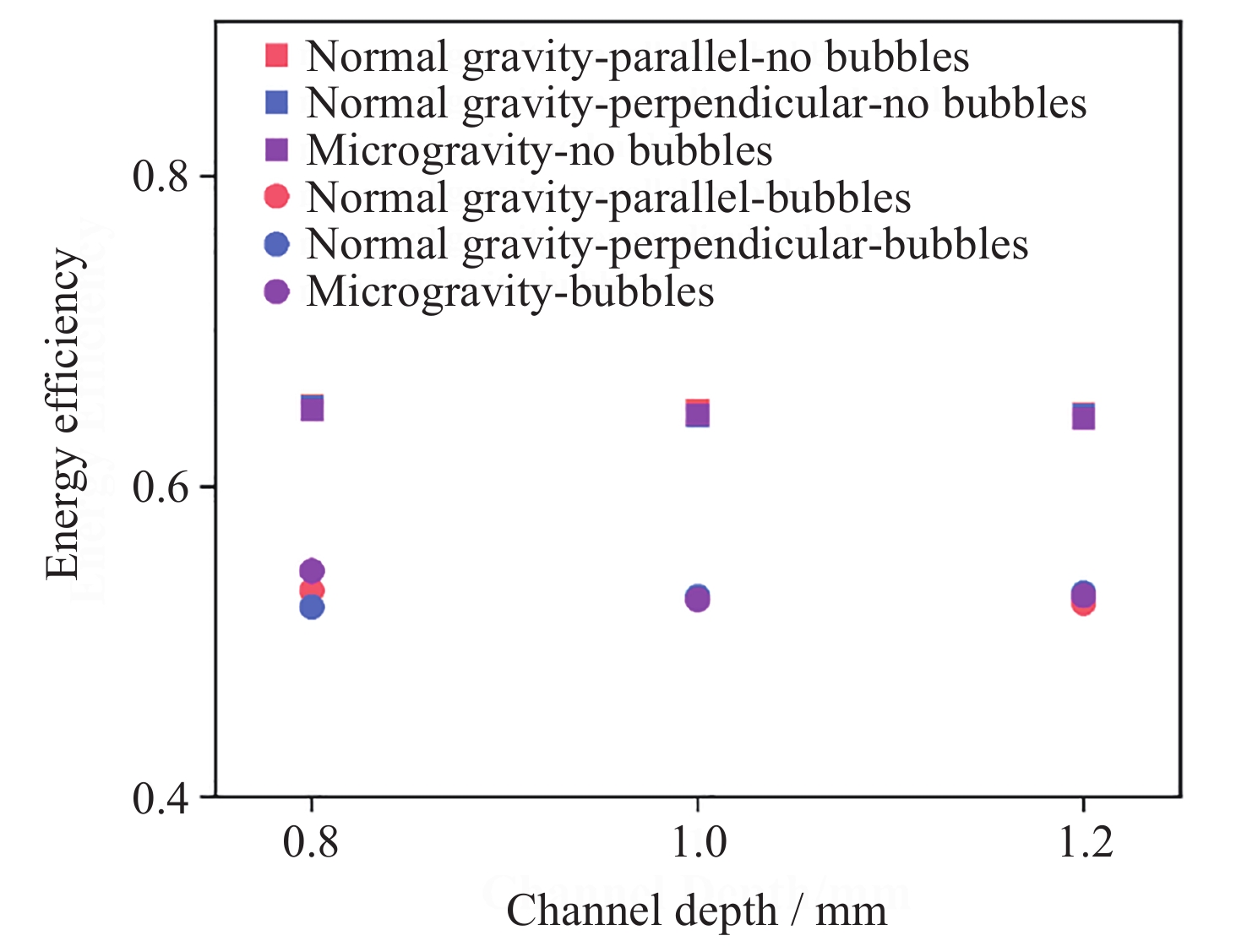
图 10 常重力环境和微重力环境不同流道深度对能量效率的影响
Figure 10. Effect of different channel depths on energy efficiency in normal gravity and microgravity environments
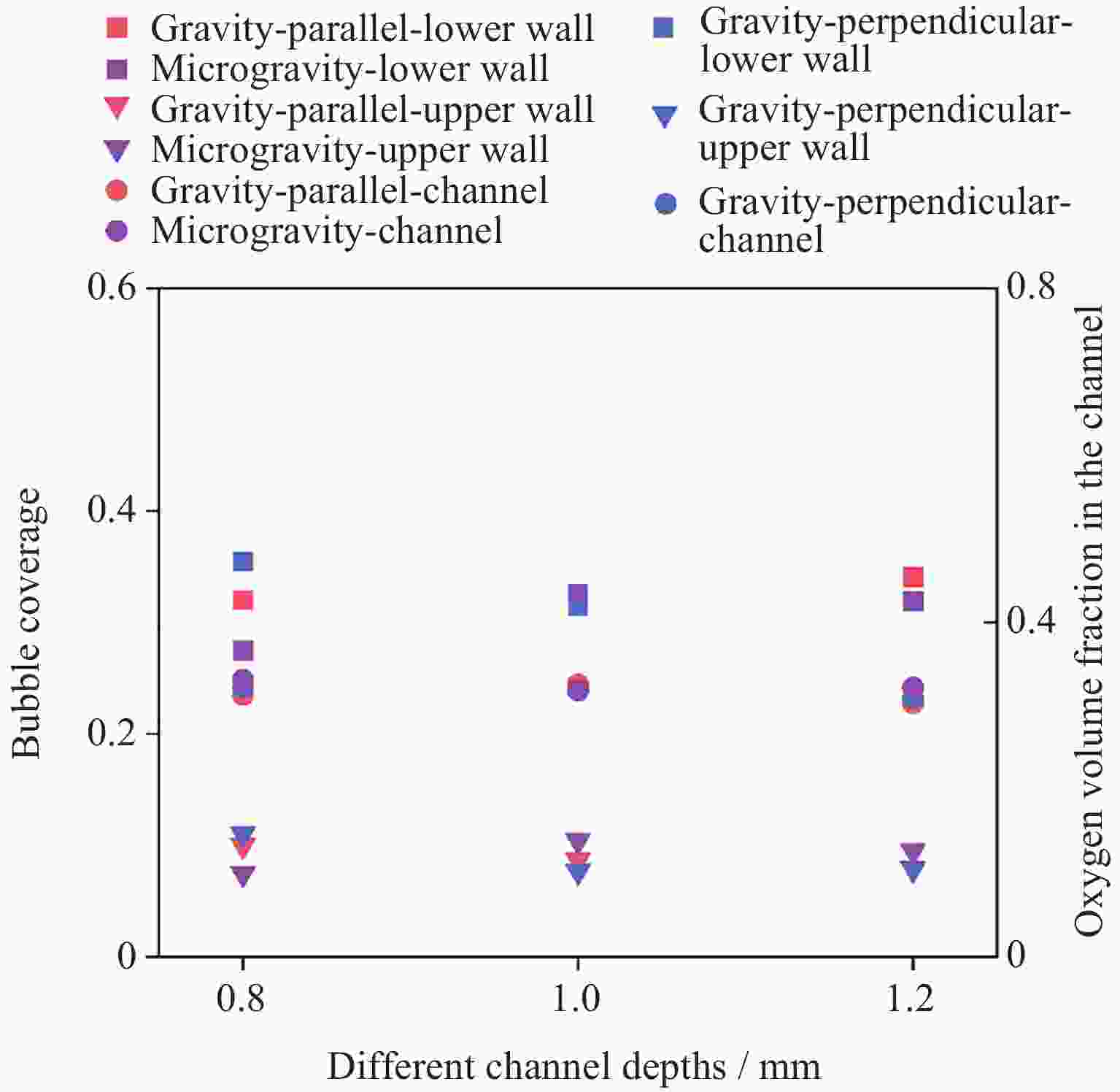
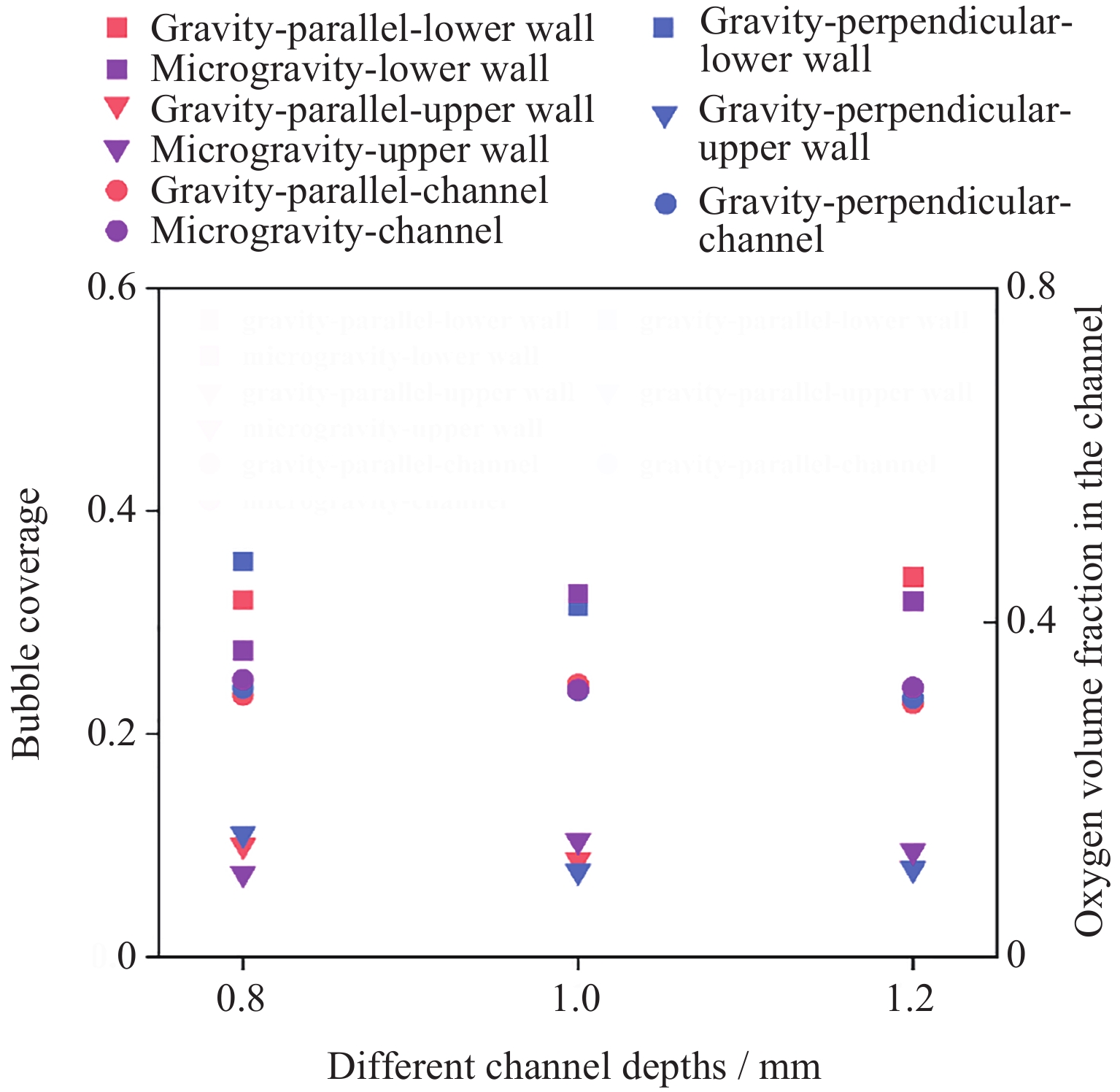
图 11 常重力环境和微重力环境不同流道深度下的气泡覆盖率和氧气体积分数
Figure 11. Bubble coverage and oxygen volume fraction at different channel depths under normal gravity and microgravity environments
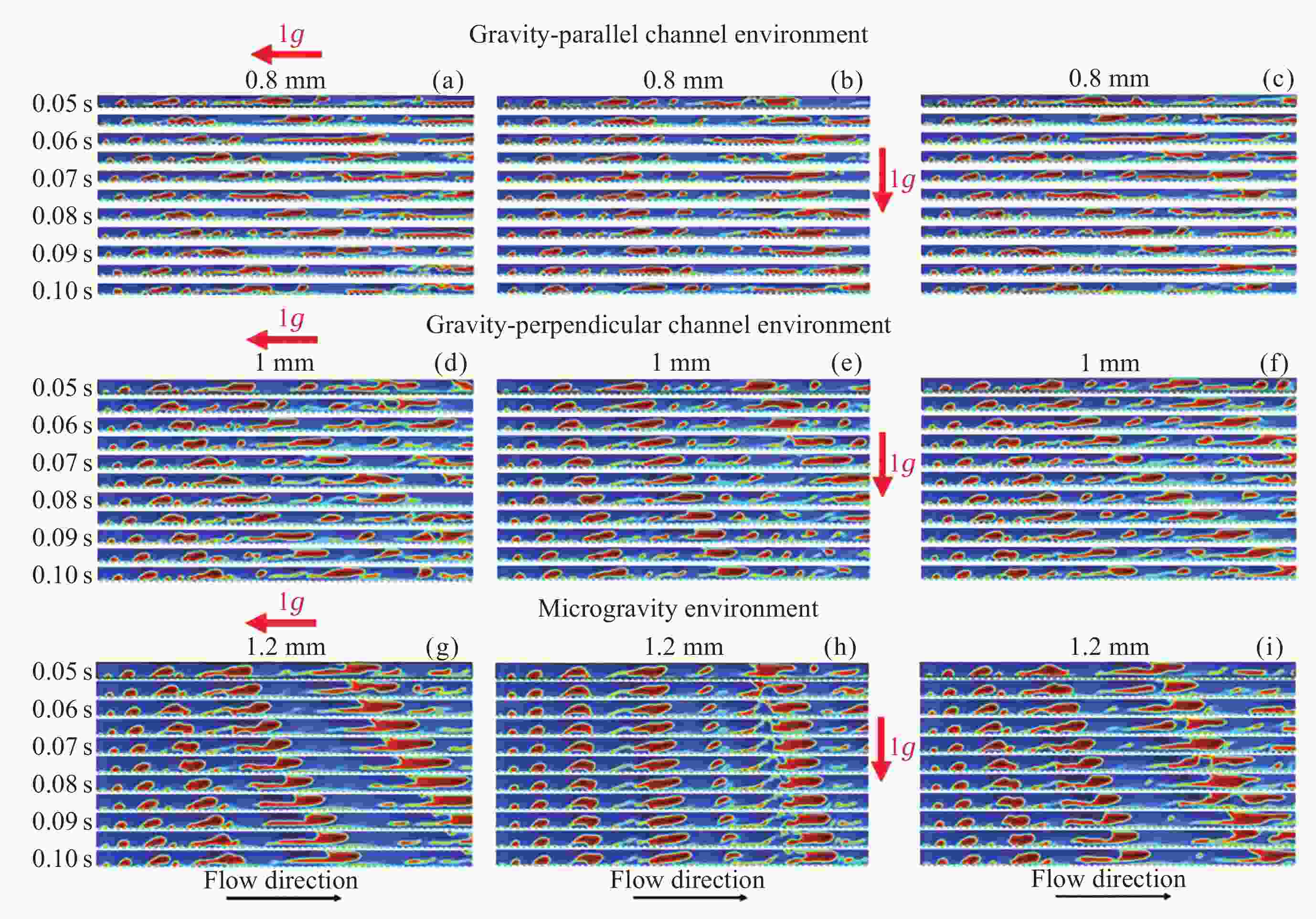
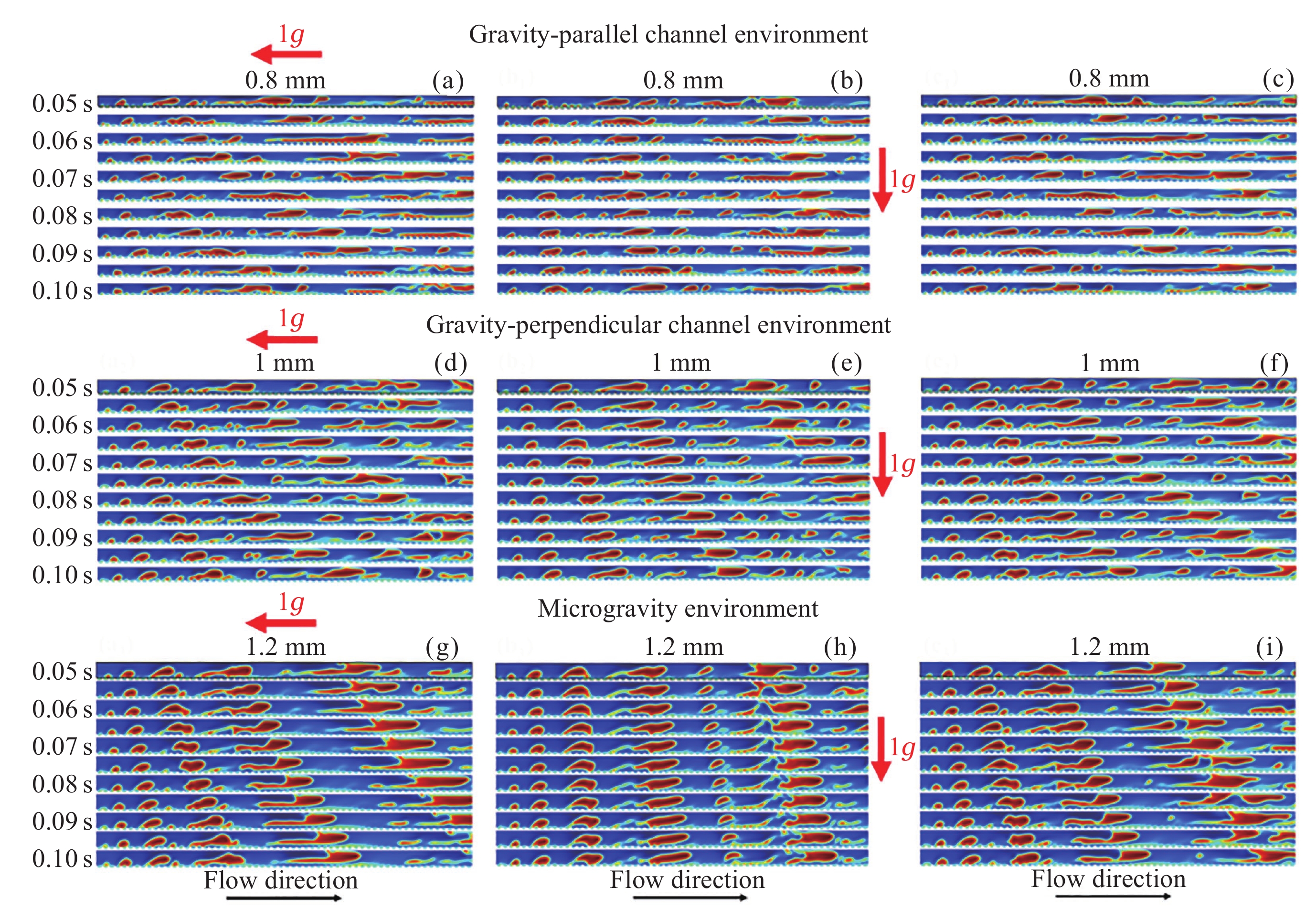
图 12 常重力环境和微重力环境不同流道深度对两相流的影响
Figure 12. Effects of different channel depths on two-phase flow in normal gravity and microgravity environments
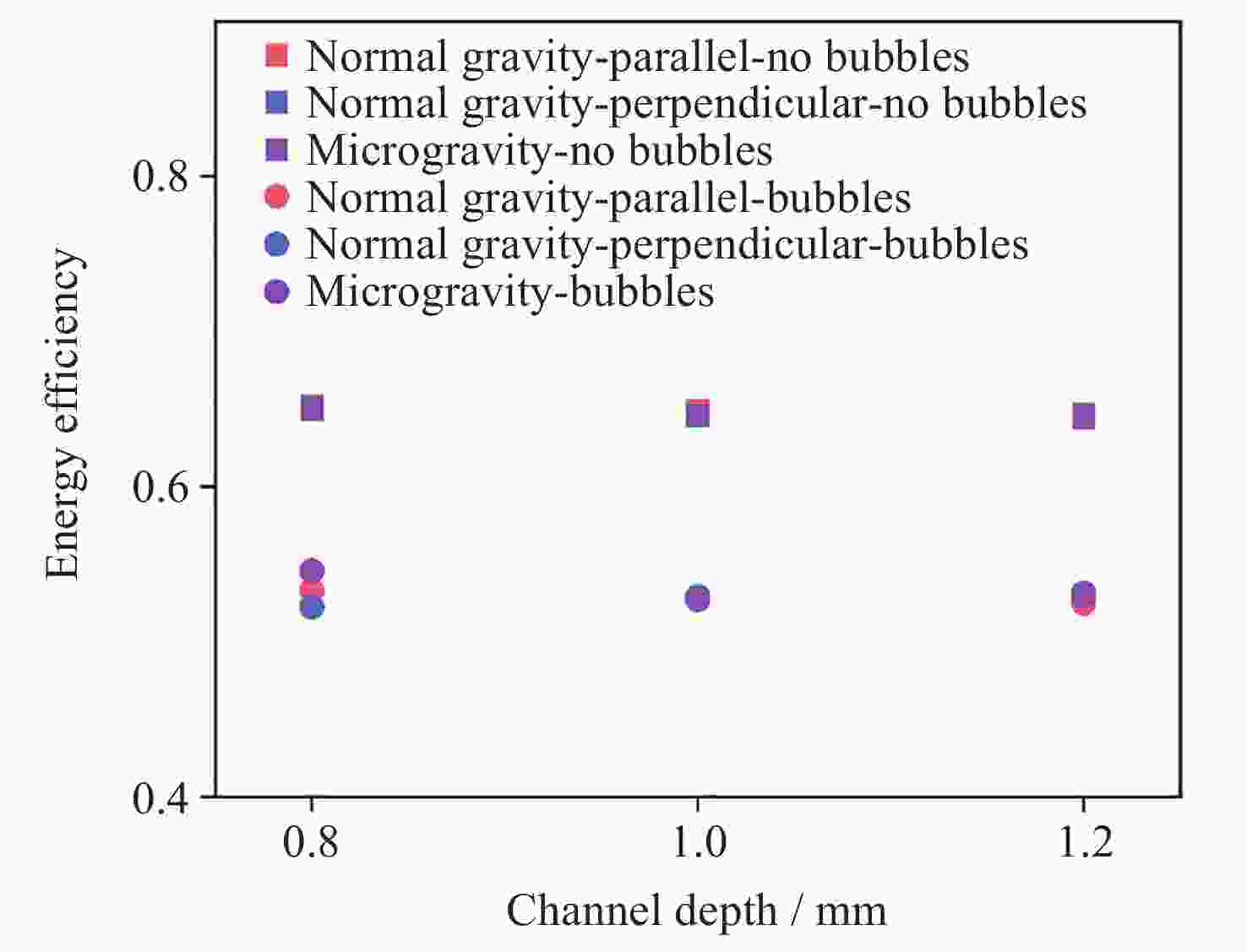
图 13 常重力环境和微重力环境不同流道深度对能量效率的影响
Figure 13. Effect of different channel depths on energy efficiency in normal gravity and microgravity environments
表 1 几何模型参数
Table 1. Geometric model parameters
参数 符号 数值 流道的长度和深度/mm $ L,H $ 30, 0.8 钛网的孔径和线径/mm $ {d}_{\mathrm{pore},}{d}_{\text{wire}} $ 0.3, 0.2 孔隙率 $ \varepsilon $ 0.6  下载: 导出CSV
表 2 流体相场边界条件
Table 2. Fluid phase field boundary entrance
参数 值 水的黏度/(kg·m–1·s–1) 0.001 氧气的黏度/(kg·m–1·s–1) 1.919×10⁻⁵ 表面张力/(N·m–1) 0.0726 比例因子 100 进水速度/(m·s–1) 0.1, 0.3, 0.5 出口压力水平(×103)/kPa 1, 5, 10 流道深度/mm 0.8, 1, 1.2
下载: 导出CSV
表 3 工作参数
Table 3. Working parameters
参数 符号 值 工作温度/K $ T $ 353.15 阳极参考交换电流密度/(A·m–2) $ {i}_{\mathrm{ref},\mathrm{a}} $ 10000 阴极参考交换电流密度/(A·m–2) $ {i}_{\mathrm{ref},\mathrm{c}} $ 1000 阳极和阴极转换系数[15] $ {\alpha }_{\mathrm{a}},{\alpha }_{\mathrm{c}} $ 0.5, 0.5 阳极和阴极气体扩散层的孔隙率[15] $ {\varepsilon }_{\mathrm{GDL},\mathrm{a}},{\varepsilon }_{\mathrm{GDL},\mathrm{c}} $ 0.6, 0.6 气体扩散层的绝对渗透率[16]/m2 $ {K}_{\text{GDL}} $ 1×10–12 气体扩散层的电导率/(S·m–1) $ {\sigma }_{\text{GDL}} $ 5000 膜的导热系数/(W·m–1·K–1) $ {k}_{\mathrm{M}} $ 0.68
下载: 导出CSV
-
[1] FENG Q, YUAN X Z, LIU G Y, et al. A review of proton exchange membrane water electrolysis on degradation mechanisms and mitigation strategies[J]. Journal of Power Sources, 2017, 366: 33-55 doi: 10.1016/j.jpowsour.2017.09.006 [2] ZOU J X, HAN N, YAN J Y, et al. Electrochemical compression technologies for high-pressure hydrogen: current status, challenges and perspective[J]. Electrochemical Energy Reviews, 2020, 3(4): 690-729 doi: 10.1007/s41918-020-00077-0 [3] LEE C, HINEBAUGH J, BANERJEE R, et al. Influence of limiting throat and flow regime on oxygen bubble saturation of polymer electrolyte membrane electrolyzer porous transport layers[J]. International Journal of Hydrogen Energy, 2017, 42(5): 2724-2735 doi: 10.1016/j.ijhydene.2016.09.114 [4] LIU R T, XU Z L, LI F M, et al. Recent advances in proton exchange membrane water electrolysis[J]. Chemical Society Reviews, 2023, 52(16): 5652-5683 doi: 10.1039/D2CS00681B [5] MURUGAIAH D K, SHAHGALDI S. Recent progress in understanding the dispersion stability of catalyst ink for proton exchange membrane fuel cell and water electrolyzer[J]. International Journal of Hydrogen Energy, 2024, 66: 156-169 doi: 10.1016/j.ijhydene.2024.04.036 [6] ZHOU T T, WANG C, CHENG X Z, et al. Two-phase flow characteristics on porous layer in PEM electrolyzer under different flow channel layouts[J]. International Journal of Hydrogen Energy, 2024, 80: 249-260 doi: 10.1016/j.ijhydene.2024.06.378 [7] SU X, XU L J, ZHU D, et al. Electrochemical performance study of proton exchange membrane electrolyzer considering the effect of bubble coverage[J]. International Journal of Hydrogen Energy, 2023, 48(70): 27079-27094 doi: 10.1016/j.ijhydene.2023.03.247 [8] JEON D H, KIM S, KIM M, et al. Oxygen bubble transport in a porous transport layer of polymer electrolyte water electrolyzer[J]. Journal of Power Sources, 2023, 553: 232322 doi: 10.1016/j.jpowsour.2022.232322 [9] NOURI-KHORASANI A, TABU OJONG E, SMOLINKA T, et al. Model of oxygen bubbles and performance impact in the porous transport layer of PEM water electrolysis cells[J]. International Journal of Hydrogen Energy, 2017, 42(48): 28665-28680 doi: 10.1016/j.ijhydene.2017.09.167 [10] HOSEINI LARIMI S Z, RAMIAR A, ESMAILI Q, et al. The effect of inlet velocity of water on the two-phase flow regime in the porous transport layer of polymer electrolyte membrane electrolyzer[J]. Heat and Mass Transfer, 2019, 55(7): 1863-1870 doi: 10.1007/s00231-018-2436-x [11] QIU Y, ZHANG R M, LIU C, et al. Numerical investigation on two-phase flow of PEM water electrolyzers under high operating pressures[J]. International Journal of Hydrogen Energy, 2025, 105: 817-834 doi: 10.1016/j.ijhydene.2025.01.331 [12] ZHU Feng, JIAO Feifei, WANG Fei, et al. Critical operating conditions and water supply optimization of electrolytic oxygen generation system under microgravity environment[J]. Chinese Space Science and Technology, 2025, 45(2): 42-50 [13] GARCÍA-SALABERRI P A. 1D two-phase, non-isothermal modeling of a proton exchange membrane water electrolyzer: an optimization perspective[J]. Journal of Power Sources, 2022, 521: 230915 doi: 10.1016/j.jpowsour.2021.230915 [14] WU L Z, ZHANG G B, XIE B, et al. Integration of the detailed channel two-phase flow into three-dimensional multi-phase simulation of proton exchange membrane electrolyzer cell[J]. International Journal of Green Energy, 2021, 18(6): 541-555 doi: 10.1080/15435075.2020.1854270 [15] ZHOU H R, MENG K, CHEN W S, et al. 3D two‐phase and non‐isothermal modeling for PEM water electrolyzer: heat and mass transfer characteristic investigation[J]. International Journal of Energy Research, 2022, 46(12): 17126-17143 doi: 10.1002/er.8375 [16] ZHANG Z Q, XING X H. Simulation and experiment of heat and mass transfer in a proton exchange membrane electrolysis cell[J]. International Journal of Hydrogen Energy, 2020, 45(39): 20184-20193 doi: 10.1016/j.ijhydene.2020.02.102 -
-

 下载:
下载:

计量
- 文章访问数: 1610
- HTML全文浏览量: 651
- PDF下载量: 118
-
被引次数:
0(来源:Crossref)
0(来源:其他)

