


南极球载天文观测
doi: 10.11728/cjss2026.03.2025-0191 cstr: 32142.14.cjss.2025-0191
-
 程骏飞 男, 2002年3月出生于河北省沧州市, 现为中国科学院空天信息创新研究院研究生, 主要研究方向为临近空间风速测量技术、浮空器动力学控制
 -
 周江华 男, 1973年2月出生于江西省鹰潭市, 现为中国科学院空天信息创新研究院研究员, 中国科学院大学兼职教授, 博士生导师. 主要研究方向为临近空间飞行器飞行动力学与控制技术, 飞行任务规划和数字化仿真技术、自动驾驶仪与飞控系统工程研制. E-mail: Zhoujh@aircas.ac.cn
作者简介:
通讯作者:
Balloon-borne Astronomical Observations in Antarctica
-
摘要: 南极大气凭借极低水汽含量和多种波段高透射率成为天文观测的绝佳地点之一. 尤其是其独特的极昼条件和稳定的极地涡旋, 为科学气球实现长时间定高飞行与绕极漂流提供了有利条件, 使科学气球成为低成本、高效率的观测平台. 1984年以来南极科学气球以美国麦克默多站为主要发放基地, 已完成数百项球载观测实验. 其中天文观测占主要部分, 涵盖粒子天体物理与非粒子天体物理两大领域, 涉及宇宙微波背景辐射测量, 星系太赫兹与宽波段光谱成像, 中微子与反物质观测等多项科学实验. 基于公开文献, 针对南极地区开展的高空球载天文观测实验进行系统综述, 并对中国南极气球基地建设进行展望: 开展环极长时间气球天文实验, 对提升中国的科学竞争力、增强南极地区的国际话语权具有重要意义.Abstract: Antarctica is widely regarded as one of the most favorable natural laboratories for astronomy, owing to its exceptionally low atmospheric water vapor and correspondingly high transmittance across multiple wavebands. Beyond these radiative advantages, the Antarctic summer provides a unique operational regime for stratospheric scientific balloons: continuous daylight and a relatively stable polar vortex support long-duration, near-constant-float-altitude flights with circumpolar trajectories. These conditions enable balloon platforms to deliver space-like observing environments at substantially lower cost, with the added benefits of rapid iteration, recoverable payloads, and flexible mission design. Since 1984, the U.S. Antarctic balloon program-launched primarily from McMurdo Station-has carried out hundreds of balloon-borne experiments, with astronomical and astrophysical missions forming a major fraction of the overall portfolio. The resulting body of work spans two broad domains: particle astrophysics and electromagnetic (photon) astronomy. Representative themes include measurements of the Cosmic Microwave Background (CMB), terahertz observations and broadband spectral imaging of Galactic targets, and particle-oriented investigations such as neutrino-related observations and searches for antimatter components. Together, these missions have helped advance frontier science while simultaneously maturing key enabling technologies for near-space instrumentation, including long-duration platform operations, pointing and stabilization, low-noise detector readout, cryogenic subsystems, background suppression strategies, and robust telemetry, recovery, and reflight capability. Building on publicly available literature and mission records, this paper provides a systematic review of Antarctic balloon-borne astronomical experiments, organizing prior efforts by observing band, scientific objective, and payload and instrument class. By synthesizing the scientific drivers and the evolution of mission concepts, the review also highlights how Antarctic ballooning serves as a practical bridge between ground-based facilities and space missions-de-risking high-impact hardware and observation strategies in a repeatable, lower-cost environment. Finally, we discuss prospects for developing China’s Antarctic balloon infrastructure. Establishing a dedicated polar balloon capability and conducting long-duration circumpolar balloon astronomy campaigns would strengthen China’s competitiveness in near-space astrophysics, accelerate technology readiness through iterative fielding, and enhance China’s scientific visibility and influence in Antarctic research.
-
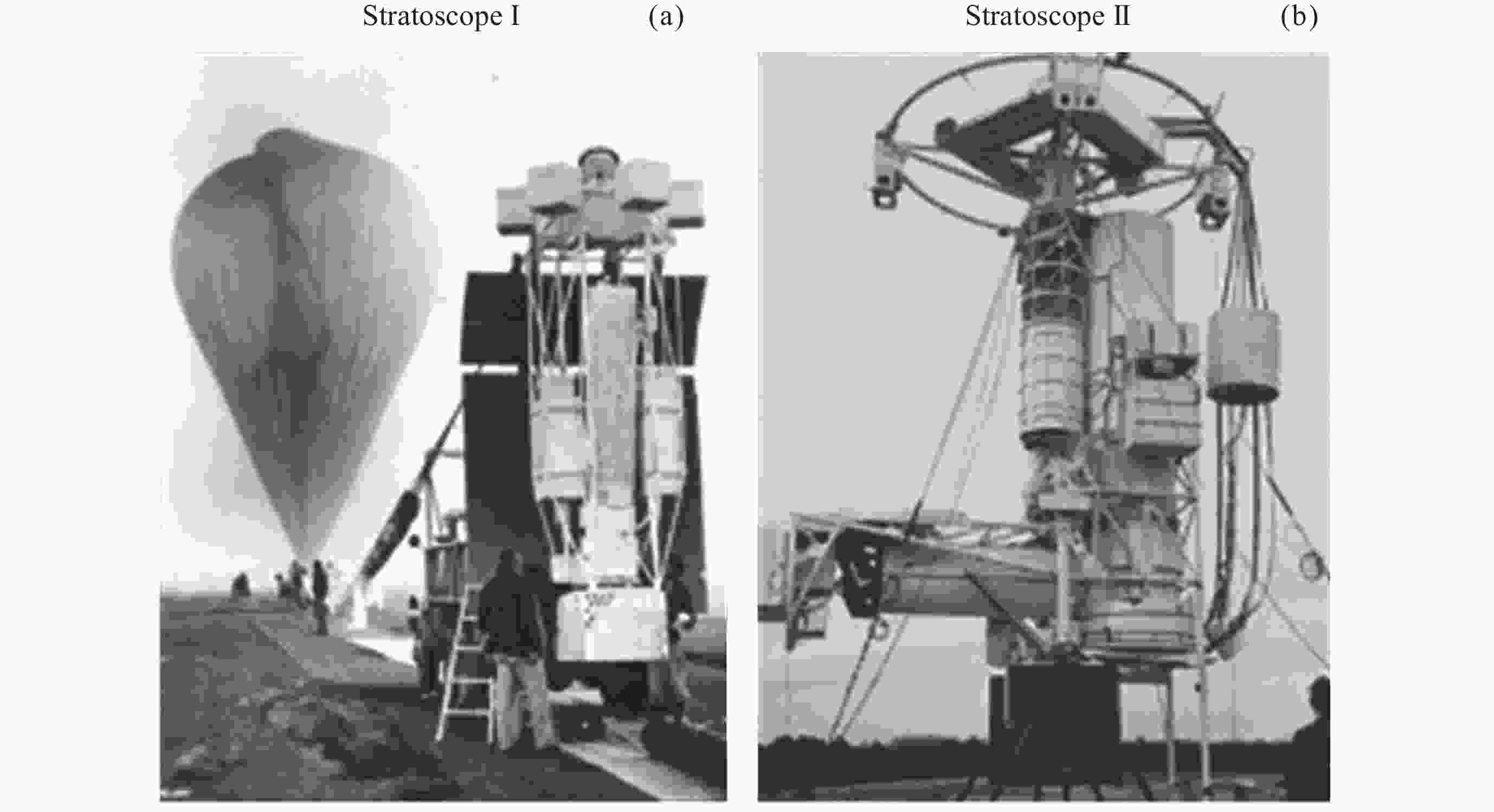
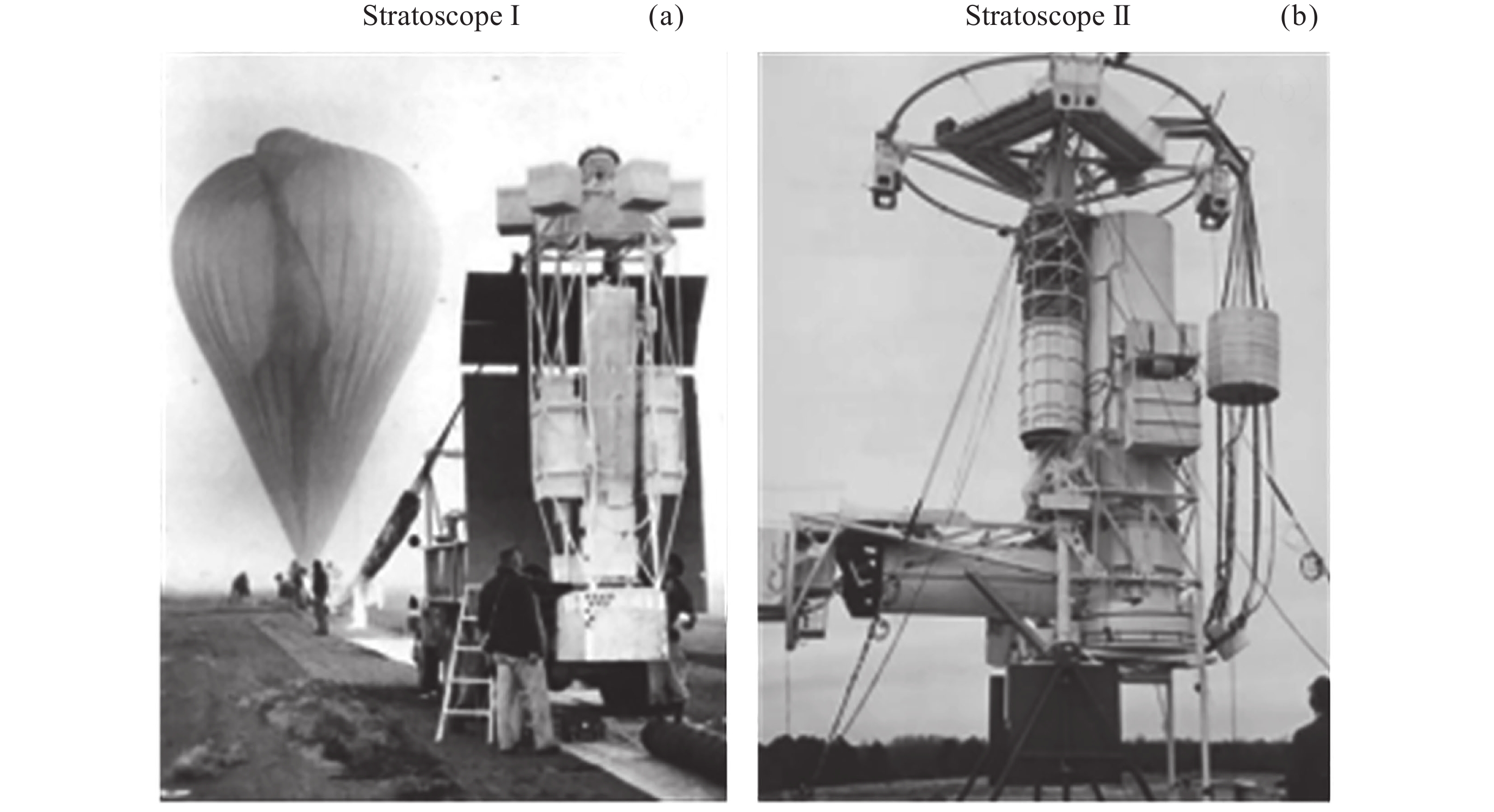
图 1 Stratoscope系列球载望远镜实物
Figure 1. Photographs of Stratoscope series balloon-borne telescopes
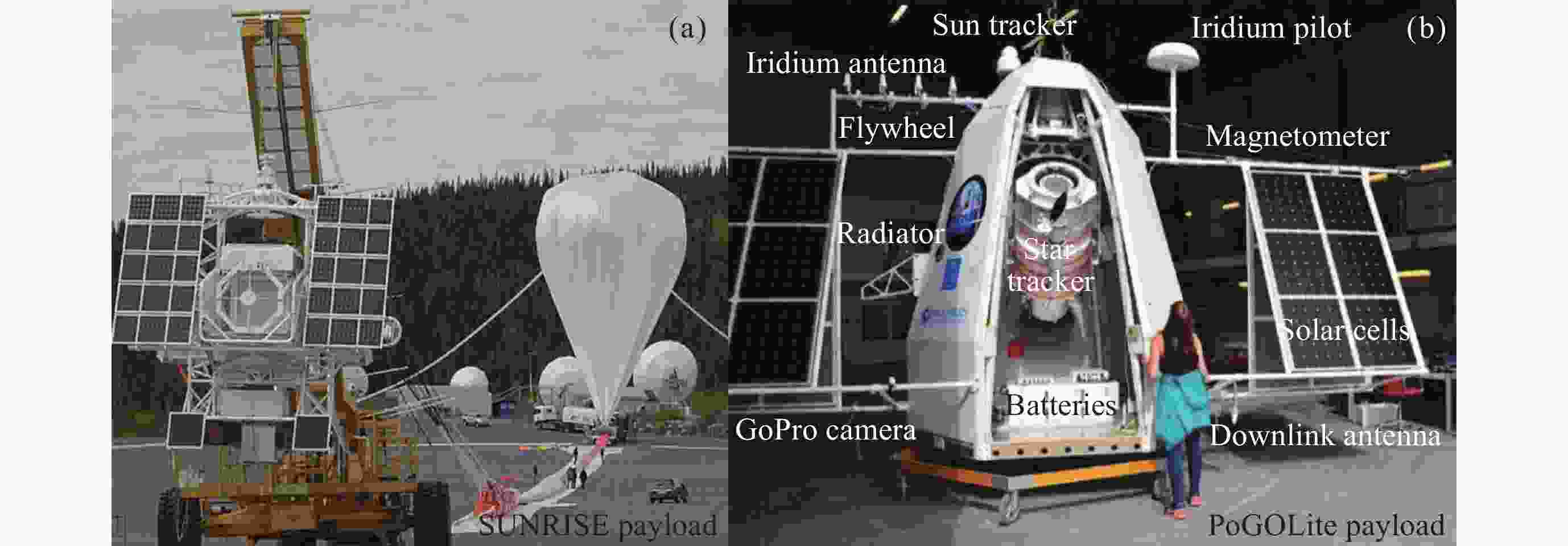
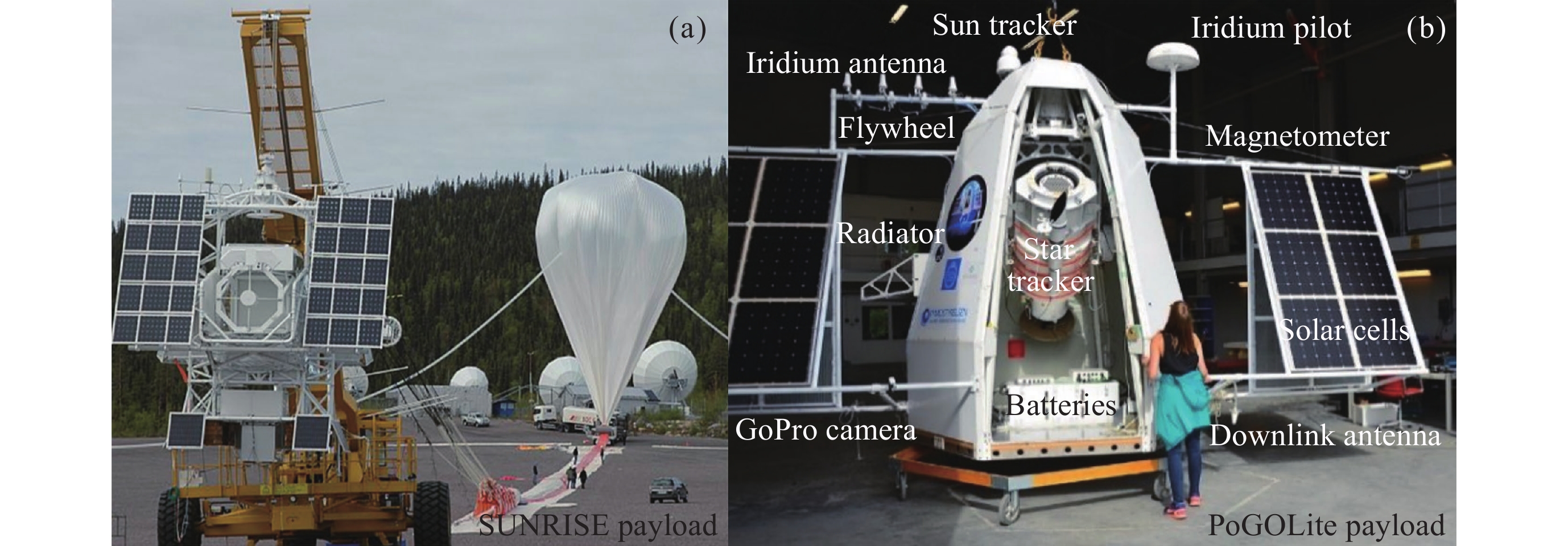
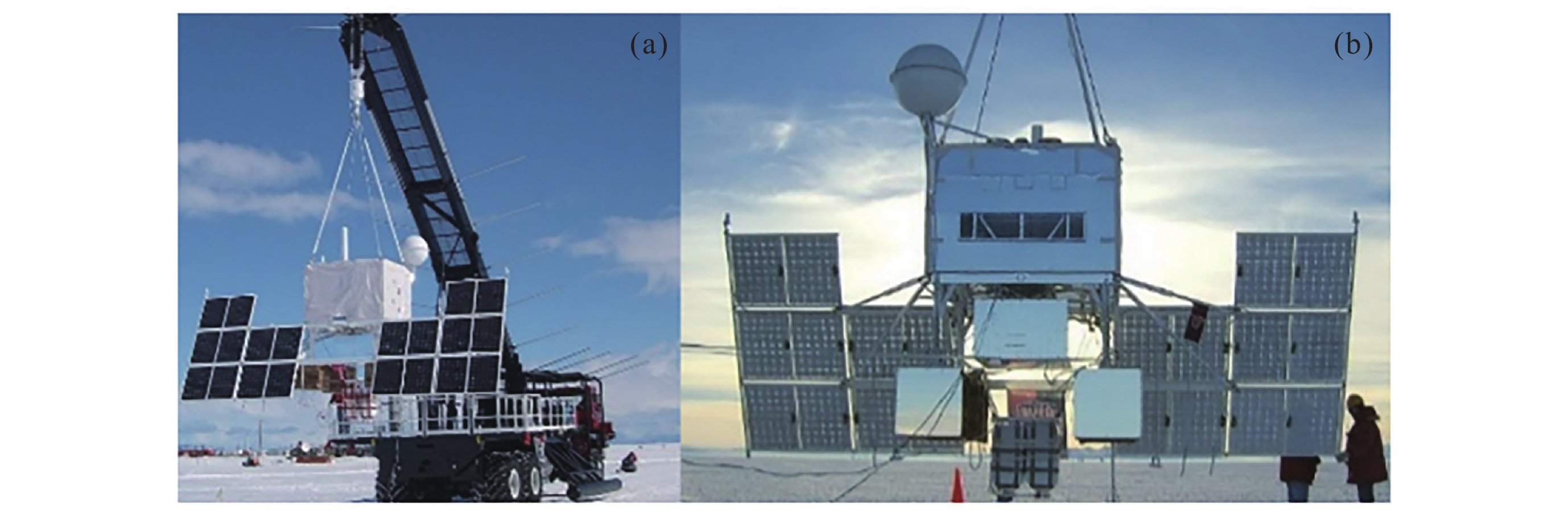
图 2 SUNRISE载荷与PoGOLite载荷实物
Figure 2. Physical images of SUNRISE payload and PoGOLite payload
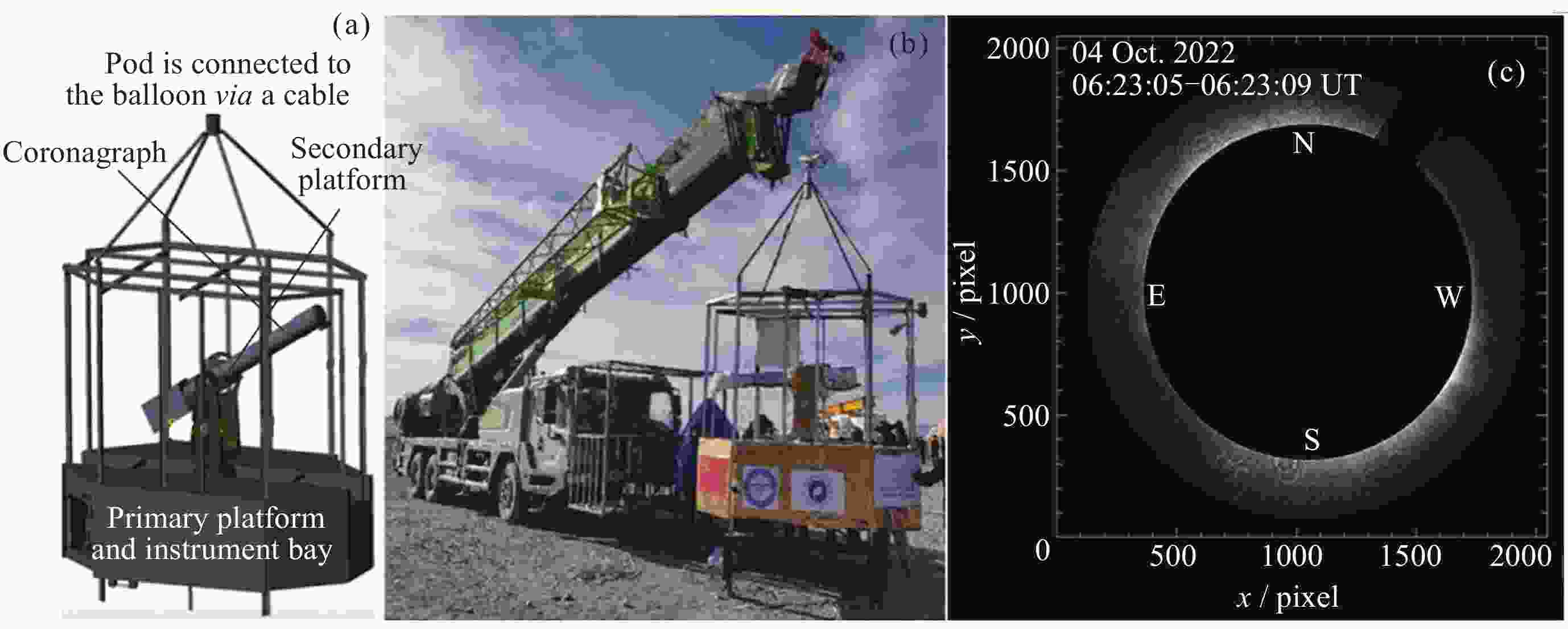
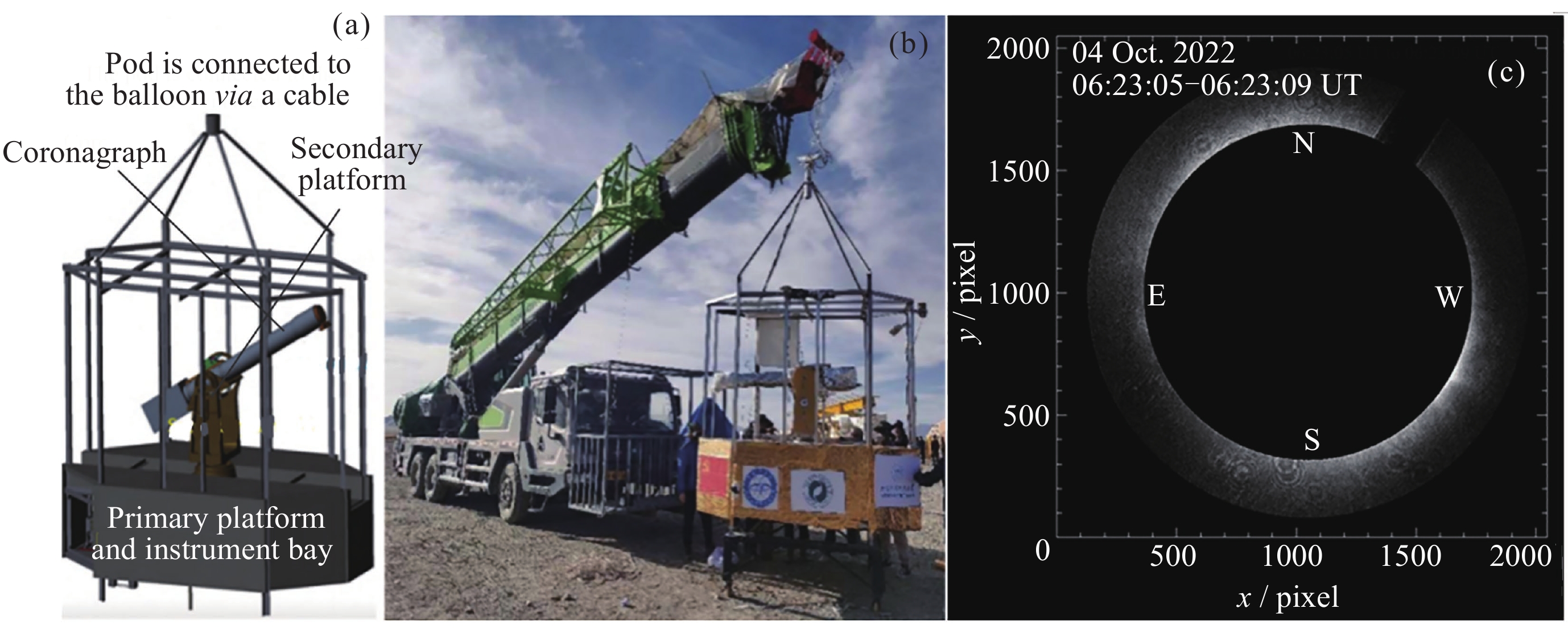
图 3 搭载日冕仪吊舱整体结构与日冕观测图像
Figure 3. Equipped with the overall structure of the coronagraph pod and the coronal observation images
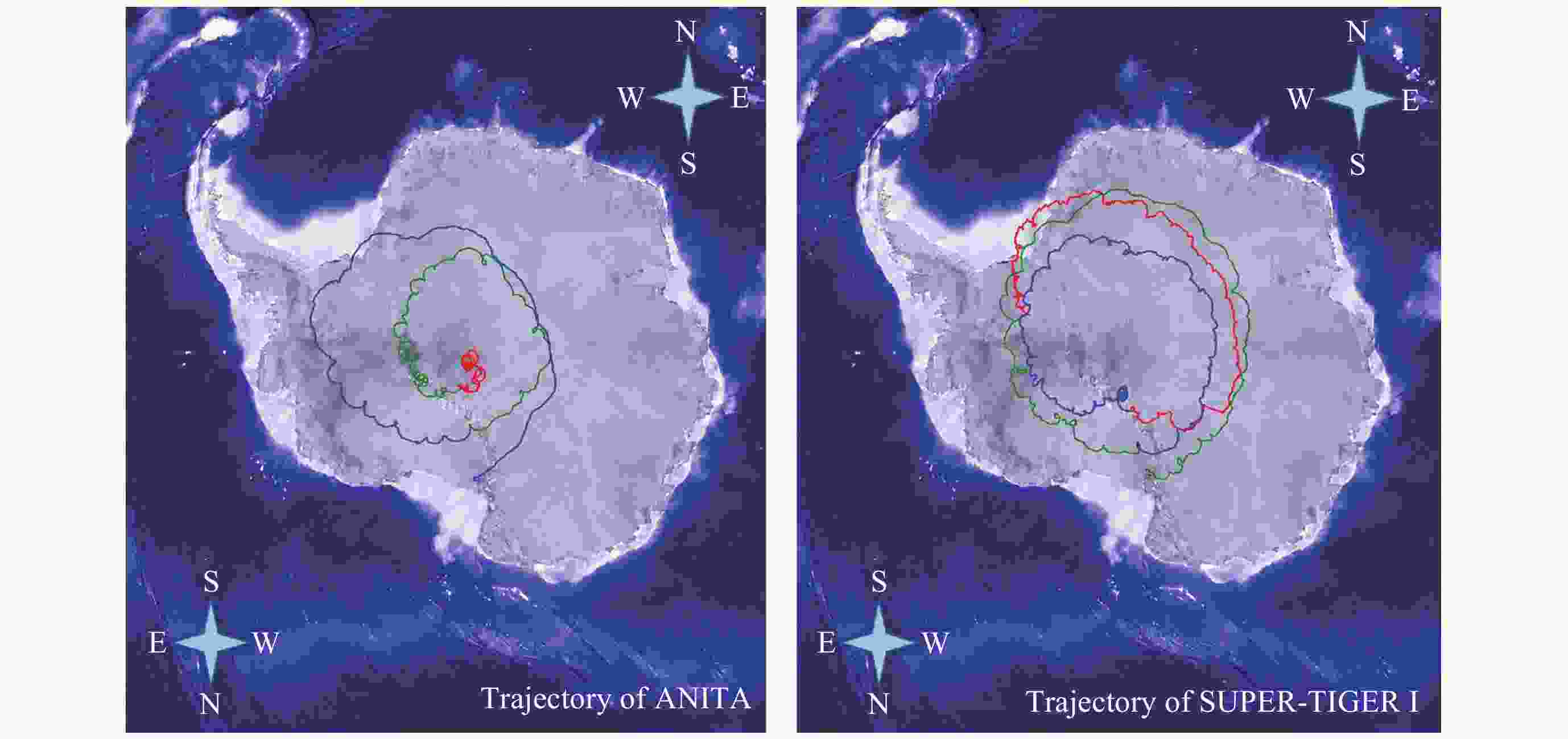
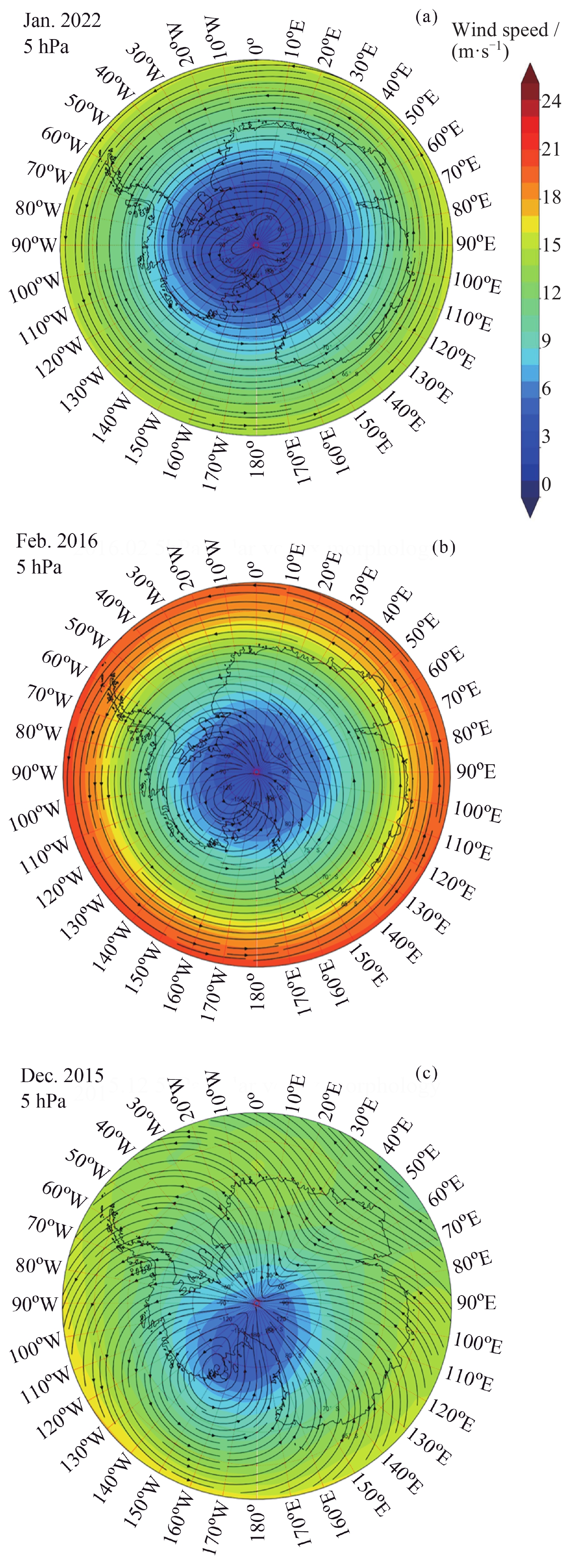
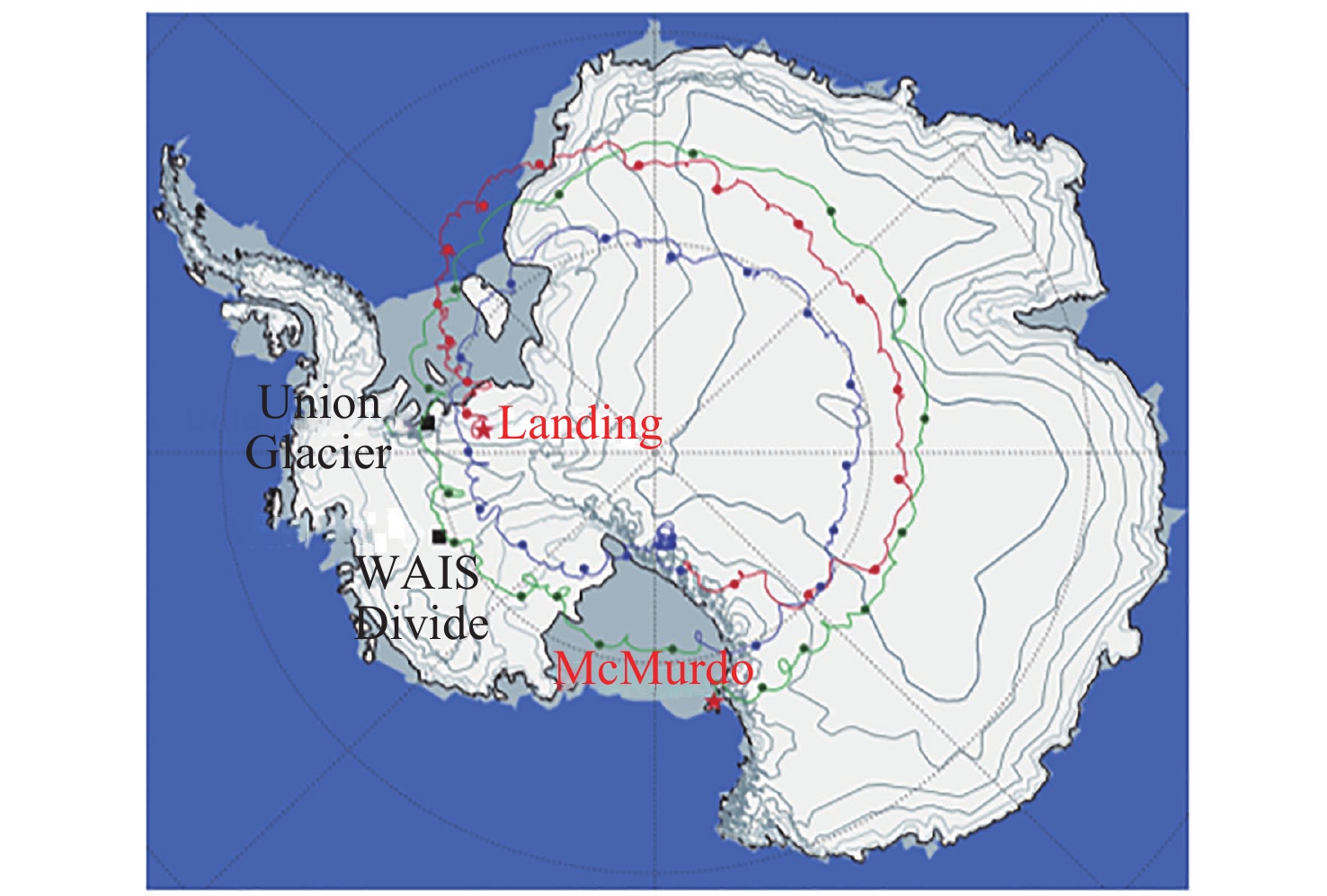
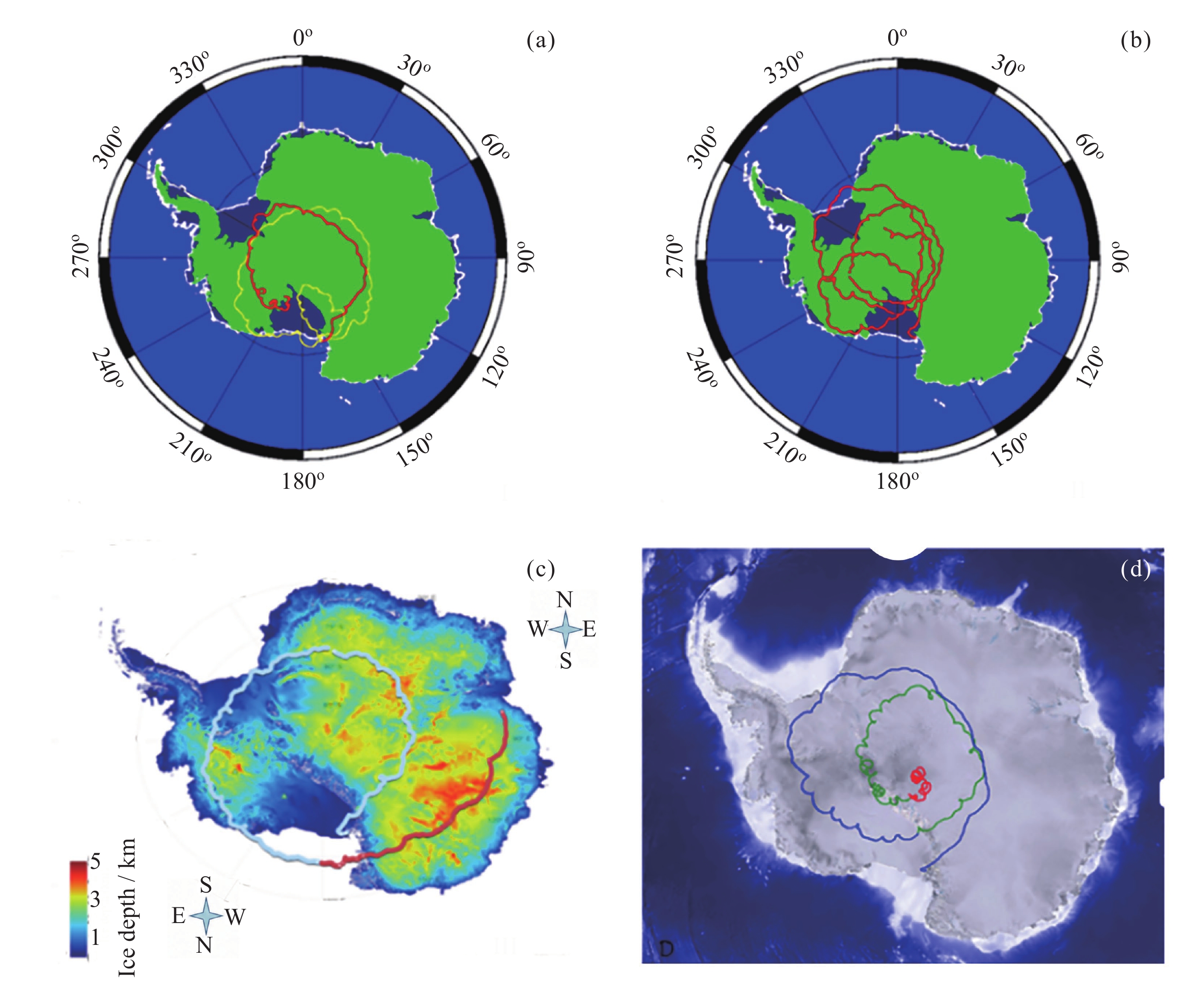
图 5 极昼期东风极涡下的气球飞行轨迹
Figure 5. Balloon flight trajectory under the easterly polar vortex during the polar day period
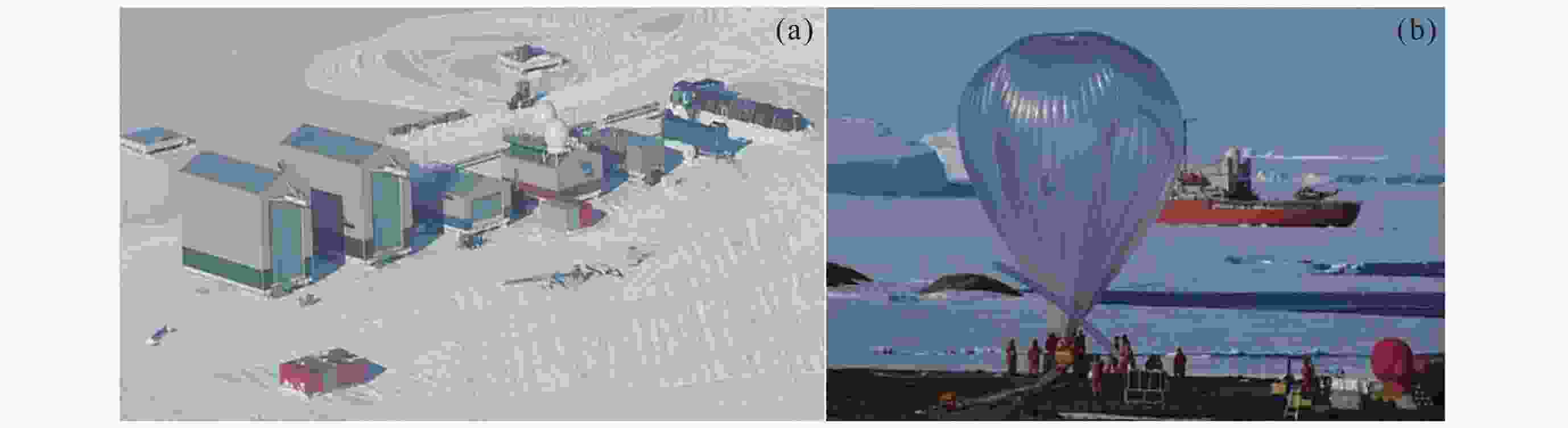
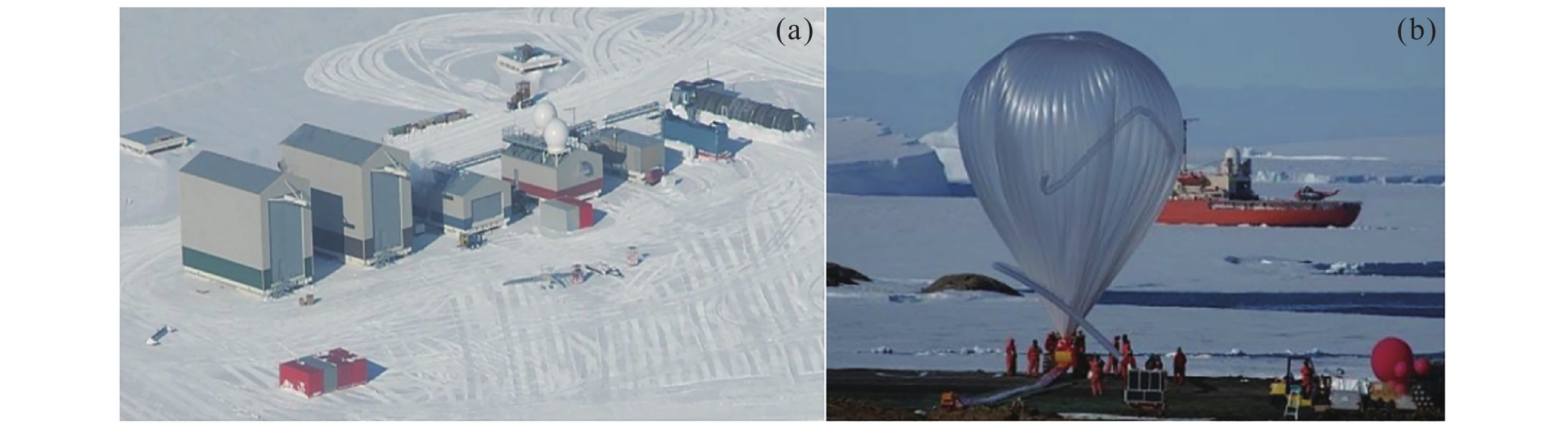
图 6 南极气球主要发放基站. (a)麦克默多, (b)昭和站
Figure 6. Major Antarctic balloon launching base stations. (a) McMurdo station, (b) Showa station
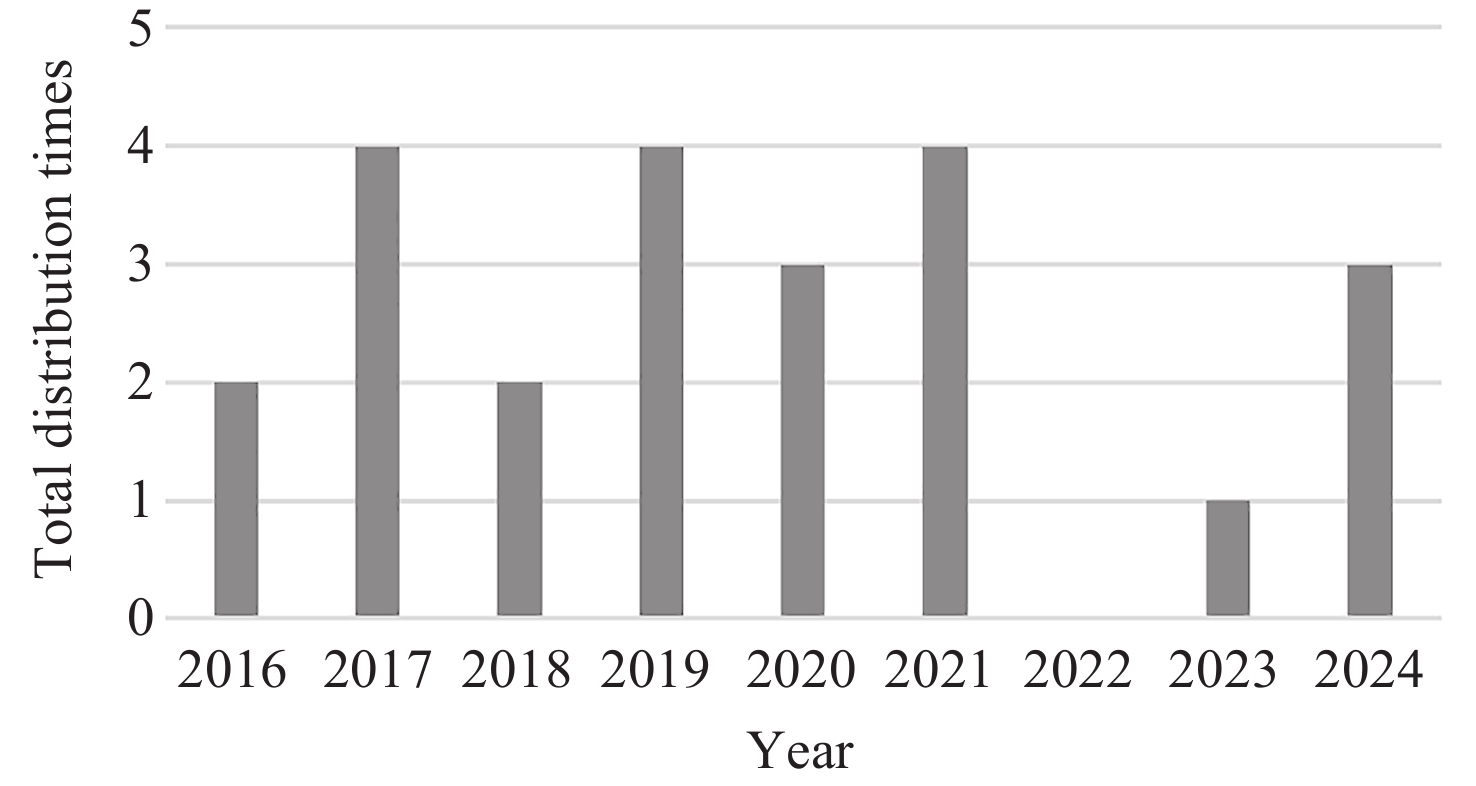
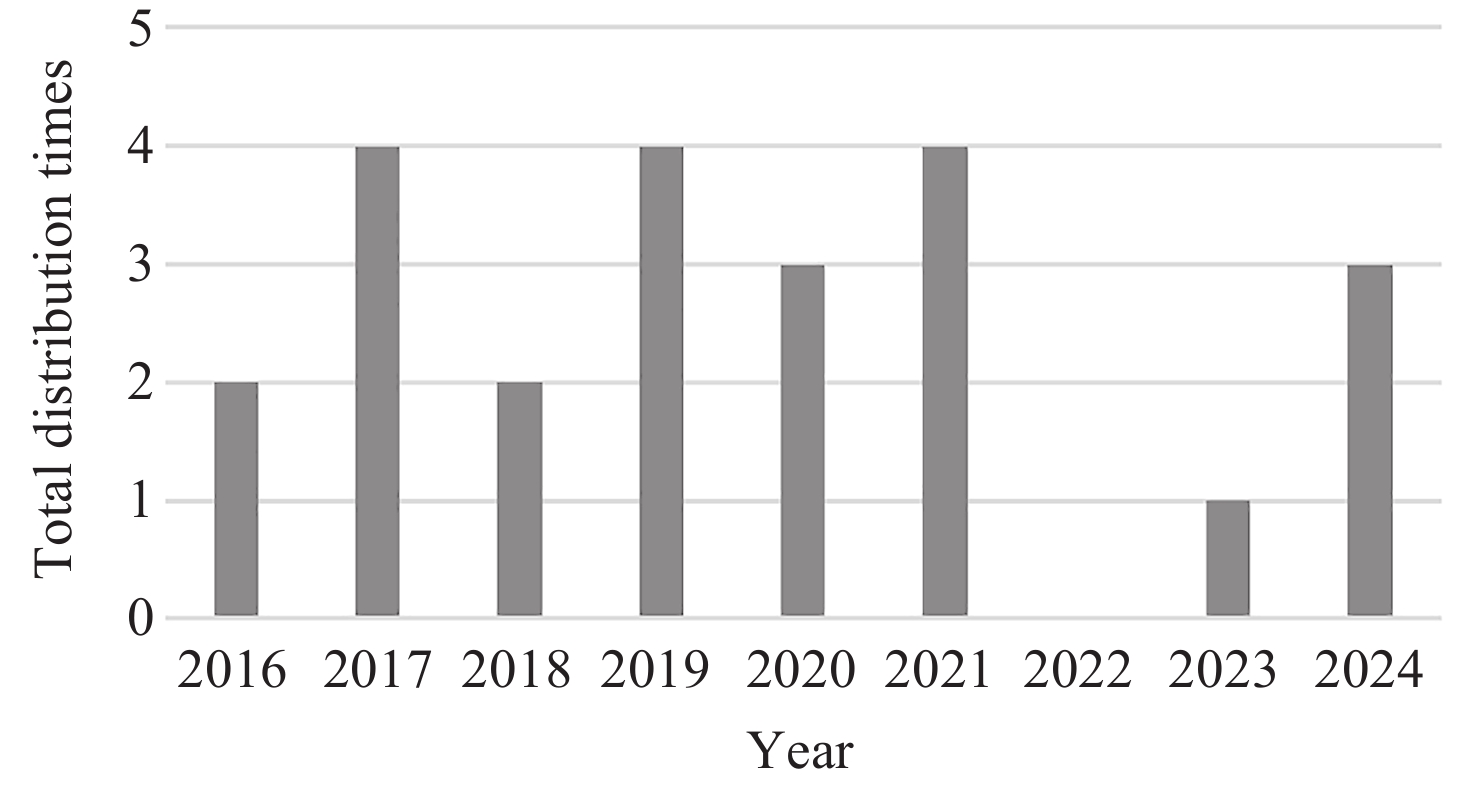
图 7 2016-2024年麦克默多站气球发放情况
Figure 7. Balloon distribution at McMurdo station from 2016 to 2024
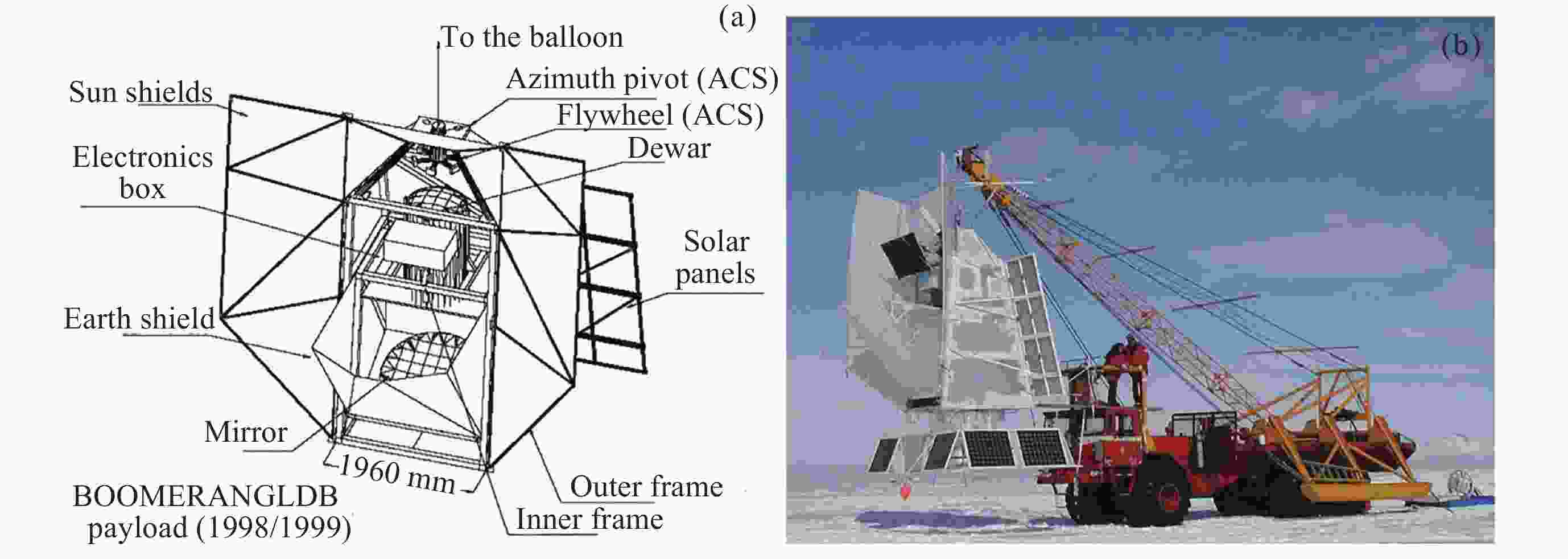
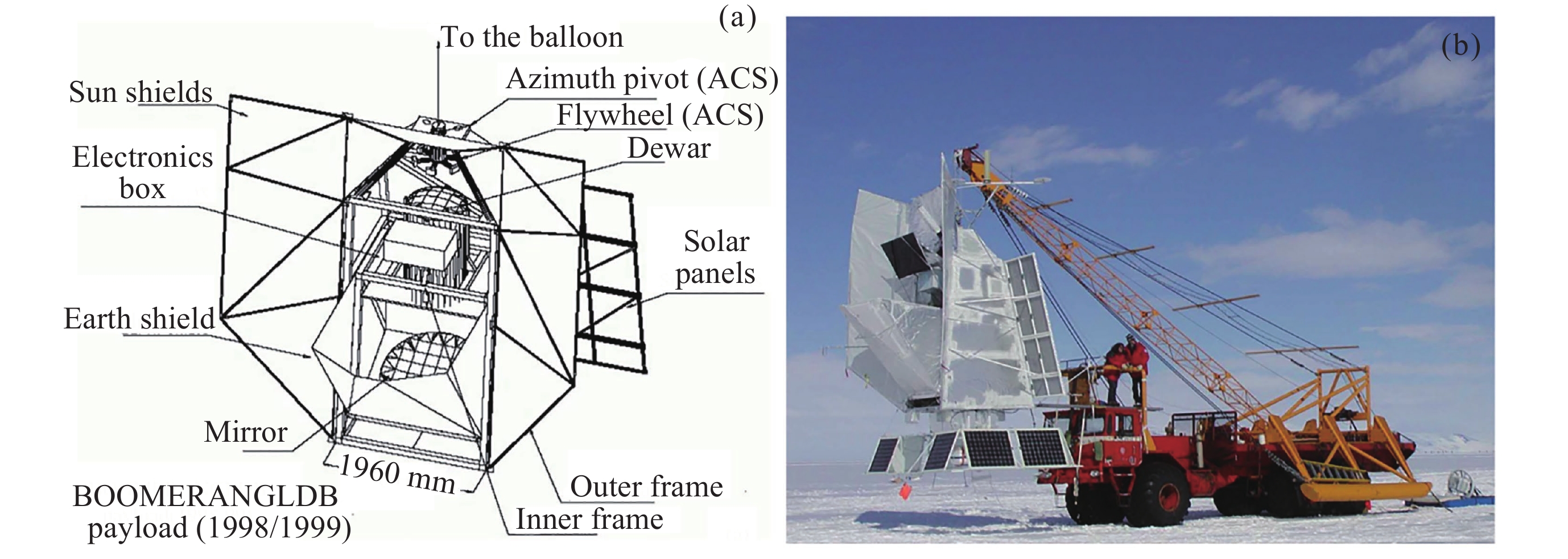
图 8 BOOMERANG吊舱. (a) 吊舱结构, (b) 实物
Figure 8. BOOMERANG pod. (a) Pod structure, (b) physical image
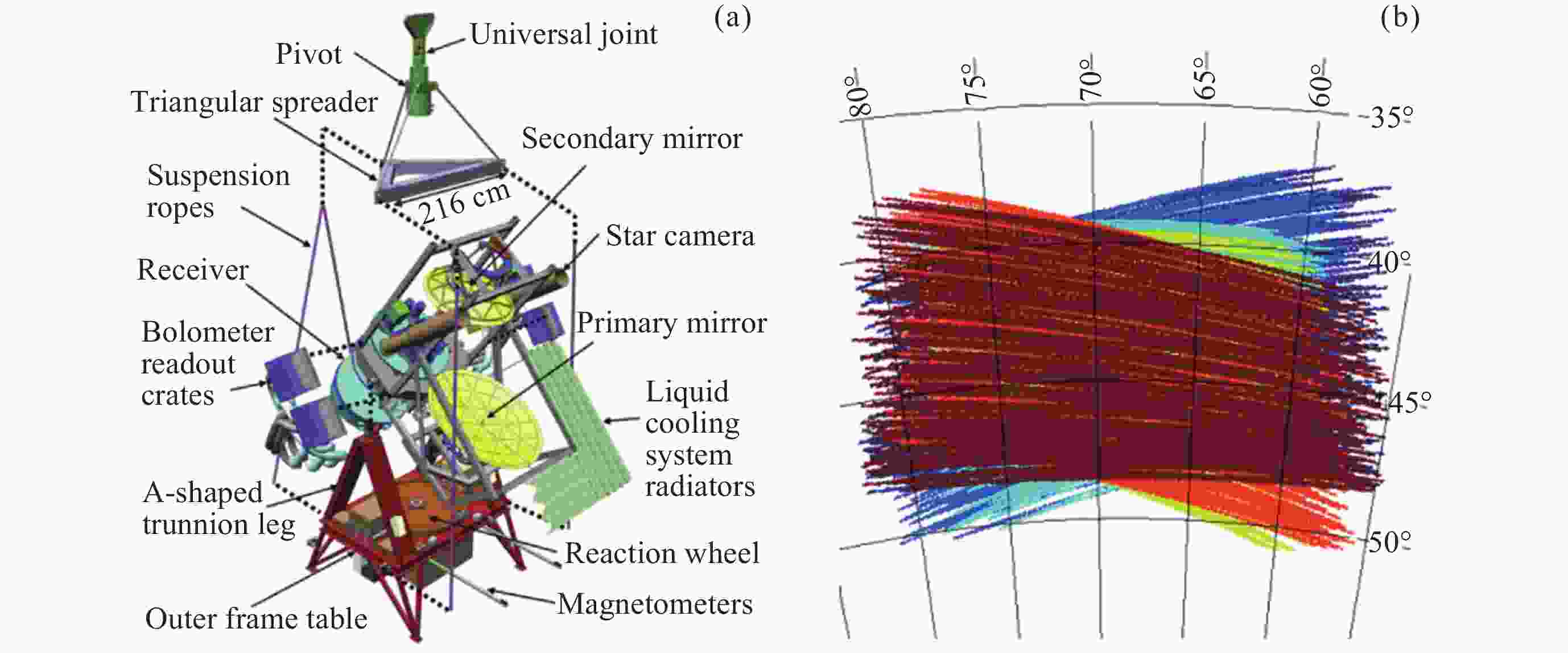
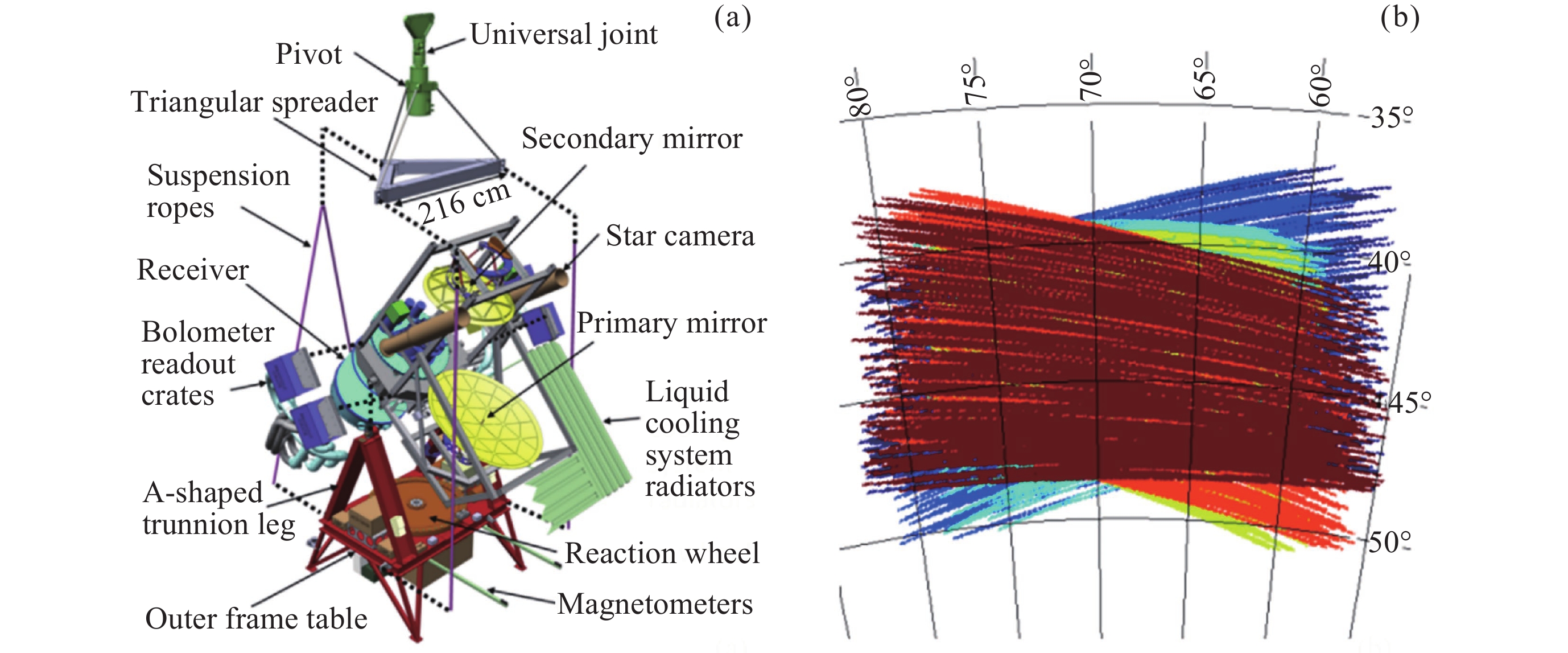
图 9 EBEX实验吊舱结构 (a) 以及由单个150 GHz探测器对天空进行24 h扫描得到的扫描结果 (b)
Figure 9. EBEX experimental pod structure (a), and scanning map obtained by scanning the sky for 24 h with a single 150 GHz detector (b)
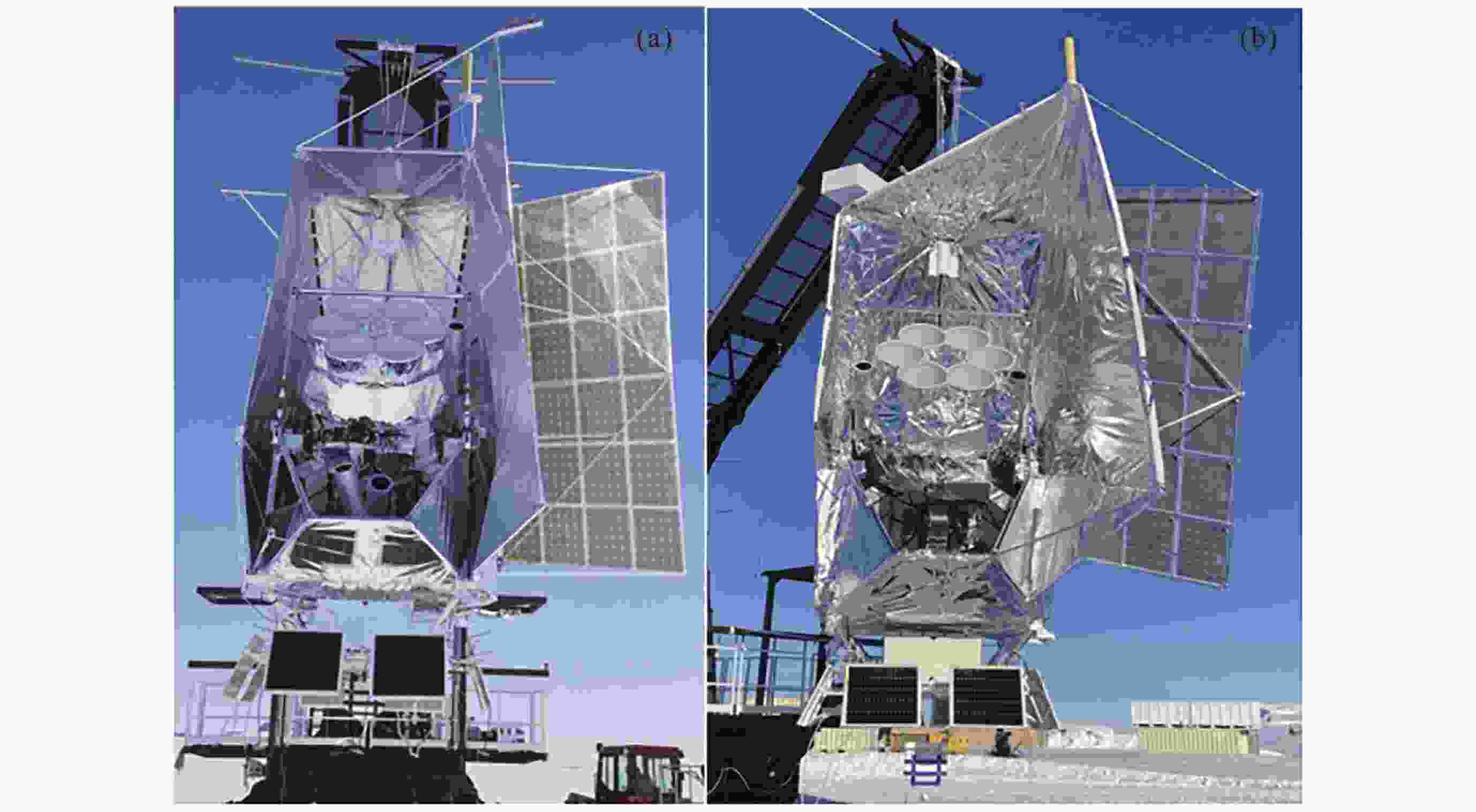
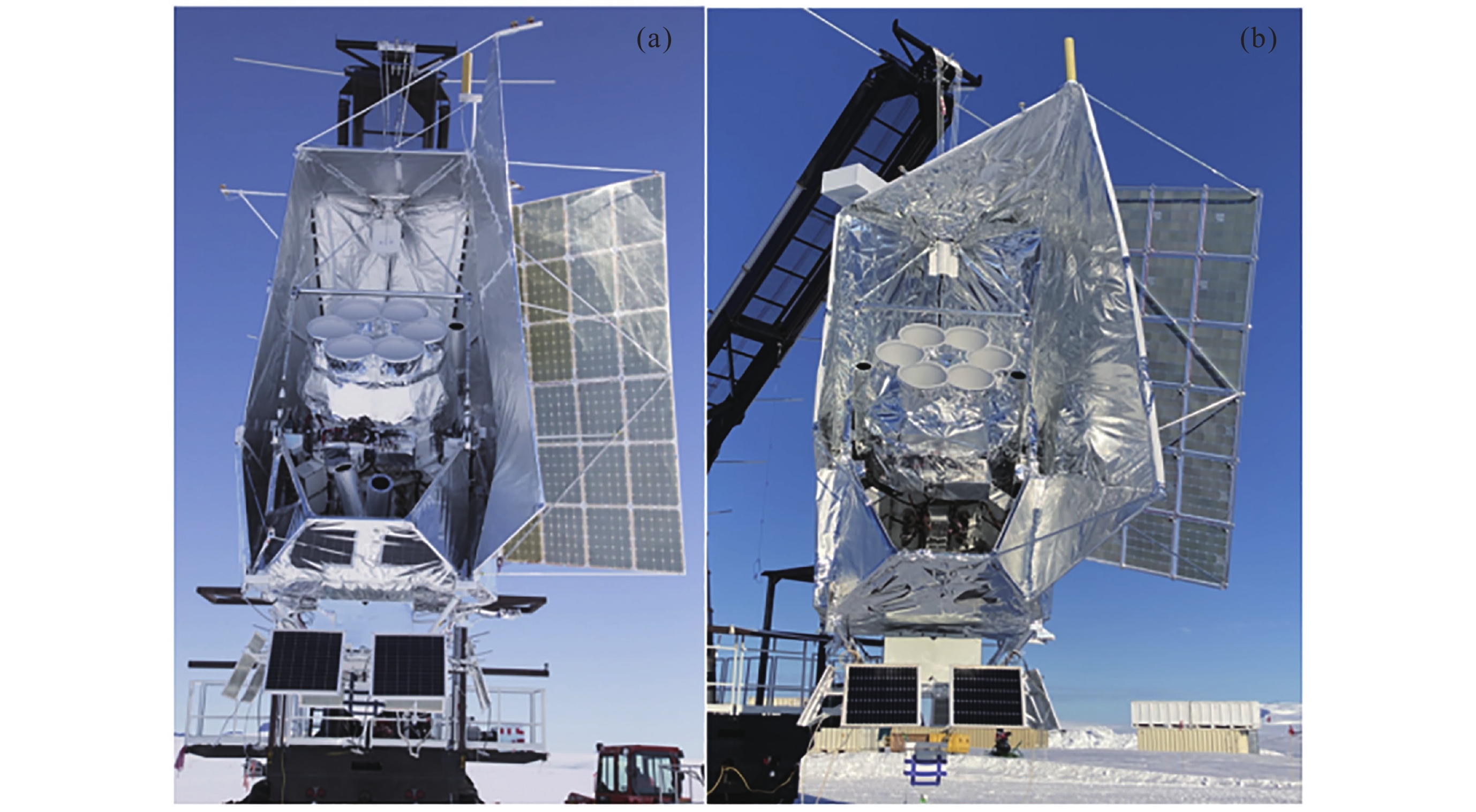
图 10 大角尺度微波观测. (a) SPIDER-1, (b) SPIDER-2
Figure 10. Large angular scale microwave observations. (a) SPIDER-1, (b) SPIDER-2
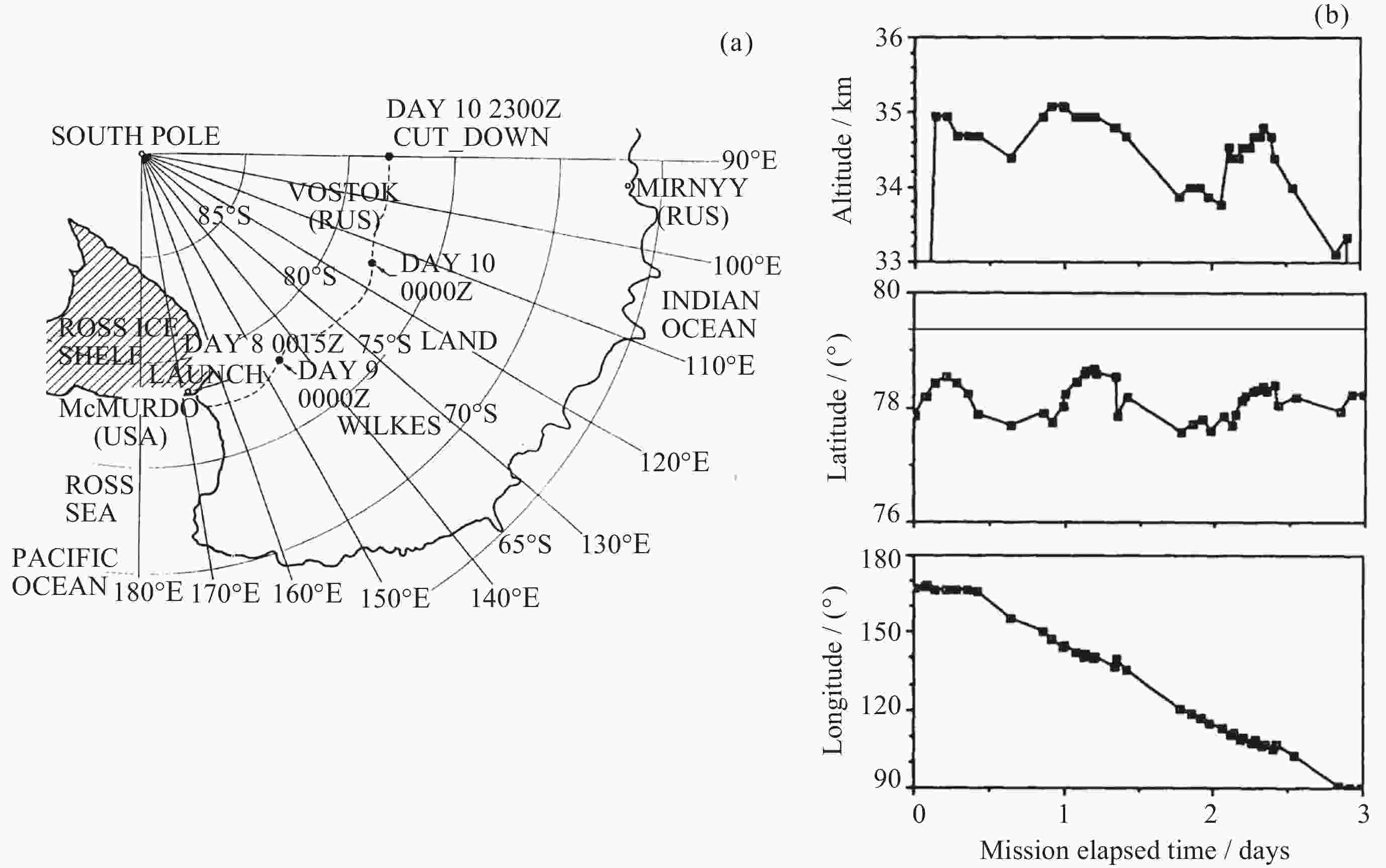
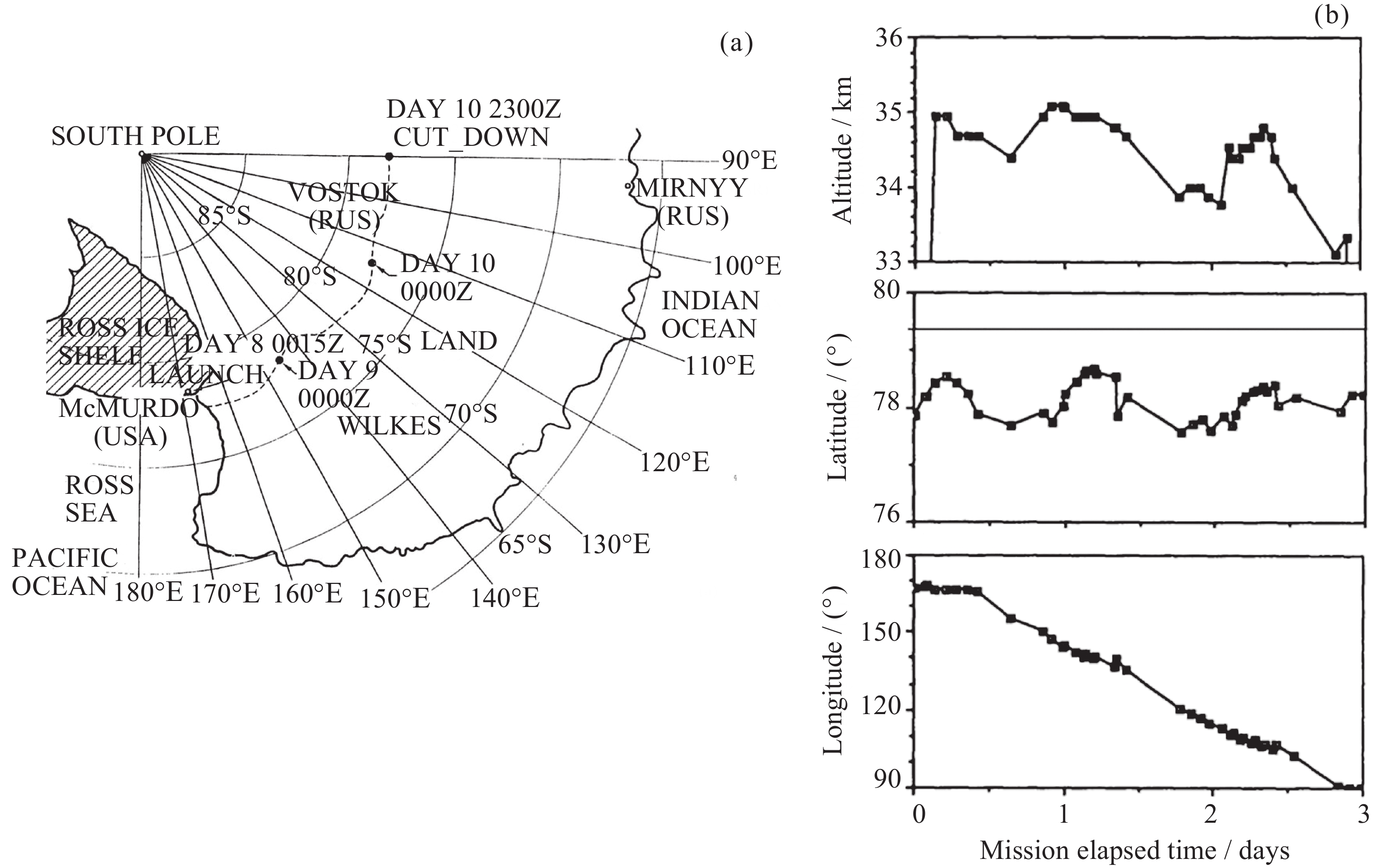
图 11 GRAD实验气球. (a)飞行路径, (b)飞行剖面
Figure 11. GRAD experimental balloon. (a) Flight path diagram, (b) flight profile diagram
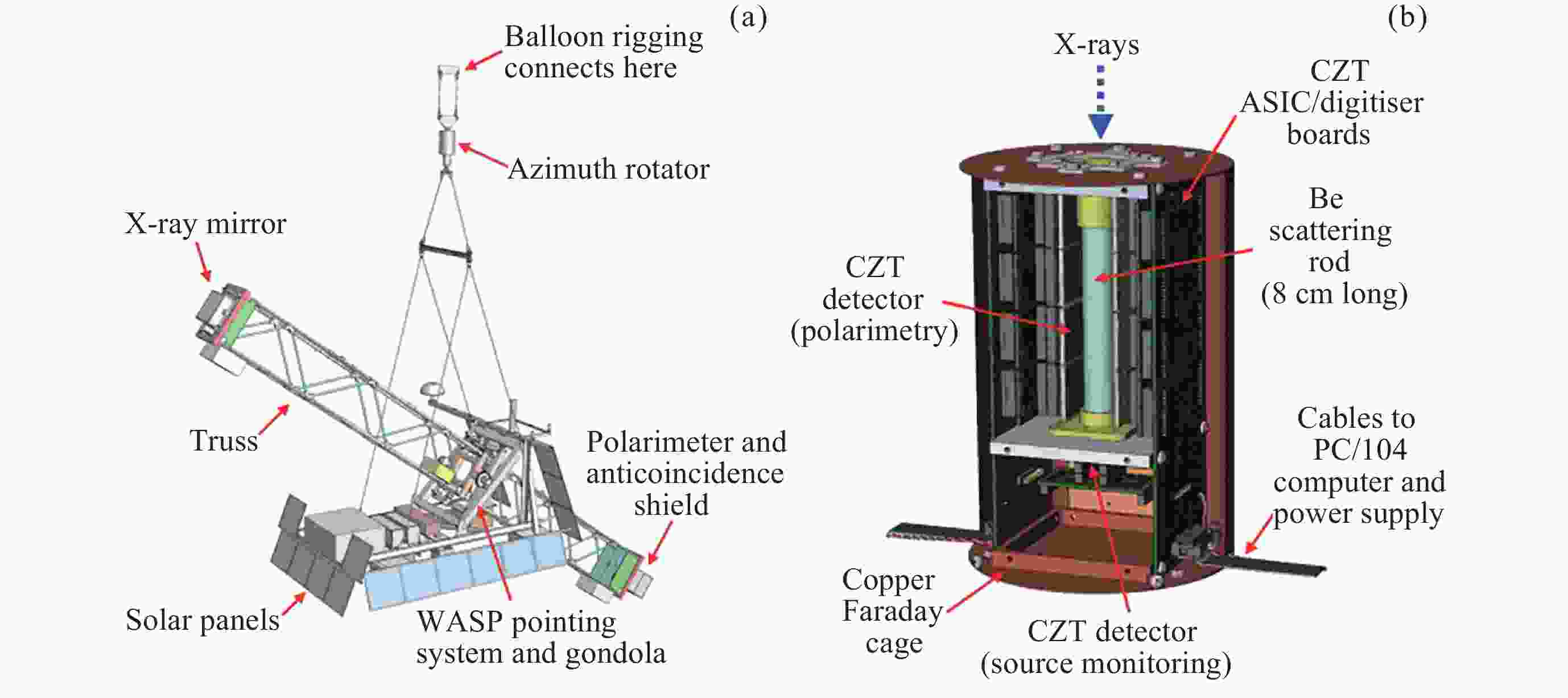
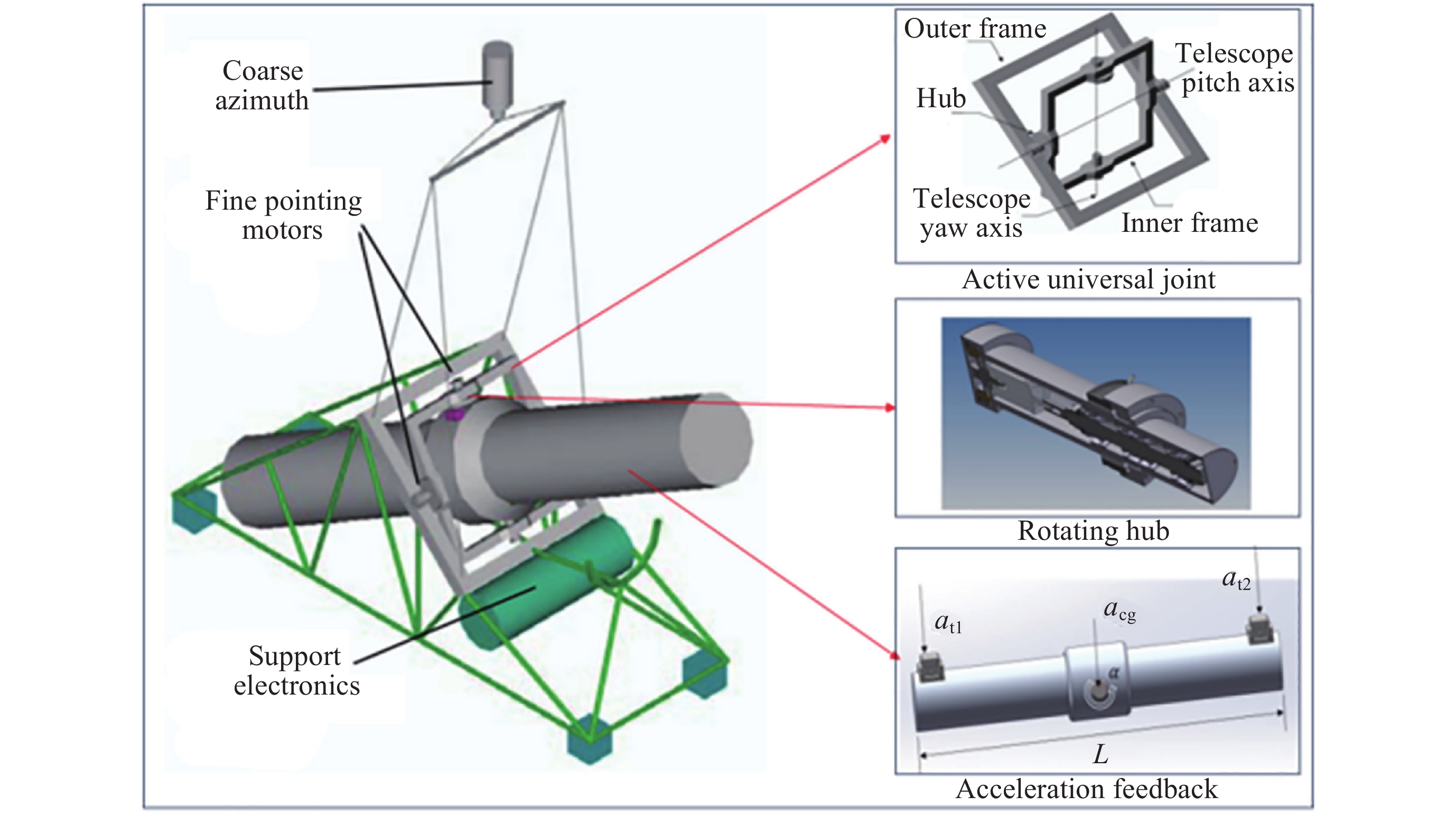
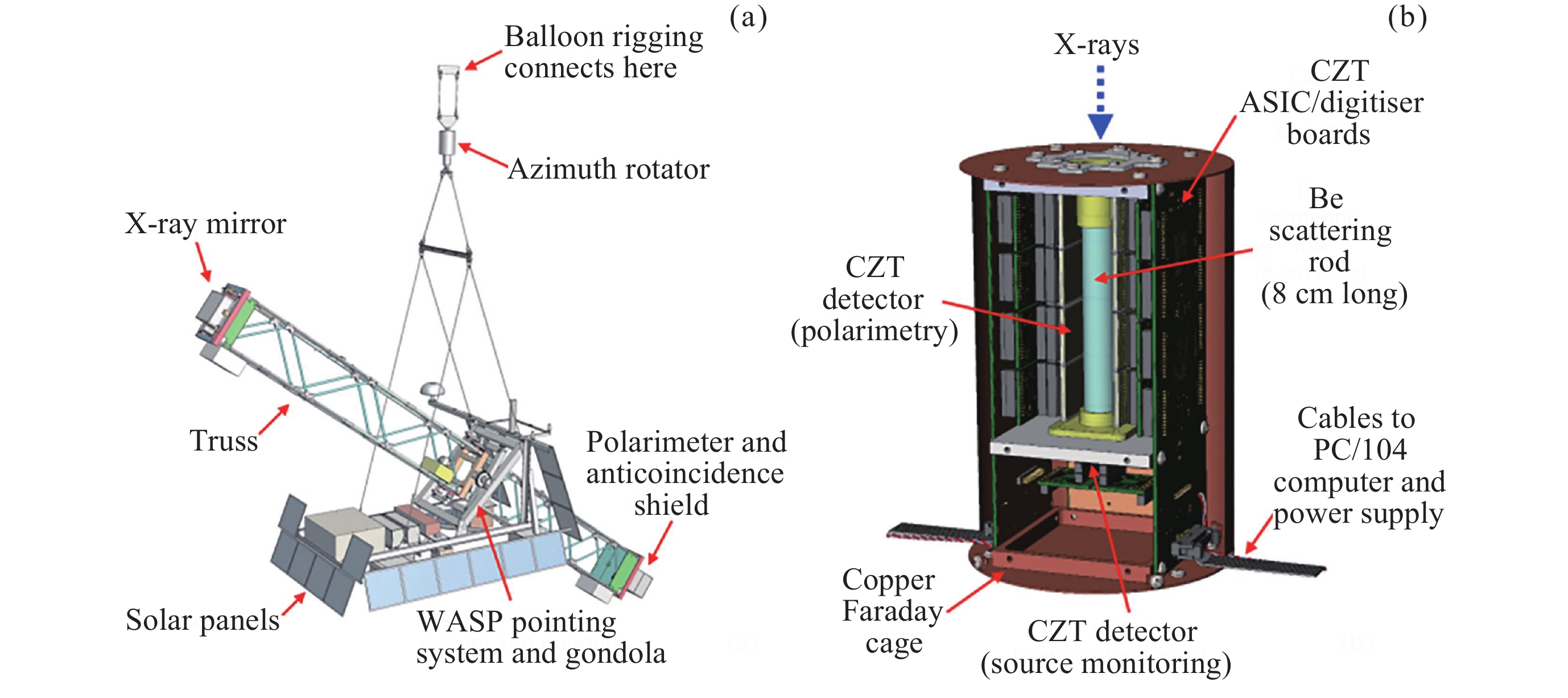
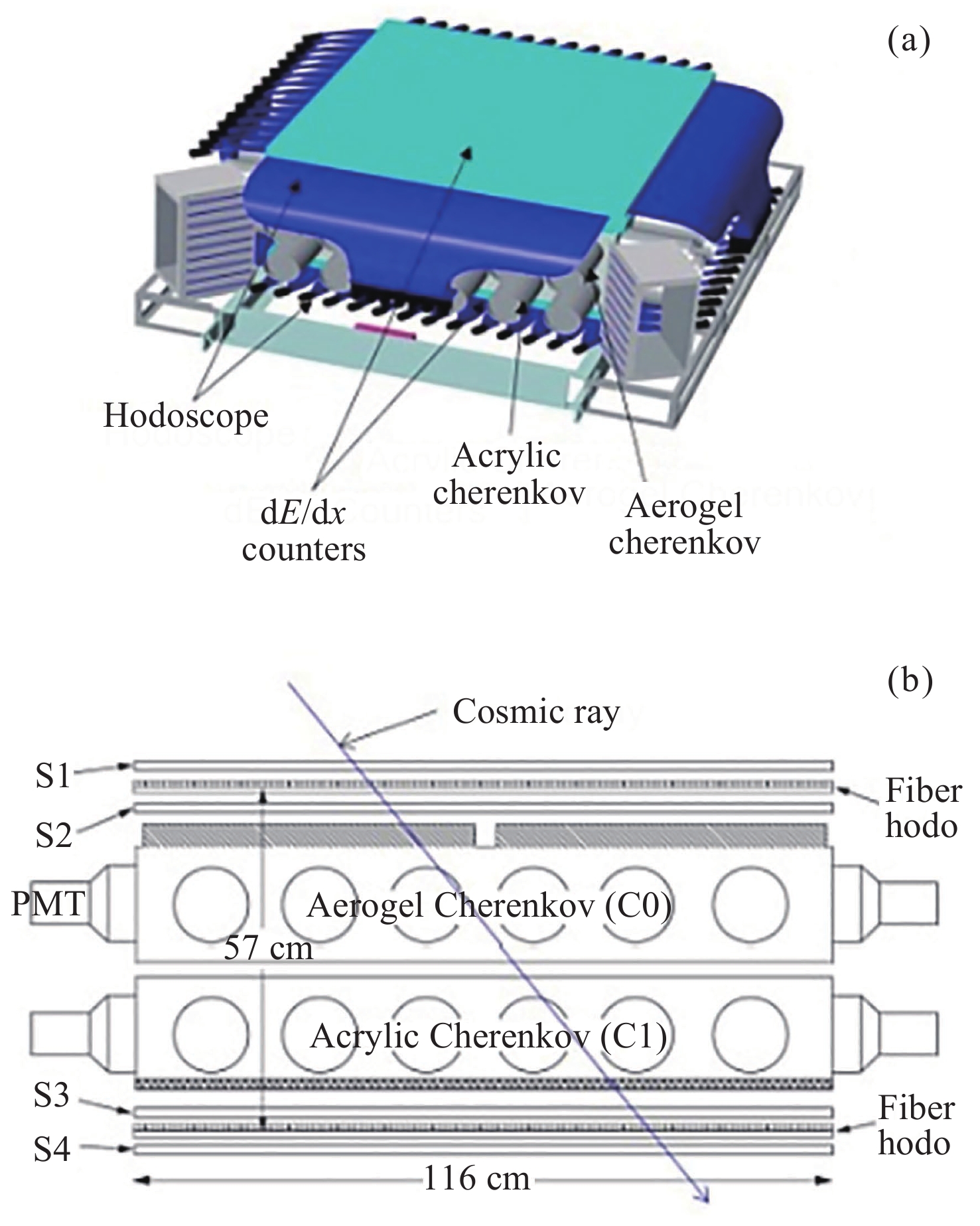
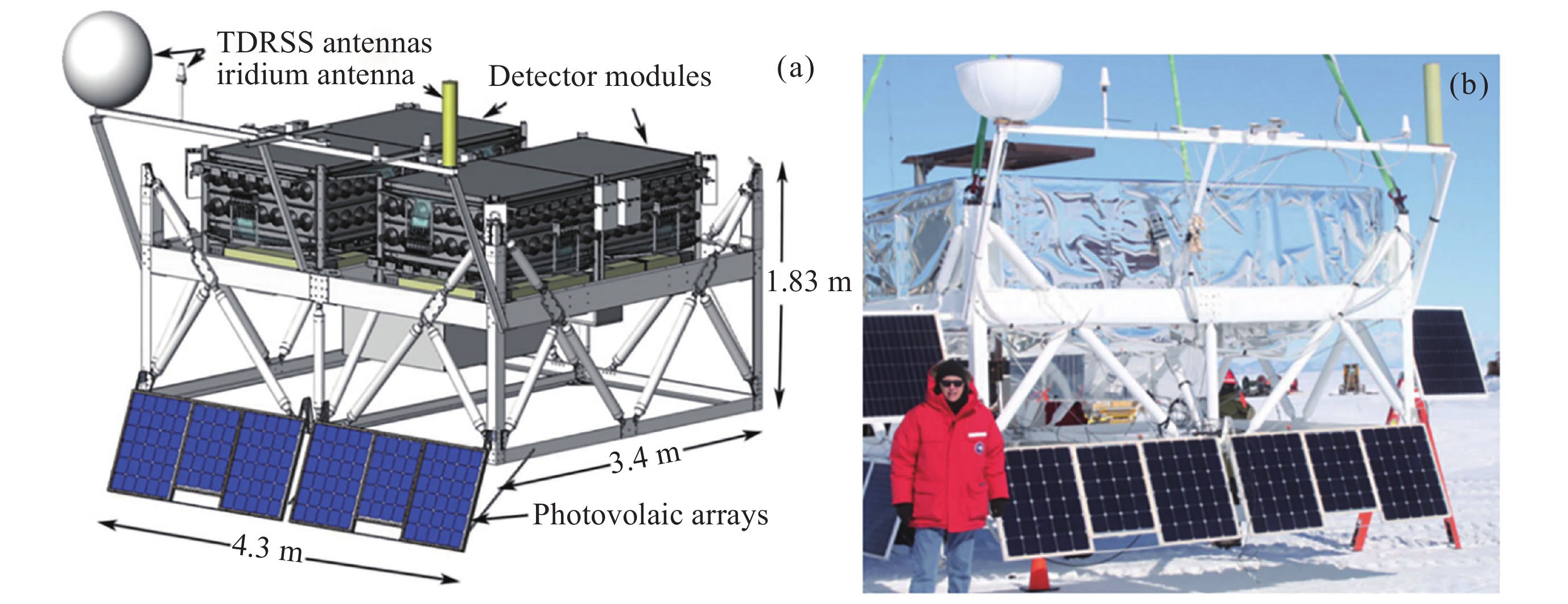
图 16 XL-Calibur吊舱 (a)与X射线偏振仪剖面 (b)
Figure 16. Schematic diagram of the XL-Calibur module (a), and cross-sectional view of the X-ray polarimeter (b)
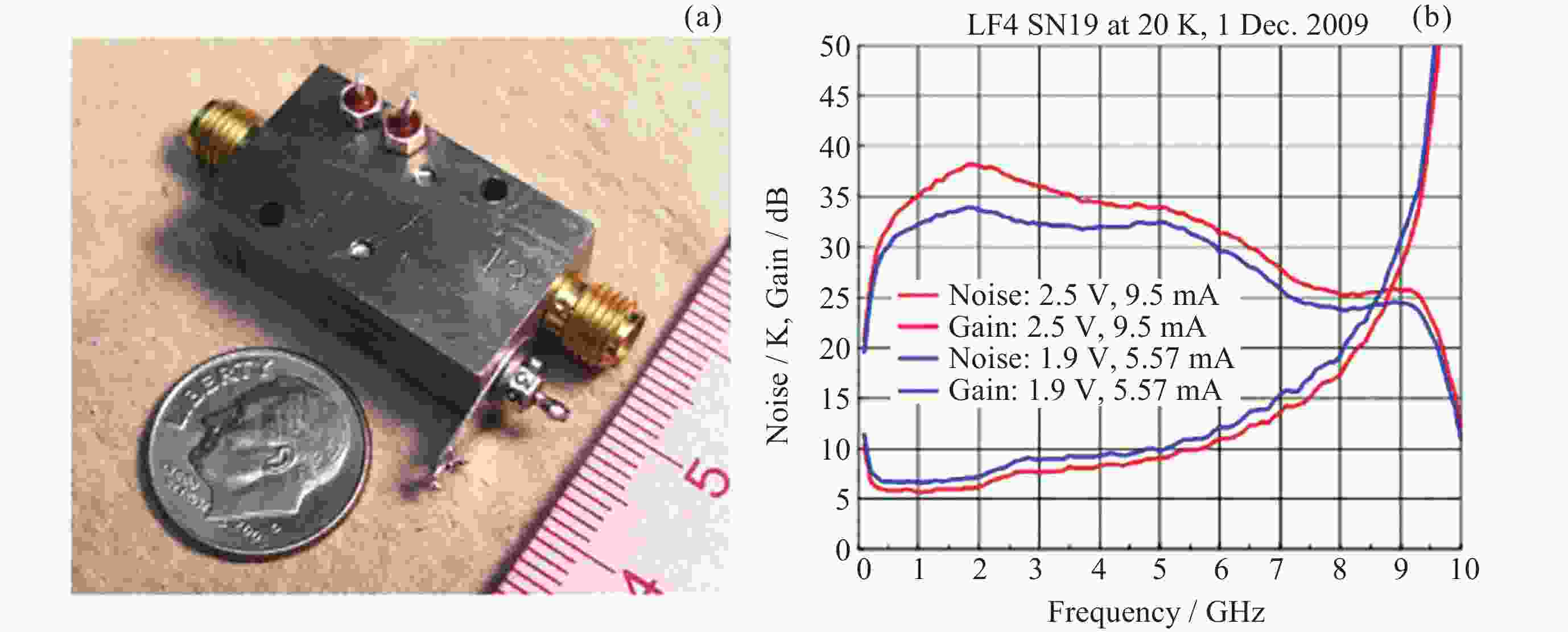
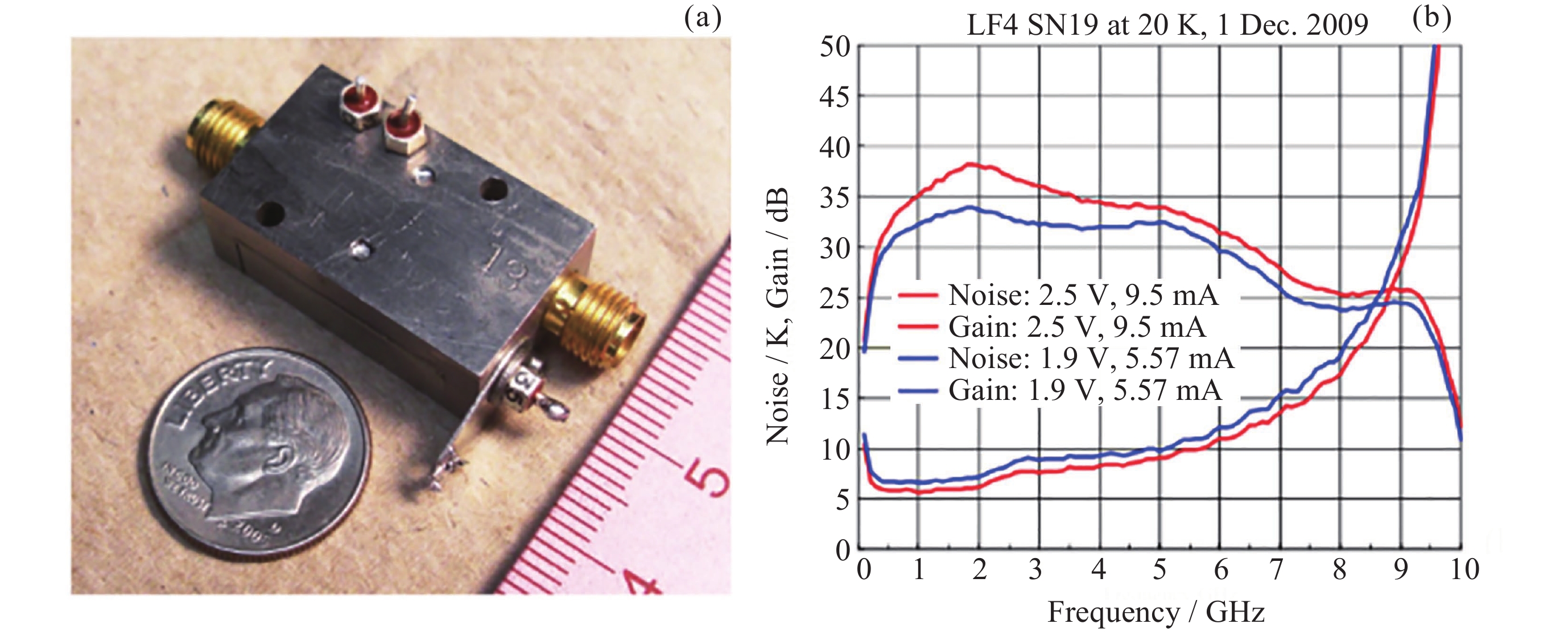
图 17 混合信号差频放大器 (a)及其性能曲线(b)
Figure 17. Mixed-signal heterodyne amplifier (a) and its performance curves (b)
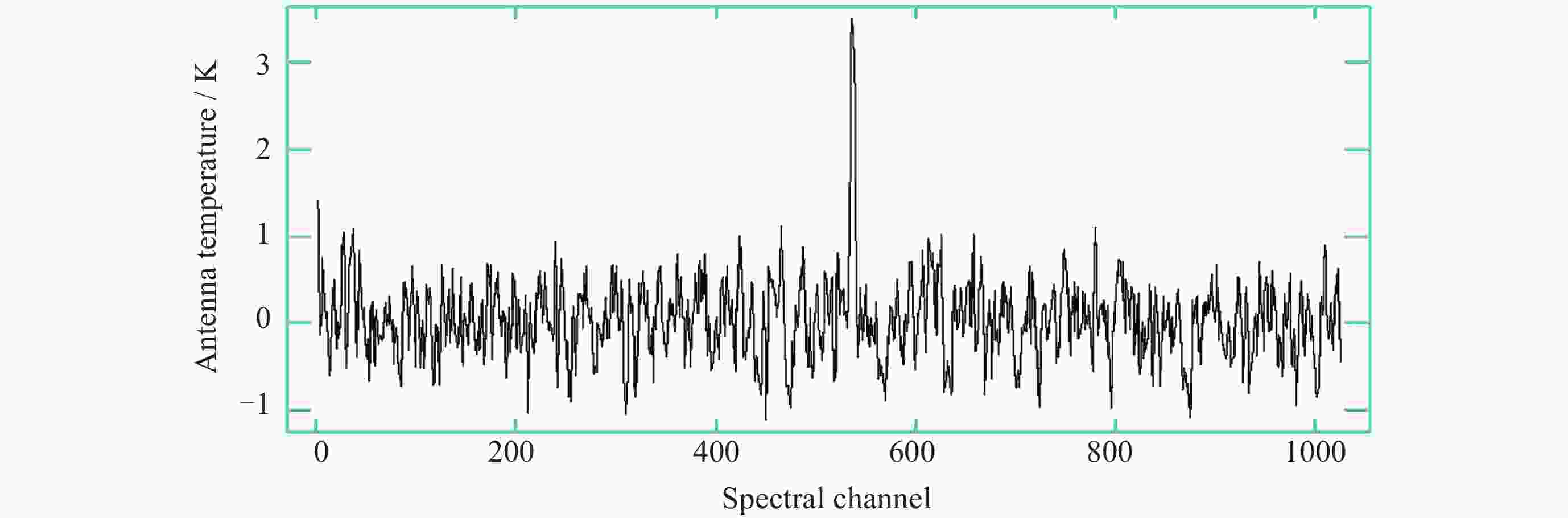
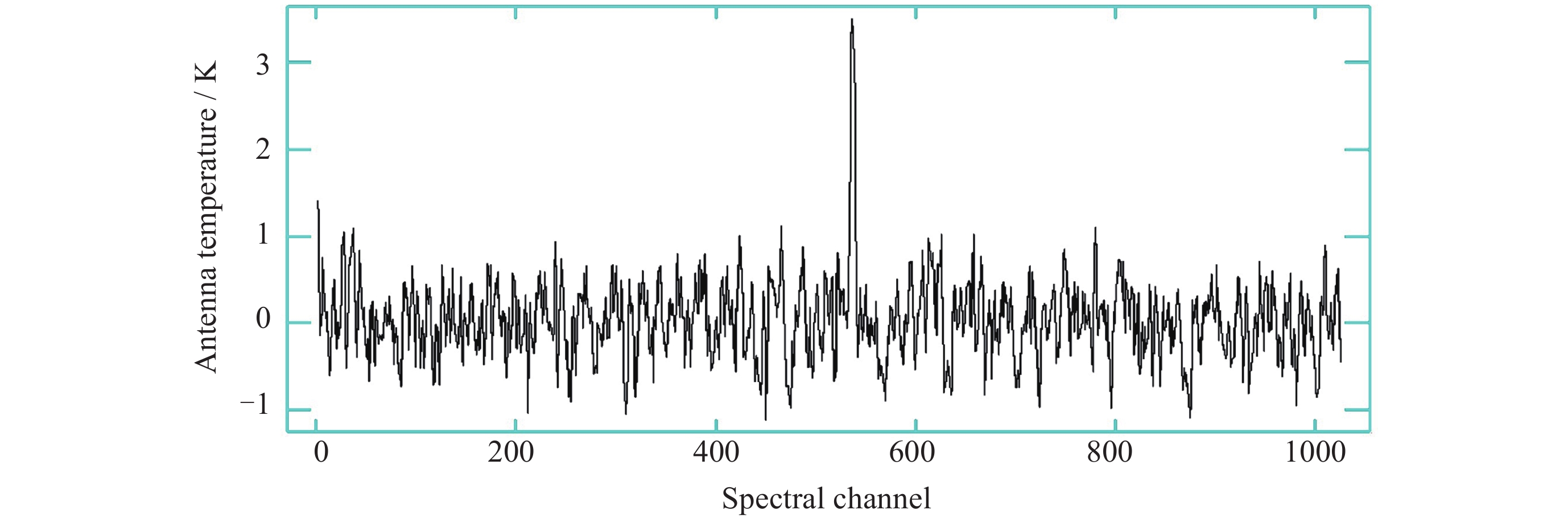
图 18 从浮标高度观测的朝向猎户座的13COJ=3-2线
Figure 18. 13COJ=3-2 line toward Orion observed from the float height
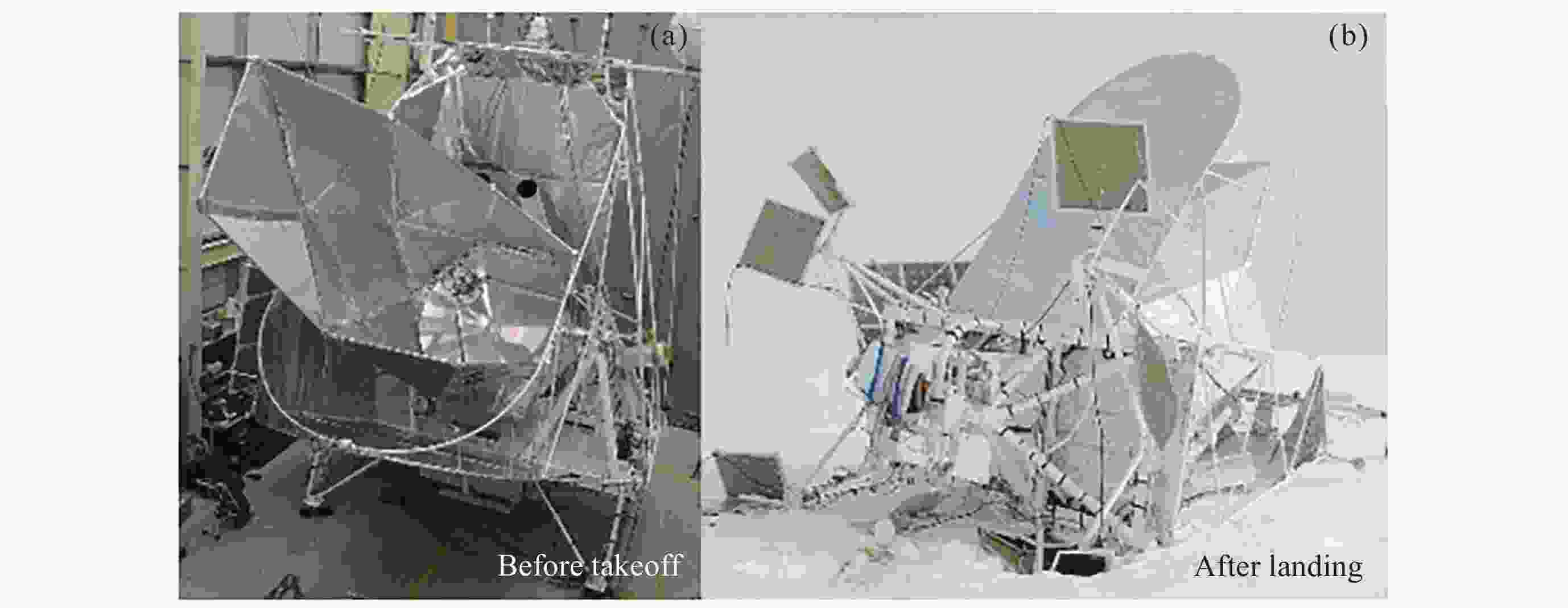
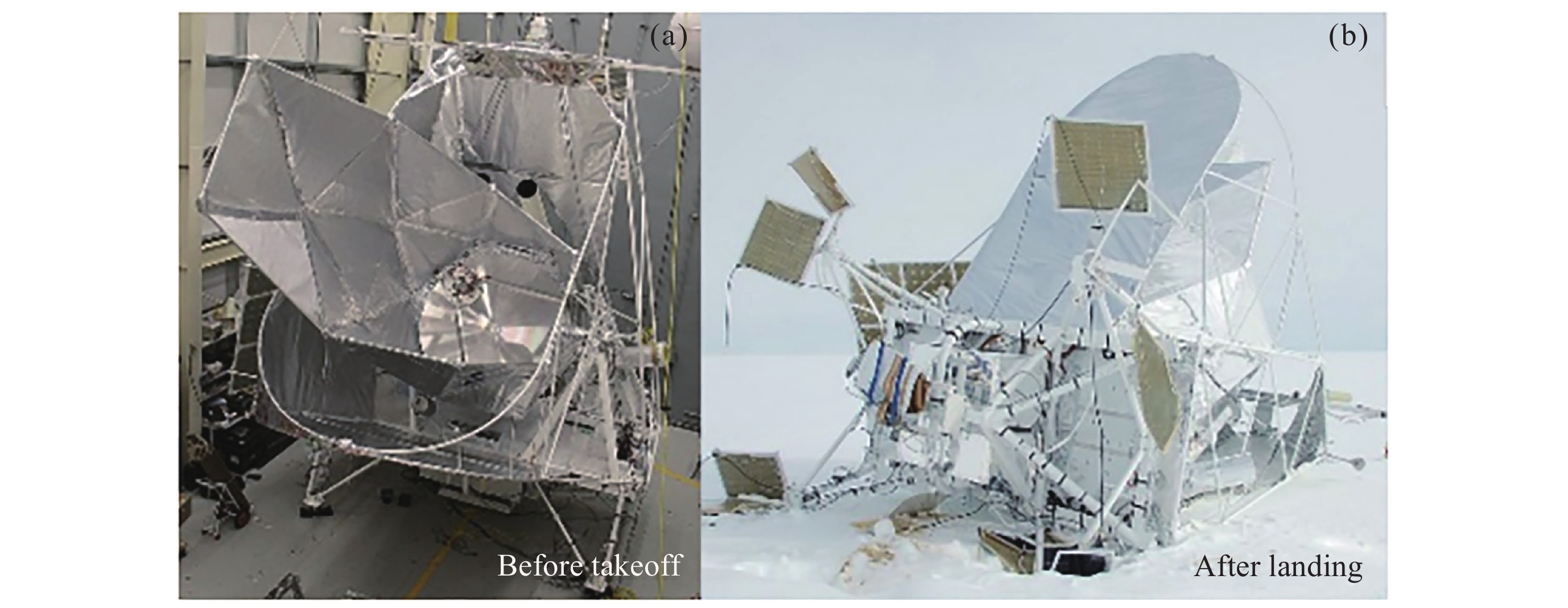
图 20 BLAST-Pol有效载荷部分(起飞前/着陆后)
Figure 20. BLAST Pol payload section (before takeoff/after landing)
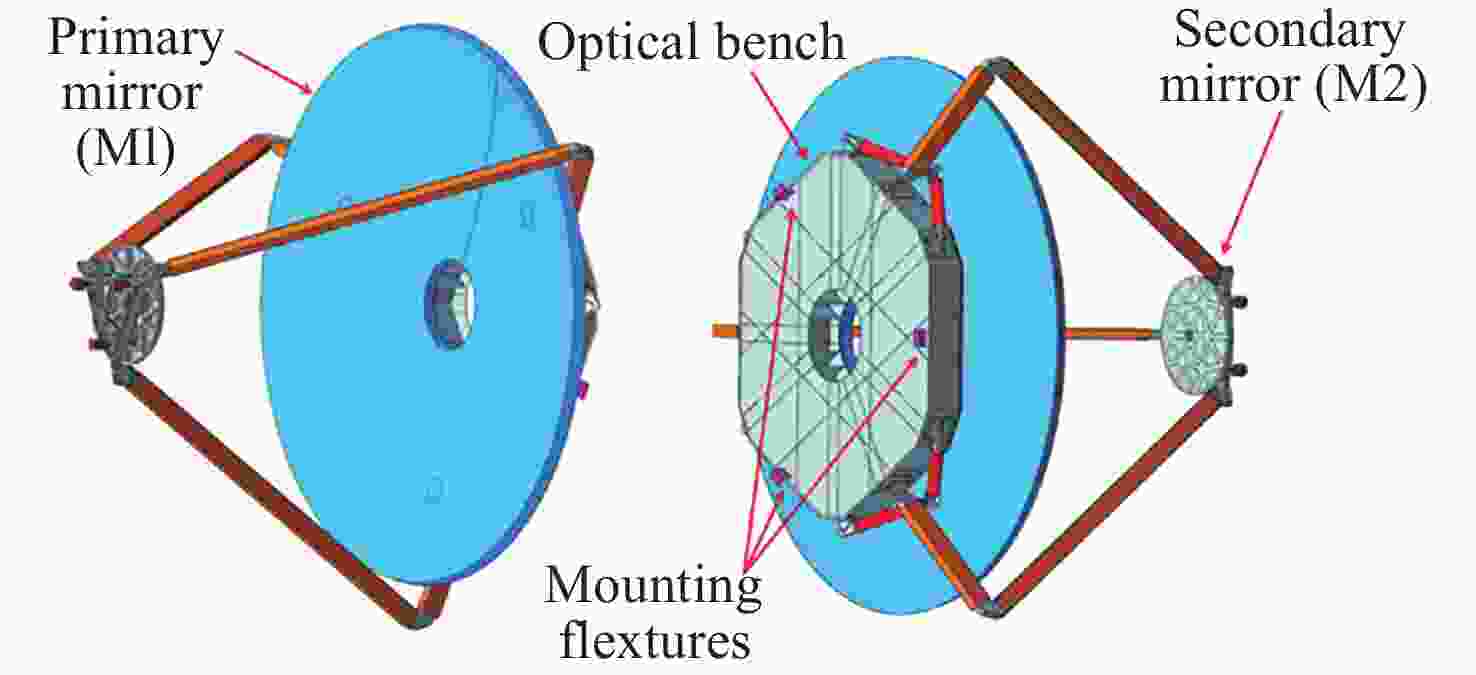
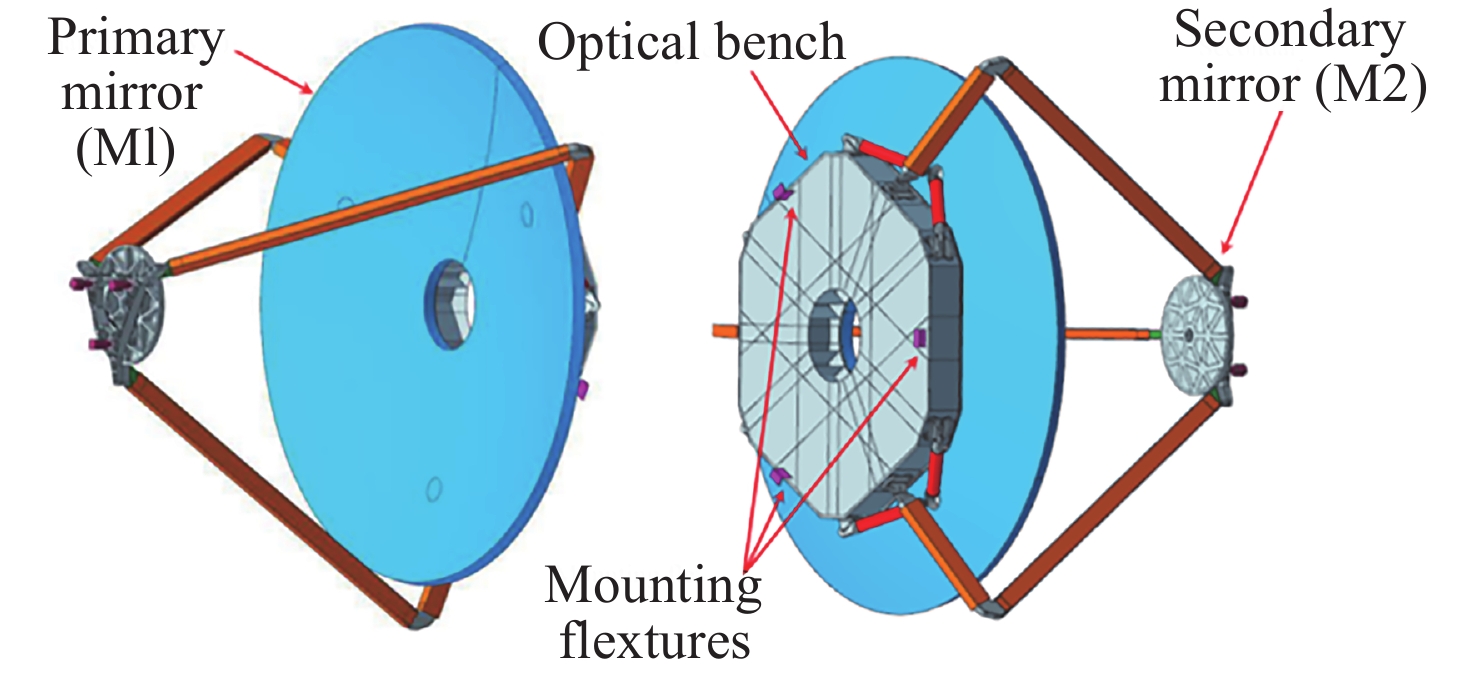
图 21 BLAST-TNG碳纤维主镜/铝制副镜
Figure 21. BLAST-TNG carbon fiber primary mirror/aluminum secondary mirror
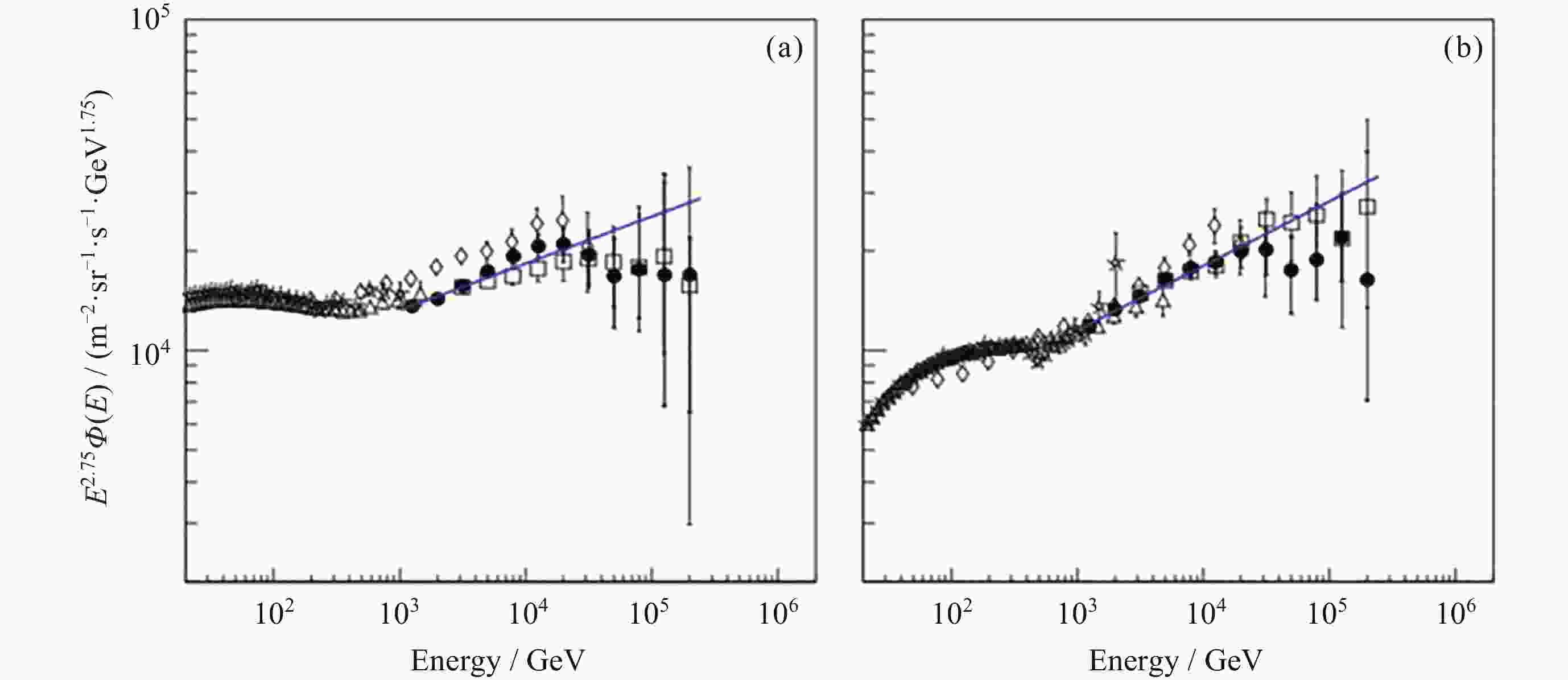
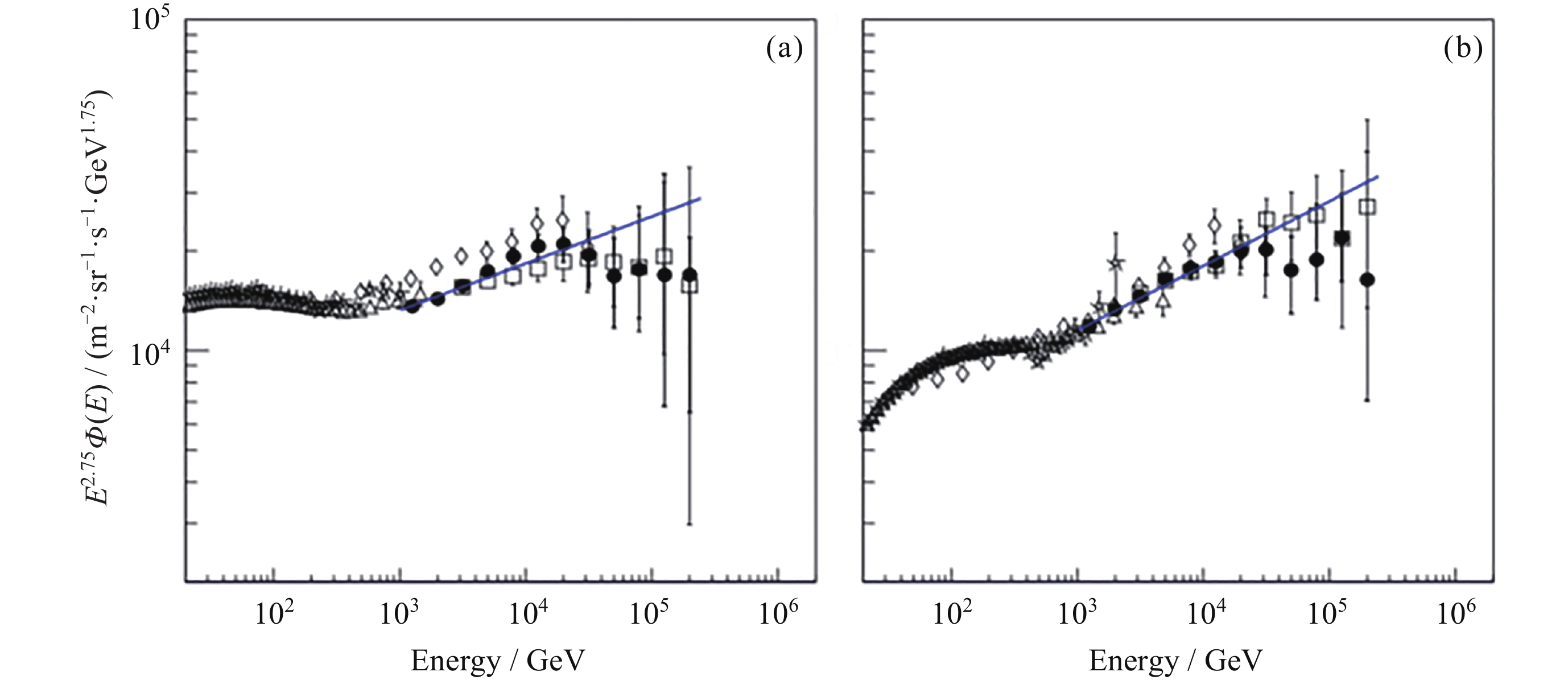
图 24 来自CREAM-III的质子(a)和氦(b)光谱(实心圆)与幂律拟合(线)
Figure 24. Proton (a) and helium (b) spectra from CREAM-III (solid circles) and power law fitting (lines)
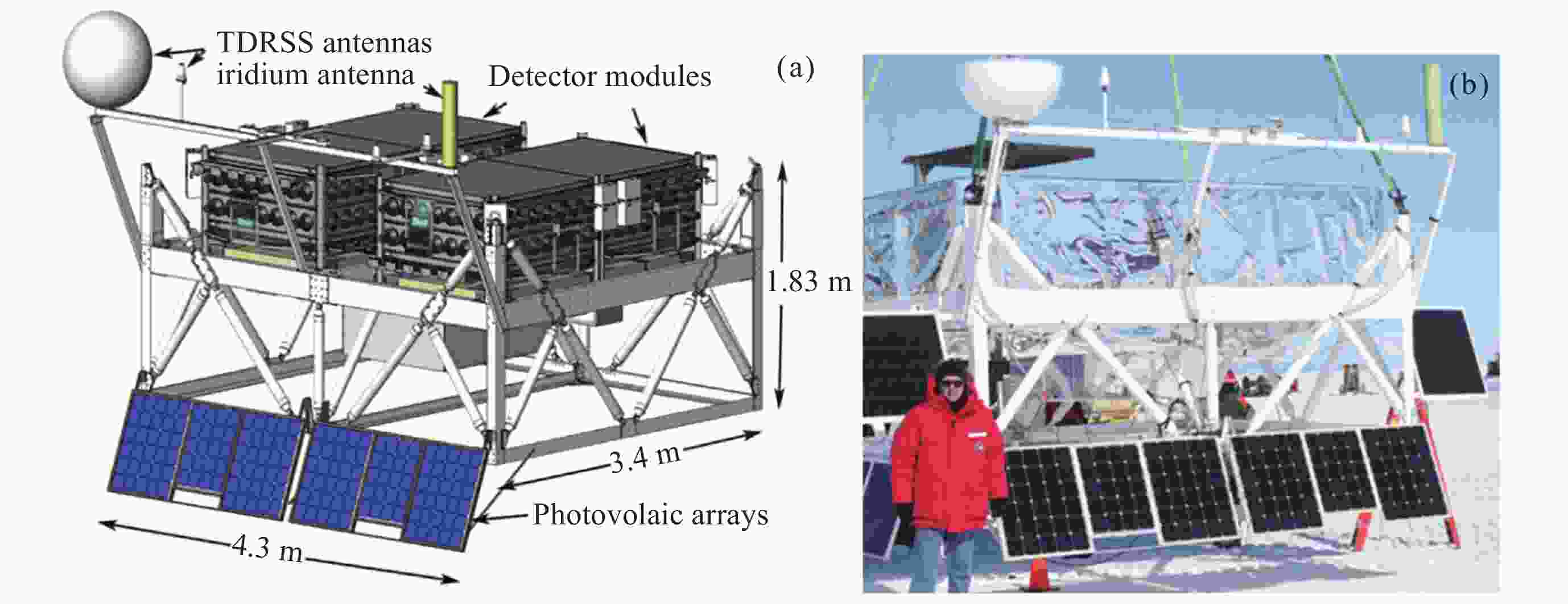
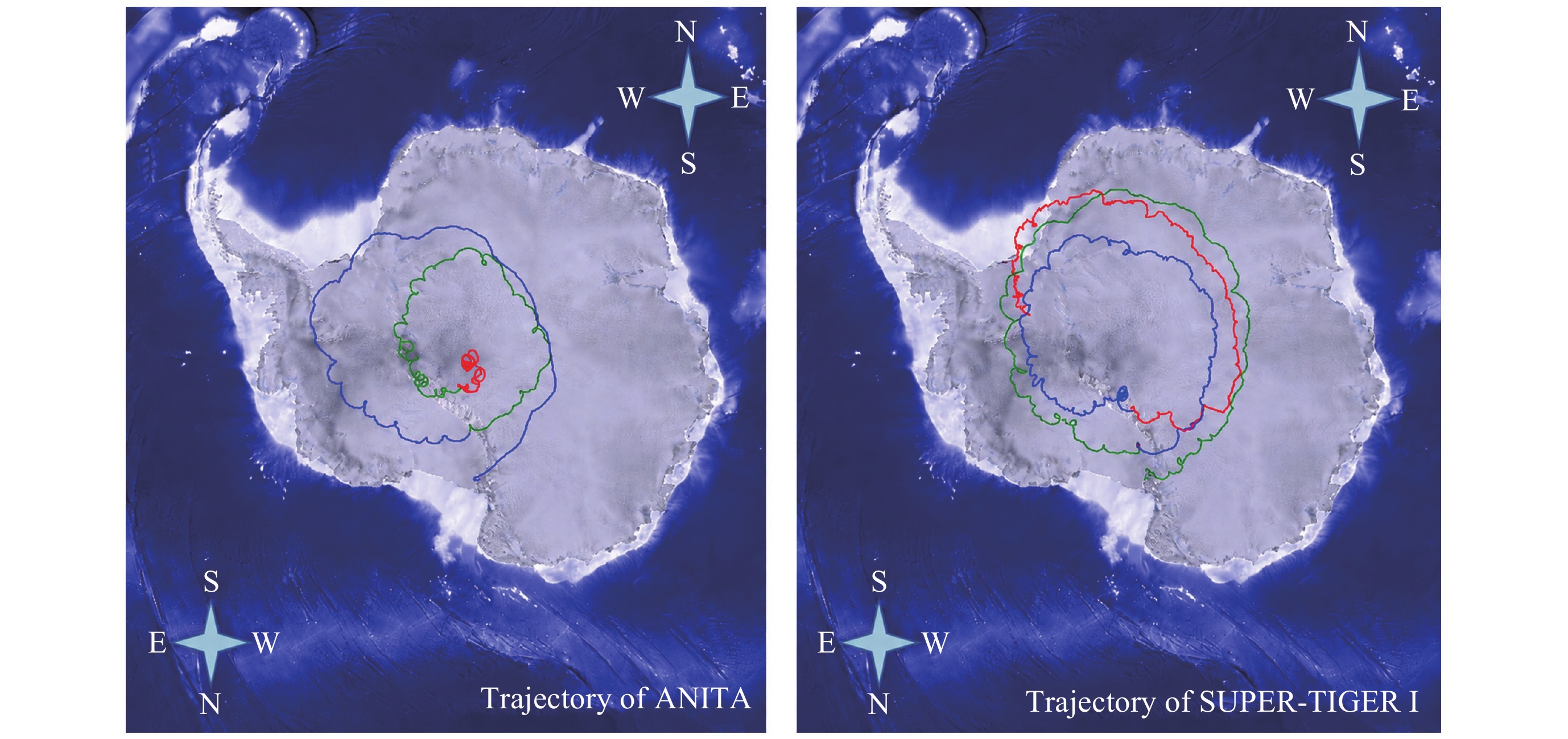
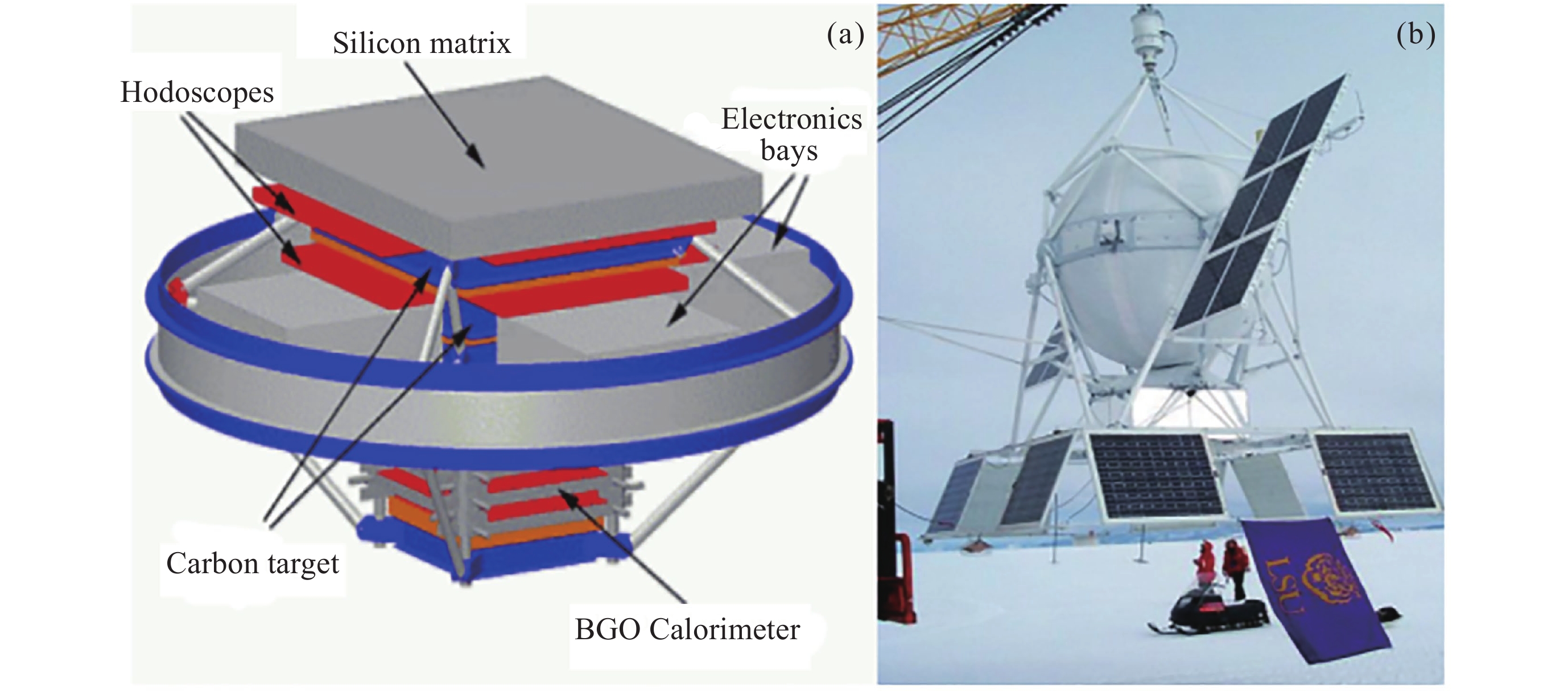
图 27 Super-TIGER结构中的二个单独模块 (a) 及吊舱实物 (b)
Figure 27. Two separate modules in Super-TIGER structure diagram (a) and actual pod diagram (b)
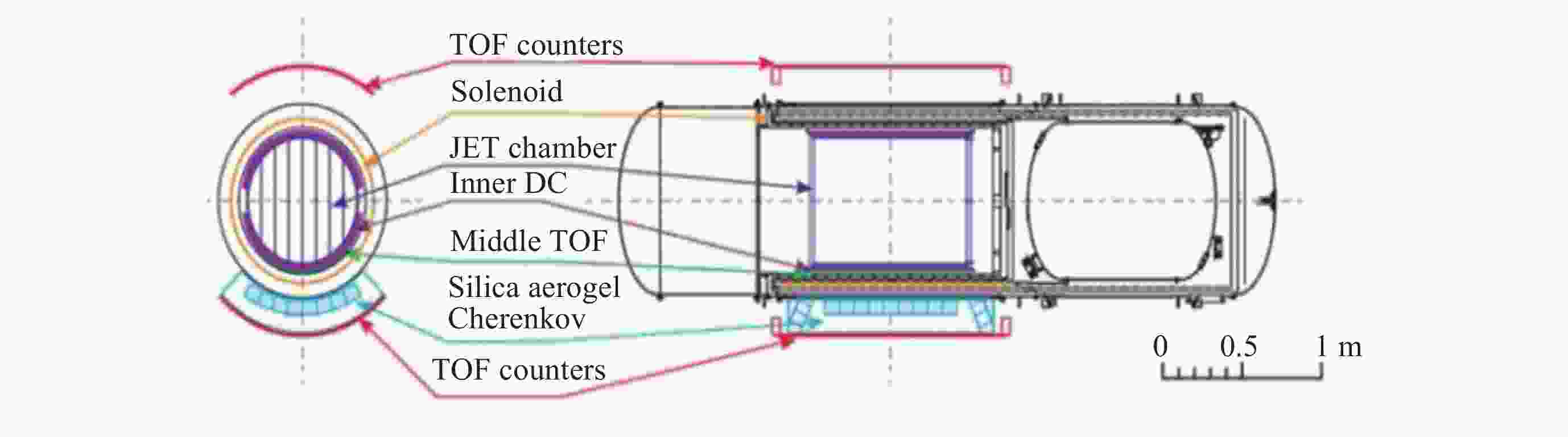
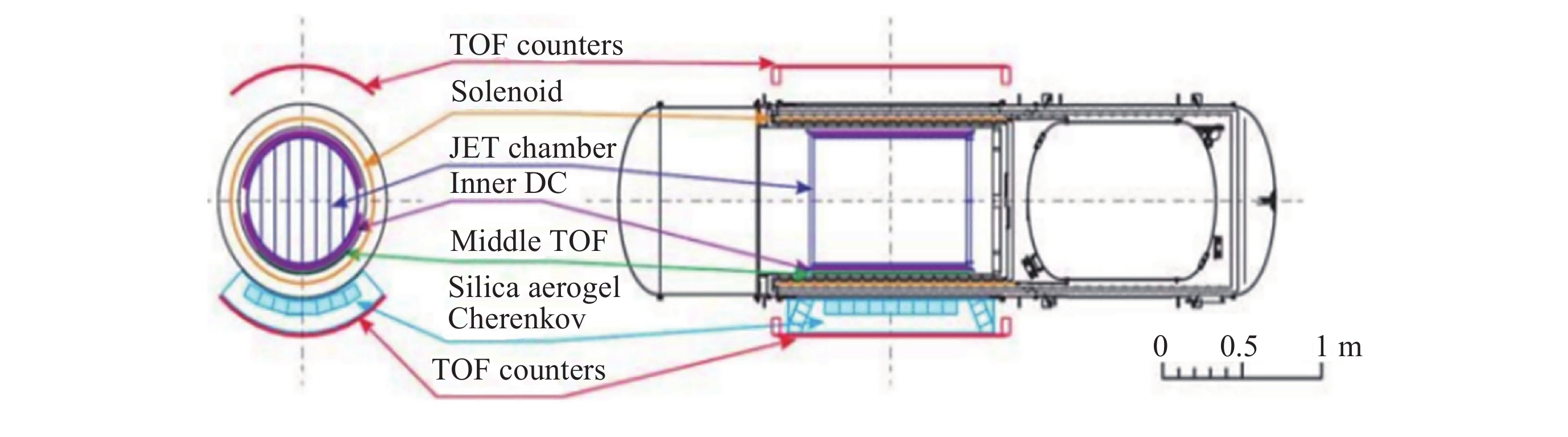
图 29 BESS-Polar II仪器的断面和侧视图
Figure 29. Sectional and side views of BESS-Polar II instrument
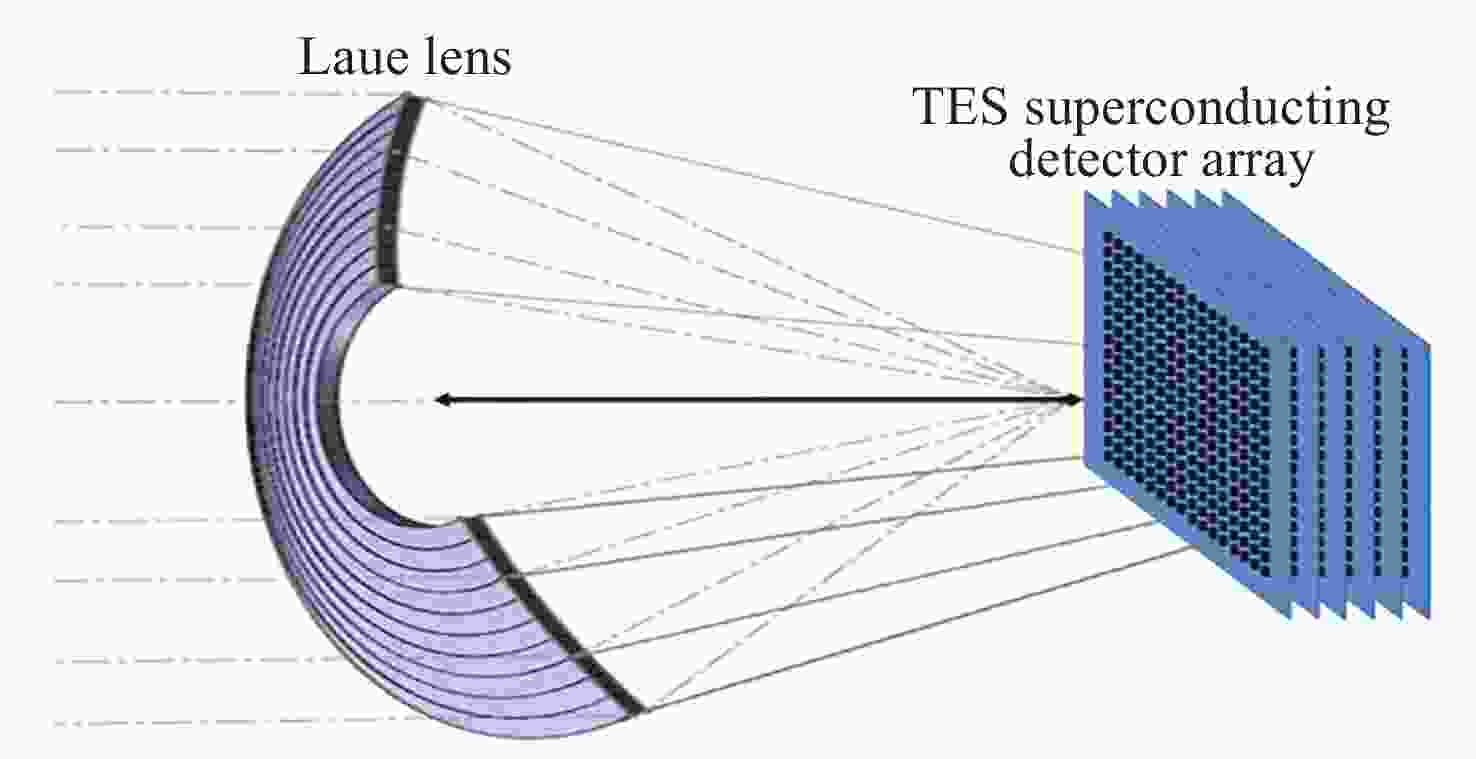
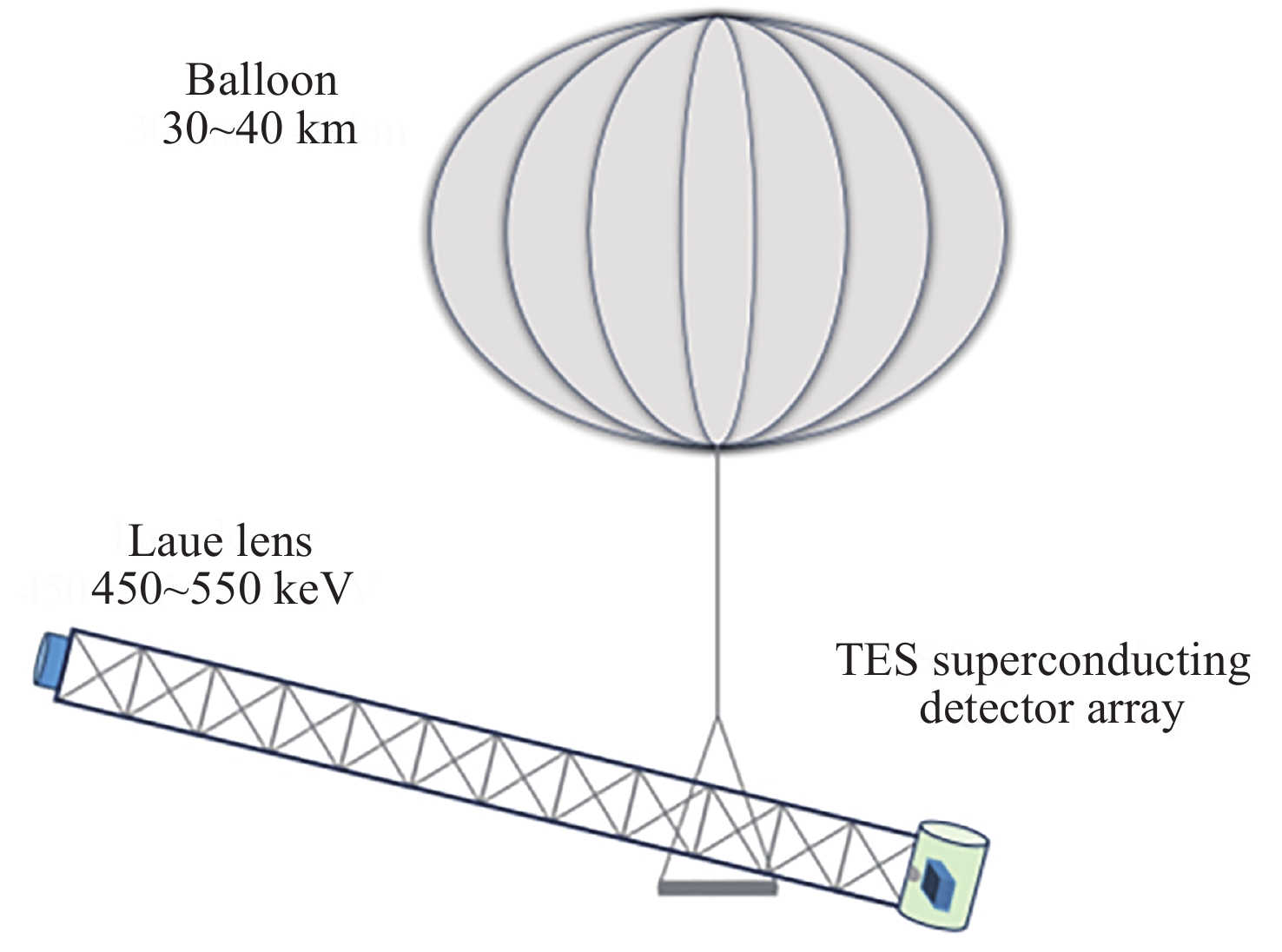
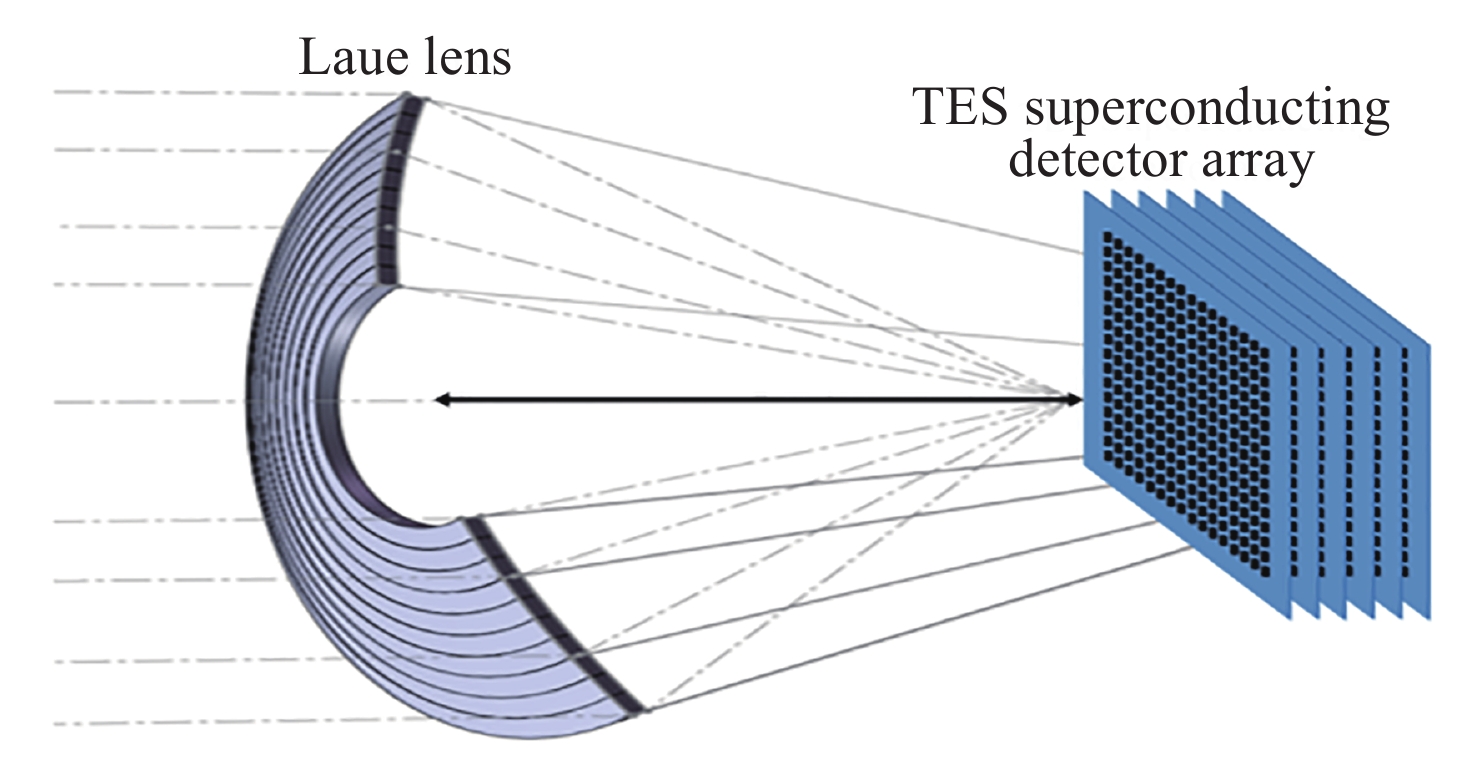
图 31 劳厄透镜成像与能谱分辨
Figure 31. Schematic diagram of Laue lens imaging and spectral resolution
表 1 国内外南极地区主要站点位置与地面极昼时长对比(30 km高空有延长)
Table 1. Comparison of the locations of major stations in Antarctica both domestically and internationally, and the duration of polar day on the ground (Extended at 30 km altitude)
站点 昭和(日本) 麦克默多(美国) 秦岭(中国) 中山(中国) 泰山(中国) 昆仑(中国) 位置 69°00'S
39°25'E77°51'S
166°40'E74°55'S
163°42'E69°22'S
76°22'E73°51'S
76°58'E80°25'S
77°06'E极昼/d 46 115 102 51 89 130 起始日期 11/28 10/25 11/02 11/26 11/07 10/17 结束日期 01/12 02/16 02/11 01/15 02/03 02/23 中天高度角/(°) 42.6~44.4 25.0~35.6 29.3~38.5 41.9~44.1 33.0~39.6 19.7~33.0  下载: 导出CSV
表 2 南极气球发放基站
Table 2. Antarctic balloon launching base stations
名称 地理位置 所属国家 McMurdo station 77°51'S, 166°40'E 美国 Halley Research station 75°35'S, 26°34'W 英国 Mario Zucchelli 74°41'S, 164°06'E 意大利 Antarctique Concordia 75°06'S, 123°20'E 意大利/法国 Showa station 69°00'15''S, 39°34'55''E 日本
下载: 导出CSV
表 3 非粒子天体物理实验
Table 3. Non-particle astrophysics experiment
主要方向 已在南极成功实验 尚在计划中 大爆炸宇宙学 BOOMERANG微波背景观测
EBEX微波辐射偏振观测
SPIDER大角尺度微波观测BETTII远红外光谱采集
COFE-T宇宙前景微波探测X和γ射线源 GRAD γ射线探测
HIREGS γ射线和硬X射线探测
X-Calibur高能X射线偏振测量系内外行星观测 STO平流层太赫兹天文台
BLAST望远镜红移/行星观测EXCITE系外行星观测
Zodiac II系外星尘盘探测
下载: 导出CSV
表 4 粒子天体物理实验
Table 4. Particle astrophysics experiment
主要方向 已在南极成功实验 宇宙线起源和加速 ATIC宇宙先进薄型离子探测
CREAM宇宙线能量和质量探测
Super-TIGER银河全离子成分记录中微子天文 ANITA南极暂现脉冲观测 暗物质和反物质 BESS Polar气球超导磁谱仪实验
ATIC宇宙先进薄型离子探测
下载: 导出CSV
-
[1] 蔡榕, 孙建颖. 浮空飞行器极地科学探测[J]. 现代物理知识, 2020, 32(2): 18-25 doi: 10.13405/j.cnki.xdwz.2020.02.005CAI Rong, SUN Jianying. Polar scientific exploration by airships[J]. Modern Physics Knowledge, 2020, 32(2): 18-25 doi: 10.13405/j.cnki.xdwz.2020.02.005 [2] 李一健, 黄宛宁, 周江华, 等. 临近空间天文台发展现状与展望[J]. 空间科学学报, 2024, 44(6): 1068-108 doi: 10.11728/cjss2024.06.2023-0145LI Yijian, HUANG Wanning, ZHOU Jianghua, et al. Development status and prospects of near space observatories[J]. Chinese Journal of Space Science, 2024, 44(6): 1068-108 doi: 10.11728/cjss2024.06.2023-0145 [3] 顾逸东. 气球科学观测100年[J]. 现代物理知识, 2020, 32(2): 3-12GU Yidong. 100 years of balloon scientific observations[J]. Modern Physics Knowledge, 2020, 32(2): 3-12 [4] SOLANKI S K, RIETHMÜLLER T L, BARTHOL P, et al. The second flight of the SUNRISE balloon-borne solar observatory: overview of instrument updates, the flight, the data, and first results[J]. The Astrophysical Journal Supplement Series, 2017, 229(1): 2 doi: 10.3847/1538-4365/229/1/2 [5] LOCKOWANDT C, ABRAHAMSSON M. The stratospheric balloon mission PoGO+ from Esrange to Victoria Island, Canada[C]//Proceedings of the AIAA Balloon Systems Conference. Denver: AIAA, 2017 [6] 田莉莉, 方贤德. NASA高空气球的研究及其进展[J]. 航天返回与遥感, 2012, 33(1): 81-87 doi: 10.3969/j.issn.1009-8518.2012.01.019TIAN Lili, FANG Xiande. Research and progress of NASA’s balloon[J]. Spacecraft Recovery & Remote Sensing, 2012, 33(1): 81-87 doi: 10.3969/j.issn.1009-8518.2012.01.019 [7] JONES W V. Scientific ballooning: past, present and future[J]. AIP Conference Proceedings, 2013, 1516(1): 229-233 doi: 10.1063/1.4792574 [8] WALKER C, KULESA C, YOUNG A, et al. Gal/Xgal U/LDB spectroscopic/stratospheric THz observatory: GUSTO[C]//Proceedings of SPIE 12190, Millimeter, Submillimeter, and Far-Infrared Detectors and Instrumentation for Astronomy XI. Montréal: SPIE, 2022: 121900E [9] HOOVER S, for the ANITA collaboration. Status of the ANITA experiment[J]. Journal of Physics: Conference Series, 2007, 81(1): 012009 doi: 10.1088/1742-6596/81/1/012009 [10] 李惕碚, 顾逸东. 我国的高空科学气球与高能天文观测[J]. 自然杂志, 1984, 7(3): 163-169 doi: CNKI:SUN:ZRZZ.0.1984-03-000LI Tibei, GU Yidong. China’s High-altitude Scientific Balloons and High-energy Astronomical Observations[J]. Chinese Journal of Nature, 1984, 7(3): 163-169 doi: CNKI:SUN:ZRZZ.0.1984-03-000 [11] 林隽, 宋腾飞, 孙明哲, 等. 50 mm白光球载日冕仪: Ⅰ. 基本结构与地面观测实验[J]. 中国科学: 物理学 力学 天文学, 2023, 53(5): 259611 doi: 10.1360/SSPMA-2022-0363LIN Jie, SONG Tengfei, SUN Mingzhe, et al. A 50-mm balloon-borne white-light coronagraph: I. Basic structure and experiments on the ground[J]. SCIENTIA SINICA Physica, Mechanica & Astronomica, 2023, 53(5): 259611 doi: 10.1360/SSPMA-2022-0363 [12] 苏润, 李小建. 平流层零压气球飞行控制仿真研究[J]. 合肥工业大学学报(自然科学版), 2018, 41(3): 325-332 doi: CNKI:SUN:HEFE.0.2018-03-007SU Run, LI Xiaojian. Numerical simulation study on flight performance of stratospheric zero-pressure balloon[J]. Journal of Hefei University of Technology, 2018, 41(3): 325-332 doi: CNKI:SUN:HEFE.0.2018-03-007 [13] 隋翠娟, 孙兰涛, 孟上, 等. 2003年北极科考期间一次极涡个例天气学分析[J]. 海洋学报, 2010, 32(4): 51-61SUI Cuijuan, SUN Lantao, MENG Shang, et al. Case analysis of the polar vortex during Arctic research expedition in 2003[J]. Acta Oceanologica Sinica, 2010, 32(4): 51-61 [14] 龙远, 邓小龙, 杨希祥, 等. 极涡风场中平流层浮空器轨迹仿真研究[J]. 计算机仿真, 2021, 38(8): 37-42 doi: 10.3969/j.issn.1006-9348.2021.08.007LONG Yuan, DENG Xiaolong, YANG Xixiang, et al. Trajectory simulation of stratosphere aerostats in polar vortex wind field[J]. Computer Simulation, 2021, 38(8): 37-42 doi: 10.3969/j.issn.1006-9348.2021.08.007 [15] 蔡榕, 孙建颖. 我国高空气球极地科学探测的初步构想[J]. 科学通报, 2020, 65(32): 3510-3519CAI Rong, SUN Jianying. Advances in Chinese polar scientific exploration using high-altitude balloons[J]. Chinese Science Bulletin, 2020, 65(32): 3510-3519 [16] KOGUT A, FIXSEN D, FIXSEN S, et al. ARCADE: absolute radiometer for cosmology, astrophysics, and diffuse emission[J]. New Astronomy Reviews, 2006, 50(11/12): 925-931 doi: 10.1016/j.newar.2006.09.023 [17] LANGE A, DE BERNARDIS P, DE PETRIS M, et al. The BOOMERANG experiment[J]. Space Science Reviews, 1995, 74(1): 145-150 doi: 10.1007/BF00751263 [18] CRILL B P, ADE P A R, ARTUSA D R, et al. BOOMERANG: a balloon-borne millimeter-wave telescope and total power receiver for mapping anisotropy in the cosmic microwave background[J]. The Astrophysical Journal Supplement Series, 2003, 148(2): 527 doi: 10.1086/376894 [19] REICHBORN-KJENNERUD B, ABOOBAKER A M, ADE P, et al. EBEX: a balloon-borne CMB polarization experiment[C]//Proceedings of SPIE 7741, Millimeter, Submillimeter, and Far-Infrared Detectors and Instrumentation for Astronomy V. San Diego: SPIE, 2010: 77411C [20] FILIPPINI J P, ADE P A R, AMIRI M, et al. SPIDER: a balloon-borne CMB polarimeter for large angular scales[C]//Proceedings of SPIE 7741, Millimeter, Submillimeter, and Far-Infrared Detectors and Instrumentation for Astronomy V. San Diego: SPIE, 2010: 77411N [21] SHAW E C, ADE P A R, AKERS S, et al. In-flight performance of SPIDER’s 280-GHz receivers[J]. Journal of Astronomical Telescopes, Instruments, and Systems, 2024, 10(4): 044012 doi: 10.1117/12.3016837 [22] RIZZO M J, RINEHART S A, DHABAL A, et al. The Balloon Experimental Twin Telescope for Infrared Interferometry (BETTII): towards the first flight[C]//Proceedings of SPIE 9908, Ground-Based and Airborne Instrumentation for Astronomy VI. Edinburgh: SPIE, 2016: 99080S [23] RHODES J, DOBKE B, BOOTH J, et al. Space-quality data from balloon-borne telescopes: the High Altitude Lensing Observatory (HALO)[J]. Astroparticle Physics, 2012, 38: 31-40 doi: 10.1016/j.astropartphys.2012.05.015 [24] RESTER A C. The GRAD Supernova Observer: first flight of a very large balloon over Antarctica[J]. Advances in Space Research, 1993, 13(2): 87-99 doi: 10.1016/0273-1177(93)90280-O [25] BOGGS S E, LIN R P, FEFFER P T, et al. A High Resolution Gamma-ray and hard X-ray Spectrometer (HIREGS) for long duration balloon flights[J]. Advances in Space Research, 1998, 21(7): 1015-1018 doi: 10.1016/S0273-1177(97)01090-9 [26] FEFFER P T, LIN R P, SMITH D M, et al. Preliminary results from the HIgh REsolution Gamma-ray and hard X-ray Spectrometer (HIREGS) long duration balloon flight in Antarctica[J]. Astronomy and Astrophysics Supplement Series, 1993, 97: 31-33 doi: 10.1002/asna.2113140608 [27] ABARR Q, BEHESHTIPOUR B, BEILICKE M, et al. Performance of the X-Calibur hard X-ray polarimetry mission during its 2018/19 long-duration balloon flight[J]. Astroparticle Physics, 2022, 143: 102749 doi: 10.48550/arXiv.2204.09761 [28] ABARR Q, AWAKI H, BARING M G, et al. XL-Calibur–a second-generation balloon-borne hard X-ray polarimetry mission[J]. Astroparticle Physics, 2021, 126: 102529 doi: 10.1016/j.astropartphys.2020.102529 [29] WALKER C, KULESA C, BERNASCONI P, et al. The Stratospheric THz Observatory (STO)[C]//Proceedings of SPIE 7733, Ground-based and Airborne Telescopes III. San Diego: SPIE, 2010: 77330N [30] MILLS G, YOUNG A, DOMINGUEZ R, et al. Cryogenics on the Stratospheric Terahertz Observatory (STO)[C]//Proceedings of the Cryogenic Engineering Conference. Tucson: CEC, 2015: 012131 [31] PASCALE E, ADE P A R, BOCK J J, et al. The balloon-borne large aperture submillimeter telescope: BLAST[J]. The Astrophysical Journal, 2008, 681(1): 400-414 [32] GALITZKI N, ADE P A R, ANGILÈ F E, et al. The next generation BLAST experiment[J]. Journal of Astronomical Instrumentation, 2014, 3(2): 1440001 doi: 10.1142/S2251171714400017 [33] TUCKER G S, NAGLER P, BUTLER N, et al. The Exoplanet Climate Infrared TElescope (EXCITE)[C]//Proceedings of SPIE 10702, Ground-Based and Airborne Instrumentation for Astronomy VII. Austin: SPIE, 2018: 107025G [34] BRYDEN G, TRAUB W, ROBERTS JR L C, et al. Zodiac II: debris disk science from a balloon[C]//Proceedings of SPIE 8151, Techniques and Instrumentation for Detection of Exoplanets V. San Diego: SPIE, 2011: 81511E [35] GUZIK T G. The Advanced Thin Ionization Calorimeter (ATIC) for studies of high energy cosmic rays[C]//Proceedings of the 26th International Cosmic Ray Conference. Salt Lake City: ICRC, 1999: 09 [36] WEFEL J P. The ATIC experiment: first balloon flight[C]//Proceedings of the 27th International Cosmic Ray Conference. Hamburg, Germany: ICRC, 2001: 2111 [37] WAKELY S P, AHN H S, ALLISON P, et al. First measurements of cosmic-ray nuclei at high energy with CREAM[J]. Advances in Space Research, 2008, 42(3): 403-408 doi: 10.1016/j.asr.2007.03.080 [38] MAESTRO P, AHN H S, ALLISON P, et al. Measurements of cosmic-ray energy spectra with the 2nd CREAM flight[J]. Nuclear Physics B - Proceedings Supplements, 2009, 196: 239-242 doi: 10.1016/j.nuclphysbps.2009.09.045 [39] YOON Y S, ANDERSON T, BARRAU A, et al. Proton and helium spectra from the CREAM-III flight[J]. The Astrophysical Journal, 2017, 839(1): 5 doi: 10.3847/1538-4357/aa68e4 [40] ANDERSON T B. Exploring the cosmic ray spectrum with the CREAM experiment[D]. University Park: The Pennsylvania State University, 2013 [41] RAUCH B F. Measurement of the relative abundances of the ultra-heavy galactic cosmic rays (30≤Z≤ 40) with the Trans-Iron Galactic Element Recorder (TIGER) instrument[D]. Seattle: Washington University, 2008 [42] BINNS W R, BOSE R G, BRAUN D L, et al. The SuperTIGER instrument: measurement of elemental abundances of ultra-heavy galactic cosmic rays[J]. The Astrophysical Journal, 2014, 788(1): 18 doi: 10.1088/0004-637X/788/1/18 [43] GORHAM P W, ALLISON P, BANERJEE O, et al. Constraints on the diffuse high-energy neutrino flux from the third flight of ANITA[J]. Physical Review D, 2018, 98(2): 022001 doi: 10.1103/PhysRevD.98.022001 [44] PROHIRA S, NOVIKOV A, BESSON D Z, et al. HiCal 2: an instrument designed for calibration of the ANITA experiment and for Antarctic surface reflectivity measurements[J]. Nuclear Instruments and Methods in Physics Research Section A: Accelerators, Spectrometers, Detectors and Associated Equipment, 2019, 918: 60-66 doi: 10.1016/j.nima.2018.11.092 [45] YAMAMOTO A, MITCHELL J W. Search for primary antiparticles and cosmological antimatter with BESS[J]. Nuclear Physics B-Proceedings Supplements, 2013, 243-244: 92-97 [46] ABE K, FUKE H, HAINO S, et al. Measurements of cosmic-ray proton and helium spectra from the BESS-Polar long-duration balloon flights over Antarctica[J]. The Astrophysical Journal, 2016, 822(2): 65 doi: 10.3847/0004-637X/822/2/65 [47] ONG R A, ARAMAKI T, BIRD R, et al. The GAPS experiment to search for dark matter using low-energy antimatter[C]//Proceedings of the 35th International Cosmic Ray Conference. Busan: ICRC, 2017 -
-

 下载:
下载:

计量
- 文章访问数: 1569
- HTML全文浏览量: 809
- PDF下载量: 110
-
被引次数:
0(来源:Crossref)
0(来源:其他)

