


Recent Progresses of the DAMPE Mission
doi: 10.11728/cjss2026.04.2026-yg14 cstr: 32142.14.cjss.2026-yg14
-
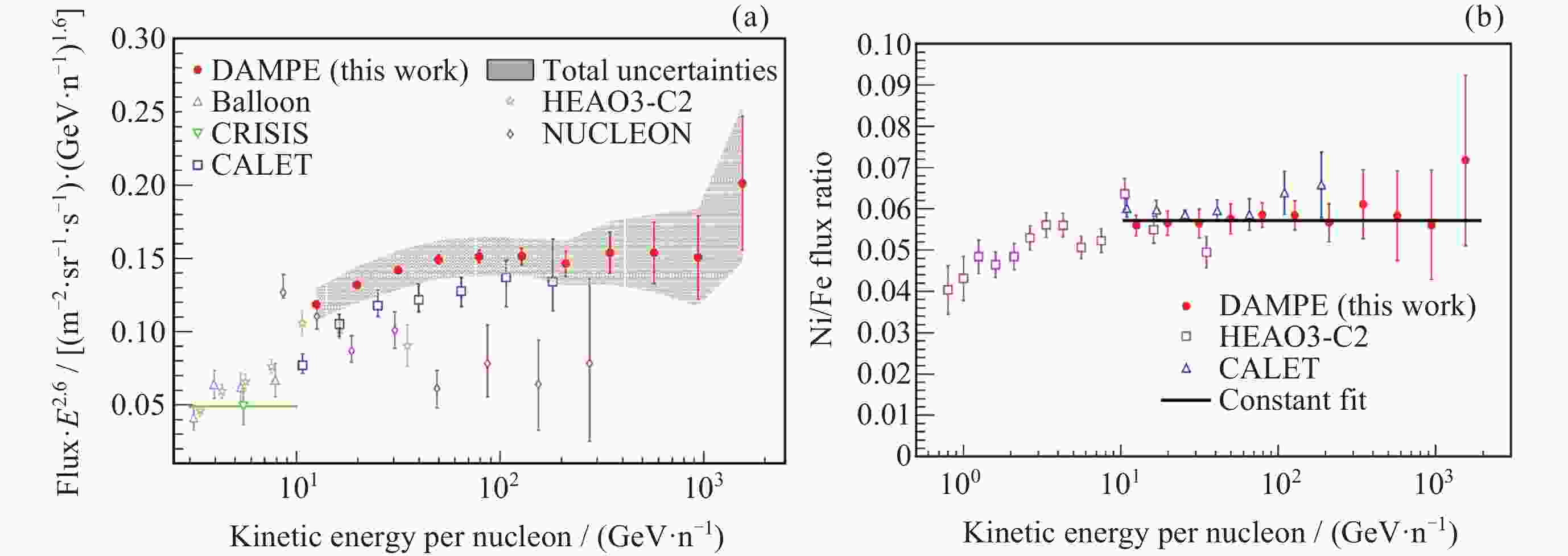
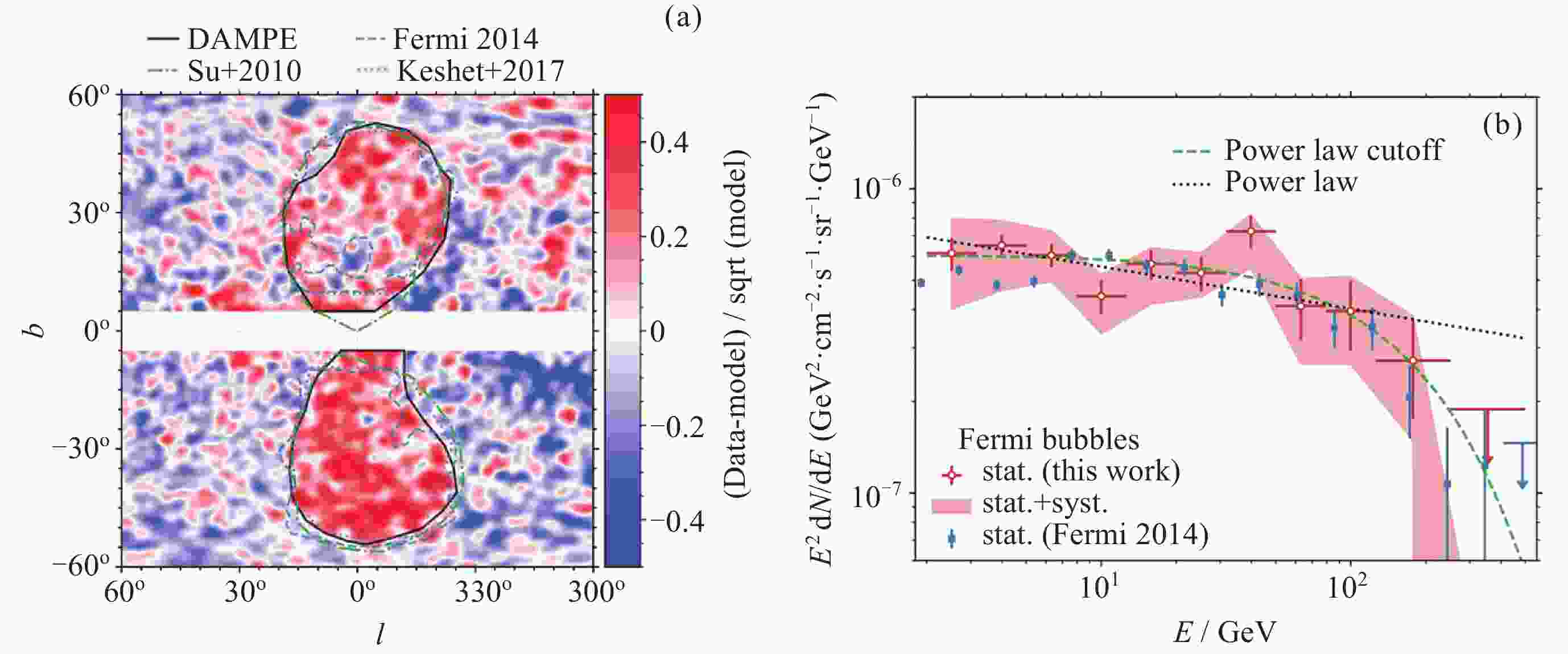
Abstract: The Dark Matter Particle Explorer (DAMPE) is a space high-energy particle and γ-ray detector whose major scientific goals are the indirect detection of dark matter particles, the origin of cosmic rays and high-energy γ-ray astronomy. Since its successful launch in December, 2015, the DAMPE has been operated smoothly in orbit for more than 10 years. The precise measurement of the secondary boron spectrum reveals a spectral hardening with a very high significance. The spectra of five primary cosmic-ray nuclei, i.e. protons, helium, carbon, oxygen, and iron, are measured to unprecedented high energies, revealing the universal charge-dependent spectral softening for the first time. The energy spectrum of nickel is firstly measured to above TeV/n. The Fermi bubbles and GCE are detected in the γ-ray flux map at very high significances. The DAMPE measurements are expected to significantly advance our understanding of the fundamental problems in astroparticle physics.
-
Key words:
- DAMPE /
- Dark matter /
- Cosmic rays /
- γ-ray
-
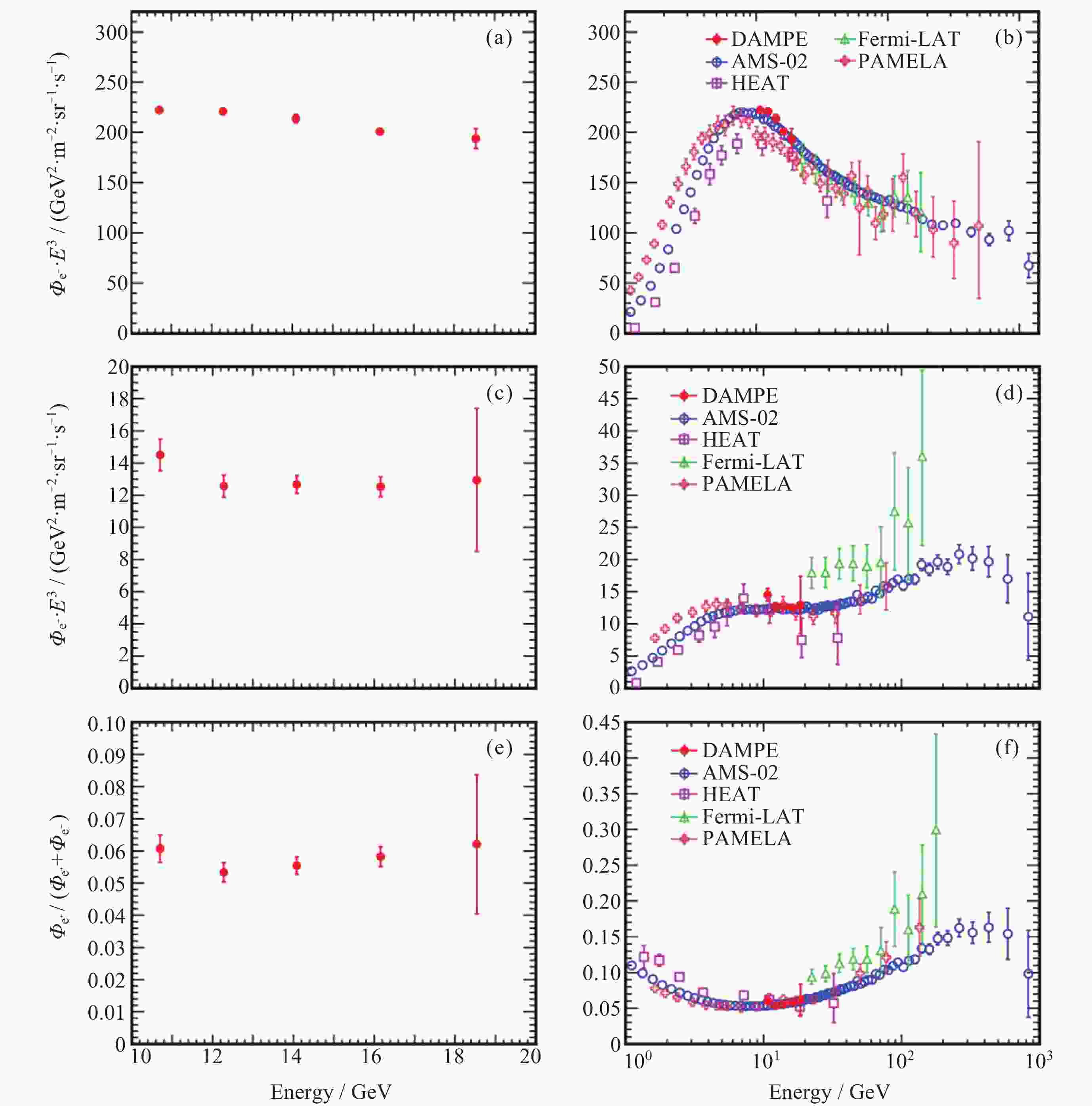
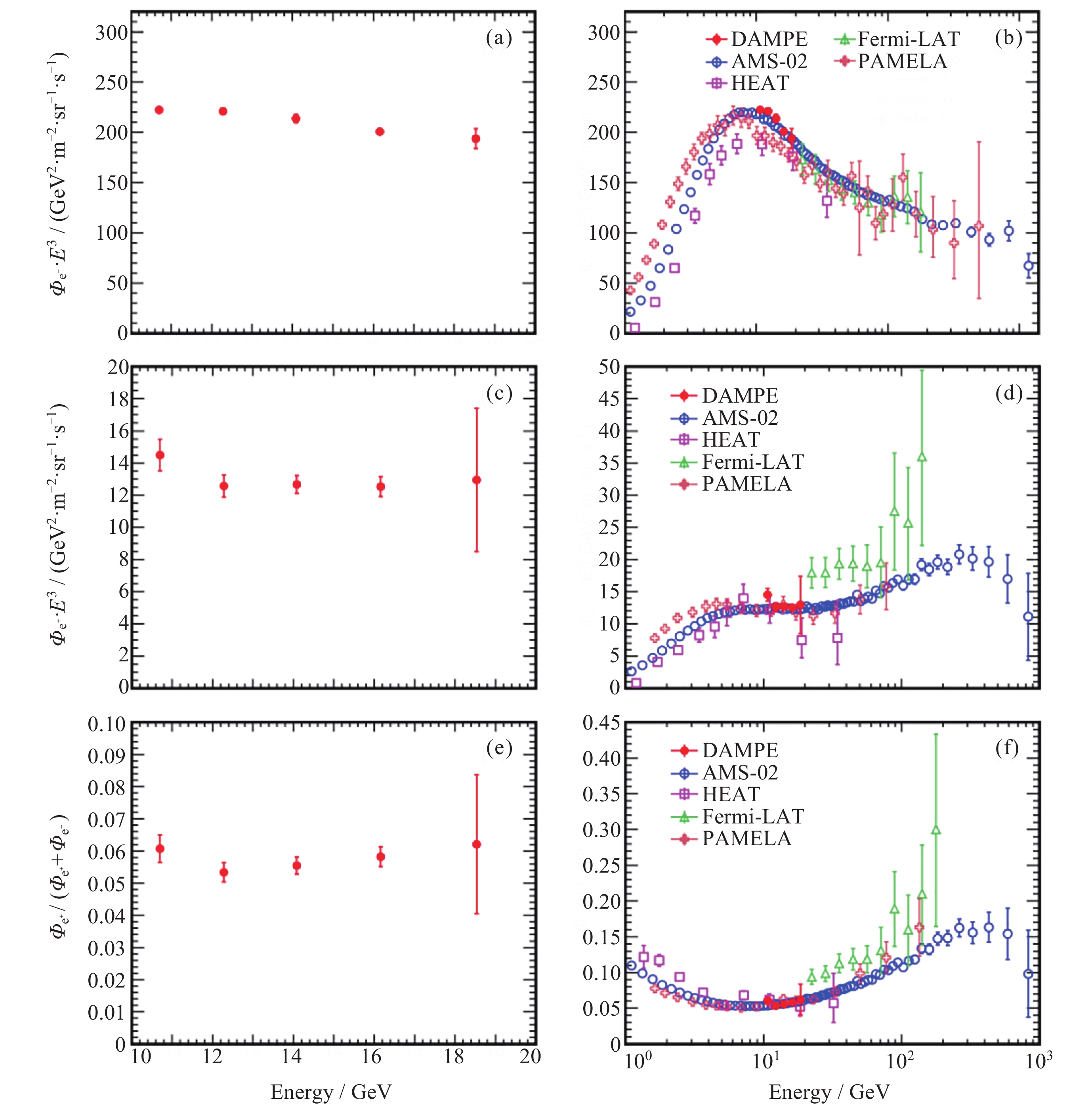
Figure 2. CR electron spectrum (a), positron spectrum (c) and positron ratios (e) measured by DAMPE. Previous measurements from other experiments are presented for comparisons in (b)(d)(f)
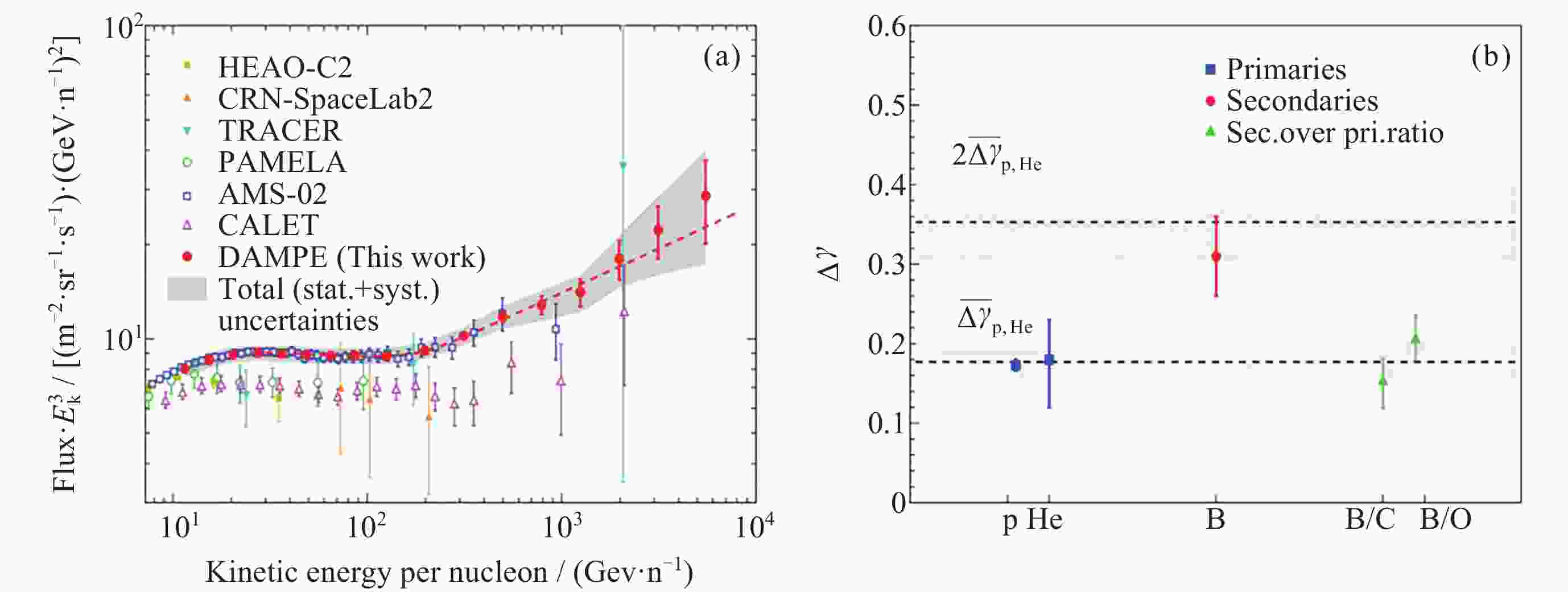
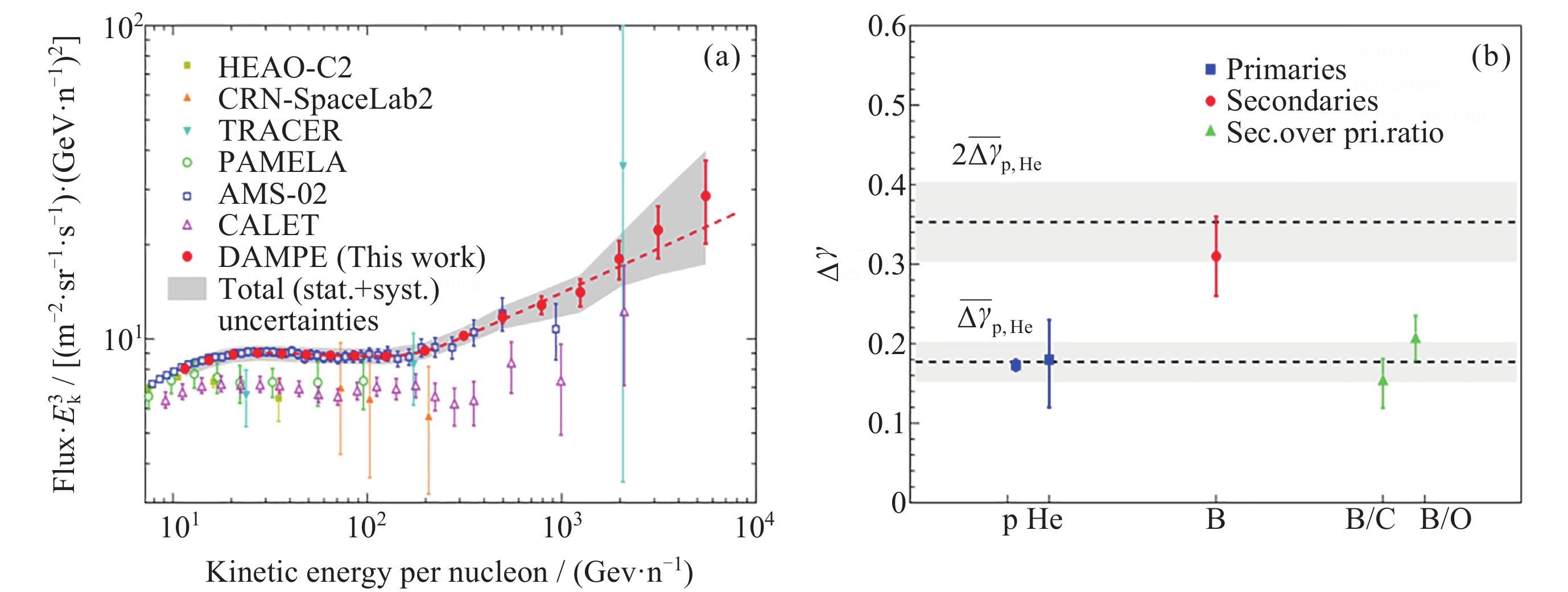
Figure 3. CR boron spectrum as a function of kinetic energy per nucleon measured by DAMPE[34] (red filled dots), compared with measurements from other experiments (a), and the spectral index change values of the hardening in the spectra of proton, helium, B/C, B/O, and boron measured with DAMPE[34] (b)
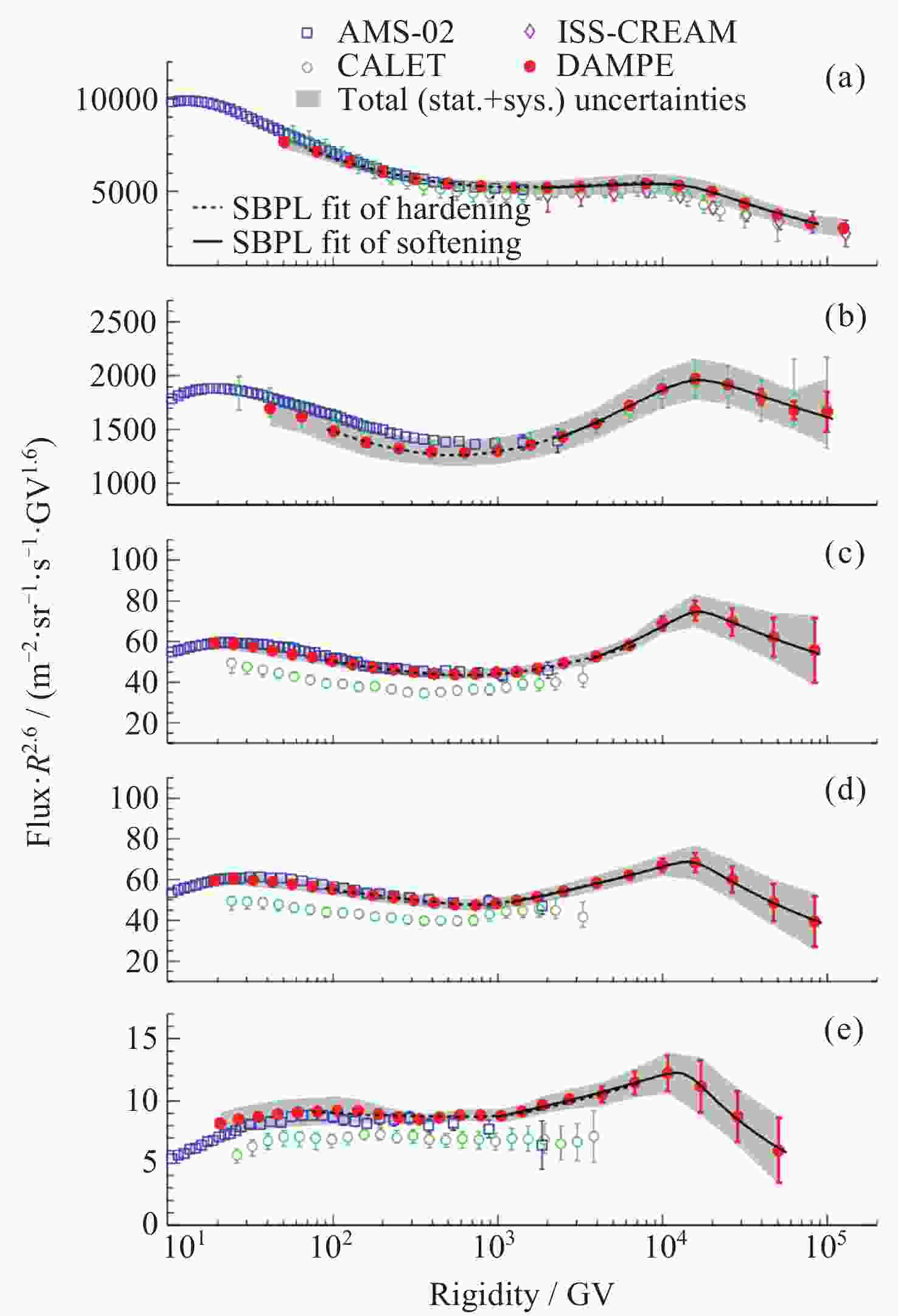
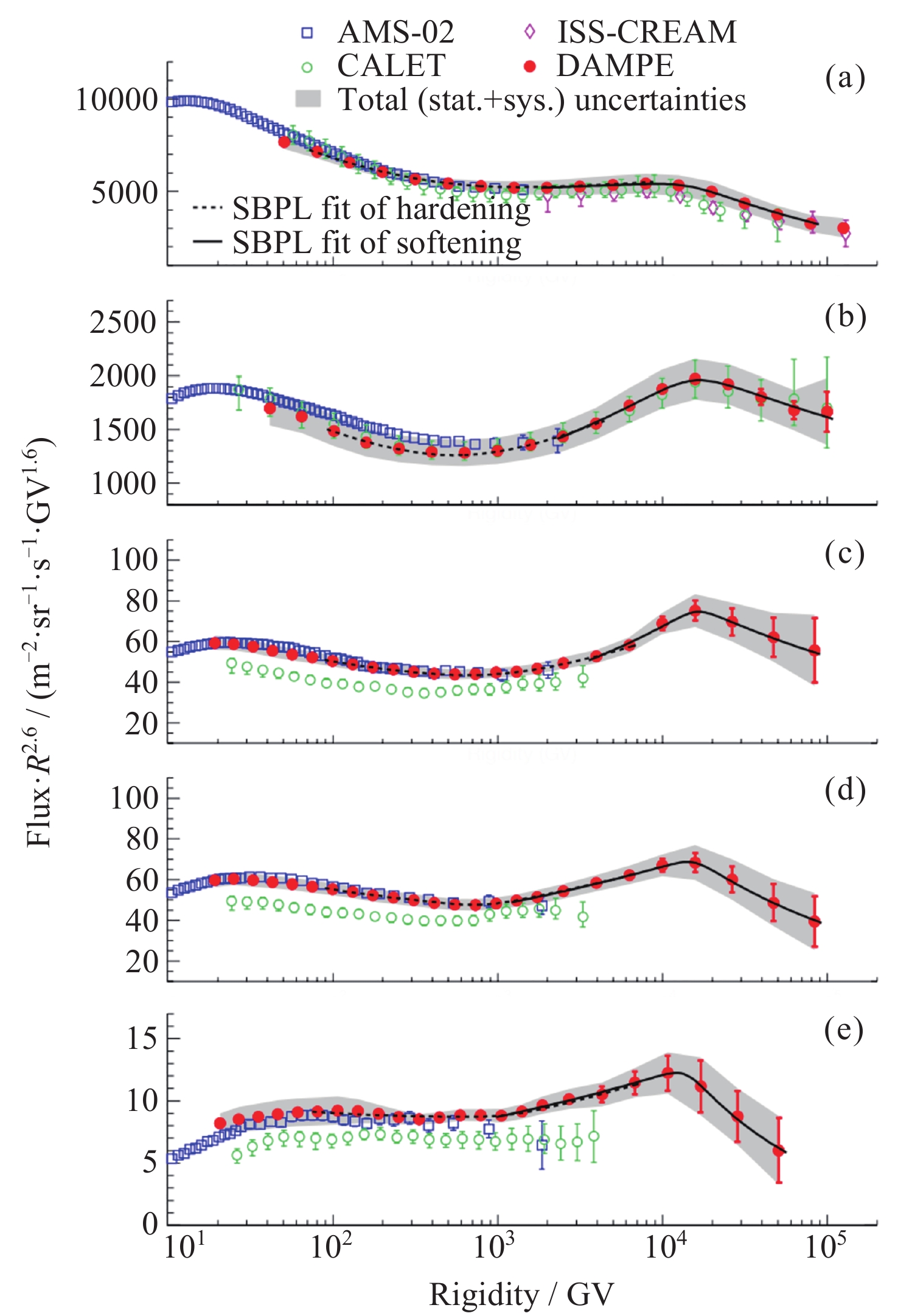
Figure 4. Spectra of protons (a), helium (b), carbon (c), oxygen (d) and iron (e) measured by DAMPE (red filled dots) [38], compared with measurements from other experiments
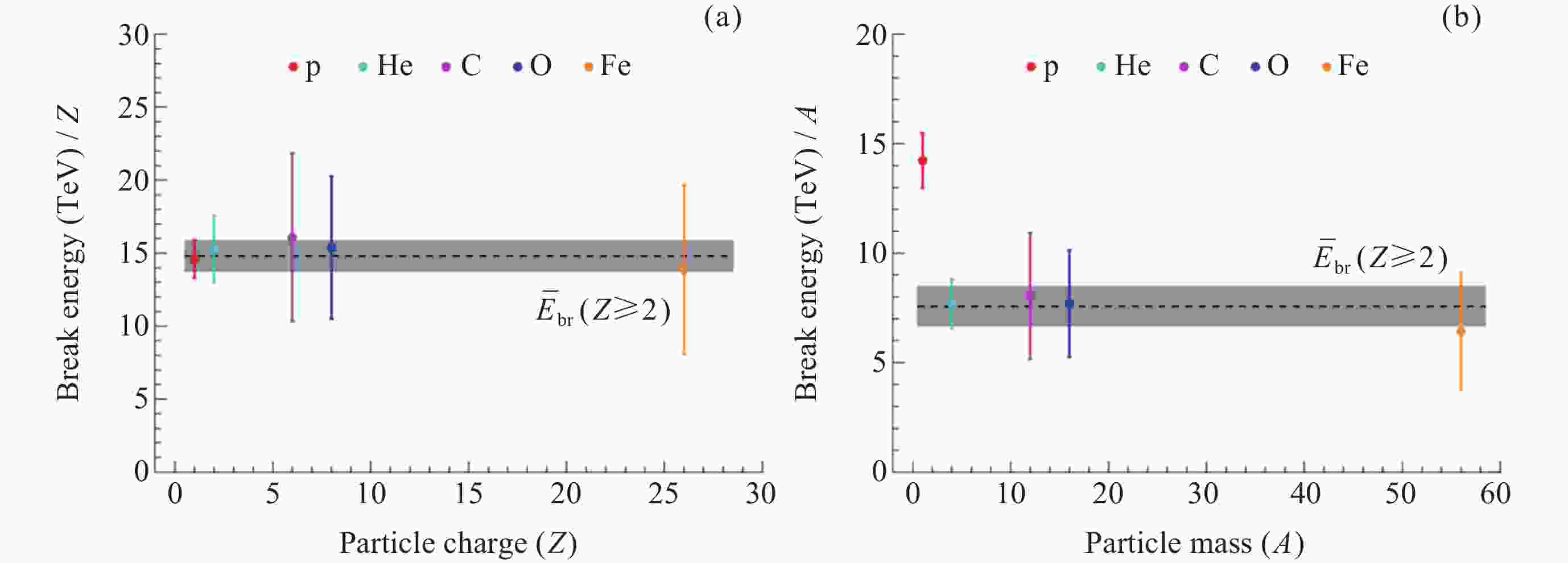
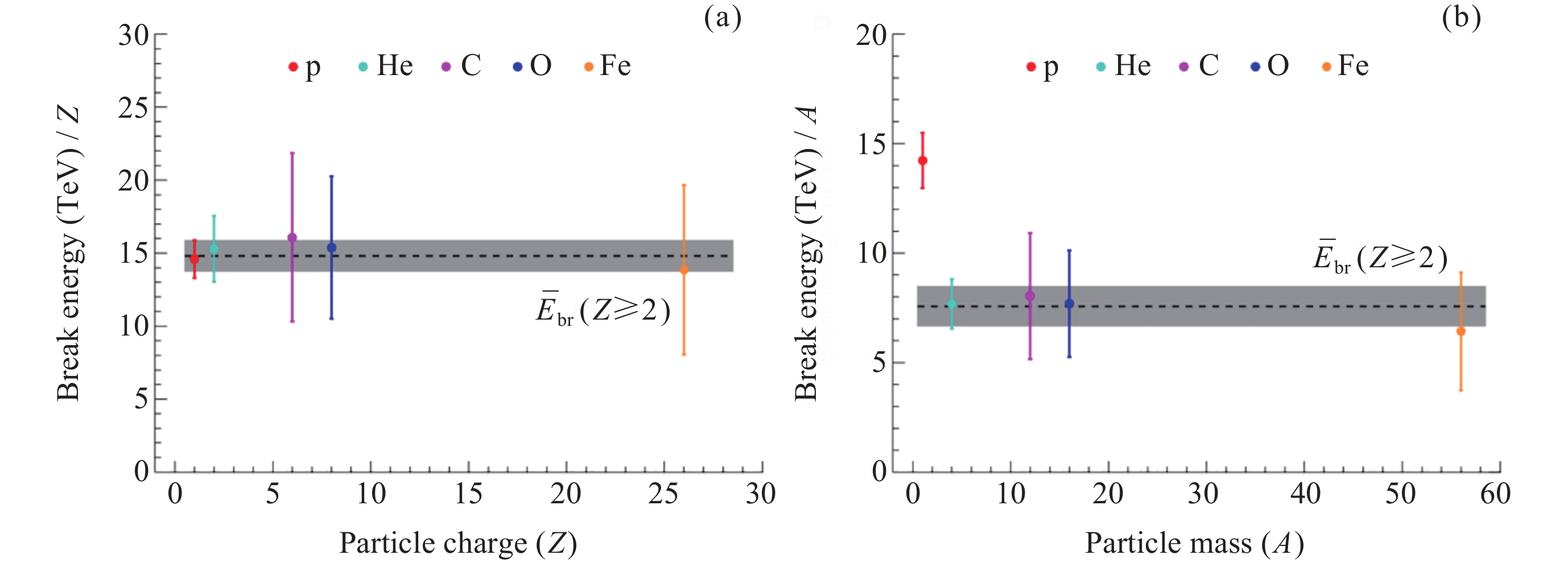
Figure 5. Break energies for different species divided by particle charge Z (a) and particle mass A (b) [38]
-
[1] ADE P A R, AGHANIM N, ARNAUD M, et al. Planck 2015 results. XIII. Cosmological parameters[J]. Astronomy & Astrophysics, 2016, 594: A13 doi: 10.1051/0004-6361/201525830 [2] JUNGMAN G, KAMIONKOWSKI M, GRIEST K. Supersymmetric dark matter[J]. Physics Reptorts, 1996, 267(5/6): 195-373 [3] BERTONE G, HOOPER D, SILK J. Particle dark matter: evidence, candidates and constraints[J]. Physics Reptorts, 2005, 405(5/6): 279-390 doi: 10.1088/978-1-64327-132-3ch2 [4] BI X J, YIN P F, YUAN Q. Status of dark matter detection[J]. Frontiers of Physics, 2013, 8(6): 794-827 doi: 10.1007/s11467-013-0330-z [5] ZHAO L, LIU J L. Experimental search for dark matter in China[J]. Frontiers of Physics, 2020, 15(4): 44301 doi: 10.1007/s11467-020-0960-x [6] ADRIANI O, BARBARINO G C, BAZILEVSKAYA G A, et al. An anomalous positron abundance in cosmic rays with energies 1.5-100 GeV[J]. Nature, 2009, 458(7238): 607-609 doi: 10.1038/nature07942 [7] ACKERMANN M, AJELLO M, ALLAFORT A, et al. Measurement of separate cosmic-ray electron and positron spectra with the Fermi large area telescope[J]. Physical Review Letters, 2012, 108(1): 011103 doi: 10.1103/PhysRevLett.108.011103 [8] AGUILAR M, ALBERTI G, ALPAT B, et al. First result from the alpha magnetic spectrometer on the international space station: Precision measurement of the positron fraction in primary cosmic rays of 0.5-350 GeV[J]. Physical Review Letters, 2013, 110(14): 141102 doi: 10.1103/PhysRevLett.110.141102 [9] CHANG J, ADAMS J H, AHN H S, et al. An excess of cosmic ray electrons at energies of 300-800 GeV[J]. Nature, 2008, 456(7220): 362-365 doi: 10.1038/nature07477 [10] ABDO A A, ACKERMANN M, AJELLO M, et al. Measurement of the cosmic ray e++e- spectrum from 20 GeV to 1 TeV with the Fermi large area telescope[J]. Physical Review Letters, 2009, 102(18): 181101 doi: 10.1103/PhysRevLett.102.181101 [11] AGUILAR M, AISA D, ALPAT B, et al. (AMS collaboration). Precision measurement of the (e++e-) flux in primary cosmic rays from 0.5 GeV to 1 TeV with the alpha magnetic spectrometer on the international space station[J]. Physical Review Letters, 2014, 113(22): 221102 doi: 10.1103/PhysRevLett.113.221102 [12] AMBROSI G, AN Q, ASFANDIYAROV R, et al. Direct detection of a break in the teraelectronvolt cosmic-ray spectrum of electrons and positrons[J]. Nature, 2017, 552(7683): 63-66 doi: 10.1038/nature24475 [13] ADRIANI O, AKAIKE Y, ASANO K, et al. Direct measurement of the spectral structure of cosmic-ray electrons + positrons in the TeV region with CALET on the international space station[J]. Physical Review Letters, 2023, 131(19): 191001 doi: 10.1103/PhysRevLett.131.191001 [14] SHEN C S. Pulsars and very high-energy cosmic-ray electrons[J]. The Astrophysical Journal, 1970, 162: L181 doi: 10.1086/180650 [15] HOOPER D, BLASI P, SERPICO P D. Pulsars as the sources of high energy cosmic ray positrons[J]. Journal of Cosmology and Astroparticle Physics, 2009, 2009(1): 025 doi: 10.1088/1475-7516/2009/01/025 [16] YÜKSEL H, KISTLER M D, STANEV T. TeV gamma rays from Geminga and the origin of the GeV positron excess[J]. Physical Review Letters, 2009, 103(5): 051101 doi: 10.1103/PhysRevLett.103.051101 [17] CIRELLI M, KADASTIK M, RAIDAL M, et al. Model-independent implications of the e±, $ \bar{p} $ cosmic ray spectra on properties of dark matter[J]. Nuclear Physics B, 2009, 813(1/2): 1-21 [18] YIN P F, YUAN Q, LIU J, et al. PAMELA data and leptonically decaying dark matter[J]. Physical Review D, 2009, 79(2): 023512 doi: 10.1103/PhysRevD.79.023512 [19] HOOPER D, GOODENOUGH L. Dark matter annihilation in the Galactic Center as seen by the Fermi Gamma Ray Space Telescope[J]. Physics Letters B, 2011, 697(5): 412-428 doi: 10.1016/j.physletb.2011.02.029 [20] CUI M Y, YUAN Q, TSAI Y L S, et al. Possible dark matter annihilation signal in the AMS-02 antiproton data[J]. Physical Review Letters, 2017, 118(19): 191101 doi: 10.1103/PhysRevLett.118.191101 [21] CUOCO A, KRÄMER M, KORSMEIER M. Novel dark matter constraints from antiprotons in light of AMS-02[J]. Physical Review Letters, 2017, 118(19): 191102 doi: 10.1103/PhysRevLett.118.191102 [22] CHANG J. Dark matter particle explorer: The first Chinese cosmic ray and hard γ-ray detector in space[J]. Chinese Journal of Space Science, 2014, 34(5): 550-557 doi: 10.11728/cjss2014.05.550 [23] CHANG J, AMBROSI G, AN Q, et al. The dark matter particle explorer mission[J]. Astroparticle Physics, 2017, 95: 6-24 doi: 10.1016/j.astropartphys.2017.08.005 [24] YU Y H, SUN Z Y, SU H, et al. The plastic scintillator detector for DAMPE[J]. Astroparticle Physics, 2017, 94: 1-10 doi: 10.22323/1.358.0100 [25] AZZARELLO P, AMBROSI G, ASFANDIYAROV R, et al. The DAMPE silicon-tungsten tracker[J]. Nuclear Instruments and Methods in Physics Research Section A: Accelerators, Spectrometers, Detectors and Associated Equipment, 2016, 831: 378-384 [26] ZHANG Z Y, ZHANG Y L, DONG J N, et al. Design of a high dynamic range photomultiplier base board for the BGO ECAL of DAMPE[J]. Nuclear Instruments and Methods in Physics Research Section A: Accelerators, Spectrometers, Detectors and Associated Equipment, 2015, 780: 21-26 doi: 10.1016/j.nima.2015.01.036 [27] HE M, MA T, CHANG J, et al. GEANT4 simulation of neutron detector for DAMPE[J]. Chinese Astronomy and Astrophysics, 2016, 40(4): 474-482 doi: 10.1016/j.chinastron.2016.10.002 [28] AMBROSI G, AN Q, ASFANDIYAROV R, et al. The on-orbit calibration of dark matter particle explorer[J]. Astroparticle Physics, 2019, 106: 18-34 doi: 10.1016/j.astropartphys.2018.10.006 [29] DONG T K, ZHANG Y P, MA P X, et al. Charge measurement of cosmic ray nuclei with the plastic scintillator detector of DAMPE[J]. Astroparticle Physics, 2019, 105: 31-36 doi: 10.1016/j.astropartphys.2018.10.001 [30] DUAN K K, SHEN Z Q, XU Z L, et al. PSF calibration of DAMPE for gamma-ray observations[J]. Astroparticle Physics, 2025, 165: 103058 doi: 10.1016/j.astropartphys.2024.103058 [31] YUE C, ZANG J J, DONG T K, et al. A parameterized energy correction method for electromagnetic showers in BGO-ECAL of DAMPE[J]. Nuclear Instruments and Methods in Physics Research Section A: Accelerators, Spectrometers, Detectors and Associated Equipment, 2017, 856: 11-16 doi: 10.1016/j.nima.2017.03.013 [32] ALEMANNO F, AN Q, AZZARELLO P, et al. Measurement of separate electron and positron spectra from 10 to 20 GeV with the geomagnetic field on DAMPE[J]. Chinese Physics C, 2025, 49(11): 115001 doi: 10.1088/1674-1137/adfa04 [33] ALEMANNO F, ALTOMARE C, AN Q, et al. Observation of a spectral hardening in cosmic ray boron spectrum with the DAMPE space mission[J]. Physical Review Letters, 2025, 134(19): 191001 doi: 10.1103/PhysRevLett.134.191001 [34] AN Q, ASFANDIYAROV R, AZZARELLO P, et al. Measurement of the cosmic ray proton spectrum from 40 GeV to 100 TeV with the DAMPE satellite[J]. Science Advances, 2019, 5(9): eaax3793 doi: 10.1126/sciadv.aax3793 [35] ALEMANNO F, AN Q, AZZARELLO P, et al. Measurement of the cosmic ray helium energy spectrum from 70 GeV to 80 TeV with the DAMPE space mission[J]. Physical Review Letters, 2021, 126(20): 201102 doi: 10.1103/PhysRevLett.126.201102 [36] ALTOMARE C, AN Q, AZZARELLO P, et al. Detection of spectral hardenings in cosmic-ray boron-to-carbon and boron-to-oxygen flux ratios with DAMPE[J]. Science Bulletin, 2022, 67(21): 2162-2166 doi: 10.1016/j.scib.2022.10.002 [37] ALEMANNO F, AN Q, AZZARELLO P, et al. Charge-dependent spectral softenings of primary cosmic rays below the knee[J]. Nature, 2026, 653(8113): 52-55 doi: 10.1038/s41586-026-10472-0 [38] PETERS B. Primary cosmic radiation and extensive air showers[J]. Il Nuovo Cimento (1955-1965), 1961, 122(4): 800-819 doi: 10.1007/bf02783106 [39] ALEMANNO F, AN Q, AZZARELLO, et al. Measurement of the cosmic ray nickel energy spectrum from 10 GeV/n to 2 TeV/n with the DAMPE space mission[J]. Physical Review Letters, 2026, 137(5): 051001 [40] ADRIANI O, AKAIKE Y, ASANO K, et al. Precision spectral measurements of chromium and titanium from 10 to 250 GeV/n and sub-iron to iron ratio with the calorimetric electron telescope on the international space station[J]. Physical Review Letters, 2025, 135(2): 021002 doi: 10.1103/py17-74rk [41] ALEMANNO F, AN Q, AZZARELLO P, et al. Observations of the Fermi bubbles and the galactic center excess with the dark matter particle explorer[J]. The Astrophysical Journal Supplement Series, 2026, 284(1): 22 doi: 10.3847/1538-4365/ae58a1 [42] ACKERMANN M, ALBERT A, ATWOOD W B, et al. The spectrum and morphology of the Fermi bubbles[J]. The Astrophysical Journal, 2014, 793(1): 64-97 doi: 10.1088/0004-637X/793/1/64 [43] CALORE F, CHOLIS I, WENIGER C. Background model systematics for the Fermi GeV excess[J]. Journal of Cosmology and Astroparticle Physics, 2015, 2015(3): 038 [44] CHOLIS I, ZHONG Y M, MCDERMOTT S D, et al. Return of the templates: Revisiting the Galactic Center excess with multimessenger observations[J]. Physical Review D, 2022, 105(10): 103023 -
-

 下载:
下载:

计量
- 文章访问数: 809
- HTML全文浏览量: 582
- PDF下载量: 13
-
被引次数:
0(来源:Crossref)
0(来源:其他)

