


中巴资源一号卫星星内粒子探测器研制回顾
doi: 10.11728/cjss2026.05.2025-0164 cstr: 32142.14.cjss.2025-0164
-
 邹鸿 男, 1975年11月出生于北京市, 现为北京大兴地球与空间科学学院研究员, 博士生导师, 主要研究方向为空间探测技术、地球辐射带和火星电离层研究等. E-mail: hongzou@pku.edu.cn
通讯作者:
Review of the Development of the In-Satellite Particle Detector for the China-Brazil Earth Resources Satellite-1
-
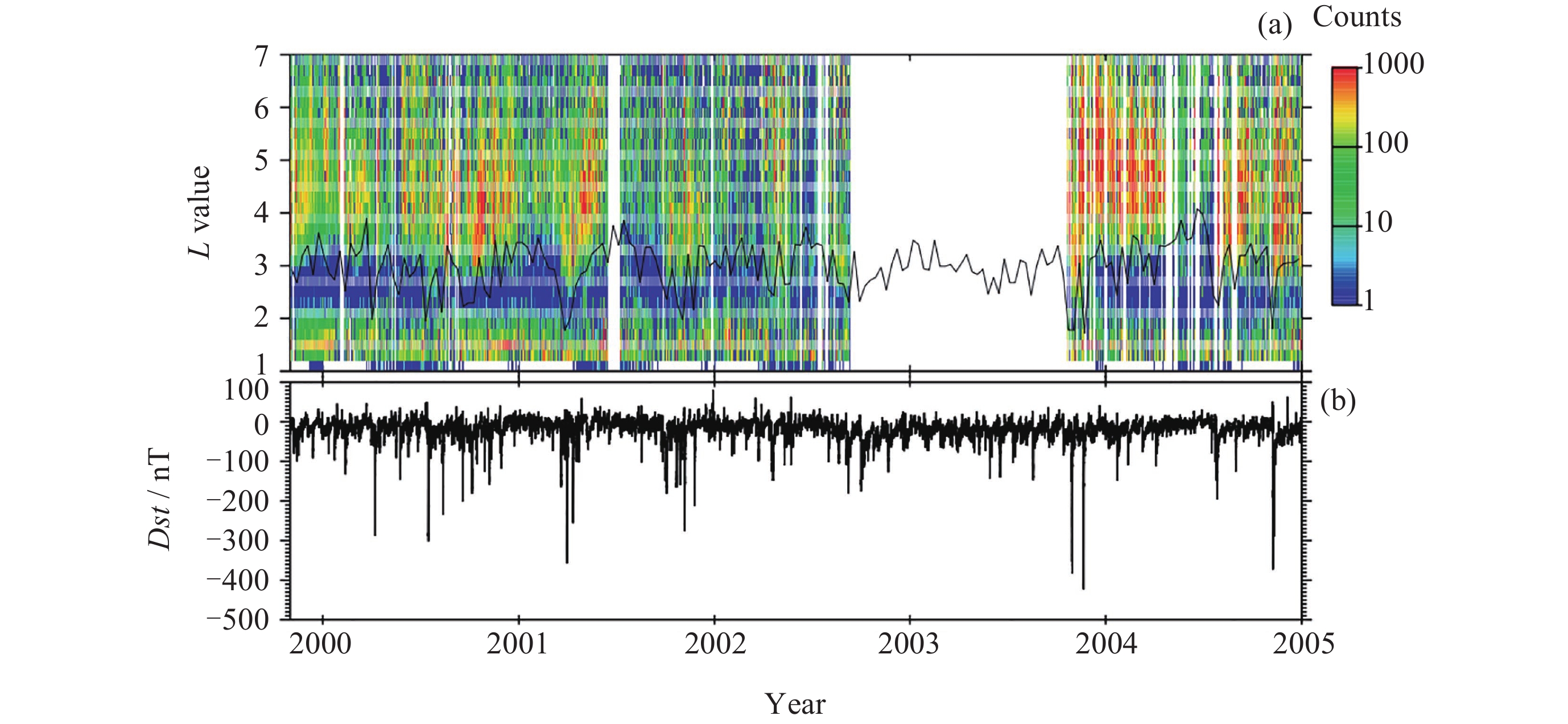
摘要: 中巴资源一号01卫星星内粒子探测器是北京大学项目组研制的第一个空间粒子辐射探测载荷. 该载荷的主要功能是对卫星内部高能电子和质子的辐射环境进行监测. 本文详细介绍了星内粒子探测器的研制过程、发射和在轨运行、数据处理以及基于载荷数据发表的研究成果. 对观测结果的分析和研究表明, 星内粒子辐射探测器在轨工作正常, 性能指标满足要求, 观测结果符合预期. 中巴资源一号01卫星星内粒子探测器的成功研制开创了中国高校研制星载粒子辐射探测载荷的先河, 为北京大学空间探测载荷研制能力的提升和承担后续研制任务奠定了坚实的基础.Abstract: The In-Satellite Particle Detector onboard the China-Brazil Earth Resources Satellite-1 (CBERS-1) was the first space particle radiation detection payload developed by the project team at Peking University. The main objective of this payload was to monitor the high-energy electron and proton radiation environment inside the satellite. The payload probe consists of an electron probe and a proton probe. The electron probe is a ΔE-E telescope composed of a 100 um-thick silicon surface barrier detector and a 5000 μm-thick lithium drift detector, capable of measuring electrons ranging from 0.5 to 2.0 MeV and above 2.0 MeV, while eliminating proton contamination. The proton probe is a telescope consisting of two silicon surface barrier detectors with thicknesses of 100 μm and 450 μm respectively, capable of measuring protons ranging from 5 to 30 MeV and 30 to 60 MeV. From the task assignment in 1987 to the delivery of the flight-mode payload in 1998, the development process underwent four stages: principle-mode, electrical-mode, qualification-mode, and flight-mode, spanning over 11 years. On October 14, 1999, the CBERS-1/01 satellite was successfully launched. The In-Satellite Particle Detector was powered on three days later and successfully transmitted data, and then operated normally in orbit until the end of the satellite's lifespan. After preprocessing the payload’s data and matching it with satellite orbit information, the data suitable for scientific research was obtained. The data analysis proved that the In-Satellite Particle Detector performs well in orbit, and its observations are in accord with expectations. Based on the payload’s data, several papers on radiation belt research have been published. The successful development of the In-Satellite Particle Detector onboard CBERS-1 marks a milestone in the development of space particle detectors by Chinese universities, and lays a solid foundation for the subsequent development of space detection payloads at Peking University.
-
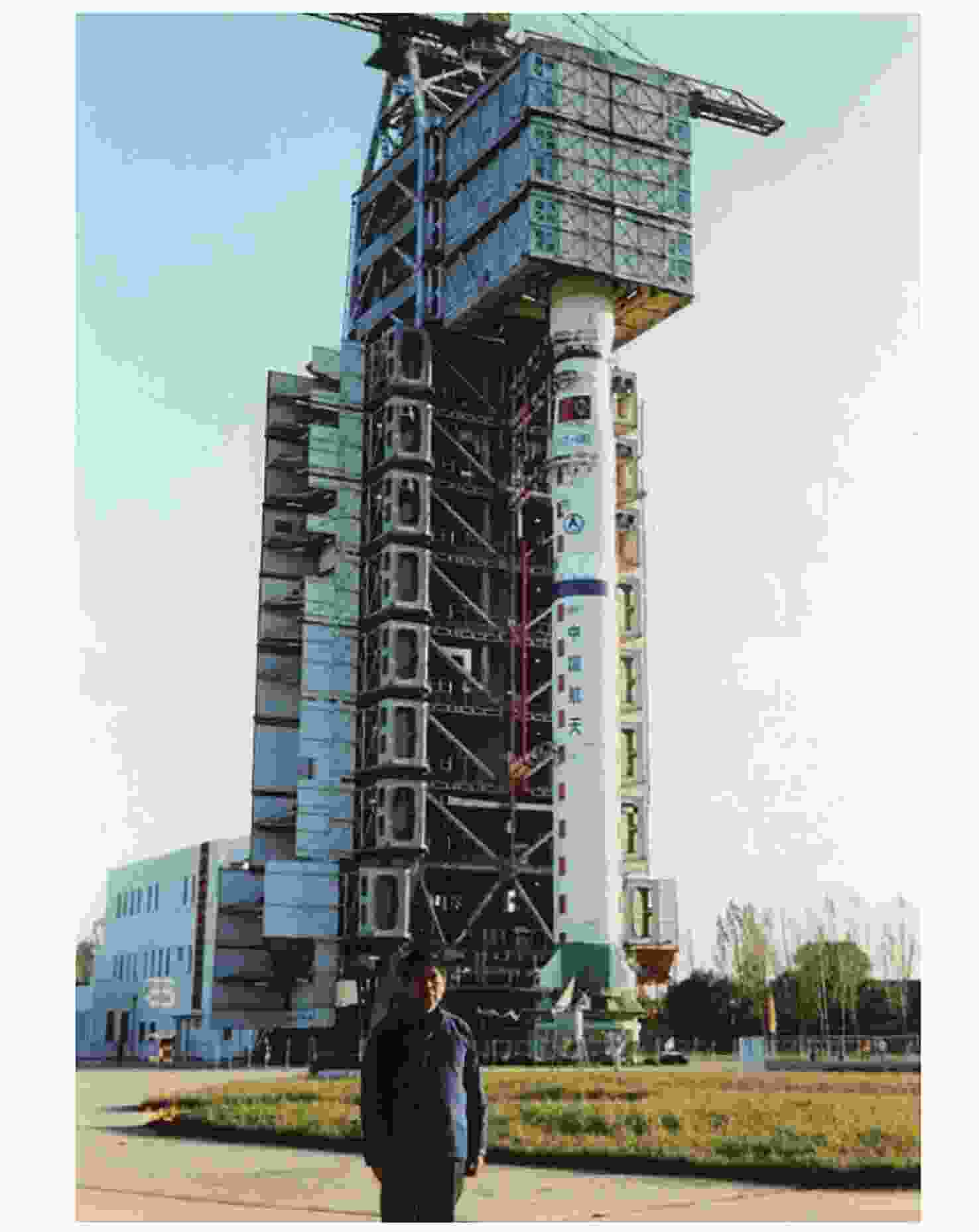
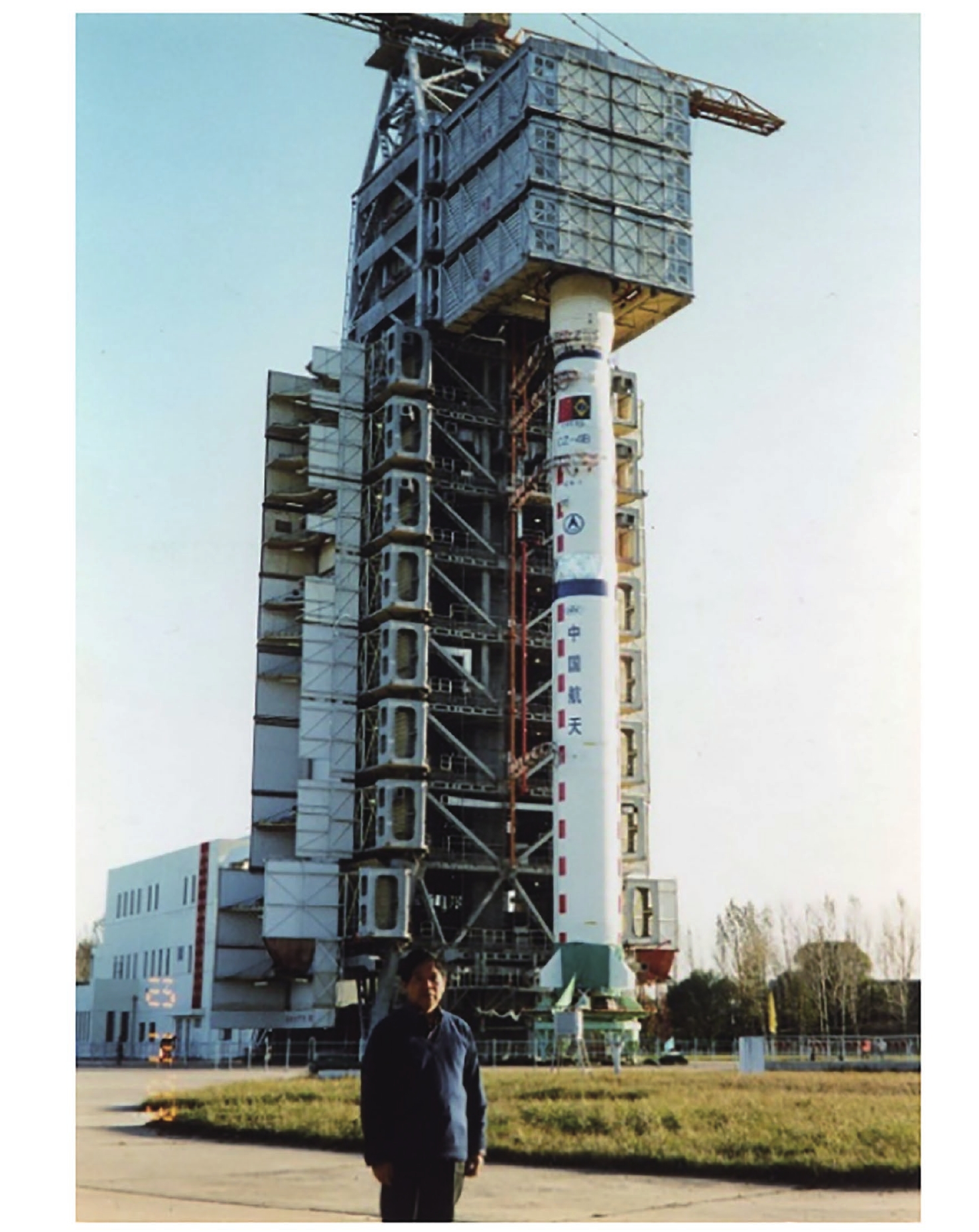
图 2 CBERS-1/01星搭载的长征四号乙运载火箭在太原发射场等待发射
Figure 2. CZ-4 B rocket carrying the CBERS-1/01 satellite at Taiyuan launching site
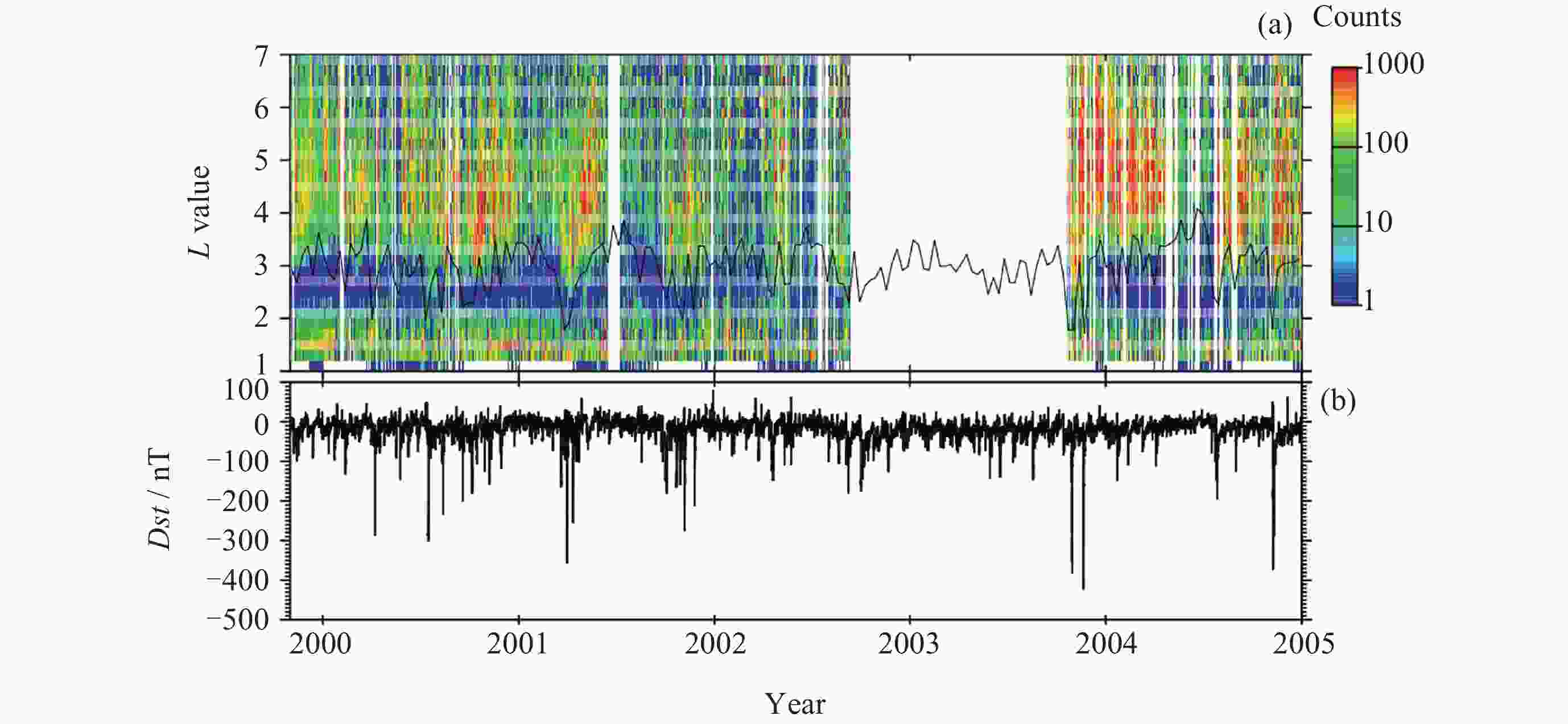
表 1 CBERS-1/01星星内粒子探测器主要性能指标
Table 1. Performance of the In-Satellite Particle Detector in CBERS-1/01
性能指标 需求 电子能量范围/MeV 0.5~2.0
>2.0质子能量范围/MeV 5~30
30~60采样间隔/s 24(一次采样)  下载: 导出CSV
-
[1] 张永维. 中国科学探测与技术试验卫星[J]. 中国航天, 2001(7): 3-6ZHANG Yongwei. China's scientific and technological test satellites[J]. Aerospace China, 2001(7): 3-6 [2] 肖佐, 邹积清, 邹鸿, 等. “资源一号”卫星星内高能粒子探测器[J]. 北京大学学报(自然科学版), 2003, 39(3): 361-369 doi: 10.3321/j.issn:0479-8023.2003.03.011XIAO Zuo, ZOU Jiqing, ZOU Hong, et al. Energetic particle detector on board “ZY-1” satellite[J]. Acta Scientiarum Naturalium Universitatis Pekinensis, 2003, 39(3): 361-369 doi: 10.3321/j.issn:0479-8023.2003.03.011 [3] 邹鸿, 肖佐, 吴中祥, 等. 极轨卫星在780km高度上测得的高能粒子辐射事件[J]. 北京大学学报(自然科学版), 2003, 39(3): 370-374 doi: 10.3321/j.issn:0479-8023.2003.03.012ZOU Hong, XIAO Zuo, WU Zhongxiang, et al. Energetic particle event observed by a polar orbit satellite at 780km[J]. Acta Scientiarum Naturalium Universitatis Pekinensis, 2003, 39(3): 370-374 doi: 10.3321/j.issn:0479-8023.2003.03.012 [4] 邹鸿, 肖佐, 邹积清, 等. 资源一号卫星星内粒子探测器与神舟二号X射线探测器对高能电子探测的比较分析[J]. 地球物理学报, 2004, 47(4): 562-570 doi: 10.3321/j.issn:0001-5733.2004.04.003ZOU Hong, XIAO Zuo, ZOU Jiqing, et al. A comparison between detections of energetic electron by ZY1/CBMC and SZ2/XD[J]. Chinese Journal of Geophysics, 2004, 47(4): 562-570 doi: 10.3321/j.issn:0001-5733.2004.04.003 [5] 马宇倩, 王焕玉, 张承模, 等. 2001年4月2日太阳耀斑及其太阳质子事件的观测结果研究[J]. 地球物理学报, 2004, 47(5): 737-742 doi: 10.3321/j.issn:0001-5733.2004.05.001MA Yuqian, WANG Huanyu, ZHANG Chengmo, et al. A conjunctive study of solar flare 20010402 and related solar proton events by the observation of SZ2/XD and ZY1/CBMC[J]. Chinese Journal of Geophysics, 2004, 47(5): 737-742 doi: 10.3321/j.issn:0001-5733.2004.05.001 [6] 邹鸿, 肖佐, 郝永强, 等. "资源一号"卫星星内粒子探测器对扰动事件的观测[J]. 地球物理学报, 2006, 49(3): 636-641 doi: 10.3321/j.issn:0001-5733.2006.03.005ZOU Hong, XIAO Zuo, HAO Yongqiang, et al. Observation of the disturbed events by the particle detector inside “ZY-1” satellite[J]. Chinese Journal of Geophysics, 2006, 49(3): 636-641 doi: 10.3321/j.issn:0001-5733.2006.03.005 [7] ZOU H, XIAO Z, HAO Y Q, et al. Analysis of the observation of particle detector inside “CBERS-1” satellite under solar quiet conditions[J]. Science in China Series E, 2006, 49(3): 342-357 doi: 10.1007/s11431-006-0342-9 [8] HAO Y Q, XIAO Z, ZOU H, et al. Energetic particle radiations measured by particle detector on board CBERS-1 satellite[J]. Chinese Science Bulletin, 2007, 52(5): 665-670 doi: 10.1007/s11434-007-0087-2 [9] 邹鸿, 陈鸿飞, 邹积清, 等. 星内粒子探测器观测结果与辐射带模型的比较[J]. 地球物理学报, 2007, 50(3): 678-683 doi: 10.3321/j.issn:0001-5733.2007.03.004ZOU Hong, CHEN Hongfei, ZOU Jiqing, et al. Comparison between the observation of the particle detector inside “ZY-1” Satellite and the model of the radiation belt[J]. Chinese Journal of Geophysics, 2007, 50(3): 678-683 doi: 10.3321/j.issn:0001-5733.2007.03.004 [10] ZONG Q G, HAO Y Q, WANG Y F. Ultra low frequency waves impact on radiation belt energetic particles[J]. Science in China Series E: Technological Sciences, 2009, 52(12): 3698-3708. doi: 10.1007/s11431-009-0390-z [11] O’BRIEN T P, MOLDWIN M B. Empirical plasmapause models from magnetic indices[J]. Geophysical Research Letters, 2003, 30(4): 1152 doi: 10.1029/2002gl016007 [12] ZOU H, YE Y G, ZONG Q G, et al. Imaging energetic electron spectrometer onboard a Chinese navigation satellite in the inclined GEO orbit[J]. Science China Technological Sciences, 2018, 61(12): 1845-1865 [13] YE Y G, ZOU H, ZONG Q G, et al. Energetic electron detection packages on board Chinese navigation satellites in MEO[J]. Earth and Planetary Physics, 2021, 5(2): 158-179. doi: 10.26464/epp2021021 [14] YE Y G, LI J W, HUANG C, et al. Medium-energy electron detector onboard the FY-3E satellite[J]. Space Weather, 2023, 21(3): e2022SW003241. doi: 10.1029/2022SW003241 [15] YE Y G, LIU Y, ZOU H, et al. Medium-energy electron spectrometers on Macao Science Satellite-1[J]. Sci China Tech Sci, 2024, 67: 3324-3343. doi: 10.1007/s11431-023-2676-6 [16] YE Y G, LIU Y, ZOU H, et al. High-energy electron spectrometer on Macao Science Satellite-1[J]. Science China Technological Sciences, 2024, 67(12): 3909-3924. doi: 10.1007/s11431-023-2647-2 [17] YU X Q, HUANG C, XIAO C J, et al. AC vector magnetometer for space-based applications using low-resource magneto-impedance sensor[J]. Science China Technological Sciences, 2023, 66(12): 3663-3670. doi: 10.1007/s11431-022-2390-2 -
-

 下载:
下载:

图(3) / 表(1)
计量
- 文章访问数: 921
- HTML全文浏览量: 193
- PDF下载量: 147
-
被引次数:
0(来源:Crossref)
0(来源:其他)

