


基于低纬超视距电离层雷达的电离层扰动观测
doi: 10.11728/cjss2026.05.2025-0207 cstr: 32142.14.cjss.2025-0207
-
 代国峰 男, 1997年7月出生于重庆市, 现为中国科学院地质与地球物理研究所工程师, 主要研究方向为电离层高频无线电探测技术研发、电离层扰动与不均匀体观测研究等. E-mail: guofengcas@mail.iggcas.ac.cn
 -
 李国主 男, 1980年9月出生于湖南省, 现为中国科学院地质与地球物理研究所研究员, 中国科学院大学教授, 主要研究方向为电离层探测技术研发、电离层不均匀体诊断与机理研究和电离层与流星天文学科交叉研究等. E-mail: gzlee@mail.iggcas.ac.cn
作者简介:
通讯作者:
Observational on Ionospheric Disturbances Based on the Low-latitude Long-range Ionospheric Radar
-
摘要: 在低纬电离层, 等离子体泡和行进式扰动是两种重要的电离层扰动现象. 这两种现象均能影响无线电波传播, 干扰卫星通讯和导航定位系统的正常工作. 由于陆基探测手段的局限, 目前对低纬海洋上空的电离层行进式扰动和等离子体泡观测仍存在大量空白. 基于子午工程二期海南低纬超视距电离层雷达, 介绍了一种超视距探测低纬电离层扰动的方法, 实现了对电离层等离子体泡的追踪和行进式扰动的二维结构成像. 雷达对等离子体泡的定位结果与全球导航卫星系统接收机的电离层闪烁指数观测结果一致, 对电离层行进式扰动的观测结果与电离层总电子含量的观测结果存在显著差异. 这种差异可能部分来源于两种观测手段高度上的区别. 鉴于雷达目前仅能观测准东/西方向传播的电离层行进式扰动和雷达东西方向大范围的电离层不均匀体, 给出一种将其观测方位拓展至全向(360°)的方法, 有效增大了雷达对背景电离层扰动和不均匀体的探测范围.
-
关键词:
- 低纬超视距电离层雷达 /
- 赤道等离子体泡不均匀体 /
- 电离层行进式扰动 /
- 全向超视距电离层雷达
Abstract: In the low-latitude ionosphere, the Equatorial Plasma Bubble (EPB) irregularities and Traveling Ionospheric Disturbances (TIDs) are two important space weather phenomena. These disturbances can affect radio wave propagation, disrupting satellite communications and navigation positioning systems. Due to the limitations of ground-based detection techniques, substantial observational gaps remain regarding ionospheric TIDs and irregularities over low-latitude oceanic regions. This study introduces an over-the-horizon detection method for low-latitude ionospheric disturbances using the Low-lAtitude long Range Ionospheric Radar (LARID) located in Hainan, China. By resolving the elevation angle of arrival based on the phase difference between the radar's main array and interferometer array, LARID can determine the spatial location of ionospheric disturbances. Leveraging its multi-beam observation capability, we have achieved two-dimensional imaging of TID structures and retrieved their wavelengths and propagation directions. The localization results for EPBs show good agreement with S4 index data from GNSS receivers. Significant differences exist between the observed TIDs and GNSS TEC measurements, which may be partly attributed to the filtering effect of daytime westward wind fields on atmospheric gravity waves. While LARID is currently only capable of observing quasi-east/west propagating TIDs and ionospheric irregularities along the east-west direction, this study finally proposes a method to extend its observational azimuth to full 360° coverage. Ray-tracing experiments demonstrate that this expansion can effectively enhance LARID's detection coverage for background ionospheric disturbances and irregularities. -
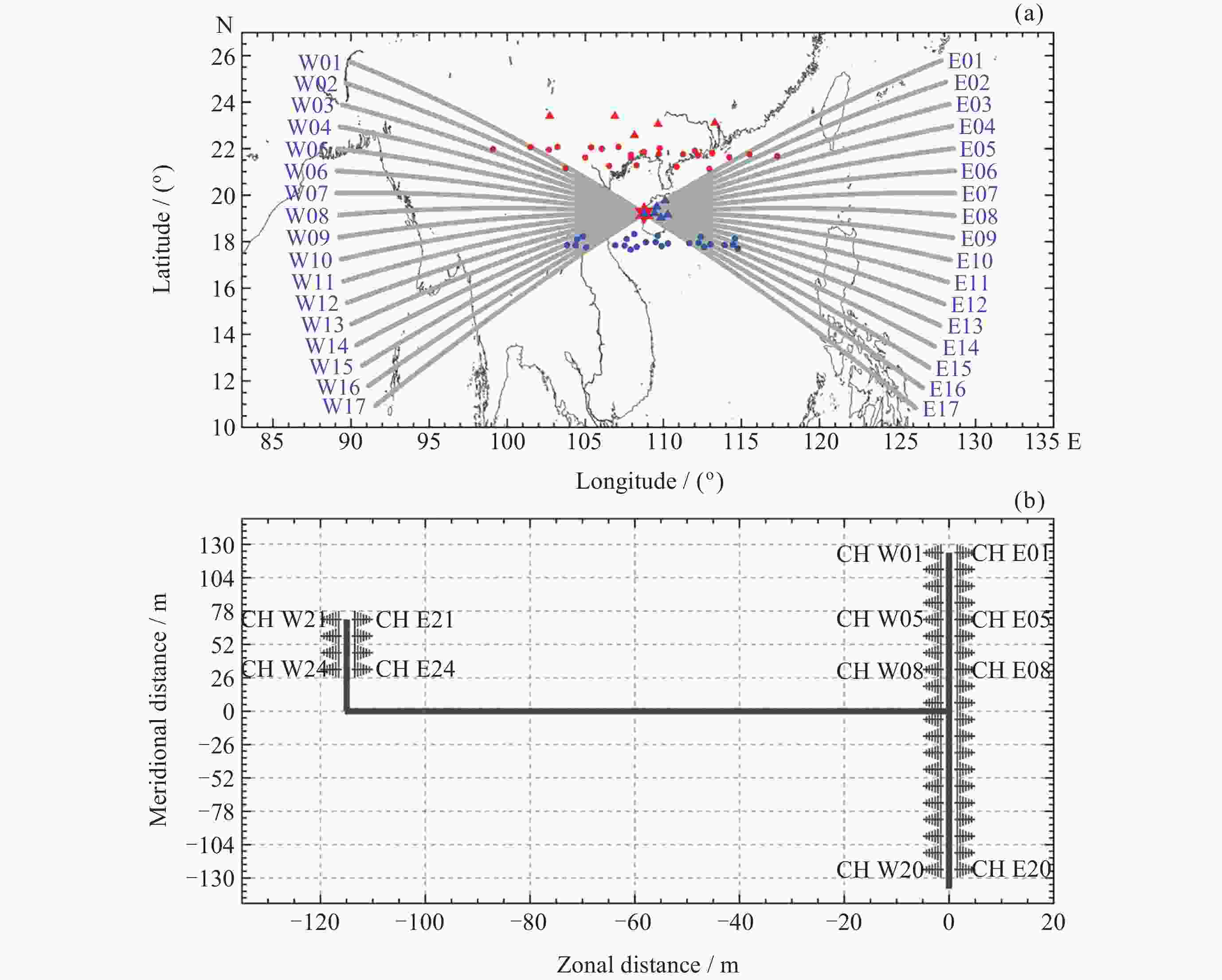
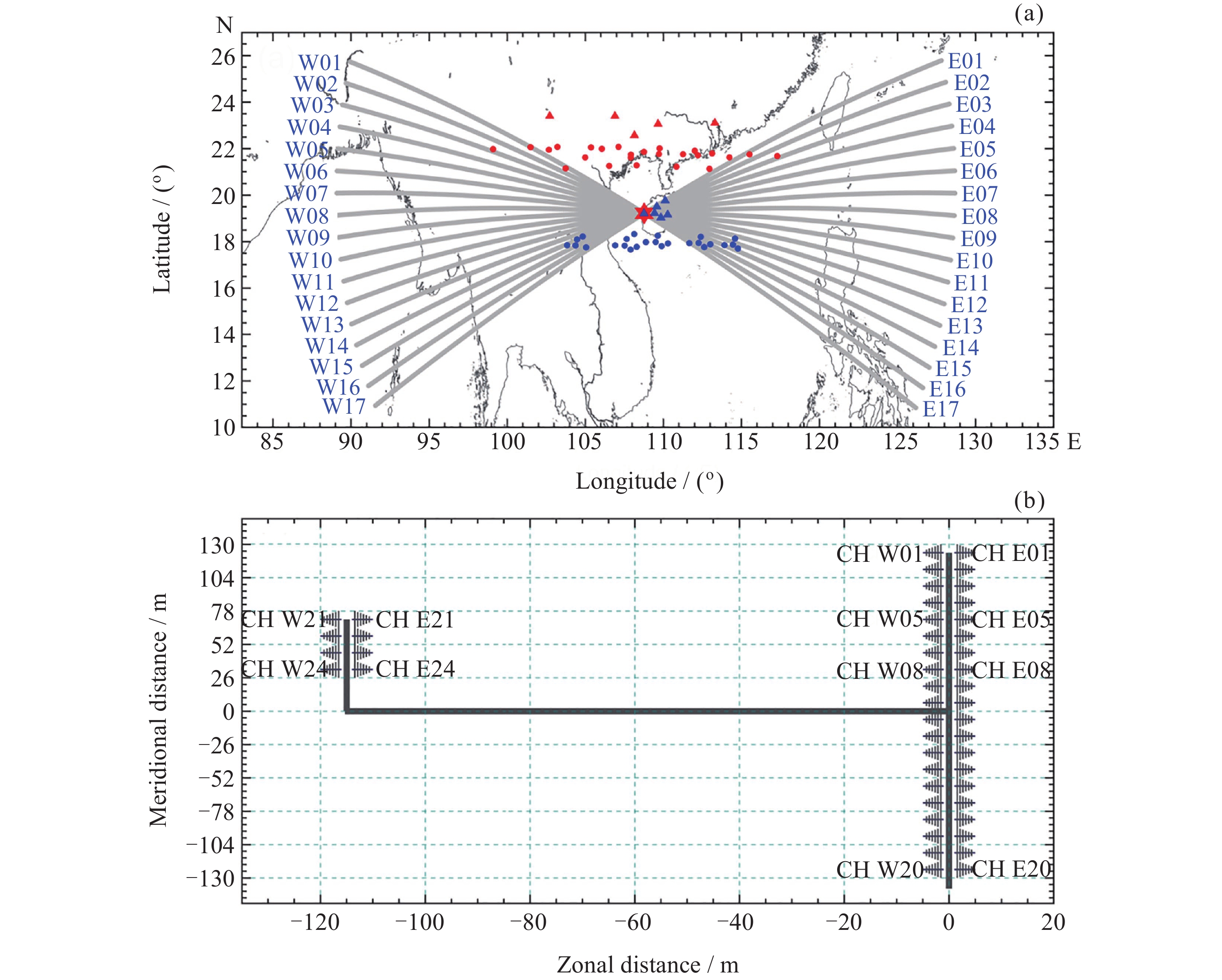
图 1 (a) LARID(红色六角星)和东西向雷达的17个方位角扫描波束(灰线)位置, (b) LARID天线阵列布局
Figure 1. (a) Geographic locations of LARID (red hexagram) and the 17 azimuthal beam directions (gray lines) of the LARID west and east radars, and (b) antenna array layout of the LARID
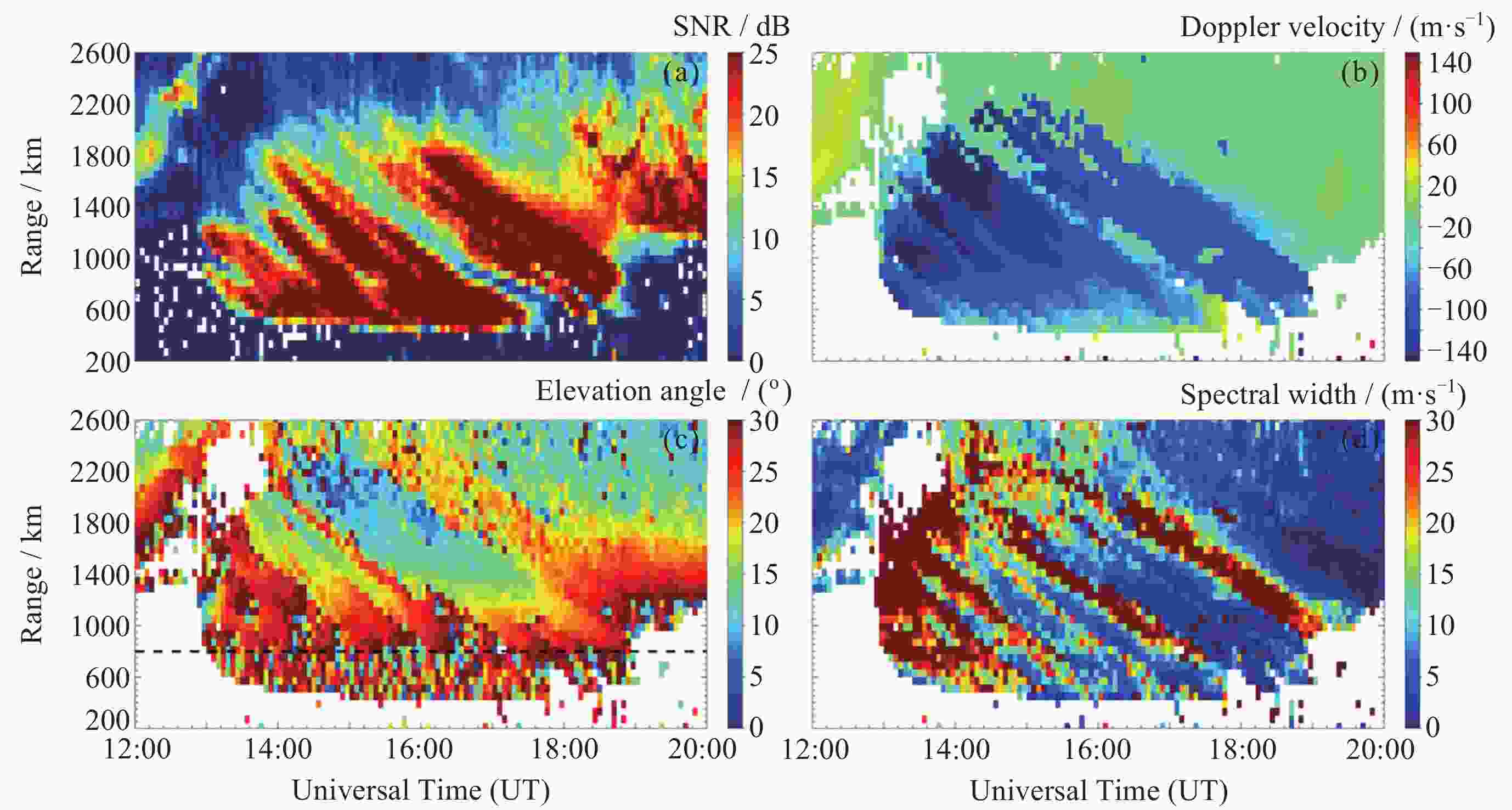
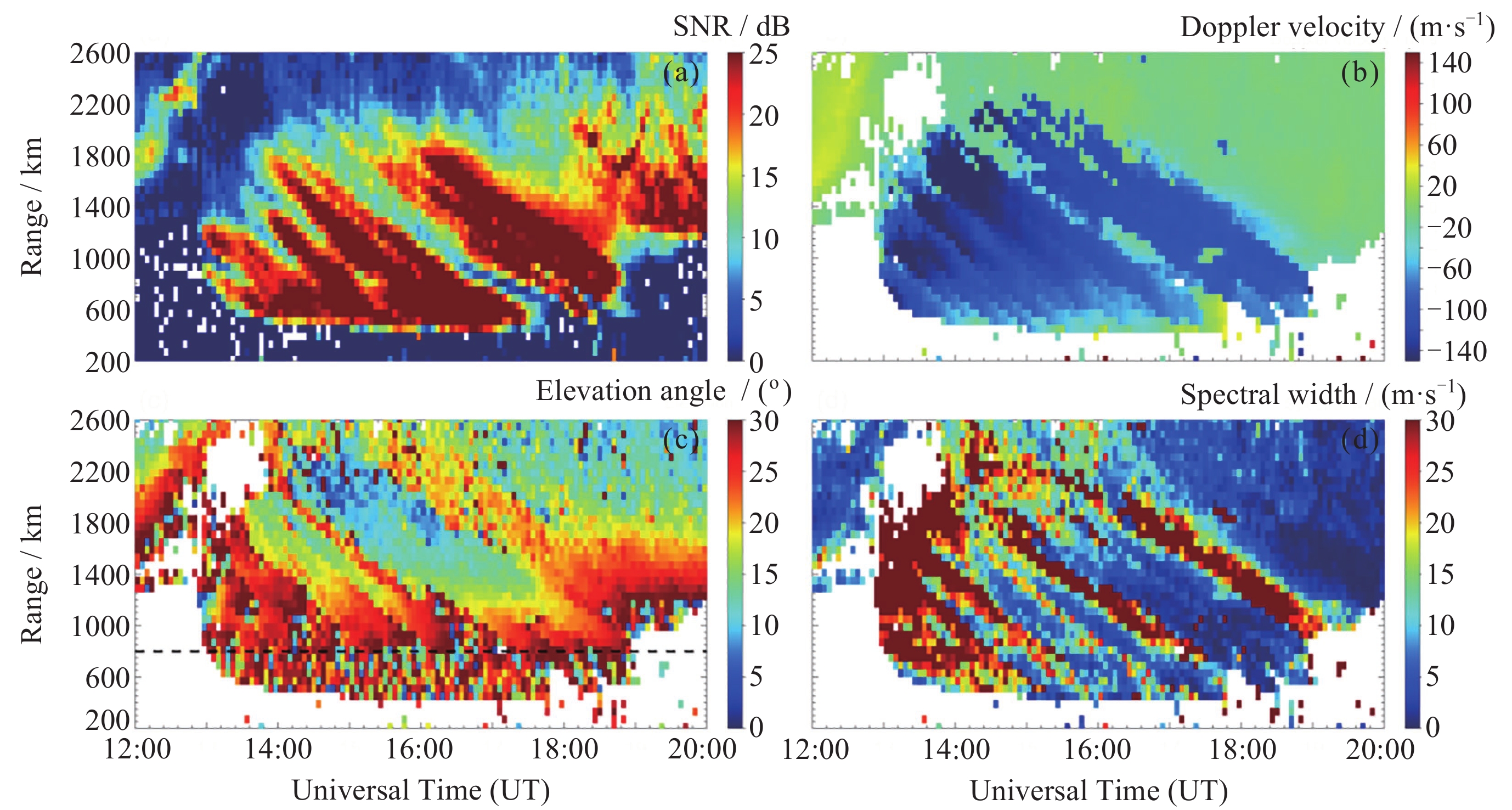
图 2 2024年4月25日12:00-20:00 UT期间, LARID西向雷达9号波束观测参数的距离–时间分布
Figure 2. Range‐time distributions of observed parameters measured along beam 9 of the LARID west radar at 12:00–20:00 UT on 25 April 2024
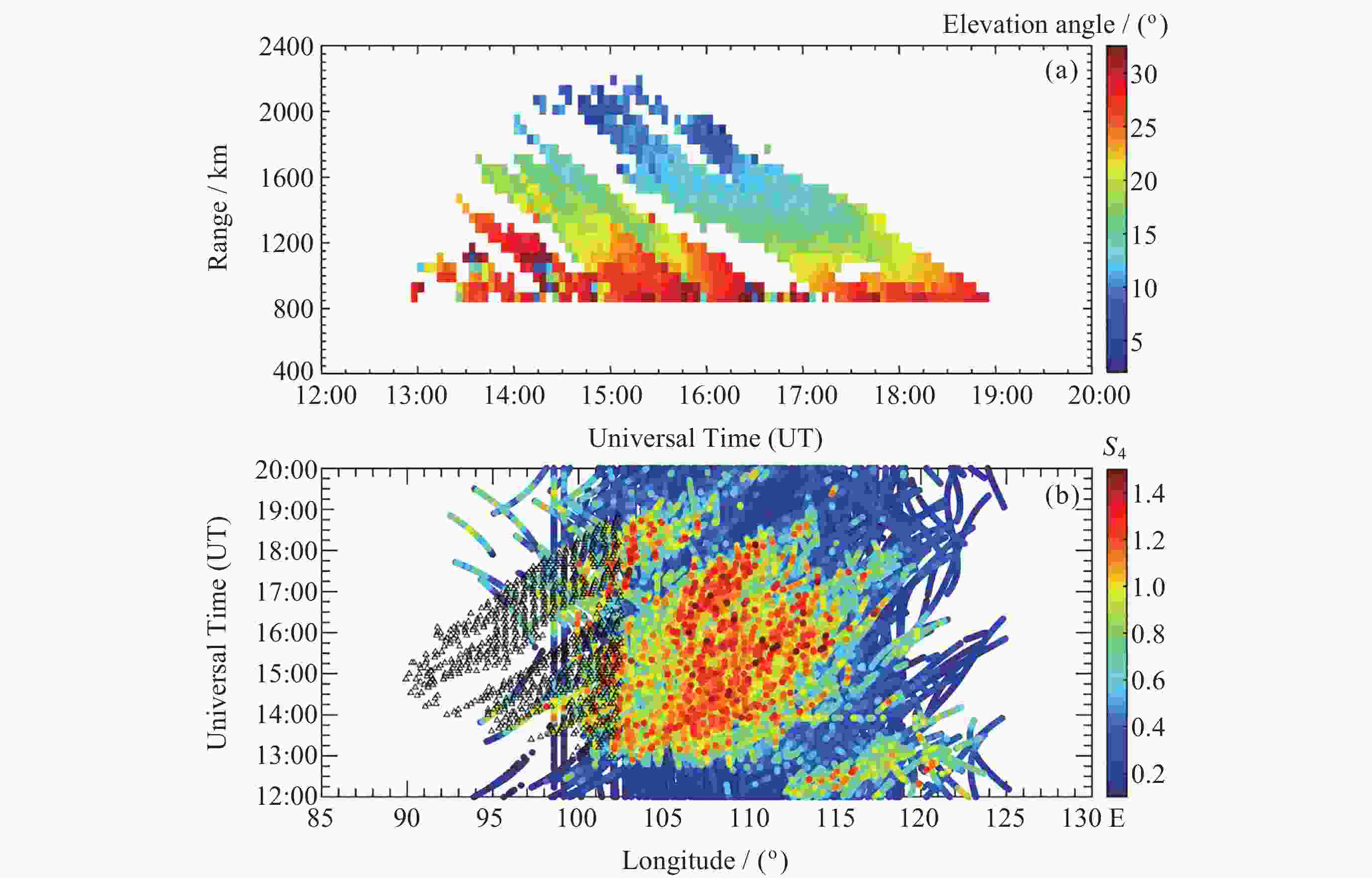
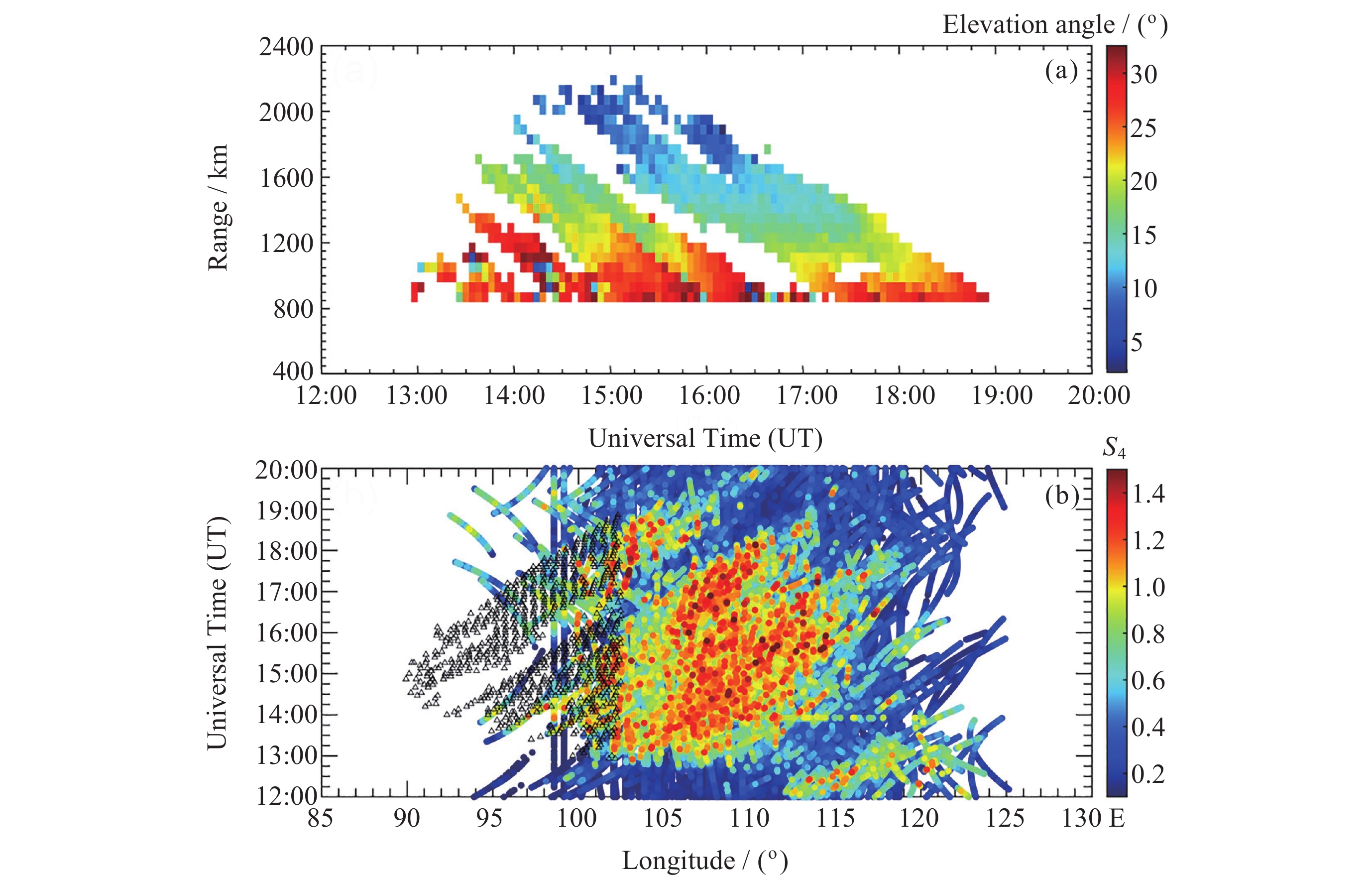
图 3 (a) 2024年4月25日12:00-20:00 UT期间, LARID西向雷达9号波束观测的回波仰角的距离–时间分布. (b) LARID观测的EPB不均匀体回波(黑色三角形)与GNSS接收机观测的S4指数(彩色圆点)的经度–世界时散点图
Figure 3. (a) Range‐time plots of echo elevation angle along beam 9 of the LARID west radar during 12:00–20:00 UT on 25 April, 2024. (b) Comparison of longitude-time variation of EPB irregularity echoes observed by the LARID (black triangles) and the S4 index (colored dots) observed by GNSS receivers
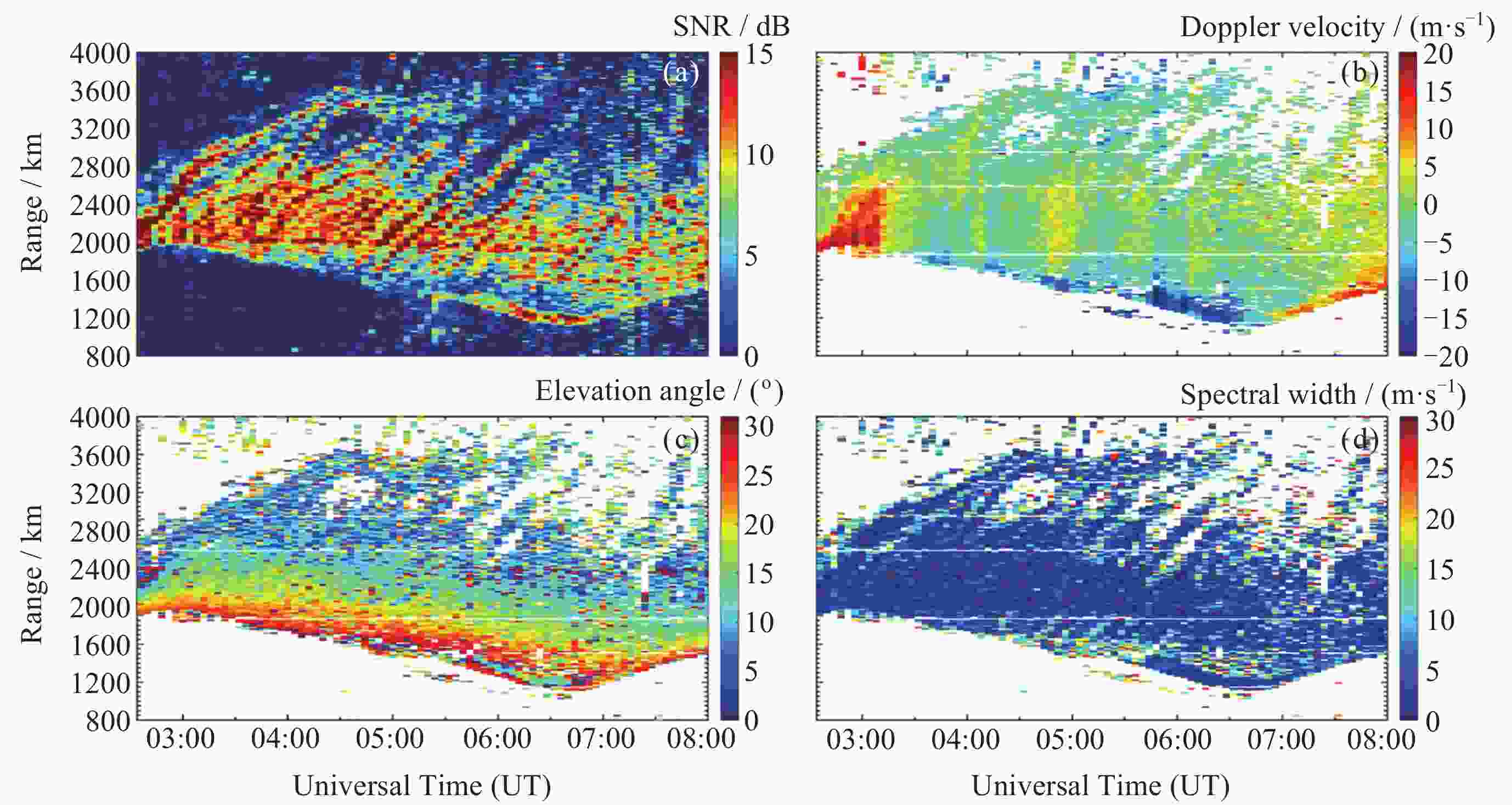
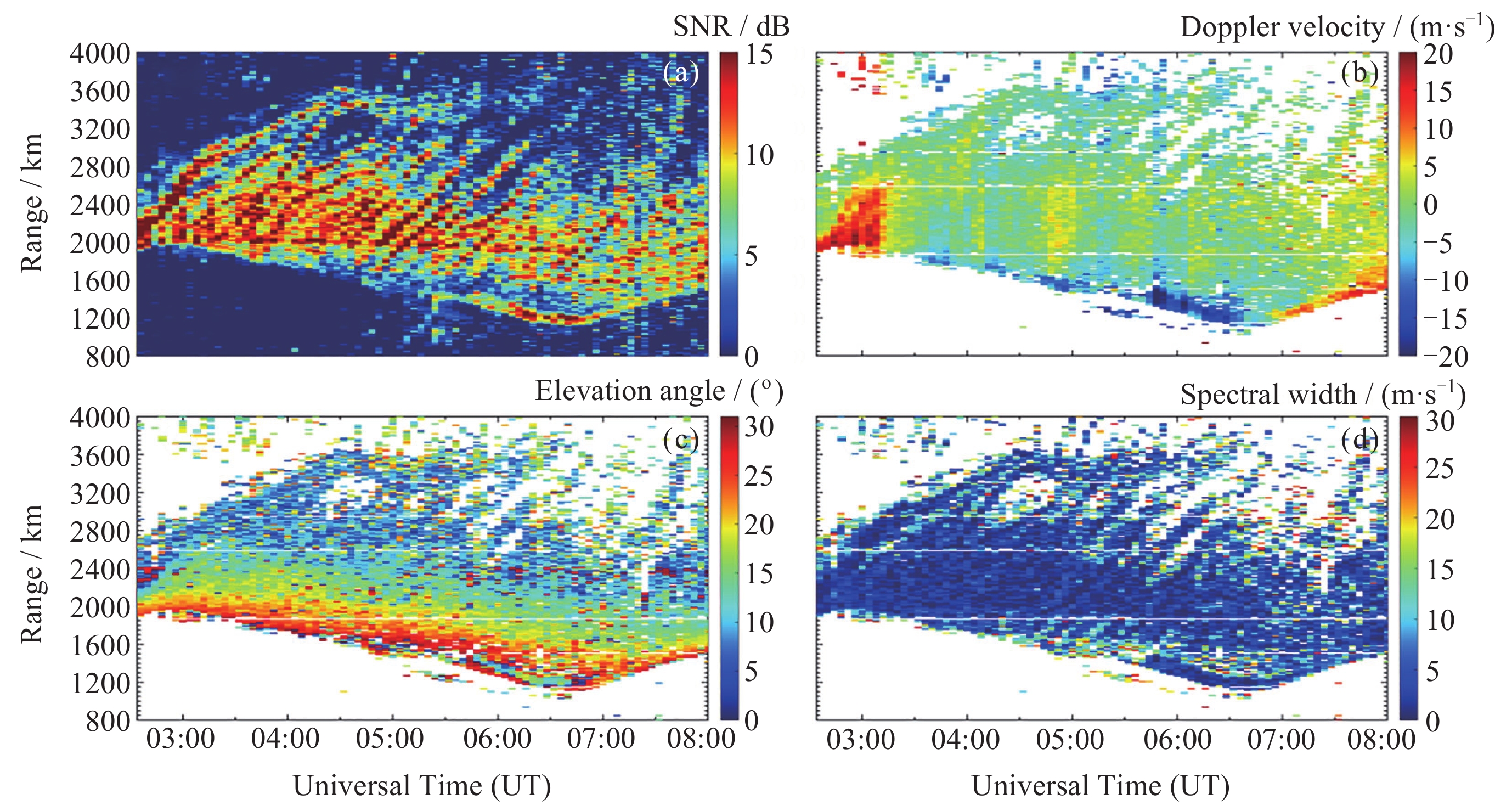
图 4 2024年5月1日02:30–08:00 UT期间, LARID东向雷达2号波束观测的回波的距离–时间分布
Figure 4. Range‐time plots of echoing observed by beam 2 of the LARID east radar during 02:30–08:00 UT on 1 May 2024
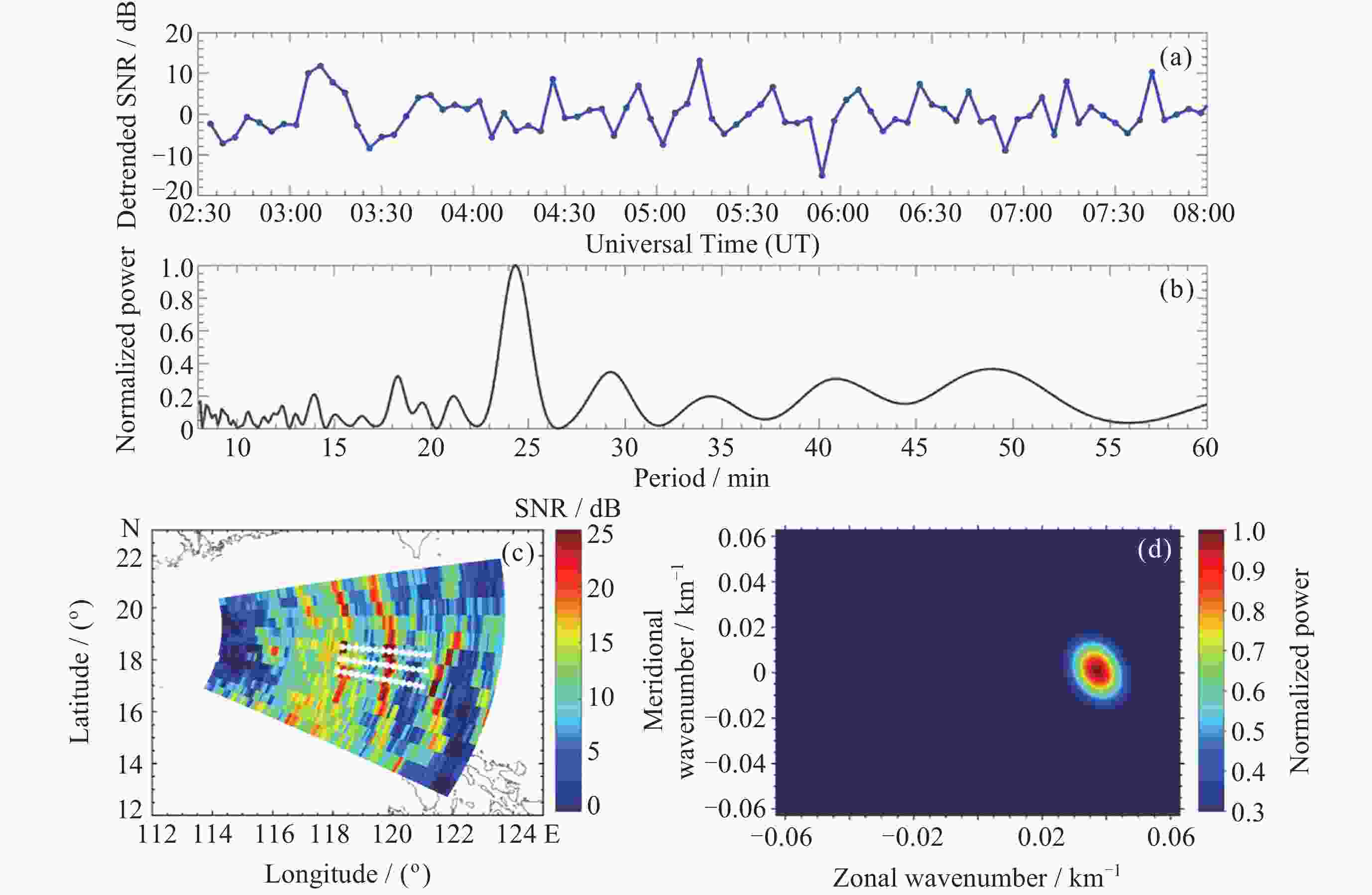
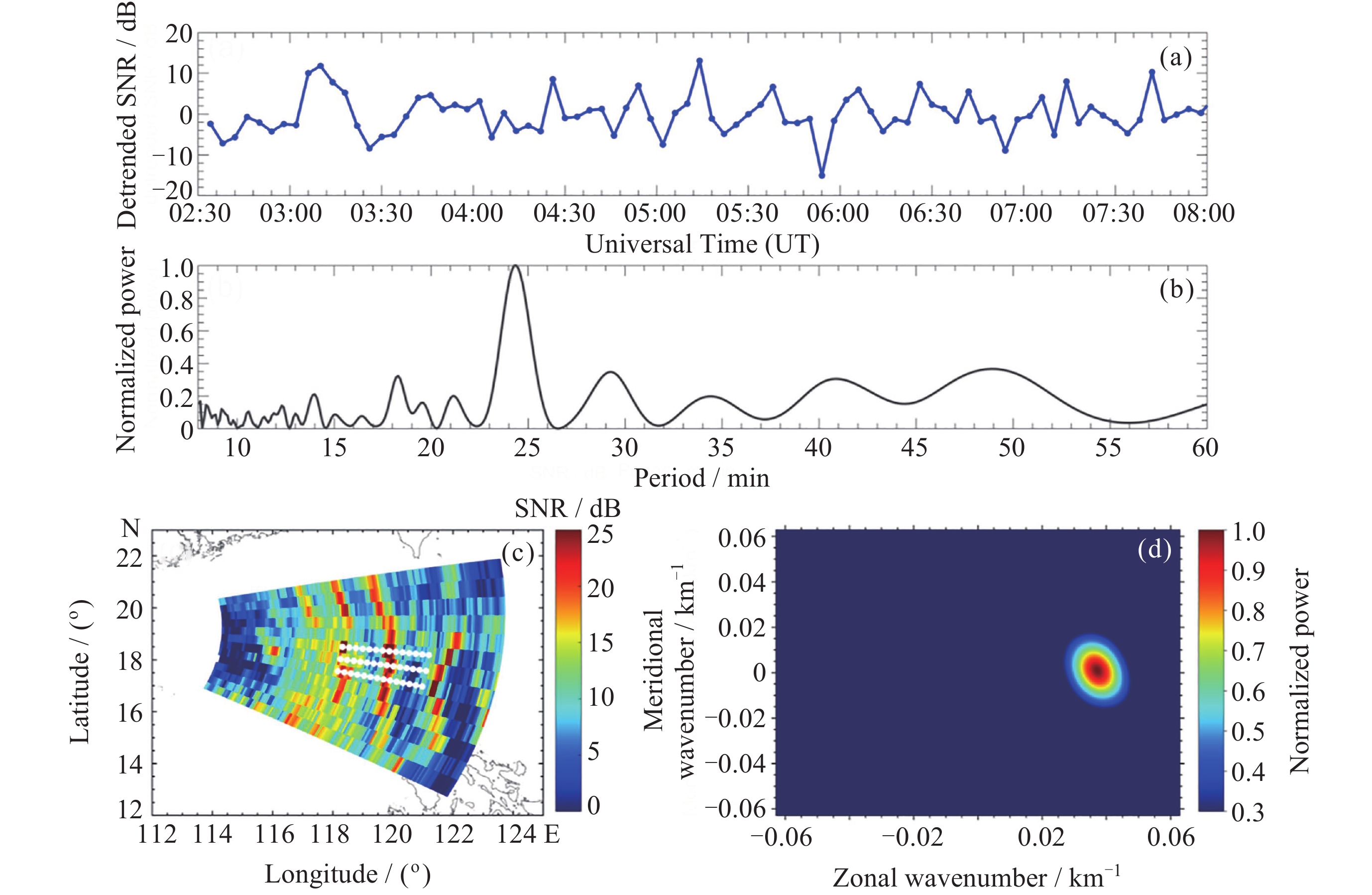
图 5 2024年5月1日LARID东向雷达2号波束在2850 km距离门处的观测结果. (a)去趋势信噪比时间序列, (b)对应的Lomb-Scargle周期图, (c) 05:18 UT信噪比二维分布, (d) 基于120个距离门上03:30-06:30 UT的信噪比时间序列计算得到的波数谱
Figure 5. Observations from LARID east radar along beam 2 at the range gate of 2850 km on 1 May 2024. (a) Detrended SNR time series, (b) corresponding Lomb‐Scargle periodogram, (c) two‐dimension SNR map at 05:18 UT, (d) wavenumber spectrum calculated from 120 SNR time series acquired at range gates during 03:30–06:30 UT
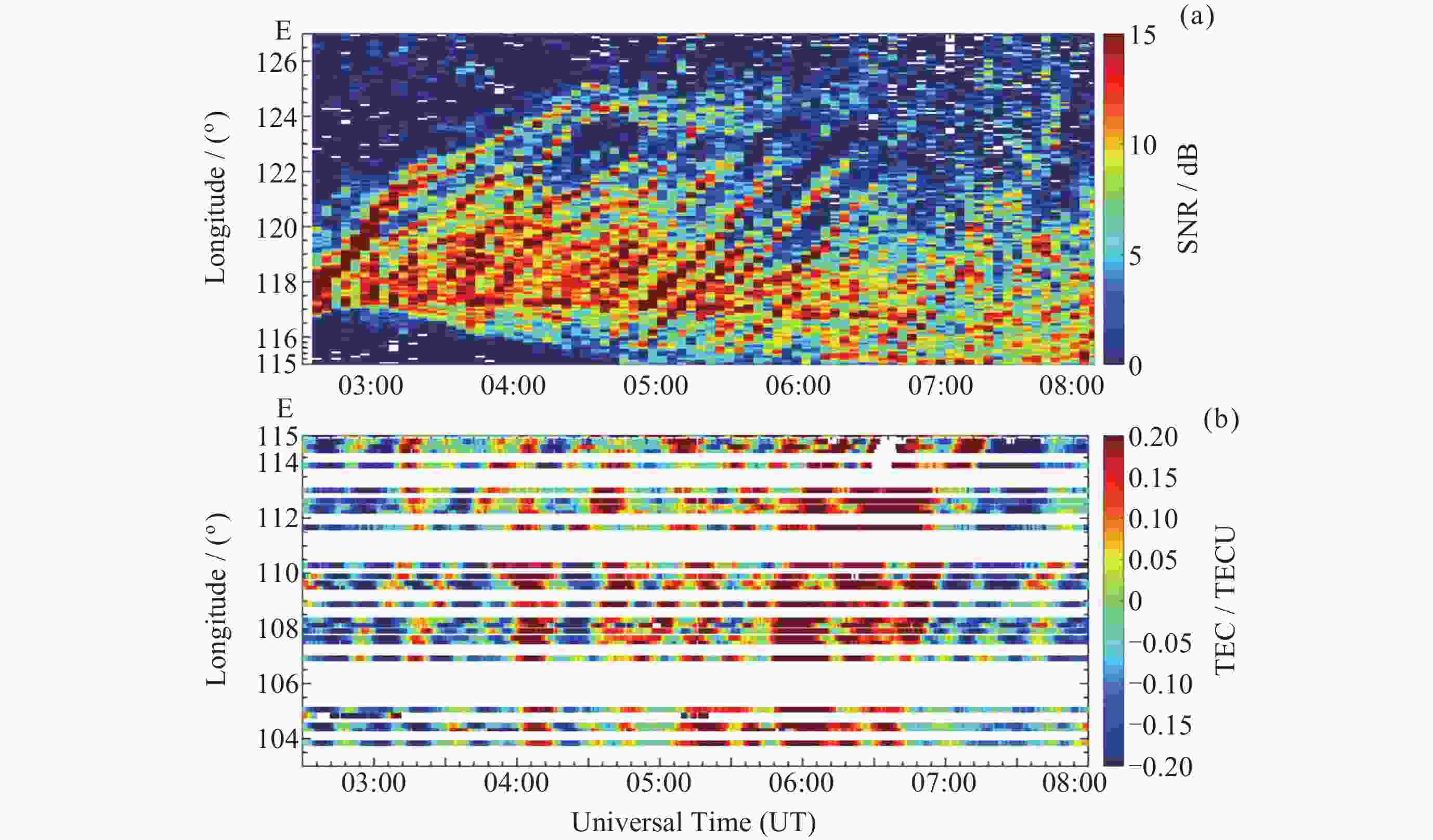
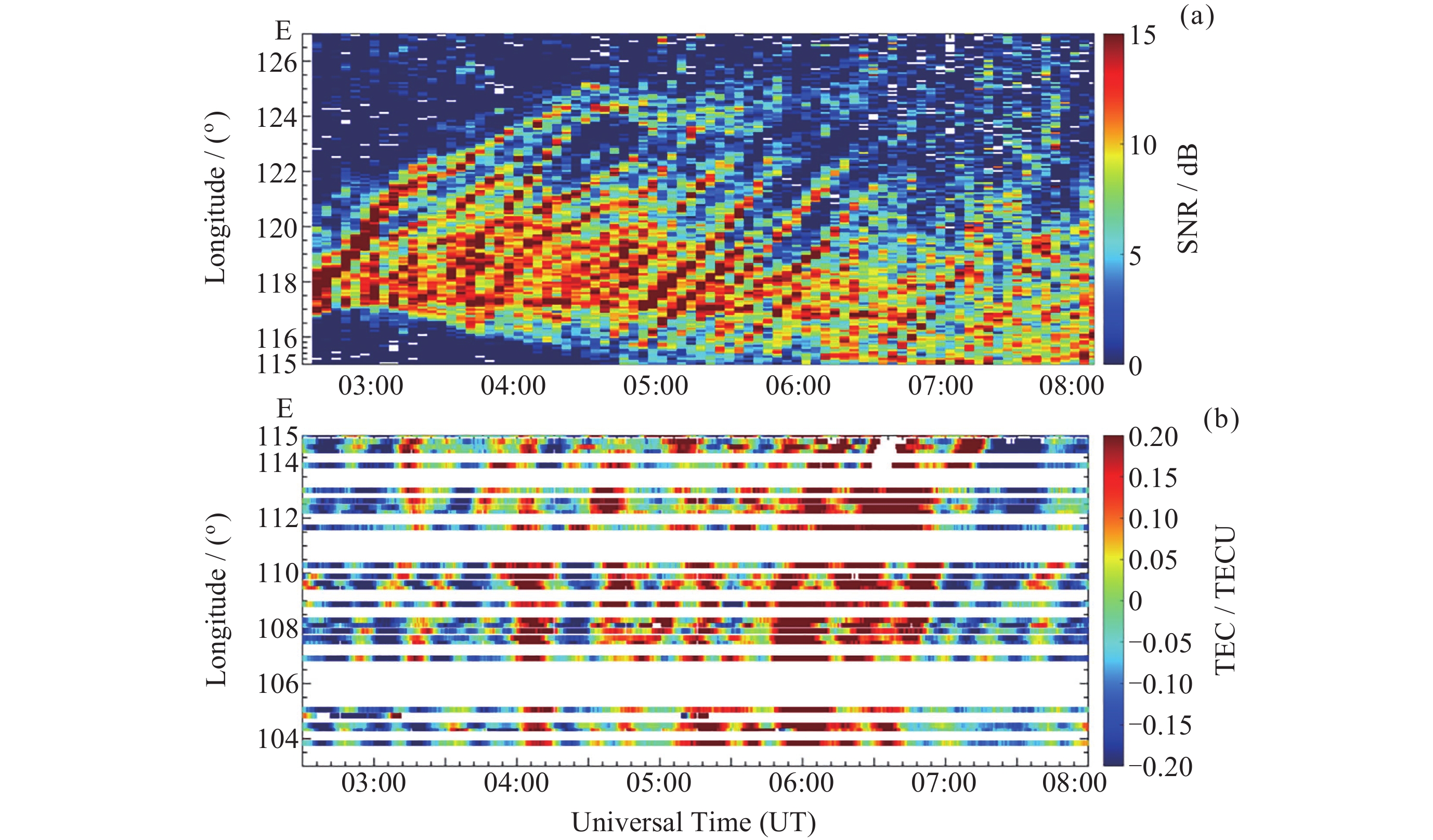
图 6 2024年5月1日LARID东向雷达2号波束观测的回波信噪比的经度–世界时变化(东经115°以东)和北纬18°附近固定电离层穿刺点的扰动TEC的经度–世界时变化(东经115°以西)
Figure 6. Longitudinal-UT variations of the detrended SNR along beam 2 of LARID east radar (to the east of 115°E) and the disturbed TEC measured at the fixed IPPs along the 18°N chain
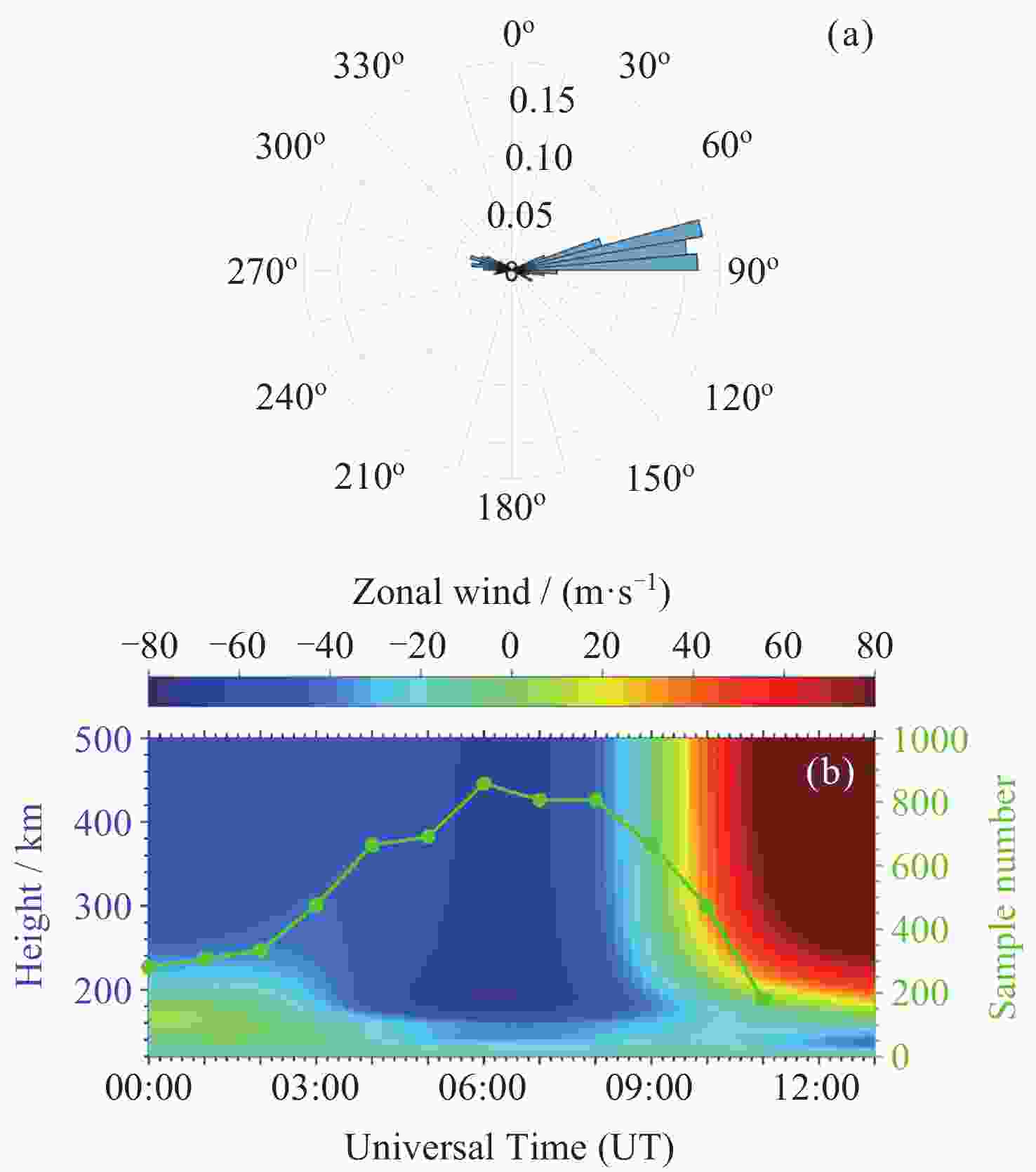
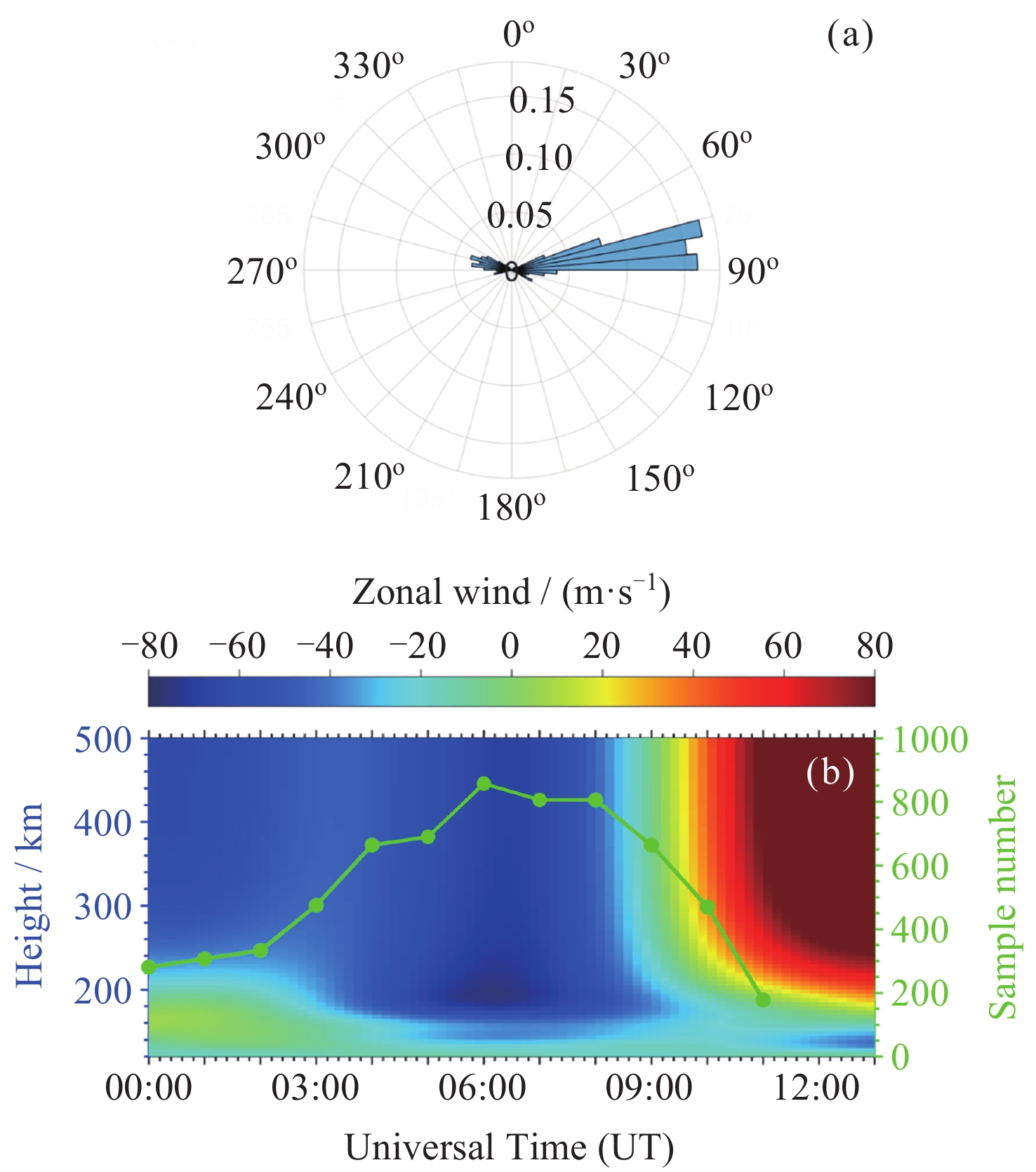
图 7 (a) 2023年4月1日至2025年3月31日期间LARID观测到的MSTID的传播方位角分布, (b) HWM14模式计算得到的MSTID观测日LARID上空纬向风场平均值随高度和世界时的变化
Figure 7. (a) Statistical distribution of propagation azimuth of MSTIDs observed by LARID from 1 April 2023 to 31 March 2025. (b) Mean zonal wind profiles over LARID calculated by the HWM14 model averaged for the days when MSTIDs were observed by LARID
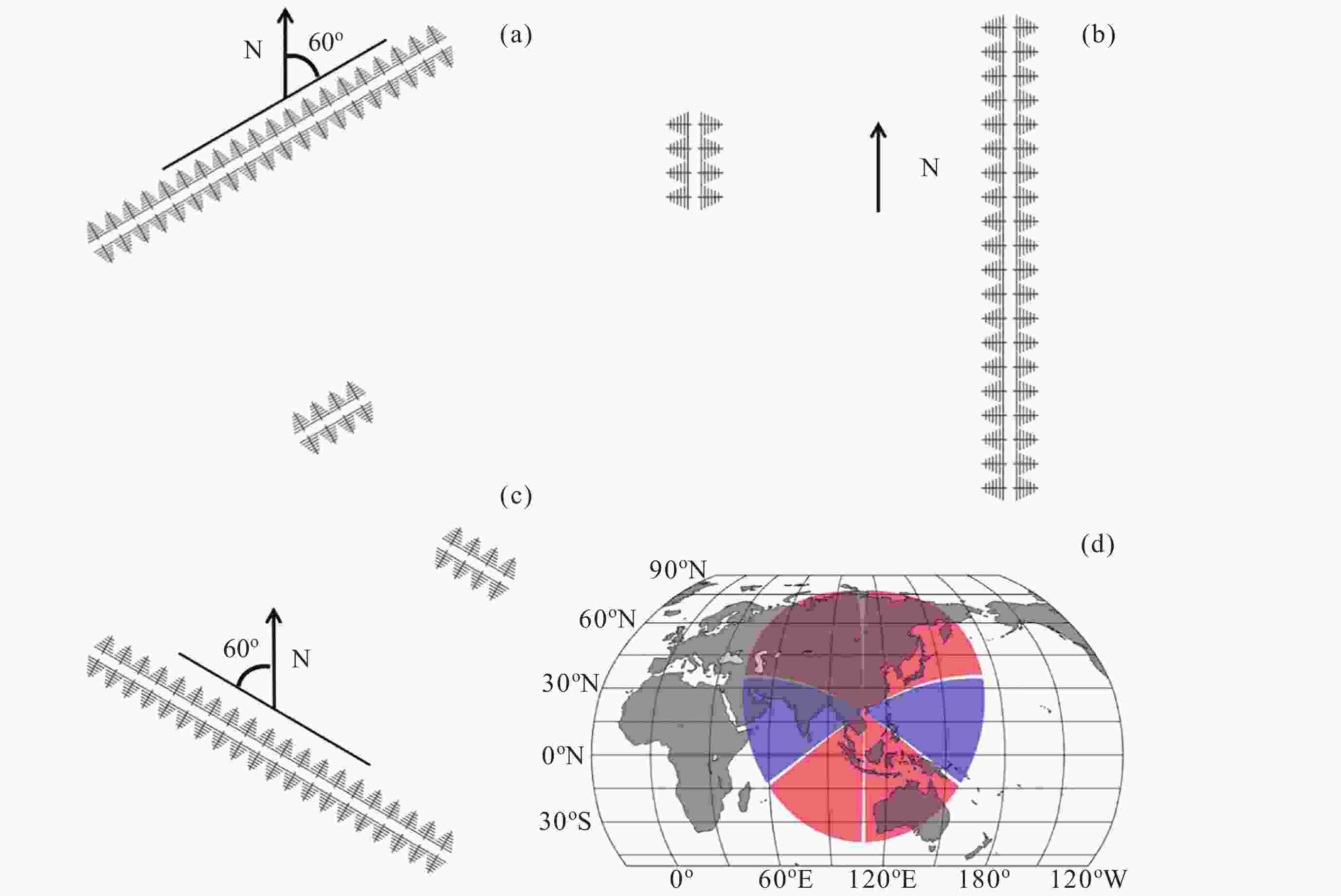
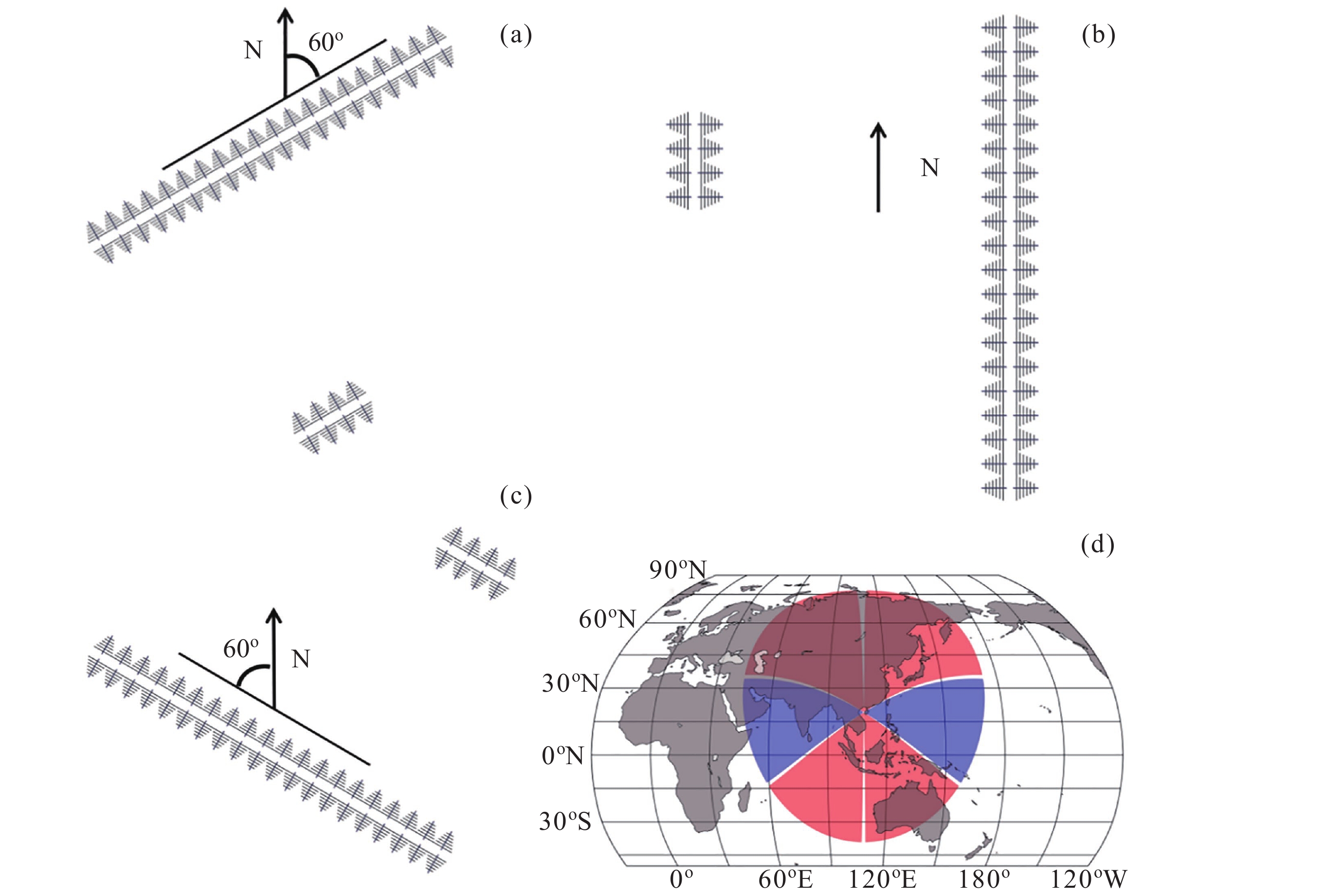
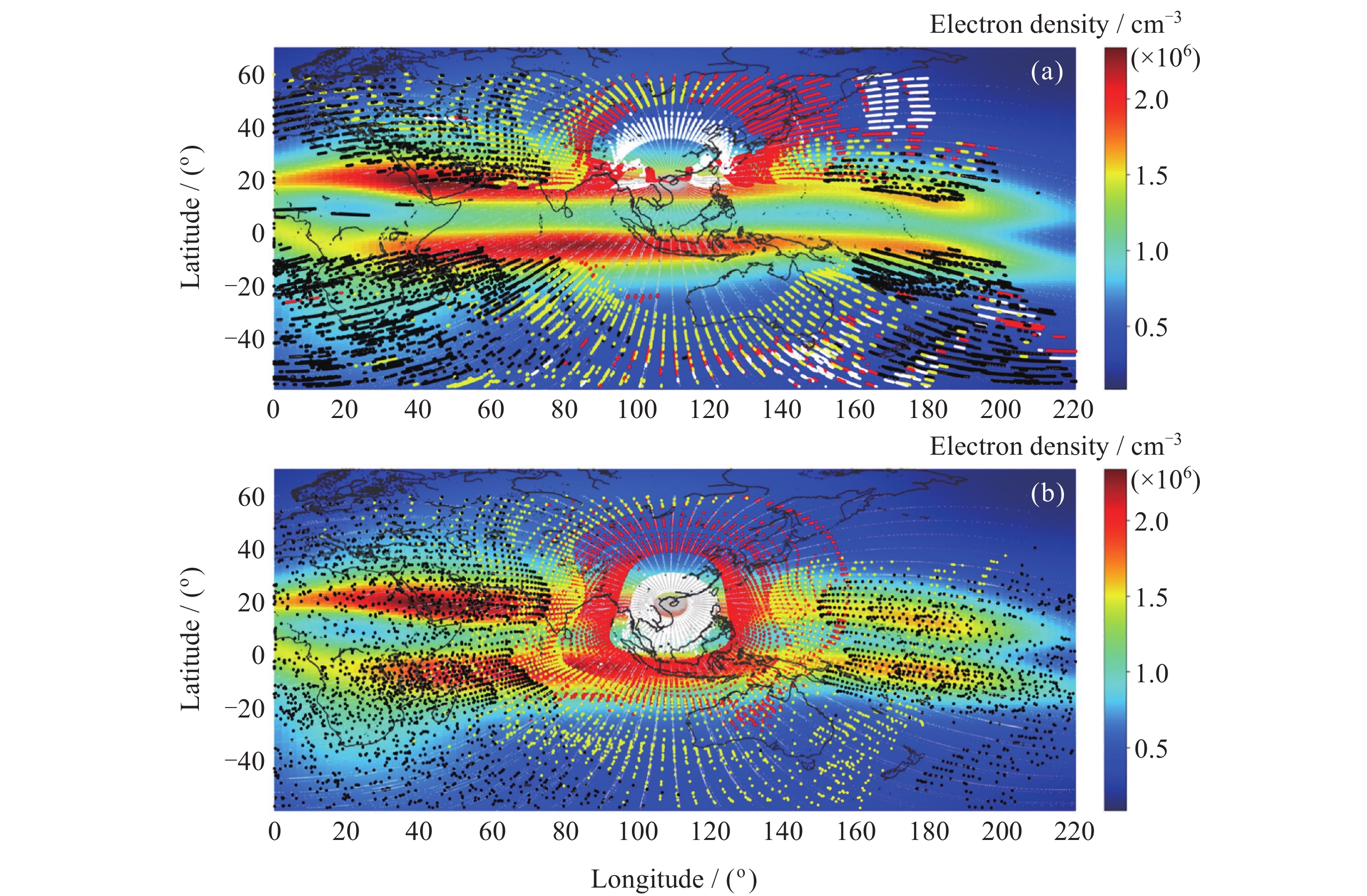
图 8 设想的全向高频雷达天线布局示意. (a)(c)增加的两组天线阵列, (b)现有的LARID天线阵列, (d) 全向高频雷达的视场
Figure 8. Layout of the proposed full-azimuth high-frequency radar antenna configuration. (a) (c) Two added antenna arrays. (b)Existing LARID antenna array. (d) Field of view of the full-azimuth high-frequency long range ionospheric radar
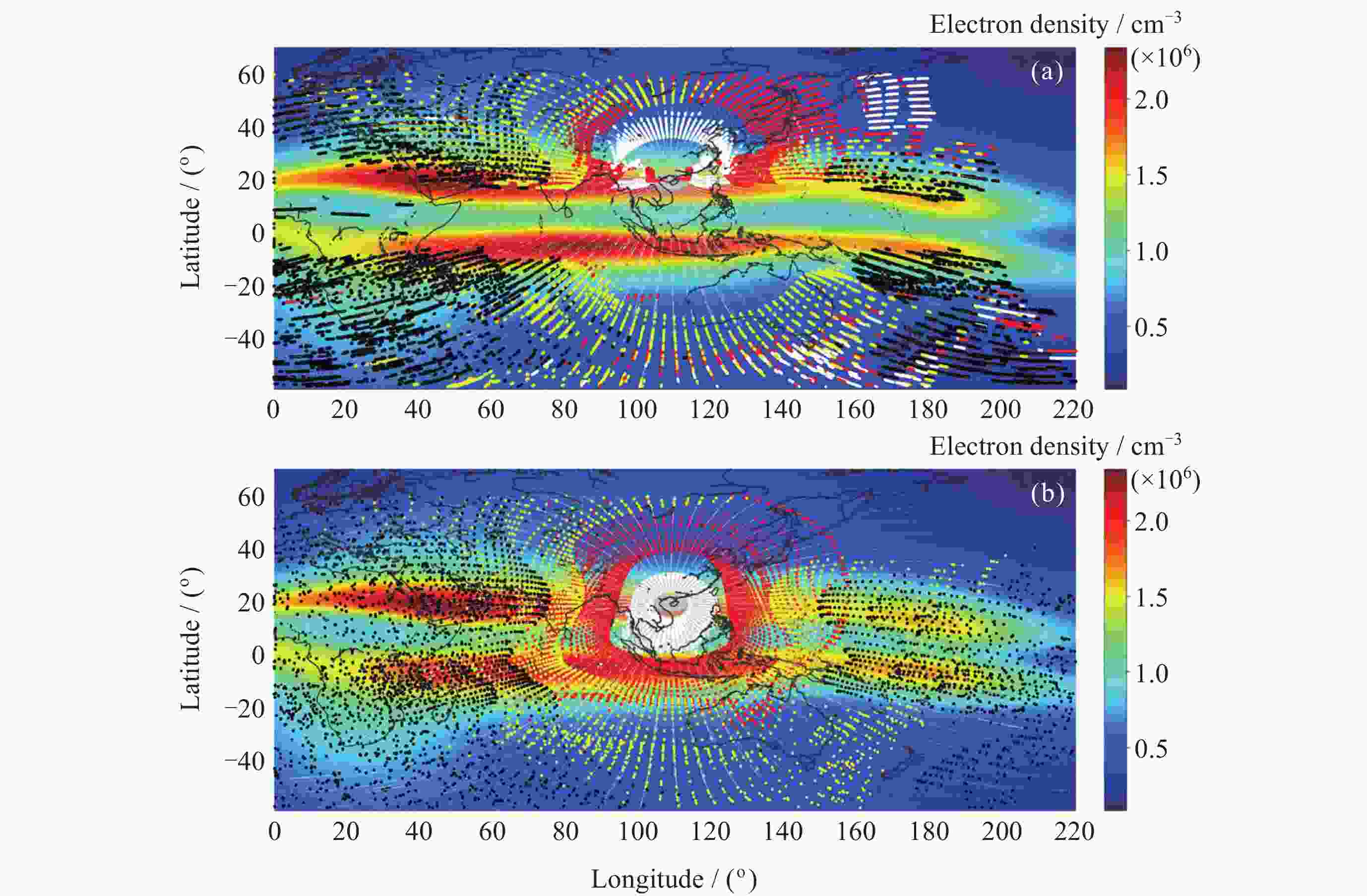
图 9 (a) 20.4 MHz电波射线路径(白色虚线)以及不同传播模式下射线垂直于磁力线的位置(散点), (b) 20.4 MHz电波射线路径(白色虚线)以及不同传播模式下的电离层反射点位置(散点)
Figure 9. (a) Ray path of radio wave at frequency of 20.4 MHz (white dashed lines) and locations where the ray is perpendicular to the geomagnetic field line (colored dots) for different propagation modes. (b) Ray path of radio wave at frequency of 20.4 MHz radio wave (white dashed lines) and locations of ionospheric reflection points for different propagation modes (colored dots)
表 1 雷达参数
Table 1. Radar parameters
参数名称 数值 工作频率/MHz 20.4 波形 不等间距脉冲 脉冲宽度/ms 100, 200, 300 编码 八脉冲Katscan 距离分辨率/km 15, 30, 45 最大探测时延/距离 0.03 s/4500 km 多普勒频移测量范围/Hz -208.3~208.3  下载: 导出CSV
-
[1] KINTNER P M, LEDVINA B M, DE PAULA E R. GPS and ionospheric scintillations[J]. Space Weather, 2007, 5(9): S09003 doi: 10.1029/2006SW000260 [2] WERNIK A W, SECAN J A, FREMOUW E J. Ionospheric irregularities and scintillation[J]. Advances in Space Research, 2003, 31(4): 971-981 doi: 10.1016/S0273-1177(02)00795-0 [3] HUNSUCKER R D. Atmospheric gravity waves generated in the high-latitude ionosphere: a review[J]. Reviews of Geophysics, 1982, 20(2): 293-315 doi: 10.1029/RG020i002p00293 [4] HINES C O. Internal atmospheric gravity waves at ionospheric heights[M]//HINES C O. The Upper Atmosphere in Motion. Washington: American Geophysical Union, 1974: 248-328. DOI: 10.1029/GM018p0248 [5] OTSUKA Y. Medium‐scale traveling ionospheric disturbances[M]//HUANG C S, LU G, ZHANG Y L, et al. Ionosphere Dynamics and Applications. Washington: American Geophysical Union, 2021: 421-437 [6] XIAO Z, XIAO S G, HAO Y Q, et al. Morphological features of ionospheric response to typhoon[J]. Journal of Geophysical Research: Space Physics, 2007, 112(A4): A04304 doi: 10.1029/2006JA011671 [7] XIAO S G, XIAO Z, SHI J K, et al. Observational facts in revealing a close relation between acoustic‐gravity waves and midlatitude spread F[J]. Journal of Geophysical Research: Space Physics, 2009, 114(A1): A01303 doi: 10.1029/2008JA013747 [8] LI K, ZHANG D H, TIAN Y Y, et al. Statistical study on the connections between TEC periodic disturbances associated with MSTIDs and mid‐latitude frequency spread f in summer nights over China[J]. Journal of Geophysical Research: Space Physics, 2025, 130(6): e2025JA033706 doi: 10.1029/2025JA033706 [9] KELLEY M C. The Earth’s Ionosphere: Plasma Physics and Electrodynamics[M]. 2nd ed. Amsterdam: Academic Press, 2009 [10] SULTAN P J. Linear theory and modeling of the Rayleigh‐Taylor instability leading to the occurrence of equatorial spread F[J]. Journal of Geophysical Research: Space Physics, 1996, 101(A12): 26875-26891 doi: 10.1029/96JA00682 [11] HUANG C S. Effects of the postsunset vertical plasma drift on the generation of equatorial spread F[J]. Progress in Earth and Planetary Science, 2018, 5(1): 3 doi: 10.1186/s40645-017-0155-4 [12] SU S Y, CHAO C K, LIU C H. On monthly/seasonal/longitudinal variations of equatorial irregularity occurrences and their relationship with the postsunset vertical drift velocities[J]. Journal of Geophysical Research: Space Physics, 2008, 113(A5): A05307 doi: 10.1029/2007JA012809 [13] ABDU M A. Day-to-day and short-term variabilities in the equatorial plasma bubble/spread F irregularity seeding and development[J]. Progress in Earth and Planetary Science, 2019, 6(1): 11 doi: 10.1186/s40645-019-0258-1 [14] TAKAHASHI H, WRASSE C M, FIGUEIREDO C A O B, et al. Equatorial plasma bubble seeding by MSTIDs in the ionosphere[J]. Progress in Earth and Planetary Science, 2018, 5(1): 32 doi: 10.1186/s40645-018-0189-2 [15] CHISHAM G, LESTER M, MILAN S E, et al. A decade of the Super Dual Auroral Radar Network (SuperDARN): scientific achievements, new techniques and future directions[J]. Surveys in Geophysics, 2007, 28(1): 33-109 doi: 10.1007/s10712-007-9017-8 [16] NISHITANI N, RUOHONIEMI J M, LESTER M, et al. Review of the accomplishments of mid-latitude Super Dual Auroral Radar Network (SuperDARN) HF radars[J]. Progress in Earth and Planetary Science, 2019, 6(1): 27 doi: 10.1186/s40645-019-0270-5 [17] HU L H, LI G Z, NING B Q, et al. Development of low latitude long range ionospheric radar for observing plasma bubble irregularities and preliminary results[J]. Journal of Geophysical Research: Space Physics, 2024, 129(3): e2023JA032099 doi: 10.1029/2023JA032099 [18] RIBEIRO A J, RUOHONIEMI J M, PONOMARENKO P V, et al. A comparison of SuperDARN ACF fitting methods[J]. Radio Science, 2013, 48(3): 274-282 doi: 10.1002/rds.20031 [19] HU L H, LI G Z, NING B Q, et al. Extremely long‐range observations of ionospheric irregularities in a large longitude zone from pacific to Africa using a low latitude over‐the‐horizon radar in China[J]. Geophysical Research Letters, 2024, 51(16): e2024GL109579 doi: 10.1029/2024GL109579 [20] DAI G F, LI G Z, OTSUKA Y, et al. Was the unseasonal development of post‐sunset equatorial plasma bubbles in southeast Asia driven by quasi‐2‐day planetary waves?[J]. Journal of Geophysical Research: Space Physics, 2025, 130(3): e2024JA033280 doi: 10.1029/2024ja033280 [21] DAI G F, LI G Z, HU L H, et al. Azimuthal asymmetry of quasi‐zonally propagating medium‐scale traveling ionospheric disturbances revealed by the low latitude long‐range ionospheric radar[J]. Journal of Geophysical Research: Space Physics, 2025, 130(10): e2025JA034050 doi: 10.1029/2025JA034050 [22] SUN W J, LI G Z, NING B Q, et al. Monitoring of ionospheric variability using the low latitude long range ionospheric radar (LARID): capabilities, advantages and limitations[J]. Space Weather, 2024, 22(11): e2024SW004134 doi: 10.1029/2024SW004134 [23] SHEPHERD S G. Elevation angle determination for SuperDARN HF radar layouts[J]. Radio Science, 2017, 52(8): 938-950 doi: 10.1002/2017RS006348 [24] THOMAS E G, SHEPHERD S G. Virtual height characteristics of ionospheric and ground scatter observed by mid‐latitude SuperDARN HF radars[J]. Radio Science, 2022, 57(6): e2022RS007429 doi: 10.1029/2022RS007429 [25] SCHMIDT R. Multiple emitter location and signal parameter estimation[J]. IEEE Transactions on Antennas and Propagation, 1986, 34(3): 276-280 doi: 10.1109/TAP.1986.1143830 [26] SAMSON J C. Pure states, polarized waves, and principal components in the spectra of multiple, geophysical time-series[J]. Geophysical Journal International, 1983, 72(3): 647-664 doi: 10.1111/j.1365-246X.1983.tb02825.x [27] SAMSON J C, GREENWALD R A, RUOHONIEMI J M, et al. Goose Bay radar observations of Earth‐reflected, atmospheric gravity waves in the high‐latitude ionosphere[J]. Journal of Geophysical Research: Space Physics, 1990, 95(A6): 7693-7709 doi: 10.1029/JA095iA06p07693 [28] LI G Z, NING B Q, ZHAO X K, et al. Low latitude ionospheric TEC oscillations associated with periodic changes in IMF Bz polarity[J]. Geophysical Research Letters, 2019, 46(16): 9379-9387 doi: 10.1029/2019GL084428 [29] SUN W J, WU B Y, WU Z, et al. IONISE: an ionospheric observational network for irregularity and scintillation in East and Southeast Asia[J]. Journal of Geophysical Research: Space Physics, 2020, 125(8): e2020JA028055 doi: 10.1029/2020JA028055 [30] SAMSON J C, GREENWALD R A, RUOHONIEMI J M, et al. High‐frequency radar observations of atmospheric gravity waves in the high‐latitude ionosphere[J]. Geophysical Research Letters, 1989, 16(8): 875-878 doi: 10.1029/GL016i008p00875 [31] COWLING D H, WEBB H D, YEH K C. Group rays of internal gravity waves in a wind-stratified atmosphere[J]. Journal of Geophysical Research, 1971, 76(1): 213-220 doi: 10.1029/JA076i001p00213 [32] HU L H, LEI J H, SUN W J, et al. Latitudinal variations of daytime periodic ionospheric disturbances from Beidou GEO TEC observations over China[J]. Journal of Geophysical Research: Space Physics, 2021, 126(3): e2020JA028809 doi: 10.1029/2020JA028809 [33] HOFFMANN L, XUE X, ALEXANDER M J. A global view of stratospheric gravity wave hotspots located with Atmospheric Infrared Sounder observations[J]. Journal of Geophysical Research: Atmospheres, 2013, 118(2): 416-434 doi: 10.1029/2012JD018658 -
-

 下载:
下载:

计量
- 文章访问数: 999
- HTML全文浏览量: 93
- PDF下载量: 108
-
被引次数:
0(来源:Crossref)
0(来源:其他)

