


Statistical Study of Plasmaspheric Plumes Based on THEMIS Observations
doi: 10.11728/cjss2026.05.2025-0240 cstr: 32142.14.cjss.2025-0240
-
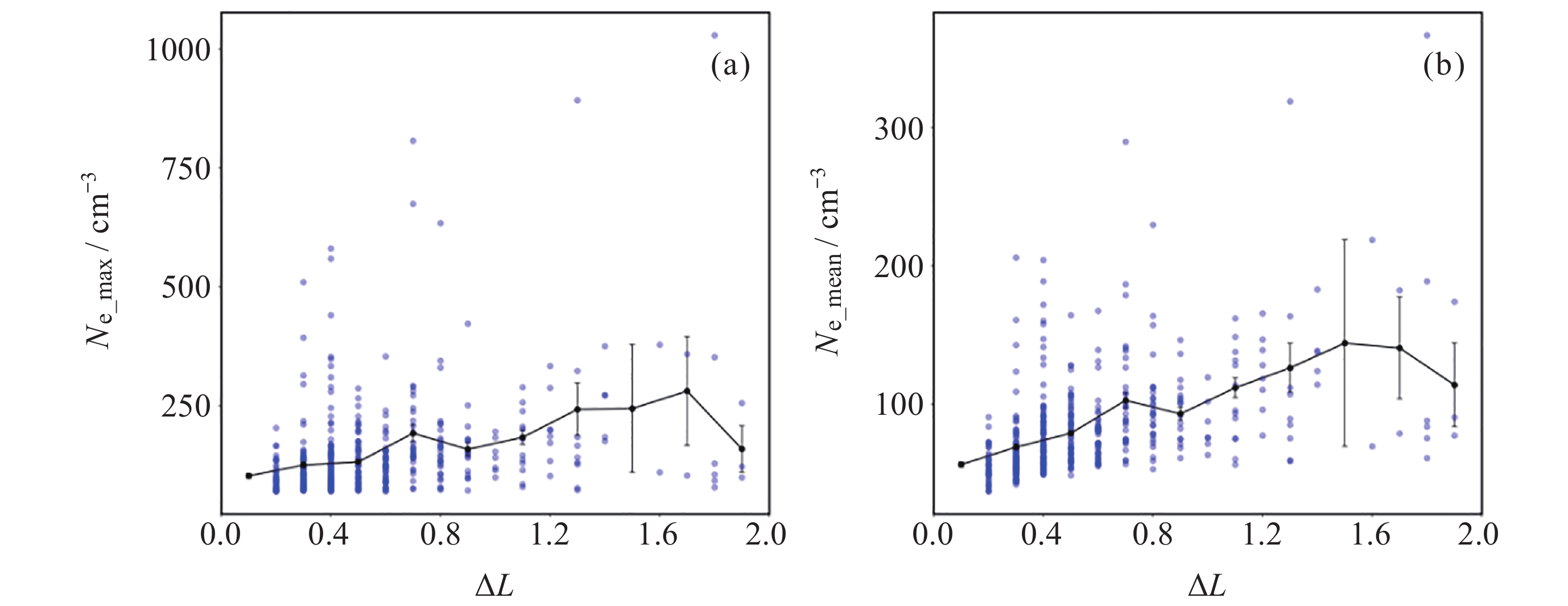
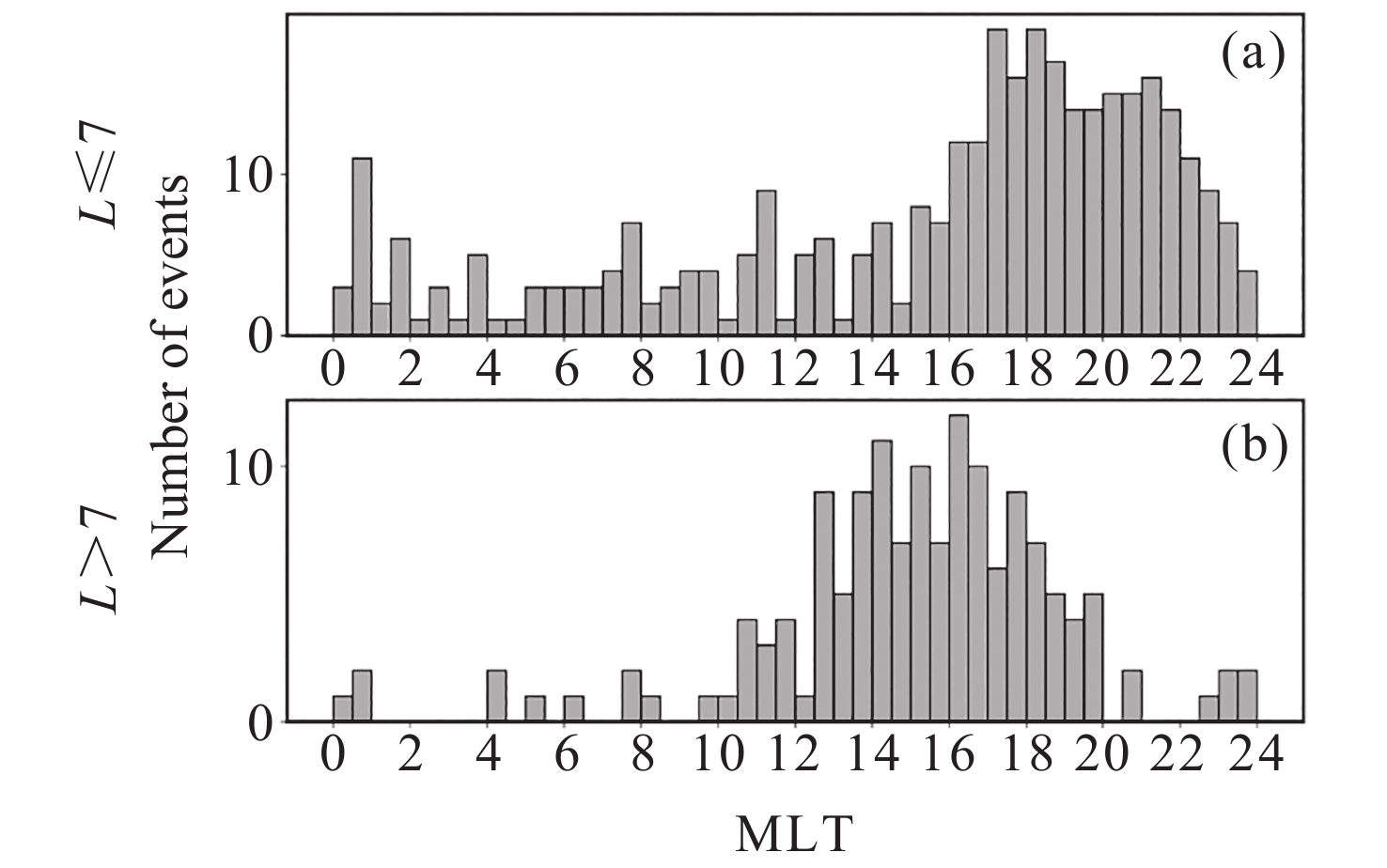
Abstract: A comprehensive statistical study of detached plasmaspheric plumes is presented, based on THEMIS observations from 2011 to 2022. Using electron densities derived from spacecraft potential measurements, we identify 488 detached plume crossings and investigate their spatial distribution, density characteristics, and morphological properties across the magnetosphere. The results show that plasmaspheric plumes occur primarily within L = 5 – 8.5, with the highest occurrence near L = 6 – 6.5. Additionally, plumes exhibit a pronounced dawn-dusk asymmetry, with significantly more events observed in the dusk sector than in the dawn sector, a trend that remains consistent even after accounting for the effects of orbital sampling, with the duskside showing the highest occurrence rate of plume crossings. In contrast, plumes observed on the dayside tend to extend to larger L than those in other Magnetic Local Time (MLT) sectors, reflecting the sunward wrapping of the entire plume structure as it extends from the duskside toward the dayside. The electron densities of plumes are typically concentrated in the range of 60 – 90 cm−3. Plume densities decrease outward from L = 5 – 6, indicating that plume plasma becomes progressively diluted as it extends outward. Density gradients within plumes are also quantified for the first time in a statistical sense. Both positive density gradients ($ {G}_{\text{pos}} $) and negative density gradients ($ {G}_{\text{neg}} $) generally decrease with increasing L and show clear dawn–dusk asymmetry, with stronger gradients on the dawnside and weaker gradients on the duskside for L > 6. Morphologically, most plumes have radial widths of ∆L = 0.2 – 1.0, and plumes on the duskside exhibit larger ∆L than those in other MLT sectors. In addition, plume electron density increases with ∆L, suggesting that plumes with smaller ∆L are accompanied by a faster reduction in electron density. These results provide a comprehensive statistical framework for understanding plume formation, evolution, and their potential roles in magnetospheric dynamics.
-
Key words:
- Plasmasphere /
- Plasmaspheric plume /
- Spatial characteristics /
- Electron density gradients
-
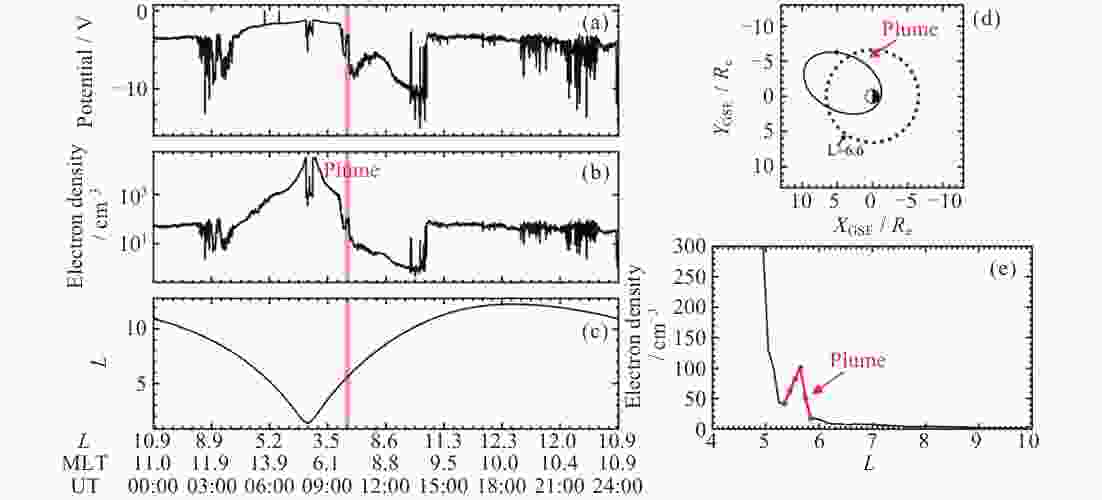
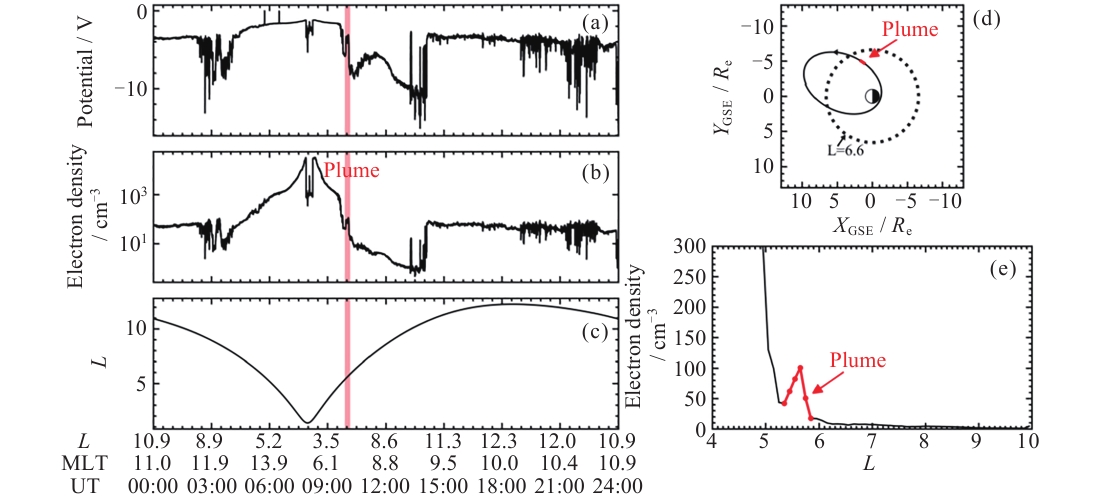
Figure 1. Example of plasmaspheric plume observed by THEMIS-A spacecraft on 29 December 2011 in GSE coordinates. (a) Spacecraft potential measured by EFI instrument. (b) Electron density derived from spacecraft potential. (c) L. (d) Spacecraft trajectory. The solid red line represents orbit during the plume. (e) Electron density as a function of L. The red line and dots represent the plume. The red shadows in (a) –(c) indicate the time interval of the detected plasmaspheric plume
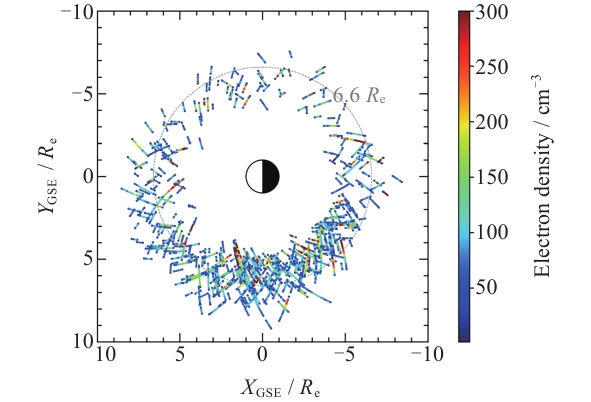
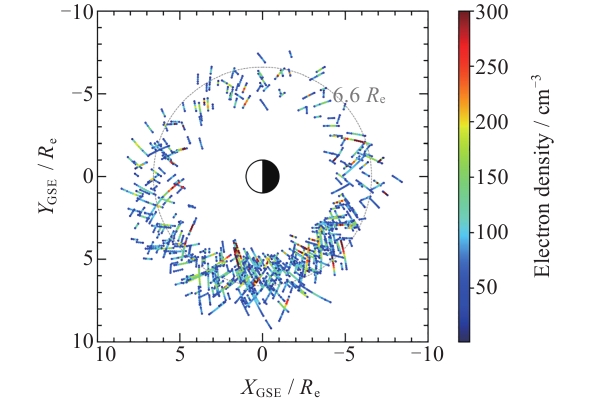
Figure 2. Locations of plasmaspheric plume events observed by the THEMIS-A and THEMIS-E spacecraft from 2011 to 2022, projected onto the GSE XY plane. Each short line segment represents a portion of the spacecraft orbit during a plume crossing. Electron density is indicated by color. The geosynchronous orbit is indicated by a dashed circle
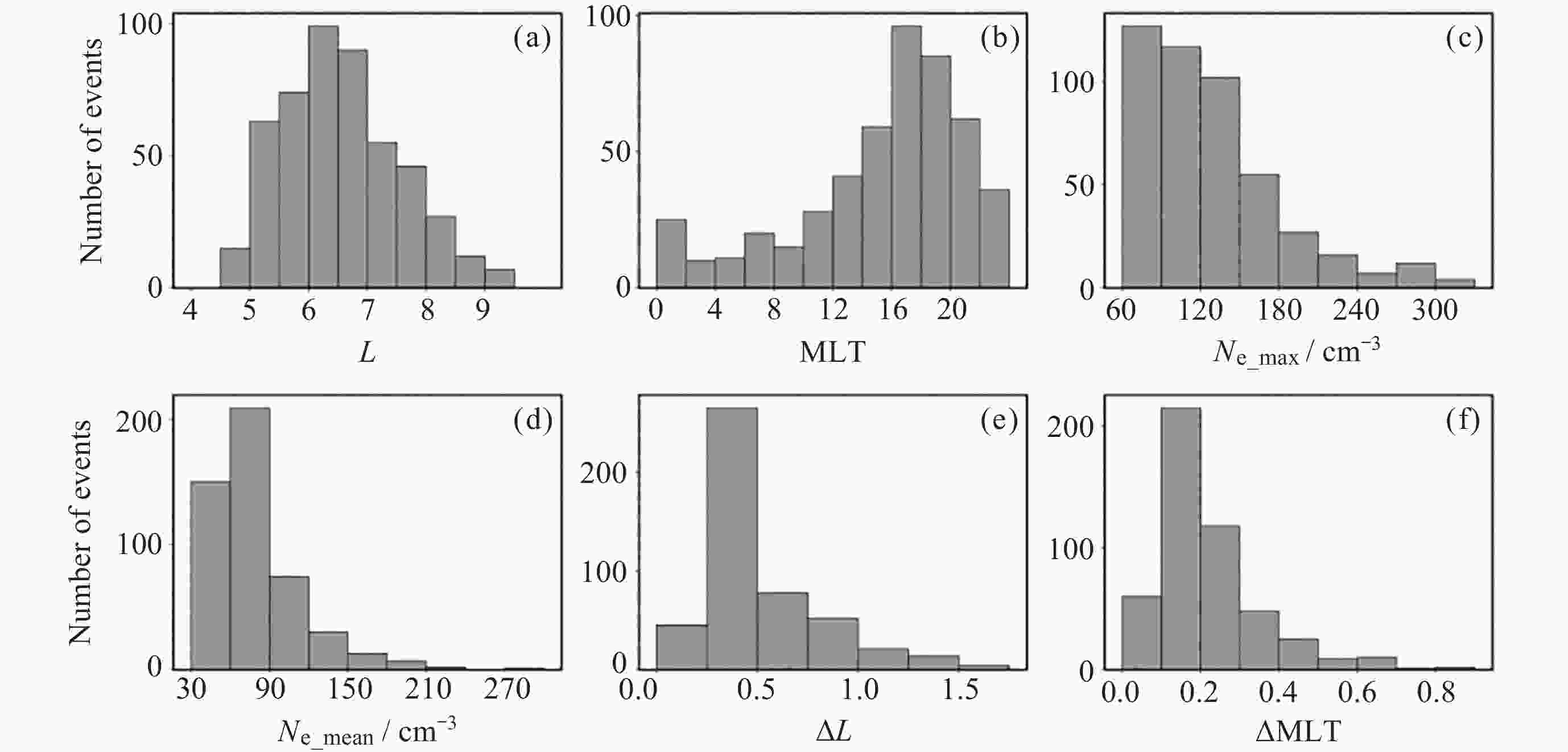
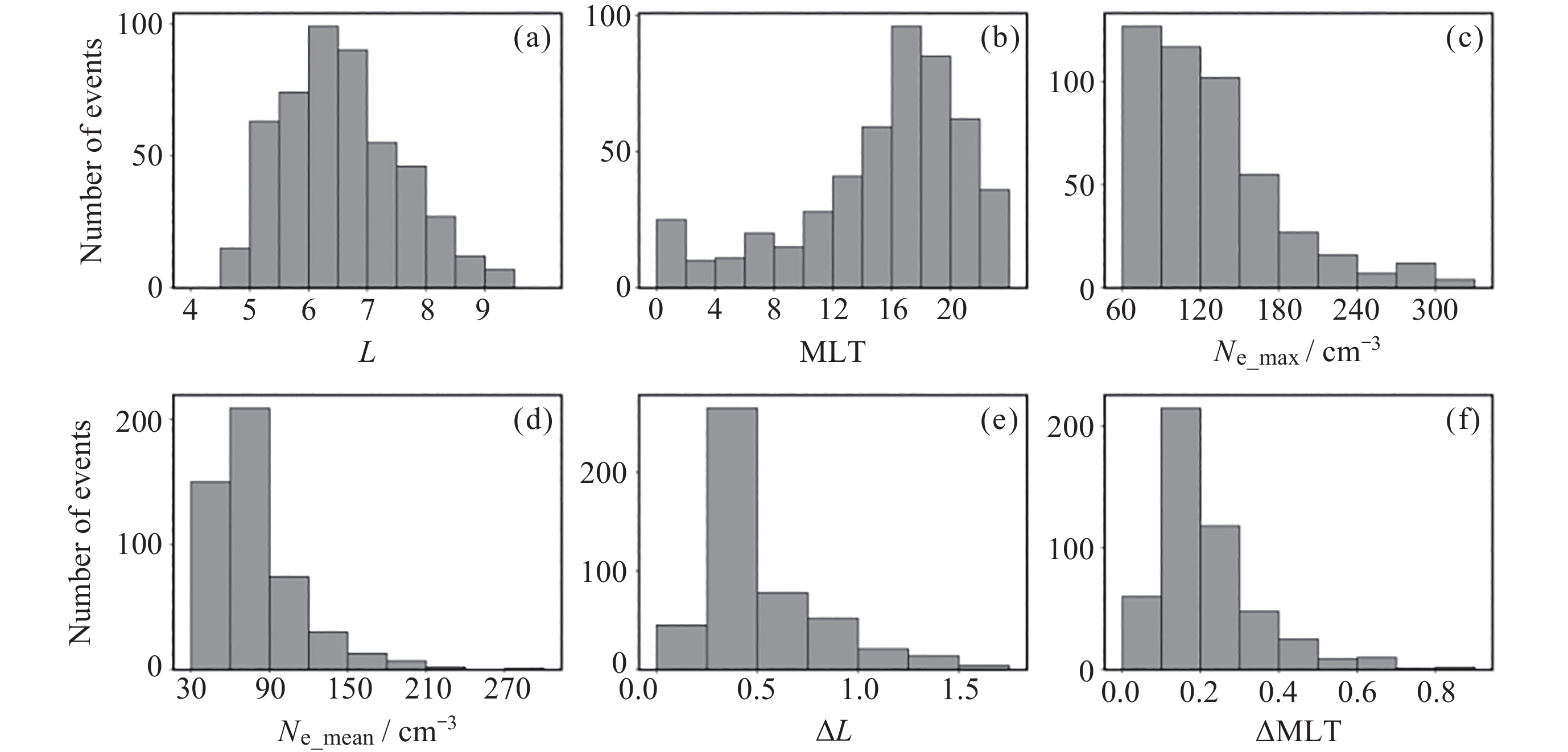
Figure 3. Number of plasmaspheric plume events as functions of L, MLT, Ne_max, Ne_mean, ∆L, ∆MLT
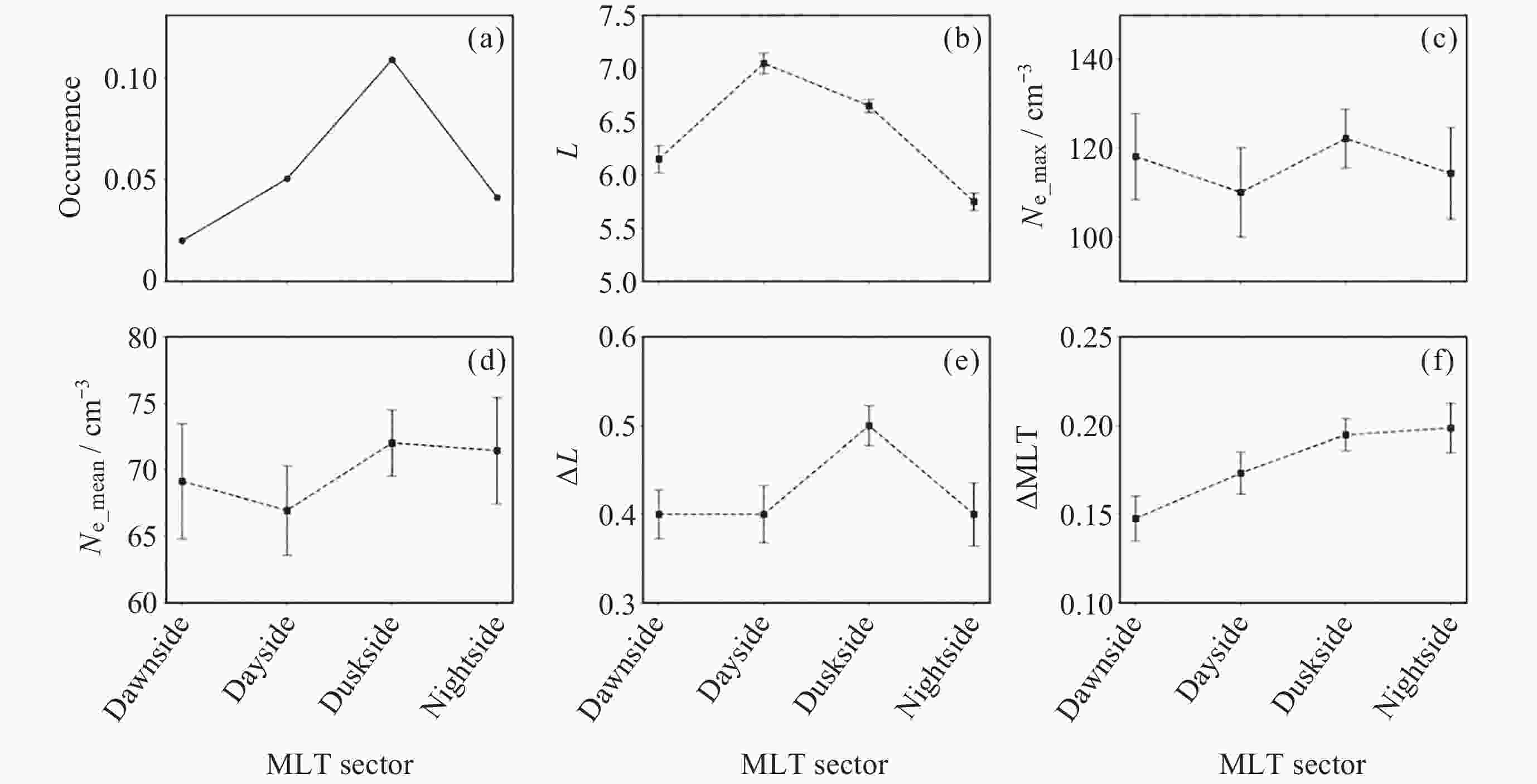
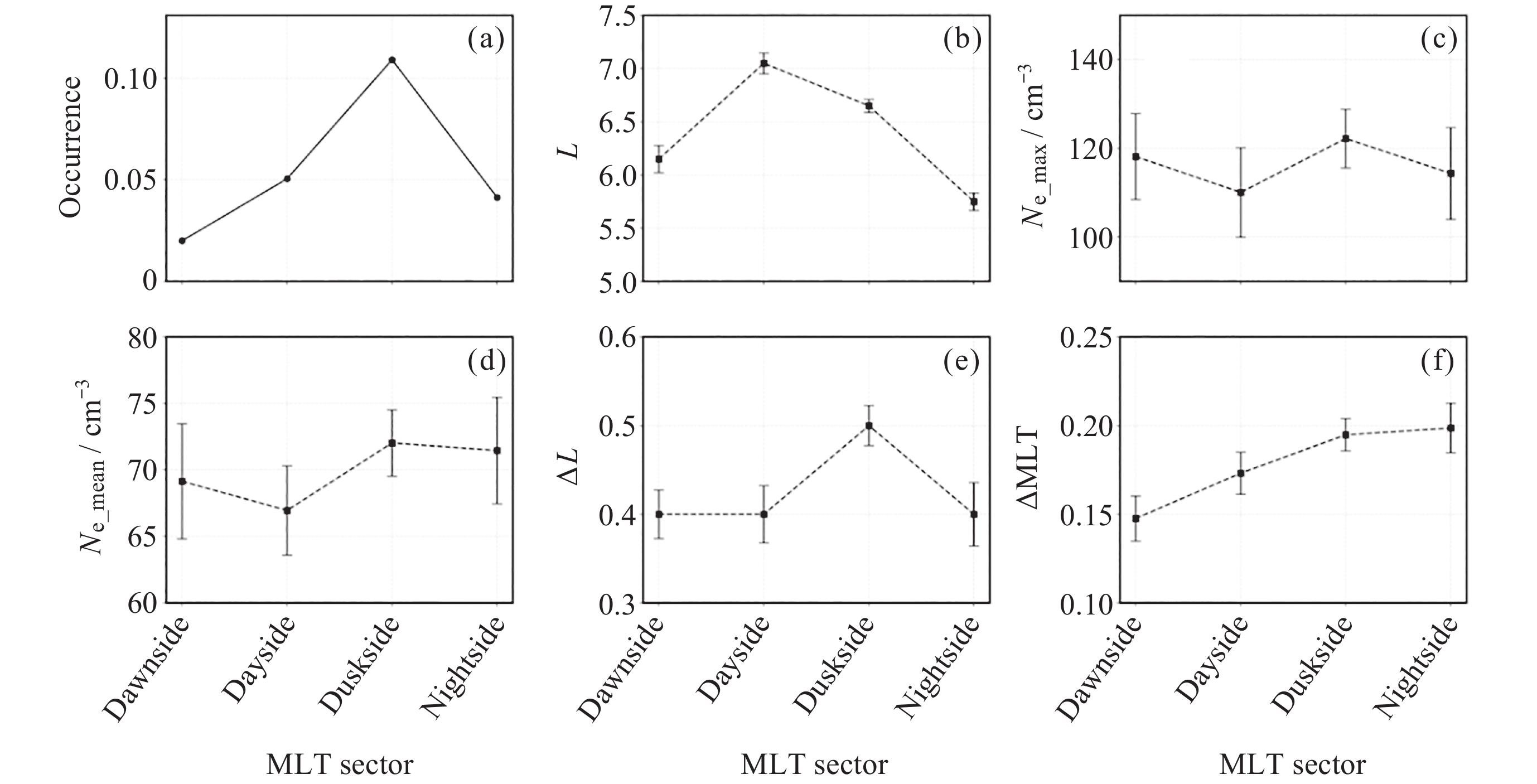
Figure 4. Occurrence rate of plume events in the four MLT sectors (a). Median values of L, Ne_max, Ne_mean, ∆L, ∆MLT for plume events in each MLT sector
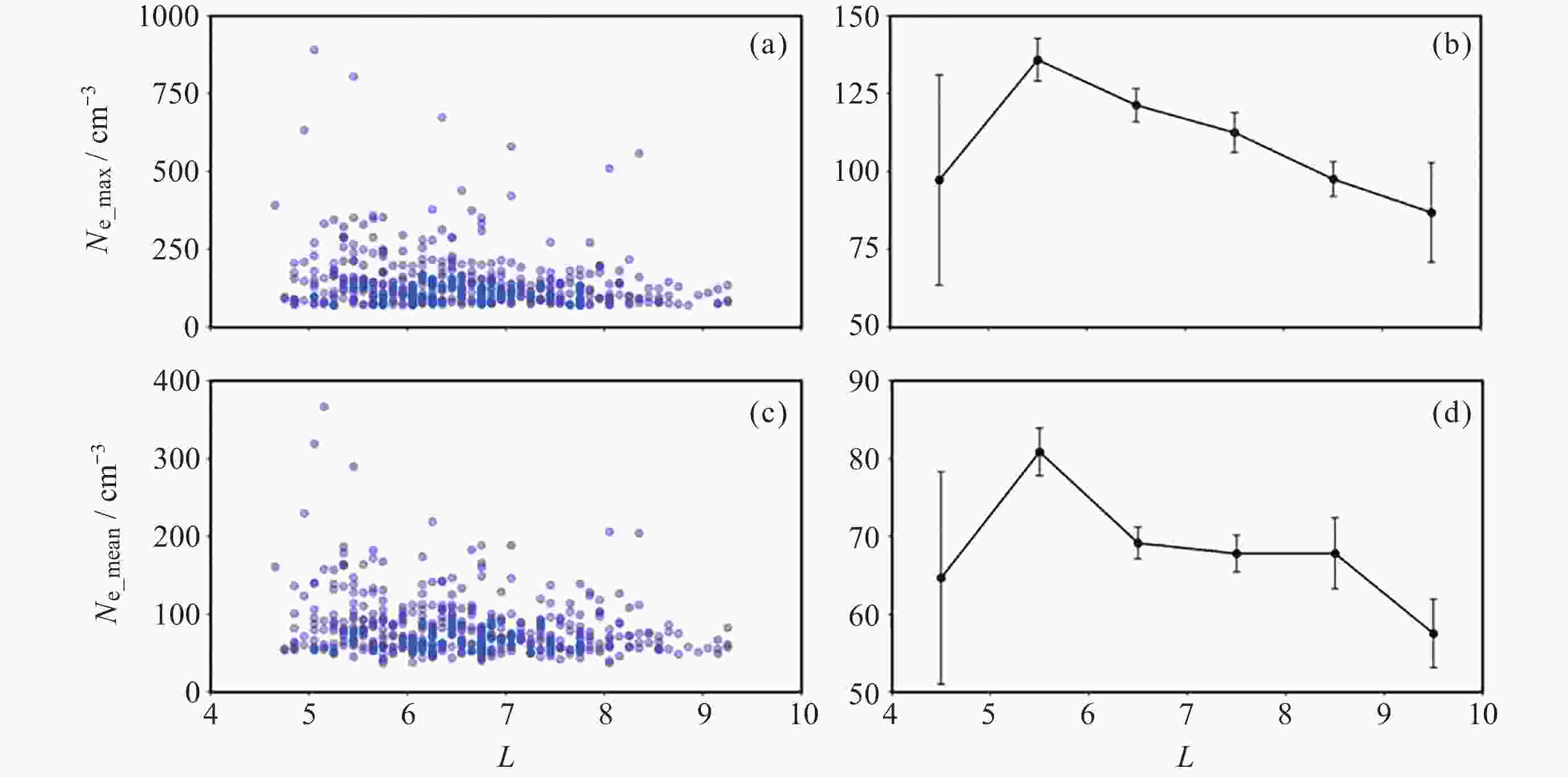
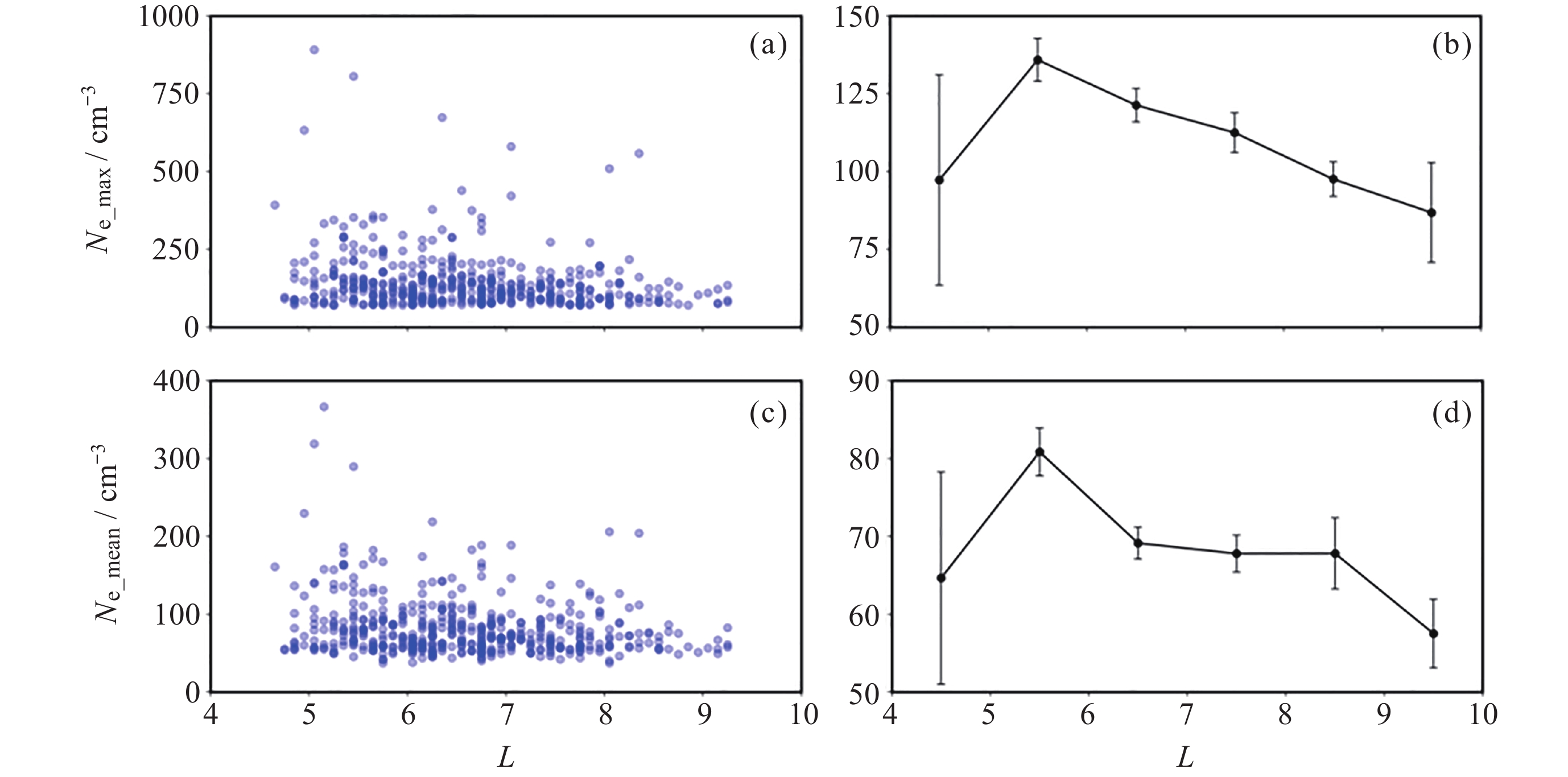
Figure 5. Scatter plots of Ne_max (a) and Ne_mean (c) versus L for all plume events, and the corresponding median values of Ne_max (b) and Ne_mean (d) as a function of L
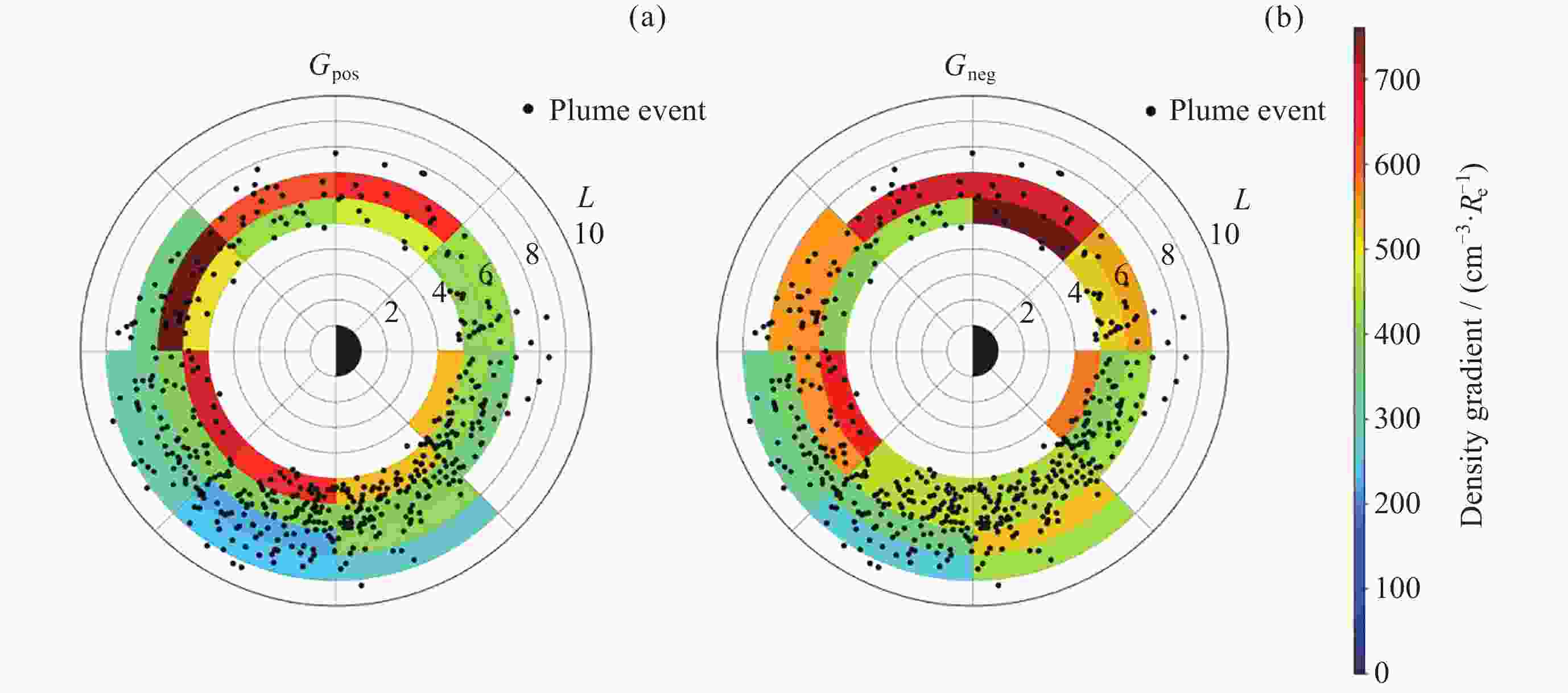
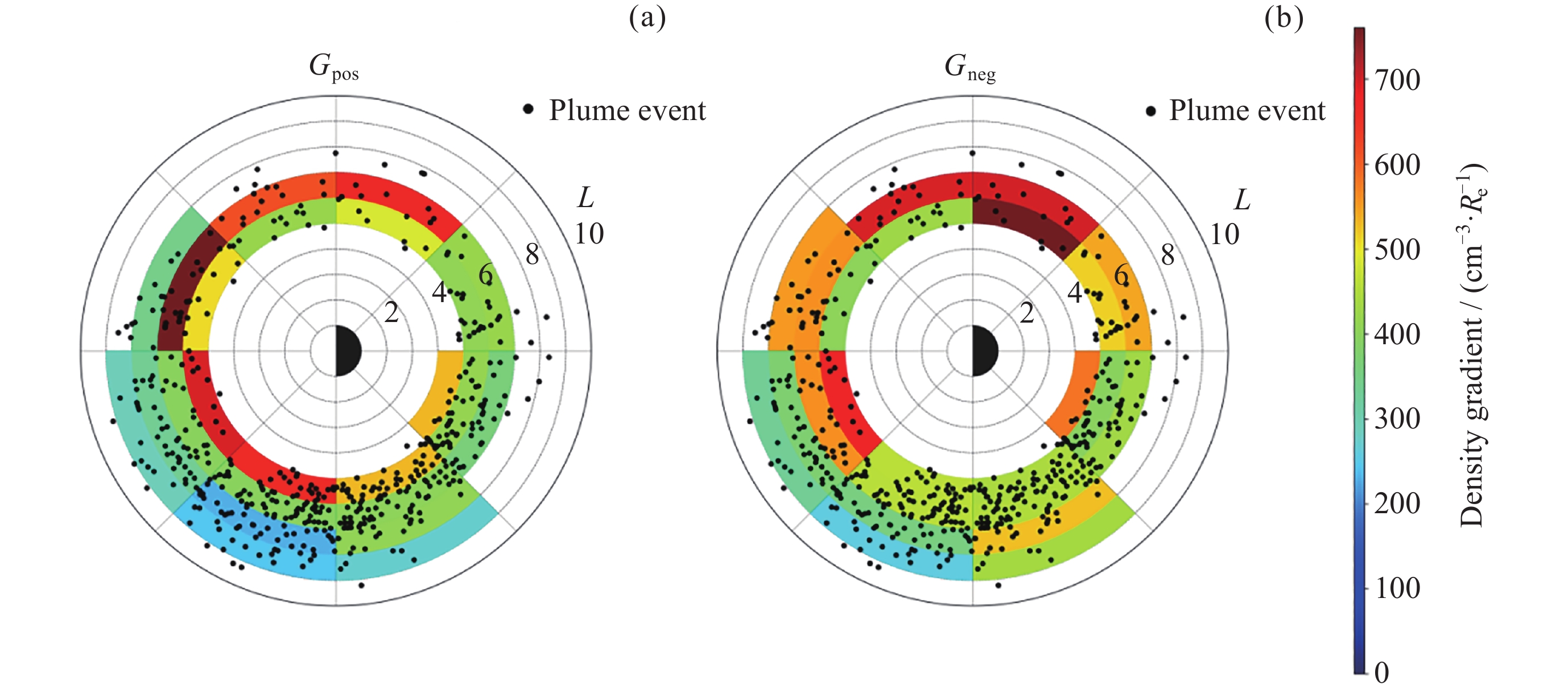
Figure 6. Electron density gradients of plasmaspheric plumes in MLT-L coordinates. (a) Mean value of $ {G}_{\text{pos}} $. (b) Mean value of $ {G}_{\text{neg}} $. Black dots indicate plume event locations
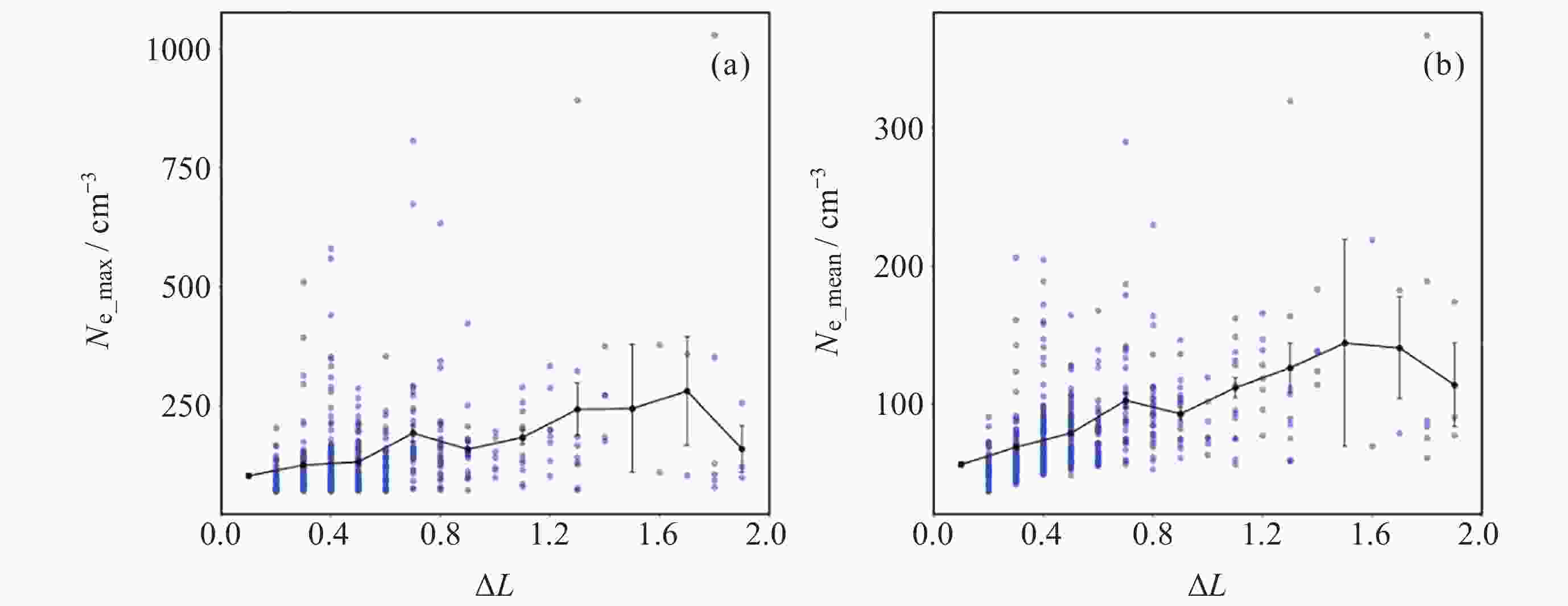
Figure 7. Distributions of plume electron densities. (a) Ne_max and (b) Ne_mean are as a function of ∆L. Each dot represents a single plume event
Table 1. Characteristics of plasmaspheric plumes
Name Symbol Mean value Median value Magnetic Local Time MLT 15.34 16.84 Radial distance L 6.56 6.45 Radial width ∆L 0.56 0.40 Peak electron density Ne_max 144.26 cm−3 120.32 cm−3 Mean electron density Ne_mean 81.34 cm−3 70.95 cm−3  下载: 导出CSV
-
[1] CARPENTER D L. Whistler evidence of a ‘knee’ in the magnetospheric ionization density profile[J]. Journal of Geophysical Research, 1963, 68(6): 1675-1682 doi: 10.1029/JZ068i006p01675 [2] CARPENTER D L. Whistler studies of the plasmapause in the magnetosphere: 1. Temporal variations in the position of the knee and some evidence on plasma motions near the knee[J]. Journal of Geophysical Research, 1966, 71(3): 693-709 doi: 10.1029/JZ071i003p00693 [3] LEMAIRE J F, GRINGAUZ K I, CARPENTER D L, et al. The Earth’s Plasmasphere[M]. Cambridge: Cambridge University Press, 1998 [4] DARROUZET F, DE KEYSER J, PIERRARD V. The Earth’s Plasmasphere: A CLUSTER and IMAGE Perspective[M]. New York: Springer, 2009 [5] GALVAN D A, MOLDWIN M B, SANDEL B R, et al. On the causes of plasmaspheric rotation variability: IMAGE EUV observations[J]. Journal of Geophysical Research: Space Physics, 2010, 115(A1): A01214 doi: 10.1029/2009ja014321 [6] WALSH B M, SIBECK D G, NISHIMURA Y, et al. Statistical analysis of the plasmaspheric plume at the magnetopause[J]. Journal of Geophysical Research: Space Physics, 2013, 118(8): 4844-4851 doi: 10.1002/jgra.50458 [7] LIU X, LIU W, CAO J B, et al. Dynamic plasmapause model based on THEMIS measurements[J]. Journal of Geophysical Research: Space Physics, 2015, 120(12): 10543-10556 doi: 10.1002/2015ja021801 [8] GALLAGHER D L, COMFORT R H, KATUS R M, et al. The breathing plasmasphere: erosion and refilling[J]. Journal of Geophysical Research: Space Physics, 2021, 126(4): e2020JA028727 doi: 10.1029/2020JA028727 [9] RIPOLL J F, PIERRARD V, CUNNINGHAM G S, et al. Modeling of the cold electron plasma density for radiation belt physics[J]. Frontiers in Astronomy and Space Sciences, 2023, 10: 1096595 doi: 10.3389/fspas.2023.1096595 [10] LÜ Jingtian, ZHANG Xiaoxin, HE Fei, et al. State studies of Earth’s plasmasphere[J]. Reviews of Geophysics and Planetary Physics, 2023, 54(4): 417-433 doi: 10.19975/j.dqyxx.2022-064 [11] BRICE N M. Bulk motion of the magnetosphere[J]. Journal of Geophysical Research, 1967, 72(21): 5193-5211 doi: 10.1029/JZ072i021p05193 [12] HORVATH I, LOVELL B C. Outer-plasmasphere plasma hole scenarios promoting hot zone and sub-auroral polarization streams (SAPS) E field development[J]. Journal of Geophysical Research: Space Physics, 2025, 130(5): e2024JA033184 doi: 10.1029/2024JA033184 [13] XIAO Z, YU S M, SHI H, et al. A brief of recent research progress on ionospheric disturbances[J]. Science China Information Sciences, 2013, 56(12): 1-9 doi: 10.1007/s11432-013-5042-z [14] XIAO Zuo, LIU Kaijun, ZHANG Donghe. Some typical records of ionospheric doppler shift and their significance in the study of ionospheric morphology[J]. Chinese Journal of Space Science, 2002, 22(4): 321-329 doi: 10.3969/j.issn.0254-6124.2002.04.005 [15] XIAO Zuo, XIE Hong. Equatorial Spread-F initiated by acoustic-gravity waves[J]. Chinese Journal of Space Science, 1994, 14(3): 183-190 [16] CARPENTER D L, ANDERSON R R. An ISEE/whistler model of equatorial electron density in the magnetosphere[J]. Journal of Geophysical Research: Space Physics, 1992, 97(A2): 1097-1108 doi: 10.1029/91JA01548 [17] CARPENTER D L, LEMAIRE J. The plasmasphere boundary layer[J]. Annales Geophysicae, 2004, 22(12): 4291-4298 doi: 10.5194/angeo-22-4291-2004 [18] CHEN A J, WOLF R A. Effects on the plasmasphere of a time-varying convection electric field[J]. Planetary and Space Science, 1972, 20(4): 483-509 doi: 10.1016/0032-0633(72)90080-3 [19] LEMAIRE J F. The formation plasmaspheric tails[J]. Physics and Chemistry of the Earth, Part C: Solar, Terrestrial & Planetary Science, 2000, 25(1/2): 9-17 doi: 10.1016/s1464-1917(99)00026-4 [20] MOLDWIN M B, DOWNWARD L, RASSOUL H K, et al. A new model of the location of the plasmapause: CRRES results[J]. Journal of Geophysical Research: Space Physics, 2002, 107(A11): 1339 doi: 10.1029/2001ja009211 [21] GOLDSTEIN J, DE PASCUALE S, KLETZING C, et al. Simulation of van allen probes plasmapause encounters[J]. Journal of Geophysical Research: Space Physics, 2014, 119(9): 7464-7484 doi: 10.1002/2014JA020252 [22] GREBOWSKY J M. Model study of plasmapause motion[J]. Journal of Geophysical Research, 1970, 75(22): 4329-4333 doi: 10.1029/JA075i022p04329 [23] CHEN A J, GREBOWSKY J M. Plasma tail interpretations of pronounced detached plasma regions measured by Ogo 5[J]. Journal of Geophysical Research, 1974, 79(25): 3851-3855 doi: 10.1029/JA079i025p03851 [24] LU Z Y, LI J C, ZHANG S, et al. Statistical properties of Pc4-5 ULF waves in plasmaspheric plumes[J]. Geophysical Research Letters, 2024, 51(6): e2023GL107514 doi: 10.1029/2023GL107514 [25] YUAN Z G, DENG X H, LIN X, et al. Link between EMIC waves in a plasmaspheric plume and a detached sub-auroral proton arc with observations of cluster and IMAGE satellites[J]. Geophysical Research Letters, 2010, 37(7): L07108 doi: 10.1029/2010gl042711 [26] CHEN L J, THORNE R M, LI W, et al. Modulation of plasmaspheric hiss intensity by thermal plasma density structure[J]. Geophysical Research Letters, 2012, 39(14): L14103 doi: 10.1029/2012gl052308 [27] HALFORD A J, FRASER B J, MORLEY S K. EMIC waves and plasmaspheric and plume density: CRRES results[J]. Journal of Geophysical Research: Space Physics, 2015, 120(3): 1974-1992 doi: 10.1002/2014JA020338 [28] GRISON B, HANZELKA M, BREUILLARD H, et al. Plasmaspheric plumes and EMIC rising tone emissions[J]. Journal of Geophysical Research: Space Physics, 2018, 123(11): 9443-9452 doi: 10.1029/2018JA025796 [29] KIM K C, SHPRITS Y. Statistical analysis of hiss waves in plasmaspheric plumes using van allen probe observations[J]. Journal of Geophysical Research: Space Physics, 2019, 124(3): 1904-1915 doi: 10.1029/2018JA026458 [30] HE B, ZHANG D J, LIU W L, et al. Statistical study on coherent quasi-periodic emissions based on multi-satellite measurements[J]. Journal of Geophysical Research: Space Physics, 2025, 130(5): e2025JA033890 doi: 10.1029/2025JA033890 [31] SUMMERS D, NI B B, MEREDITH N P, et al. Electron scattering by whistler-mode ELF hiss in plasmaspheric plumes[J]. Journal of Geophysical Research: Space Physics, 2008, 113(A4): A04219 doi: 10.1029/2007ja012678 [32] ZONG Q G, REN J, ZHOU X Z. Interactions between ULF waves and cold plasmaspheric particles[M]//ZONG Q G, ESCOUBET P, SIBECK D, et al. Dayside Magnetosphere Interactions. Hoboken: American Geophysical Union, 2020: 265-284 [33] SPASOJEVIC M, FUSELIER S A. Temporal evolution of proton precipitation associated with the plasmaspheric plume[J]. Journal of Geophysical Research: Space Physics, 2009, 114(A12): A12201 doi: 10.1029/2009ja014530 [34] YUAN Z G, LI M, XIONG Y, et al. Simultaneous observations of precipitating radiation belt electrons and ring current ions associated with the plasmaspheric plume[J]. Journal of Geophysical Research: Space Physics, 2013, 118(7): 4391-4399 doi: 10.1002/jgra.50432 [35] ZHOU R X, ZHANG X J, ARTEMYEV A V, et al. Characteristics of energy-latitude dispersed electron precipitation driven by EMIC waves[J]. Journal of Geophysical Research: Space Physics, 2025, 130(4): e2024JA033501 doi: 10.1029/2024JA033501 [36] BOROVSKY J E, DENTON M H. Effect of plasmaspheric drainage plumes on solar-wind/magnetosphere coupling[J]. Geophysical Research Letters, 2006, 33(20): L20101 doi: 10.1029/2006gl026519 [37] BOROVSKY J E, DENTON M H, DENTON R E, et al. Estimating the effects of ionospheric plasma on solar wind/magnetosphere coupling via mass loading of dayside reconnection: ion-plasma-sheet oxygen, plasmaspheric drainage plumes, and the plasma cloak[J]. Journal of Geophysical Research: Space Physics, 2013, 118(9): 5695-5719 doi: 10.1002/jgra.50527 [38] WALSH B M, FOSTER J C, ERICKSON P J, et al. Simultaneous ground- and space-based observations of the plasmaspheric plume and reconnection[J]. Science, 2014, 343(6175): 1122-1125 doi: 10.1126/science.1247212 [39] DE KEYSER J, CARPENTER D L, DARROUZET F, et al. CLUSTER and IMAGE: new ways to study the earth’s plasmasphere[J]. Space Science Reviews, 2009, 145(1/2): 7-53 [40] LEE S H, ZHANG H, ZONG Q G, et al. A statistical study of plasmaspheric plumes and ionospheric outflows observed at the dayside magnetopause[J]. Journal of Geophysical Research: Space Physics, 2016, 121(1): 492-506 doi: 10.1002/2015JA021540 [41] LI H M, FU T X, TANG R X, et al. Statistical study and corresponding evolution of plasmaspheric plumes under different levels of geomagnetic storms[J]. Annales Geophysicae, 2022, 40(2): 167-177 doi: 10.5194/egusphere-egu22-1081 [42] YANG Z R, LI H M, YUAN Z G, et al. Width of plasmaspheric plumes related to the level of geomagnetic storm intensity[J]. Annales Geophysicae, 2022, 40(6): 673-685 doi: 10.5194/angeo-40-673-2022 [43] DARROUZET F, DE KEYSER J, DÉCRÉAU P M E, et al. Statistical analysis of plasmaspheric plumes with cluster/WHISPER observations[J]. Annales Geophysicae, 2008, 26(8): 2403-2417 doi: 10.5194/angeo-26-2403-2008 [44] FOSTER J C, ERICKSON P J, COSTER A J, et al. Ionospheric signatures of plasmaspheric tails[J]. Geophysical Research Letters, 2002, 29(13): 1623 doi: 10.1029/2002gl015067 [45] SINGH A K, SINGH R P, SIINGH D. State studies of earth’s plasmasphere: a review[J]. Planetary and Space Science, 2011, 59(9): 810-834 doi: 10.1016/j.pss.2011.03.013 [46] XIANG T Y, REN J, ZONG Q G, et al. Periodic density structures around the plasmaspheric plume boundary and their association with ULF waves[J]. Journal of Geophysical Research: Space Physics, 2025, 130(6): e2025JA034044 doi: 10.1029/2025JA034044 [47] DENT Z C, MANN I R, MENK F W, et al. A coordinated ground-based and IMAGE satellite study of quiet-time plasmaspheric density profiles[J]. Geophysical Research Letters, 2003, 30(12): 1600 doi: 10.1029/2003gl016946 [48] SU Y J, THOMSEN M F, BOROVSKY J E, et al. A linkage between polar patches and plasmaspheric drainage plumes[J]. Geophysical Research Letters, 2001, 28(1): 111-113 doi: 10.1029/2000GL012042 [49] GARCIA L N, FUNG S F, GREEN J L, et al. Observations of the latitudinal structure of plasmaspheric convection plumes by IMAGE-RPI and EUV[J]. Journal of Geophysical Research: Space Physics, 2003, 108(A8): 1321 doi: 10.1029/2002ja009496 [50] DARGENT J, AUNAI N, LAVRAUD B, et al. Simulation of plasmaspheric plume impact on dayside magnetic reconnection[J]. Geophysical Research Letters, 2020, 47(4): e2019GL086546 doi: 10.1029/2019GL086546 [51] MOLDWIN M B, HOWARD J, SANNY J, et al. Plasmaspheric plumes: CRRES observations of enhanced density beyond the plasmapause[J]. Journal of Geophysical Research: Space Physics, 2004, 109(A5): A05202 doi: 10.1029/2003ja010320 [52] BOROVSKY J E, DENTON M H. A statistical look at plasmaspheric drainage plumes[J]. Journal of Geophysical Research: Space Physics, 2008, 113(A9): A09221 doi: 10.1029/2007ja012994 [53] ANGELOPOULOS V. The THEMIS mission[J]. Space Science Reviews, 2008, 141(1): 5-34 [54] BONNELL J W, MOZER F S, DELORY G T, et al. The electric field instrument (EFI) for THEMIS[J]. Space Science Reviews, 2008, 141(1/2/3/4): 303-341 [55] MCFADDEN J P, CARLSON C W, LARSON D, et al. The THEMIS ESA plasma instrument and in-flight calibration[J]. Space Science Reviews, 2008, 141(1/2/3/4): 277-302 [56] MOZER F S. Analyses of techniques for measuring DC and AC electric fields in the magnetosphere[J]. Space Science Reviews, 1973, 14(2): 272-313 doi: 10.1007/BF02432099 [57] PEDERSEN A, LYBEKK B, ANDRÉ M, et al. Electron density estimations derived from spacecraft potential measurements on cluster in tenuous plasma regions[J]. Journal of Geophysical Research: Space Physics, 2008, 113(A7): A07S33 doi: 10.1029/2008ja013371 [58] LI W, THORNE R M, NISHIMURA Y, et al. THEMIS analysis of observed equatorial electron distributions responsible for the chorus excitation[J]. Journal of Geophysical Research: Space Physics, 2010, 115(A6): A00F11 doi: 10.1029/2009ja014845 [59] NISHIMURA Y, BORTNIK J, LI W, et al. Structures of dayside whistler-mode waves deduced from conjugate diffuse aurora[J]. Journal of Geophysical Research: Space Physics, 2013, 118(2): 664-673 doi: 10.1029/2012JA018242 [60] SHEELEY B W, MOLDWIN M B, RASSOUL H K, et al. An empirical plasmasphere and trough density model: CRRES observations[J]. Journal of Geophysical Research: Space Physics, 2001, 106(A11): 25631-25641 doi: 10.1029/2000JA000286 [61] ZHANG W X, NI B B, HUANG H, et al. Statistical properties of hiss in plasmaspheric plumes and associated scattering losses of radiation belt electrons[J]. Geophysical Research Letters, 2019, 46(11): 5670-5680 doi: 10.1029/2018GL081863 [62] CHEN S H, MOORE T E. Magnetospheric convection and thermal ions in the dayside outer magnetosphere[J]. Journal of Geophysical Research: Space Physics, 2006, 111(A3): A03215 doi: 10.1029/2005ja011084 [63] GOLDSTEIN J, SANDEL B R, THOMSEN M F, et al. Simultaneous remote sensing and in situ observations of plasmaspheric drainage plumes[J]. Journal of Geophysical Research: Space Physics, 2004, 109(A3): A03202 doi: 10.1029/2003ja010281 [64] KIM K H, GOLDSTEIN J, BERUBE D. Plasmaspheric drainage plume observed by the polar satellite in the prenoon sector and the IMAGE satellite during the magnetic storm of 11 April 2001[J]. Journal of Geophysical Research: Space Physics, 2007, 112(A6): A06237 doi: 10.1029/2006ja012030 [65] MOORE T E, FOK M C, DELCOURT D C, et al. Plasma plume circulation and impact in an MHD substorm[J]. Journal of Geophysical Research: Space Physics, 2008, 113(A6): A06219 doi: 10.1029/2008ja013050 [66] ELSDEN T, WRIGHT A N. Polarization properties of 3-D field line resonances[J]. Journal of Geophysical Research: Space Physics, 2022, 127(2): e2021JA030080 doi: 10.1029/2021JA030080 [67] GOLDSTEIN J, SANDEL B R. The global pattern of evolution of plasmaspheric drainage plumes[M]//BURCH J, SCHULZ M, SPENCE H. Geophysical Monograph Series. Washington: American Geophysical Union, 2005: 1-22 -
-

 下载:
下载:

计量
- 文章访问数: 999
- HTML全文浏览量: 139
- PDF下载量: 122
-
被引次数:
0(来源:Crossref)
0(来源:其他)

