| Citation: | LAI Chang, WANG Pengchao, LI Qinzeng. Intelligent Identification and Key Parameter Extraction of Middle and Upper Atmospheric Disturbances Based on All-sky Airglow Imaging Observations of the Chinese Meridian Project (in Chinese). Chinese Journal of Space Science, 2026, 46(3): 650-657 doi: 10.11728/cjss2026.03.2025-0081

|

| [1] |
FRITTS D C. Gravity wave saturation in the middle atmosphere: a review of theory and observations[J]. Reviews of Geophysics, 1984, 22(3): 275-308 doi: 10.1029/RG022i003p00275
|
| [2] |
FRITTS D C, ALEXANDER M J. Gravity wave dynamics and effects in the middle atmosphere[J]. Reviews of Geophysics, 2003, 41(1): 1003
|
| [3] |
SUZUKI S, SHIOKAWA K, OTSUKA Y, et al. Gravity wave momentum flux in the upper mesosphere derived from OH airglow imaging measurements[J]. Earth, Planets and Space, 2007, 59(5): 421-428 doi: 10.1186/BF03352703
|
| [4] |
ICHIHARA A, NISHITANI N, OGAWA T, et al. Northward-propagating nighttime medium-scale traveling ionospheric disturbances observed with SuperDARN Hokkaido HF radar and GEONET[J]. Advances in Polar Science, 2013, 24(1): 42-49 doi: 10.3724/sp.j.1085.2013.00042
|
| [5] |
ERN M, TRINH Q T, PREUSSE P, et al. GRACILE: a comprehensive climatology of atmospheric gravity wave parameters based on satellite limb soundings[J]. Earth System Science Data, 2018, 10(2): 857-892 doi: 10.5194/essd-10-857-2018
|
| [6] |
MANDAL S, PALLAMRAJU D, KARAN D K, et al. On deriving gravity wave characteristics in the daytime upper atmosphere using radio technique[J]. Journal of Geophysical Research: Space Physics, 2019, 124(8): 6985-6997 doi: 10.1029/2019JA026723
|
| [7] |
GÜNZKOFER F, POKHOTELOV D, STOBER G, et al. Inferring neutral winds in the ionospheric transition region from Atmospheric-Gravity-Wave Traveling-Ionospheric-Disturbance (AGW-TID) observations with the EISCAT VHF radar and the Nordic Meteor Radar Cluster[C]//Special Issue on the Joint 20th International EISCAT Symposium and 15th International Workshop on Layered Phenomena in the Mesopause Region. Eskilstuna, Sweden: Copernicus Publications, 2023
|
| [8] |
BATISTA P P, TAKAHASHI H, GOBBI D, et al. First airglow all sky images at 23° S[J]. Advances in Space Research, 2000, 26(6): 925-928 doi: 10.1016/S0273-1177(00)00031-4
|
| [9] |
LI Q Z, YUSUPOV K, AKCHURIN A, et al. First OH airglow observation of mesospheric gravity waves over European Russia region[J]. Journal of Geophysical Research: Space Physics, 2018, 123(3): 2168-2180 doi: 10.1002/2017JA025081
|
| [10] |
STEFANELLO M B, MUELLA M T A H, AMORIM D C M, et al. OI 630.0 nm all-sky image observations of medium-scale traveling ionospheric disturbances at geomagnetic conjugate points[J]. Journal of Atmospheric and Solar-Terrestrial Physics, 2015, 128: 58-69 doi: 10.1016/j.jastp.2015.03.012
|
| [11] |
王赤, 徐寄遥, 刘立波, 等. 国家重大科技基础设施子午工程在空间环境领域的亮点研究进展[J]. 中国科学: 地球科学, 2023, 66(7): 1423-1438
WANG C, XU J Y, LIU L B, et al. Contribution of the Chinese Meridian Project to space environment research: highlights and perspectives[J]. Science China Earth Sciences, 2023, 66(7): 1423-1438
|
| [12] |
LI Q Z, XU J Y, GUSMAN A R, et al. Upper‐atmosphere responses to the 2022 Hunga Tonga–Hunga Ha’apai volcanic eruption via acoustic gravity waves and air–sea interaction[J]. Atmospheric Chemistry and Physics, 2024, 24(14): 8343-8361 doi: 10.5194/acp-24-8343-2024
|
| [13] |
LI Q Z, XU J Y, LIU H L, et al. How do gravity waves triggered by a typhoon propagate from the troposphere to the upper atmosphere?[J]. Atmospheric Chemistry and Physics, 2022, 22(18): 12077-12091 doi: 10.5194/acp-22-12077-2022
|
| [14] |
CLAUSEN L B N, NICKISCH H. Automatic classification of auroral images from the Oslo Auroral THEMIS (OATH) data set using machine learning[J]. Journal of Geophysical Research: Space Physics, 2018, 123(7): 5640-5647 doi: 10.1029/2018JA025274
|
| [15] |
CHAKRABARTI S, PATGIRI D, RATHI R, et al. Optimizing a deep learning framework for accurate detection of the Earth’s ionospheric plasma structures from all-sky airglow images[J]. Advances in Space Research, 2024, 73(12): 5990-6005 doi: 10.1016/j.asr.2024.03.014
|
| [16] |
ZHONG J, ZOU Z M, WU K, et al. Automatic detection and feature extraction of equatorial plasma bubbles from all‐sky airglow image based on machine learning[J]. Space Weather, 2025, 23(5): e2025SW004336 doi: 10.1029/2025SW004336
|
| [17] |
LI Q, XU J, YUE J, et al. Statistical characteristics of gravity wave activities observed by an OH airglow imager at Xinglong, in northern China[J]. Annales Geophysicae, 2011, 29(8): 1401-1410 doi: 10.5194/angeo-29-1401-2011
|
| [18] |
LAI C, YUE J, XU J Y, et al. Detection of large-scale concentric gravity waves from a Chinese airglow imager network[J]. Journal of Atmospheric and Solar-Terrestrial Physics, 2018, 171: 269-276 doi: 10.1016/j.jastp.2017.10.002
|
| [19] |
LAI C, XU J Y, YUE J, et al. Automatic extraction of gravity waves from all-sky airglow image based on machine learning[J]. Remote Sensing, 2019, 11(13): 1516 doi: 10.3390/rs11131516
|
| [20] |
LIN Z S, WANG Q Y, LAI C. Analysis of airglow image classification based on feature map visualization[J]. Applied Sciences, 2023, 13(6): 3671 doi: 10.3390/app13063671
|
| [21] |
LIN T Y, MAIRE M, BELONGIE S, et al. Microsoft COCO: common objects in context[C]//Proceedings of the 13th European Conference on Computer Vision - ECCV 2014. Zurich: Springer, 2014: 740-755
|
| [22] |
LAI C, LI W, XU J Y, et al. Extraction of quasi-monochromatic gravity waves from an airglow imager network[J]. Atmosphere, 2020, 11(6): 615 doi: 10.3390/atmos11060615
|
| [23] |
LAI C, XU J Y, LIN Z S, et al. Statistical characteristics of nighttime medium‐scale traveling ionospheric disturbances from 10‐years of airglow observation by the machine learning method[J]. Space Weather, 2023, 21(5): e2023SW003430 doi: 10.1029/2023SW003430
|
| [24] |
KIM Y H, LEE C S, CHUNG J K, et al. Seasonal variations of mesospheric gravity waves observed with an airglow all-sky camera at Mt. Bohyun, Korea (36°N)[J]. Journal of Astronomy and Space Sciences, 2010, 27(3): 181-188 doi: 10.5140/JASS.2010.27.3.181
|
| [25] |
EJIRI M K, SHIOKAWA K, OGAWA T, et al. Statistical study of short-period gravity waves in OH and OI nightglow images at two separated sites[J]. Journal of Geophysical Research: Atmospheres, 2003, 108(D21): 4679 doi: 10.1029/2002jd002795
|
| [26] |
LI H, ZHANG J, WANG W, et al. An observation of medium-scale traveling ionospheric disturbances by mid-latitude SuperDARN radars in Asia[J]. Journal of Geophysical Research: Space Physics, 2025
|
| [27] |
HUANG F Q, DOU X K, LEI J H, et al. Statistical analysis of nighttime medium‐scale traveling ionospheric disturbances using airglow images and GPS observations over central China[J]. Journal of Geophysical Research: Space Physics, 2016, 121(9): 8887-8899 doi: 10.1002/2016JA022760
|
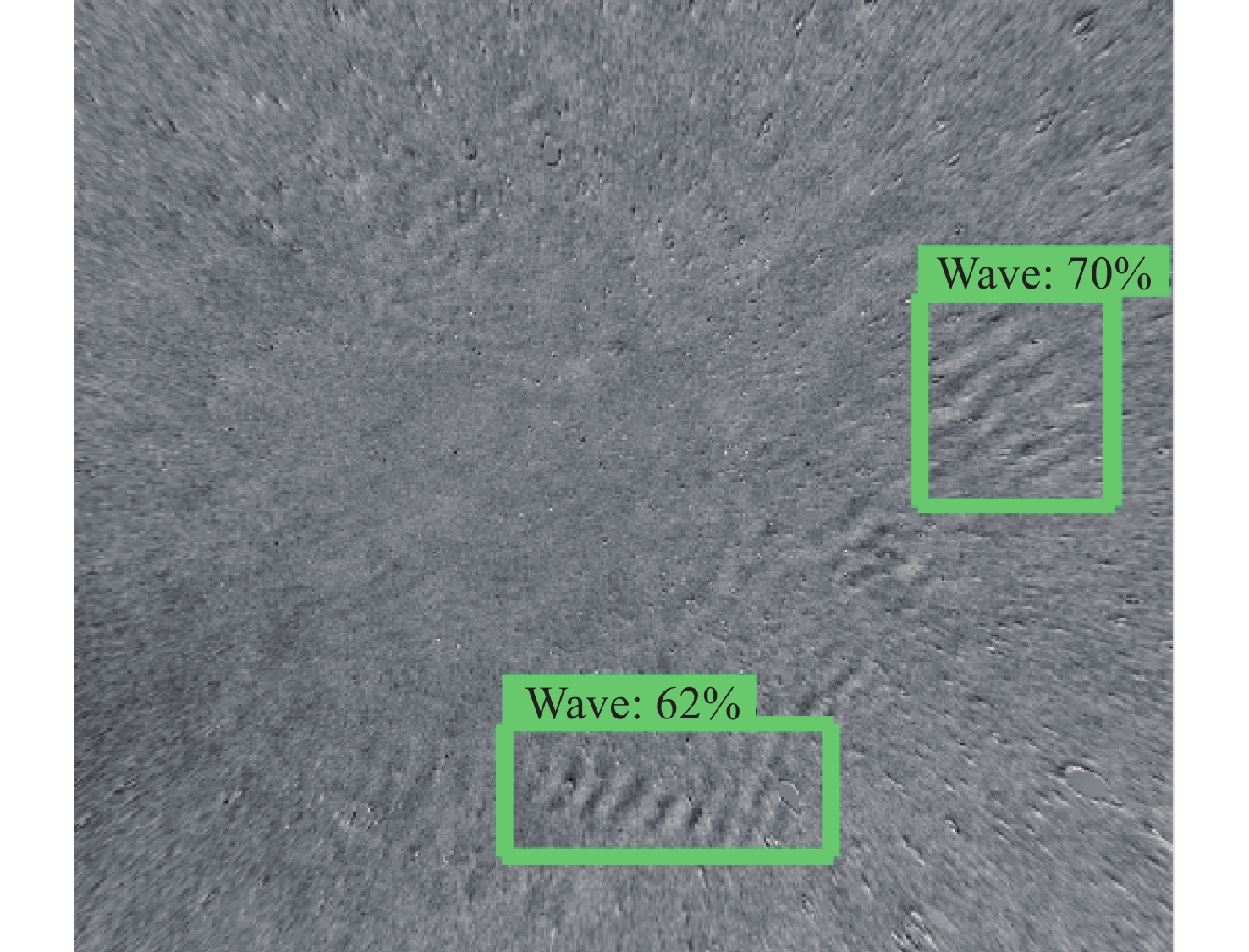
Figures(5) / Tables(3)
Journal Introduction
ISSN 2097-7689 CN 11-1783/V
Copyright © Editorial Office of Chinese Journal of Space Science. 京ICP备08100722号
Supported by: Beijing Renhe Information Technology Co., Ltd.



 DownLoad: