

Young Editorial Board





Young Editorial Board
-
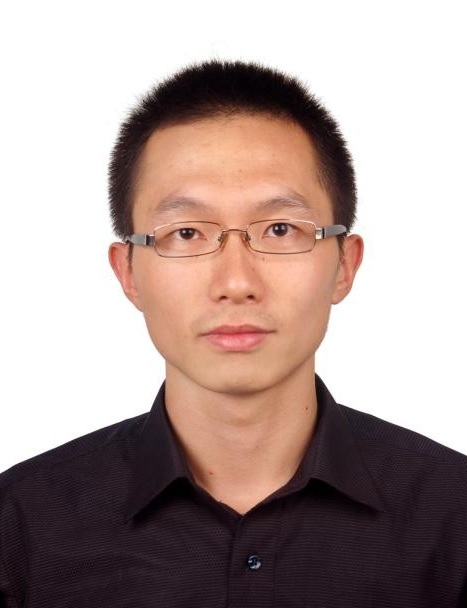
Name:Zhiming CAIIntroduction:
Zhiming CAI, Research Professor of Innovation Academy for Microsatellites, Chinese Academy of Sciences (IAMC), Director of Institute of General Technology for Science Satellites. He serves as Chief Engineer for the Direct-to-Cell (D2C) Satellite, EUHT Satellite and other satellite programs. He also acts as Deputy Chief Engineer for a series of national key space missions, including Taiji-1 and Tianguan Satellite. His core research interests cover space science satellite development, spacecraft system design & multi-physics field control, and precision measurement physics and related technologies.
-
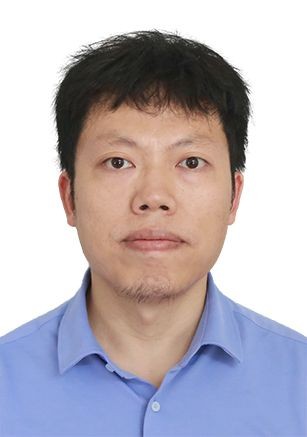
Name:Xingguo ZENGIntroduction:
Xingguo ZENG, Senior Engineer of National Astronomical Observatories (NAOC), Chinese Academy of Sciences (CAS). His research field is Lunar and Planetary Science. He is mainly engaged in research on lunar and planetary remote sensing mapping and spatial information science. He has achieved a number of innovative research results in cross-scale high-precision remote sensing mapping of the Moon and planets, site selection for lunar and Mars landing areas, and the high-precision geomorphic evolution, material sources, and spatial distribution of hydroxyl water in lunar landing areas.
-
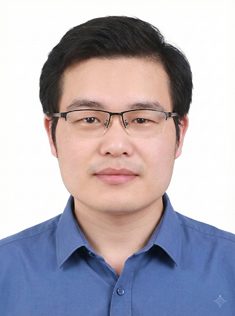
Name:Lin CHANGIntroduction:
Lin CHANG, Associate Professor of Changchun Institute of Optics, Fine Mechanics and Physics, Chinese Academy of Sciences. She primarily conducts research in the field of attitude control for small satellites in aerospace optical remote sensing. She has led projects funded by the National Natural Science Foundation of China and the Jilin Provincial Natural Science Foundation, and has participated in multiple national and provincial-level projects. She was selected for the Third Youth Talent Support Program of the China Association for Science and Technology. She has been recognized as a high-level talent in Jilin Province and has received the First Prize of Jilin Provincial Technology Invention Award, the Innovation Team Award of the 16th Jilin Provincial Youth Science and Technology Award, and the Second Prize of CICC Science and Technology Progress Award.
-
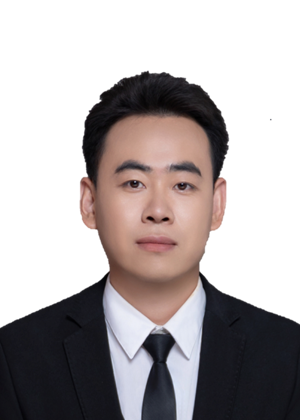
Name:Zhou CHENIntroduction:
Zhou CHEN, Deputy Dean of Artificial Intelligence Industrial Research Institute of Nanchang University, Professor and Doctoral Supervisor. He has been selected for a national high-level young talent program and serves as the Chief Scientist of a National Key R&D Program Young Scientist Project. His research focuses on the integration of space weather science and artificial intelligence, particularly chain-coupled modeling of the solar wind–magnetosphere–ionosphere system, key-state inversion, and onboard AI inference. As the Executive Chief Scientist of the FengYu intelligent space weather forecasting model, he has played a leading role in developing a national AI-based operational forecasting model of the China Meteorological Administration, covering the solar wind, magnetosphere, and ionosphere. FengYu was selected as one of China’s Top Ten Meteorological Science and Technology Advances of 2025. He has published over 50 SCI papers in journals including Science Advances, GRL, ApJ, and Space Weather, and has received honors such as the WAIC Best Native Developer Award and the Space Weather Youth Innovation Award.
-
Name:Bin CHENGIntroduction:
Bin CHENG, Assistant Professor of School of Aerospace Engineering, Tsinghua University. His primary research focuses on dynamical problems in small-body exploration, planetary defense, and in-situ resource utilization. He has published more than 20 papers in leading journals, including Nature Astronomy.
-
Name:Huicun HEIntroduction:
Huicun HE, Postdoctoral Researcher of Institute of Geology and Geophysics, Chinese Academy of Sciences. Her research focuses on the composition and evolution of water and volatile elements in lunar samples and meteorites. She has been awarded the Postdoctoral Fellowship Program (Grade A) and the President’s Special Award of the Chinese Academy of Sciences. Her work investigates the origin and abundance of water in the lunar interior and on the lunar surface using samples returned by China’s Chang’E-5 and Chang’E-6 missions. Her findings have been published in journals including Nature, Nature Geoscience, Nature Communications and EPSL.
-
Name:Yuyang HEIntroduction:
Yuyang HE, Associate Research Professor of Institute of Geology and Geophysics, Chinese Academy of Sciences (IGGCAS). Research interests: isotope effects of volatile elements, planetary atmosphere composition evolution, quantum chemistry theoretical calculation.
-
Name:Jianwu HEIntroduction:
Jianwu HE, Senior Engineer of Institute of Mechanics, Chinese Academy of Sciences (CAS), Member of the Youth Innovation Promotion Association of CAS and CAS Specially-Appointed Research Position. He has dedicated to researches on precision measurement physics and aerospace propulsion theory and engineering, led or participated in more than 10 scientific research projects at the national and provincial levels, published over 40 academic papers, and obtained more than 20 patent authorizations.
-
Name:Xiaoyan HUIntroduction:
Xiaoyan HU, a professor-level senior engineer at the National Space Science Center, Chinese Academy of Sciences (CAS), a member of the CAS Youth Innovation Promotion Association, and the executive deputy director of the National Space Science Data Center (NSSDC). Her research primarily focuses on scientific data governance and AI-readiness theory, feature engineering for space science data, and intelligent mining and knowledge discovery of space science big data. She has led or participated in multiple research projects funded by the National Natural Science Foundation of China, the National Key Research and Development Program of China, the National Major Science and Technology Infrastructure of China, and the CAS Strategic Priority Research Program. She currently serves as a youth committee member of the Space Science Big Data Committee of the Chinese Society of Space Research, and a youth editorial board member of the Chinese Journal of Space Science and Frontiers of Data & Computing.
-
Name:Hao HUANGIntroduction:
Hao HUANG, Deputy General Manager of Beijing AZSPACE Technology Co., Ltd., in charge of scientific research and production, and technical director of model development. He obtained his Ph.D. in Spacecraft Design from the School of Astronautics, Beihang University, and was a visiting scholar at the University of California, USA, sponsored by the China Scholarship Council. He previously served as Chief System Designer of DFH Satellite Co., Ltd. He has long been engaged in satellite orbit design, constellation construction, flight control and overall spacecraft system design. He has presided over a number of national-level research and development projects. As the technical director, he led the development of the A10, B300 and C2000 series orbital cargo spacecraft of AZSPACE, and successfully completed multiple flight missions including DEAR-1, DEAR-3 and DEAR-5. He is currently responsible for the development of the commercial space station project of AZSPACE.
-
Name:Shiyong HUANGIntroduction:
Shiyong HUANG, Professor of Wuhan University, Doctoral Supervisor, and a recipient of the National Youth Talent Program. His main research directions include magnetic field reconnection, magnetic structures in space environments, space plasma turbulence, planetary space physics, and the application of machine learning in space weather modeling and forecasting. He has published more than 200 academic papers and one academic book. He has been selected as an Elsevier China Highly Cited Researcher for many consecutive years. He has received the URSI Young Scientist Award, the EGU Division Outstanding Young Scientist Award, the ESA Outstanding Contribution Award for Cluster and Double Star missions, the Fu Chengyi Young Scientist Award of the Chinese Geophysical Society, the Basu International Early Career Award of the American Geophysical Union (AGU), and the U40 Young Scientist Award of the Asia-Pacific Plasma Physics Society.
-
Name:Yixin HUANGIntroduction:
Yixin HUANG, Associate Professor and Doctoral Supervisor of Harbin Institute of Technology (HIT), was a Postdoctoral Fellow at Tsinghua University. He received his Ph.D. from HIT in 2017. He serves as a member of the Spacecraft Vibration and Control Committee of the Chinese Society for Vibration Engineering and a Youth Editorial Board Member of the Chinese Journal of Space Science. He is also part of the Heilongjiang Chunyan Youth Science and Technology Talent Team. His research focuses on spacecraft design, structural dynamics and control, and computational mechanics. He has published a monograph, Computational Mechanics of Functionally Graded Material Structures for Spacecraft, proposed a thermal-mechanical response control method for spacecraft using functionally graded materials, and authored over 20 SCI-indexed papers.
-
Name:Shaoqian LIIntroduction:
Shaoqian LI, Senior Chief Engineer of Institute of Microsatellite Innovation of the Chinese Academy of Sciences. His main research areas include overall technology of navigation satellites and intelligent electronic information systems for satellites. He has participated in multiple projects, such as the National Major Science and Technology Projects, the Chinese Academy of Sciences’ Forward-Looking Strategic Science and Technology Pioneer Program (Category A), the Major Research and Development Programs of the Ministry of Science and Technology, and the Stably Supported Basic Research Teams of the Chinese Academy of Sciences.
-
Name:Wenya LIIntroduction:
Wenya LI, Researcher of the State Key Laboratory of Solar Activity and Space Weather, National Space Science Center, Chinese Academy of Sciences. He obtained his Bachelor's degree from the University of Science and Technology of China in 2009, and his Doctoral degree from the University of Chinese Academy of Sciences in 2014. He then joined the National Space Science Center, CAS, where he has been working to date. He conducted research as a visiting scholar at the Swedish Institute of Space Physics in Uppsala from 2015 to 2017. In recent years, he has carried out research on electron-scale physical processes of magnetic reconnection in the Earth’s magnetosphere using NASA’s Magnetospheric Multiscale Mission satellites. Meanwhile, he has been investigating the Martian space environment with the Mars Ion and Neutral Particle Analyzer aboard China's independent Mars exploration mission Tianwen-1.
-
Name:Zhengwei LIIntroduction:
Zhengwei LI, Research Professor of Institute of High Energy Physics, Chinese Academy of Sciences. He is mainly engaged in the research and development of astronomical instruments, including space X-ray detection technology and cosmic microwave background radiation detection technology. He conducts research on transition-edge sensor detectors and cryogenic readout technology, such as low-temperature superconducting quantum interference devices (SQUID). He served as the chief designer of the high-energy in-orbit calibration detector onboard China's first space X-ray astronomical satellite, Insight-HXMT. He has successively participated in multiple space projects such as the Gravitational Wave High-energy Electromagnetic Counterpart All-sky Monitor (GECAM), the enhanced X-ray Timing and Polarimetry Mission (eXTP), the Wide-band X-ray Spectroscopy and Polarimetry Telescope (WXPT) — a conceptual space X-ray telescope, and the All-sky Transient Hunter Constellation (CATCH). He serves as the Chief Engineer of Ali Primordial Gravitational Wave Experiment, and pioneered the research and development of CMB low-temperature superconducting detection technology in China. He is the Principal Investigator of the key R&D project of Ministry of Science and Technology, entitled “Research on Core Technologies of Focal Plane Detectors and Antennas for Primordial Gravitational Wave Telescopes”. He has presided over a number of research grants, including equipment development projects of Chinese Academy of Sciences, the Young Scientists Fund and the Joint Astronomy Fund of National Natural Science Foundation of China.
-
-
Name:Chengming LIUIntroduction:
Chengming LIU, Professor and Doctoral Supervisor of Beihang University. His research focuses on space physics and space weather, with a series of innovative achievements in the transport of energy and matter in space and their space weather effects. He has published 31 SCI papers as first or corresponding author in internationally prestigious journals including Nature, Nature Communications, Geophysical Research Letters, and Astrophysical Journal Letters. His total SCI publications exceed 60, with more than 1,700 citations. He has been selected for the Young Elite Scientists Sponsorship Program by CAST and the National High-Level Talent Program, and has received the Outstanding Doctoral Dissertation Award of the Chinese Geophysical Society and the Excellent Young Scientist Paper Award of the National Symposium on Solar-Terrestrial Space Physics.
-
Name:Yangyang LIUIntroduction:
Yangyang LIU, Associate Professor and Master Tutor of Beihang University. He received his doctoral degree from the School of Space and Earth Sciences, Beihang University, in 2022. His research primarily focuses on reconstruction of spatial magnetic topology and acceleration mechanism of charged particles in space. He has published over 50 SCI papers in international journals including Nature, Nature Communications, GRL, and APJ. In 2023, he was awarded the Outstanding Doctoral Dissertation Award by the Chinese Geophysical Society, and in 2024, he was selected for the Young Elite Scientists Sponsorship Program by the China Association for Science and Technology. He currently presides over research projects including the Youth Program and General Program from the National Natural Science Foundation of China.
-
Name:Wenlong NIUIntroduction:
Wenlong NIU, Associate Researcher of National Space Science Center, Chinese Academy of Sciences, and a member of the Youth Innovation Promotion Association of the Chinese Academy of Sciences. He received his Bachelor’s degree from Harbin Institute of Technology in 2012 and his Doctoral degree from the University of Chinese Academy of Sciences in 2018. From 2016 to 2017, he completed a one-year joint doctoral training program at Johns Hopkins University in the United States. He currently serves as a Young Committee Member of the Chinese Society of Space Science, Secretary of the Space Detection Professional Committee, and Youth Editorial Board Member of journals including Journal of Astronautics and Astronomical Technology and Instruments. His research focuses on low signal-to-noise ratio moving target detection and system simulation & evaluation. He has published over 30 academic papers, been granted more than 20 patents, and obtained over 10 software copyrights.
-
Name:Jie RENIntroduction:
Jie REN, Professor and Ph.D. Supervisor of China University of Geosciences (Beijing). Prof. Ren received the support by the National High-Level Young Talents Program. He received his bachelor’s degree from Shandong University in 2012 and his Ph.D. in Space Physics from Peking University in 2018. His research primarily focuses on magnetospheric physics and space weather. He has published over 50 SCI-indexed papers and 2 books, and has led more than 10 national and provincial research projects.
-
Name:Hui SUNIntroduction:
Hui SUN, Associate Researcher and master’s supervisor of National Astronomical Observatories, Chinese Academy of Sciences. Her research focuses on the observational and theoretical study of extragalactic high-energy transients, including gamma-ray bursts, supernova shock breakouts, and fast X-ray transients. She also specializes in electromagnetic counterparts to gravitational wave sources, particularly binary neutron star mergers involving a magnetar central engine. She is a member of the Science Center for the Einstein Probe (EP) mission and was selected for the Young Elite Scientist Sponsorship Program by the China Association for Science and Technology. She has published over 40 peer-reviewed papers in SCI journals.
-
Name:Jicheng SUNIntroduction:
Jicheng SUN, Associate Professor of Polar Research Institute of China (PRIC). He received his B.S. in Space Science and Technology from Shandong University in 2013 and earned his Ph.D. in Geophysics from the University of Science and Technology of China (USTC) in 2017. Following his doctoral studies, he conducted postdoctoral research at USTC and Auburn University (USA) from 2017 to 2021. His research focuses on space plasma physics and auroral physics, having published 15 papers as the first or corresponding author in journals such as GRL and JGR. He served as the Station Leader of the Chinese Arctic Yellow River Station from Sept. 2024 to Mar. 2025, and is currently leading space physics observations at Zhongshan Station during the 42nd Chinese National Antarctic Research Expedition (Nov. 2025 – Jan. 2027).
-
Name:Lian TAOIntroduction:
Lian TAO, Professor of Institute of High Energy Physics, Chinese Academy of Sciences, specializing in high-energy astrophysics and space astronomy. She currently serves as Co-Chair of the Core Science Team for the Insight-HXMT satellite, Co-Chair of the Science Topical Panel on Compact Stellar Objects for the Einstein Probe satellite, and Chinese Convener of the Observatory Science Working Group for the SVOM satellite. She proposed the innovative space mission — Chasing All Transients Constellation Hunters (CATCH) and serves as its Principal Investigator. She is also an editorial board member of the international astronomy journal JHEAp. One of her studies was recognized as one of the Top Ten Astronomical Advances in China in 2020.
-
Name:Shenglei WANGIntroduction:
Shenglei WANG, Associate Professor of Aerospace Information Research Institute (AIR) of Chinese Academy of Sciences. She earned her Ph.D. from University of Chinese Academy of Sciences in 2018 and later held postdoctoral positions at University of Stirling and Peking University. Her research focuses on satellite remote sensing of aquatic environments, with interests in the development of operational water quality products, dynamics and processes in aquatic ecosystems and their response to environmental stressors. She has published over 60 research articles in academic journals, including Remote Sensing of Environment, International Journal of Applied Earth Observation and Geoinformation, and Scientific Data. By integrating airborne and satellite remote sensing data with in situ observations, her work advances understanding of environmental and ecological changes in global and regional surface waters.
-
Name:Di WUIntroduction:
Di WU, Associate Research Professor of Institute of Mechanics, Chinese Academy of Sciences. He presides over the XX Instrument Project of the Bureau of Science and Industry, as well as the space station operational scientific experiment project “Spatiotemporal Evolution and Chaotic Characteristics of Spherical Bénard-Marangoni Convection Patterns”. He serves as Deputy Chief Designer of the first batch space station project “Study on Migration Behavior of Space Three-Phase Multiple Droplets”. He has undertaken a number of major projects supported by China Aerospace Science and Industry Corporation, China National Nuclear Corporation and other institutions, and participated as a key member in research programs including the Space Station Fluid Cabinet, SJ-10 and TG-2 space missions. His main research interests cover microgravity fluid physics, flow stability analysis, flow visualization technology, and spray cooling.
-
Name:Fei XIEIntroduction:
Fei XIE, Professor of Guangxi University, was selected for the National Natural Science Foundation of China’s Outstanding Young Investigator Program. Her research focuses on high-energy astrophysics, particularly data analysis and advanced detection techniques centered on X-ray polarization. She conducted postdoctoral research at the KTH Royal Institute of Technology in Sweden and at the Institute for Space Astrophysics and Planetology (INAF) in Italy. She is a core technical member of the international collaboration on the Imaging X-ray Polarimetry Explorer (IXPE) project. She has published over 90 high-impact academic papers, including one Nature paper as first author and sole corresponding author.
-
Name:Yuchen XUIntroduction:
Yuchen XU, Professor of National Space Science Center, Chinese Academy of Sciences (CAS), specializes in astrochemistry and comparative planetology. She utilizes advanced micro-nano analytical techniques to study meteorites and samples returned from deep space missions. Her research encompasses presolar grains and the early evolution of the solar nebula, space weathering processes on the Moon, and the material composition and geological evolution of samples from the Moon, Mars, and asteroids.
-
Name:Fabao YANIntroduction:
Fabao YAN, Professor of the School of Airspace Science and Engineering, Shandong University, and Director of the Shandong Key Laboratory of Intelligent Electronic Packaging Testing and Application. He received his bachelor’s degree from Harbin Institute of Technology in 2008 and his Ph.D. from Central South University in 2016. As first or corresponding author, he has published over 40 papers, been granted more than 20 national invention patents, and holds 5 software copyrights. His honors include the Shandong Youth May-Fourth Medal, the CGS Fu Chengyi Youth Science and Technology Award, and the Liu Guangding Geophysics Young Scientist Award.
-
Name:Chao YANGIntroduction:
Chao YANG, Associate Researcher of the National Key Laboratory of Space Medicine, China Astronaut Research and Training Center. He received his Bachelor’s and Master’s degrees from China Agricultural University, and his Ph.D. through a joint program between Harbin Institute of Technology and the China Astronaut Research and Training Center. His research involves weightlessness-induced bone loss and spaceflight hypometabolism technology. His research directions include the mechanisms of bone and metabolic homeostasis maintenance in space environments, countermeasures against weightlessness-induced bone loss, application of artificial hibernation technology in human spaceflight, and the mechanisms and protective effects of hibernation.
-
Name:Qin YANGIntroduction:
Qin YANG, Associate Researcher at the School of Astronautics, Harbin Institute of Technology. Her main research interests include space situational awareness, space image information processing, visual 3D perception, and the autonomous navigation and control of flight vehicles. She received her bachelor’s degree from the University of Electronic Science and Technology of China (2013―2017) and her Ph.D. from Shanghai Jiao Tong University (2017―2023). She has published 12 papers in international academic journals and conferences, including IEEE Transactions on Multimedia, IEEE Transactions on Circuits and Systems for Video Technology, Automatica, ACM Multimedia 2020, and IEEE International Conference on Computer Vision and Pattern Recognition (CVPR) 2020. Additionally, she has been granted 4 national invention patents and 1 US invention patent, and has participated in organizing the IFAC Symposium on Automatic Control in Aerospace and the International Conference on Autonomous Unmanned Systems.
-
-
Name:Yazhou YANGIntroduction:
Yazhou YANG, Research Professor of National Space Science Center, Chinese Academy of Sciences. He obtained his PhD in Planetary Geology and Comparative Planetology from China University of Geosciences (Wuhan) in 2019, and completed a joint training program at Brown University, USA from 2016 to 2018. He has been working at NSSCCAS since 2019, focusing on planetary spectroscopy research. Up to now, he has published more than 40 peer-reviewed papers, including 12 first/corresponding author papers in high level academic journals such as Nature Astronomy, EPSL, GRL and ApJL. He was selected for the Young Elite Scientists Sponsorship Program by the China Association for Science and Technology and the Nova Program of Beijing. He has also won awards such as the Second Prize of the Beijing Natural Science Award (3rd among 10 contributors) and the Young Science and Technology Award of the Chinese Society of Space Science.
-
Name:Shutao YAOIntroduction:
Shutao YAO, Professor and Doctoral Supervisor of Shandong University. He completed his bachelor’s, master’s, and doctoral degrees at Shandong University. After earning his Ph.D. in 2021, he remained at the university to advance his research career. His primary research focuses on small-scale structures in space. He has published 40 papers, which have accumulated over 1100 citations, achieving an H-index of 21 (with 16 papers as first/corresponding author, cited more than 500 times). His research accomplishments have been recognized as highlight in AGU, the CGU and Provincial Outstanding Doctoral Dissertation Awards, JGR highlight, EPP cover article, and the Wiley China Excellent Author Program. He has led an international team at the International Space Science Institute (ISSI) and has been honored as a “Taishan Scholar” of Shandong Province and a “Qilu Young Scholar” of Shandong University. In service of national polar initiatives, he participated in Antarctic expeditions for over 400 days, during which he installed Shandong University’s first scientific equipment in Antarctica. In recognition of his contributions, he received a nomination for the Chinese University Student of the Year Award, presented by the Ministry of Education and the Publicity Department of the Central Committee of the Communist Party of China.
-
-
Name:Liangliang YUIntroduction:
Liangliang YU, Associate Professor of Institute of Science and Technology for Deep Space Exploration, Nanjing University, and Gusu Young Professor. He received his Bachelor’s degree in Materials Physics from Nanjing University in 2010, his Master’s degree in Astrometry and Celestial Mechanics from Purple Mountain Observatory in 2013, and his Ph.D. in Space Information Technology from Macau University of Science and Technology in 2018. He worked as a research assistant at Purple Mountain Observatory from 2013 to 2015, and as a postdoctoral fellow (2018―2020) and assistant professor (2020―2023) at the State Key Laboratory of Lunar and Planetary Sciences, Macau University of Science and Technology. He joined Nanjing University in August 2023. His research focuses on thermodynamics and thermal radiometry of solar system small bodies, terrestrial planets and moons, interstellar small bodies, protoplanetary disks, as well as deep space remote sensing, astrometry, and celestial mechanics. He has been a visiting scholar in Taiwan, China, Japan, Germany, and the United States. He participated in pre-research for JAXA’s Hayabusa2 target Ryugu and NASA’s OSIRIS-REx target Bennu, as well as China’s Chang’E-2 flyby of Toutatis, and is involved in the future Tianwen-2 small body mission and Tianwen-3 Mars mission. As Principal Investigator, he has led projects including the NSFC Young Scientists Fund, the NSFC General Program, and a Macau FDCT general research project (over one million MOP). To date, he has published over 20 SCI papers in leading astrophysical journals such as MNRAS, ApJ, and AJ, with more than 200 citations. He serves as a peer reviewer for AAS journals, JGR-Planets, and other international astronomy and planetary science journals.
-
Name:Yang ZHANGIntroduction:
Yang ZHANG, Associate Professor of Tsinghua University, Special Researcher, Doctoral Supervisor, and National High-Level Young Talent. His research focuses on low-carbon fuel combustion theory and applications, particularly near-limit flame dynamics under microgravity conditions using the space station, recoverable satellites, and drop towers. His findings have been applied to key combustion technologies in energy, power, and environmental fields. He has received an international invention gold award, 6 provincial/ministerial and industry association science and technology awards, and more than 10 excellent paper awards at domestic and international conferences. He has been honored as the Excellent Young Scientist in Electric Power by the Chinese Society for Electrical Engineering and has received the Young Science and Technology Award from the China Energy Research Society.
-
Name:Lei ZHAOIntroduction:
Lei ZHAO, Professor and Doctoral Supervisor of Dalian Maritime University. His research focuses on the biological effects and molecular mechanisms of space radiation, space biology big data mining and analysis, and technologies for space radiation damage assessment, early warning, and protection. He has led more than ten research projects, including those supported by the China Manned Space Program and the National Natural Science Foundation of China. He has published nearly 50 peer-reviewed articles, holds five authorized patents, and has contributed to the formulation of one national standard. He has also received two outstanding young scientist paper awards from COSPAR and two natural science academic achievement awards from Liaoning Province, and two of his research achievements have been selected for the progress report on space station science research and applications in China. He has been selected for several talent programs, including the Young Talent Support Program of the China Association for Science and Technology, the Postdoctoral Innovative Talent Support Program, the Liaoning Province “Hundred-Thousand-Ten Thousand Talent Project,” and the Dalian Young Elite Scientist Program. He has also been honored with the title of National Outstanding Young Scholar in Animal Physiological Ecology. Currently, he serves as a youth editorial board member for the Chinese Journal of Space Science and Aerospace Medicine and Medical Engineering.
-
Name:Xiao ZHAOIntroduction:
Xiao ZHAO, Associate Research Fellow of Institute of Mechanics, Chinese Academy of Sciences, specializing in microgravity fluid physics, space energy, and power propulsion systems. He has been selected for the Young Elite Scientists Sponsorship Program by the China Association for Science and Technology. He has led multiple research initiatives funded by the National Natural Science Foundation of China, the CAS Strategic Priority Research Program, the Beijing Natural Science Foundation Key Project, and commissioned tasks from various institutions. He has published dozens of high-impact academic papers. He currently serves as a Youth Member of the Microgravity Science Committee of the Chinese Society of Space Science and a Youth Editorial Board Member of Science & Technology Review and Chinese Journal of Space Science. He received the 2025 Youth Science and Technology Award from the Chinese Society of Space Science.
-
Name:Tianjie ZHAOIntroduction:
Tianjie ZHAO, Director of the Laboratory for Earth Observation of Water, and a Principal Researcher at the State Key Laboratory of Remote Sensing and Digital Earth, Aerospace Information Research Institute, Chinese Academy of Sciences (CAS). He received his B.S. and Ph.D. degrees from Beijing Normal University in 2007 and 2012, respectively. His research interests include microwave remote sensing and Earth observation of the water cycle. He was the recipient of the scholarship award for excellent doctoral student granted by the Ministry of Education of China in 2011, the Young Scientist Award from the International Union of Radio Science (URSI) in 2014, the Young Scientist Award from the Progress in Electromagnetics Research Symposium (PIERS) in 2018, and the Li Xiaowen Youth Award in Remote Sensing Science in 2023.
-
Name:Hai ZHOUIntroduction:
Hai ZHOU, Professor and Doctoral Supervisor of National Space Science Center (NSSC) of the Chinese Academy of Sciences (CAS), and an Excellent Member of the Youth Innovation Promotion Association of CAS. He has long been engaged in research on spaceborne intelligent computing methods, supercomputing systems, target detection and recognition, and other intelligent information processing technologies.
-
Name:Jing ZHOUIntroduction:
Jing ZHOU, Professor of Shanghai Institute of Technical Physics, Chinese Academy of Sciences. He addresses major national demands in infrared detection, multidimensional infrared perception, and precise target recognition. His research focuses on the innovation chain of novel infrared detection mechanisms, device development, and prototype demonstration, all empowered by optical field manipulation and enhancement. He has published 76 SCI-indexed papers in leading journals such as Nature Electronics, Nature Communications, Light: Science & Applications, and Physical Review Letters, with over 2,300 citations. He holds eight authorized invention patents, including one U.S. patent. Prototype detectors based on his achievements have been deployed twice in space missions. He received the 2025 Frontiers Interdisciplinary Achievement Award in Optical Engineering. He has led more than ten major research projects, including those under the National Key R&D Program of China, the Major Research Plan of the National Natural Science Foundation of China (NSFC), and the NSFC Joint Fund. He has been selected for the National Young Talent Program, the CAS Hundred Talents Program, and the Shanghai Outstanding Academic Leader Program.
Office system

Scan Wechat
Readers and readers can bind WeChat official account to experience new functions of mobile terminals
E-mail Alerts RSSCopyright Information
bimonthly Founded in 1981
Sponsor:CAS
Sponsored by:NSSC, CAS; CSSR
Publisher:Science Press
ISSN:ISSN 2097-7689(online)ISSN 0254-6124(for print)
CN:CN 11-1783/V
Editor chief:WU Ji
Counselor:Gu YiDong
Deputy-chief-editor:
CAO Jinbin
FALANGA Maurizio (Switzerland)
FU Suiyan KANG Qi
LIN Baojun LIN Yangting
SHI Jiancheng YANG Huigen
YANG Zhen ZHANG Shuangnan
NoticeMore>>
Top DownloadMore>>
Top ViewMore>>
- Closeby Habitable Exoplanet Survey (CHES): an Astrometry Mission for Probing Nearby Habitable Planets
- Development and Prospect of Hyperspectral Imager and Its Application
- History and Implications of Asteroid Exploration
- Progress on Exoplanet Detection and Research in Space
- Recent Advances and Prospect in Space Physics
- Search for a Second Earth – the Earth 2.0 (ET) Space Mission
Top High in fiveMore>>
- Development and Prospect of Hyperspectral Imager and Its Application
- Progress of China's Lunar Exploration (2011-2020)
- A Modulation Recognition Algorithm Based on Wavelet Transform Entropy and High-order Cumulant for Satellite Signal Modulation
- Development Trend of MBSE and Investigation of Concurrent Collaborative Demonstration for Chinese Lunar Exploration Program
- Impact of Geomagnetic Storms on Ionosphere Variability and Precise Point Positioning Application in High Latitudes of the Northern Hemisphereormalsize
- Retrospect and Perspective on Microgravity Science in China
Download CenterMore>>
Contact Us
Address:North-Star Times Tower, No.8 Beichendong Road, Chaoyang District, Beijing, China
Postcode:100190
Telephone:010-62582788

